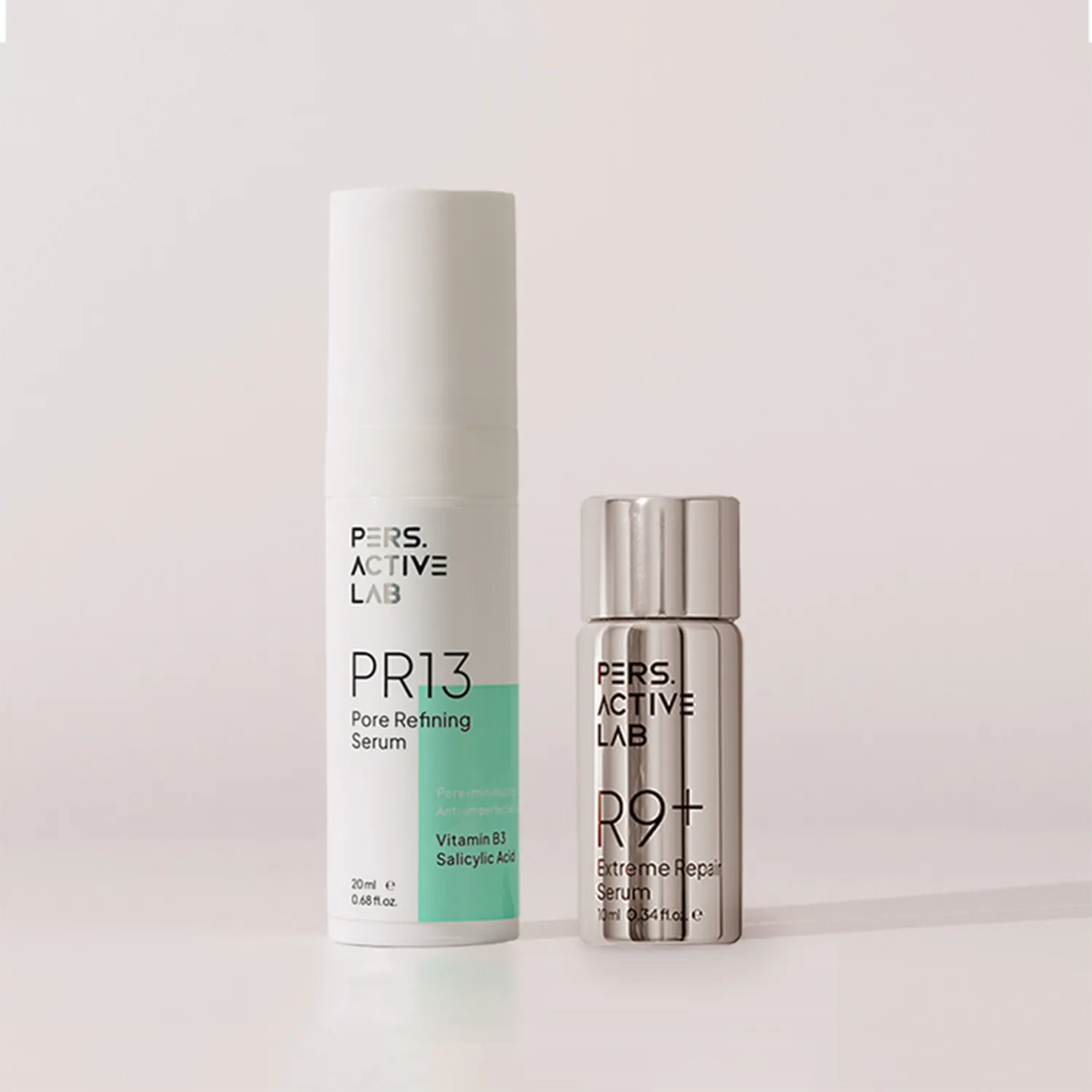

Open pores are one of the most persistent skin concerns in India and one of the most misunderstood. Walk into any pharmacy or scroll through any skincare page, and you will find two ingredients mentioned more than almost anything else: niacinamide and salicylic acid. Both appear in countless product labels. Both are backed by dermatological research. And both claim to help with enlarged pores. So which one do you actually need?
The honest answer is that they work very differently, and choosing the wrong one for your skin type can slow your results significantly. This guide breaks down exactly what each ingredient does, who it works best for, and when using both together makes more sense than choosing between them.
What Actually Causes Open Pores?
Before comparing ingredients, it helps to understand why pores become visible in the first place.
Pores are the openings of hair follicles on the skin's surface. They cannot physically open or close like a door that is a skincare myth. What changes is how noticeable they appear. When excess sebum, dead skin cells, or environmental debris accumulate inside a pore, it stretches outward and becomes more visible. Over time, factors like genetics, hormonal changes, high humidity, pollution, and sun damage weaken the skin's elasticity, making pores look permanently enlarged.
In a hot, humid climate like India's, where sweat and pollution accelerate oil buildup, pores tend to clog faster and appear larger than they would in cooler, drier environments. This is why choosing the right pore minimizing serum is not just a cosmetic preference it is a practical skincare decision suited to local conditions.
Niacinamide: The Barrier Builder
Niacinamide is a form of Vitamin B3 that has earned its place as one of the most well-tolerated active ingredients in skincare. Unlike many actives that work aggressively on the skin's surface, niacinamide works from within the skin's structure.
How it addresses open pores:
Niacinamide regulates sebum production at the source the sebaceous glands. When oil production is kept in check, pores do not fill up as quickly, and they appear smaller over time. Alongside this, niacinamide strengthens the skin's lipid barrier, which improves elasticity and keeps the skin around each pore firm and refined.
It also has anti-inflammatory properties, which reduce the redness and visible congestion that often makes pores look worse than they are.
Who benefits most from niacinamide:
Niacinamide is genuinely suited to almost every skin type. It is particularly effective for people with combination or oily skin who experience oil control issues throughout the day, those with sensitive skin who cannot tolerate stronger actives, and anyone dealing with uneven skin tone alongside enlarged pores. Because it is water-soluble and non-exfoliating, it does not increase sun sensitivity, making it a strong choice for morning routines.
One important expectation to set: niacinamide works gradually. Visible improvement in pore appearance typically takes four to six weeks of consistent use. It is a long-term solution, not an overnight fix.
Salicylic Acid: The Pore Purifier
Salicylic acid is a beta-hydroxy acid (BHA) and unlike most skincare acids, it is oil-soluble. This single property makes it uniquely effective for pore concerns. Because it can dissolve through sebum, it penetrates inside the pore lining rather than just working on the skin's surface.
How it addresses open pores:
A well-formulated salicylic acid face serum exfoliates the interior walls of the pore, loosening the buildup of dead cells and oxidised sebum that cause blackheads and stretch the pore opening. It does not physically shrink the pore nothing can do that permanently but by clearing out what fills the pore, it allows the surrounding skin to contract naturally, making pores appear significantly smaller.
Salicylic acid also has anti-inflammatory and antimicrobial properties, which is why it is so effective for acne-prone skin. When pores are clear of debris and inflammation is reduced, the skin's texture smooths out noticeably.
Who benefits most from salicylic acid:
Salicylic acid is the ingredient of choice for those with oily, acne-prone, or congested skin particularly people who deal with frequent blackheads, whiteheads, or clogged pores. It is also well-suited for those in urban environments where pollution and dust contribute to daily pore buildup.
One caveat: salicylic acid can be drying if overused, and it increases photosensitivity, so consistent sunscreen use is non-negotiable. It is best applied in the evening, two to three times per week, rather than daily, especially when starting out.
Head-to-Head: How They Compare
| Niacinamide | Salicylic Acid | |
|---|---|---|
| Primary action | Regulates oil, strengthens barrier | Exfoliates inside pores, clears buildup |
| Best for | Most skin types, sensitive skin | Oily, acne-prone, congested skin |
| Results timeline | 4–6 weeks | 1–2 weeks for initial clarity |
| Use frequency | Daily (AM or PM) | 2–3 times per week (PM) |
| Sun sensitivity | No | Yes — use SPF |
| Pairs well with | Hyaluronic acid, vitamin C | Niacinamide, moisturiser |
Can You Use Both Together?
Yes — and for many people, using both is the most effective approach.
They target the pore problem from two different angles. Salicylic acid clears the congestion that makes pores visibly stretched. Niacinamide regulates the oil production that caused the congestion in the first place and strengthens the skin around the pore to prevent it from stretching again. Together, they address both the cause and the effect.
A practical way to combine them: apply a salicylic acid-based product at night two to three evenings per week, and use a niacinamide serum every morning (and on evenings when you skip the salicylic acid). Always follow with a moisturiser and, in the morning, broad-spectrum SPF.
Give the combination at least four to six weeks before evaluating results. Skincare actives are cumulative consistency matters far more than intensity.
Which Should You Choose?
Choose niacinamide if:
- Your skin is sensitive or prone to irritation
- You want a daily-use option that is low-risk
- Your primary concern is oil control, uneven texture, or dull skin alongside pores
- You are new to skincare actives
Choose salicylic acid if:
- You have oily, acne-prone skin with blackheads or frequent breakouts
- Your pores appear clogged or congested
- You want faster initial clarity and decongestion
Use both if:
- You have combination-to-oily skin with visible pores and occasional breakouts
- You want a comprehensive, long-term approach to pore refinement
FAQs
Q: Can I use niacinamide and salicylic acid in the same routine?
Yes. The most effective approach is to use salicylic acid in your evening routine two to three times per week and niacinamide daily in the morning, or on evenings when you are not using salicylic acid. There is no significant chemical conflict between the two, though layering them in the same step is unnecessary.
Q: Does salicylic acid actually shrink pores permanently?
No ingredient can permanently change the physical size of a pore that is largely determined by genetics and skin elasticity. What salicylic acid does is clear the sebum and dead skin inside the pore, allowing the surrounding skin to contract so pores appear smaller. With consistent use, this appearance improvement is maintained.
Q: How long before I see results from niacinamide for pores?
Most people notice a change in skin texture and oil control within two to three weeks. A visible improvement in pore appearance typically requires four to six weeks of daily use.
Q: Is niacinamide or salicylic acid better for Indian skin and climate?
Both are well-suited to Indian skin conditions, but in different ways. The humidity and pollution in Indian cities accelerate pore clogging, making salicylic acid particularly effective for clearing congestion. Niacinamide, meanwhile, addresses the excess sebum production that heat and humidity trigger. For most people in India with oily or combination skin, a routine that includes both will deliver the strongest results.
Q: Can I use a pore minimizing serum every day?
It depends on the ingredient. Niacinamide can be used twice daily without issue. Salicylic acid is best limited to two or three evenings per week to avoid over-exfoliation and dryness. Always follow any active serum with a moisturiser and daytime SPF.
Q: My pores look worse after using salicylic acid for a week. Is that normal?
A brief purging phase where clogged pores clear out and temporarily look more prominent can occur during the first two to three weeks of salicylic acid use. This is normal. If irritation, persistent dryness, or breakouts continue beyond three weeks, reduce frequency or switch to a lower-concentration formula.
Q: Are niacinamide serums safe for acne-prone skin?
Yes. Niacinamide is one of the most acne-friendly ingredients available. It reduces inflammation, controls sebum, and does not clog pores. It is a strong option for acne-prone skin used alongside or in place of more aggressive actives.
The Bottom Line
Niacinamide and salicylic acid are not competitors they are partners that address different parts of the same problem. Salicylic acid clears what is already inside the pore. Niacinamide prevents it from building back up. For anyone dealing with visible, enlarged pores especially in a climate that encourages oil production and congestion using both strategically is far more effective than picking one and hoping it does everything.
Start with whichever matches your most immediate concern, give it a full month to work, and build from there. Skincare rewards patience more than it rewards products.






























Sign in to leave a comment.