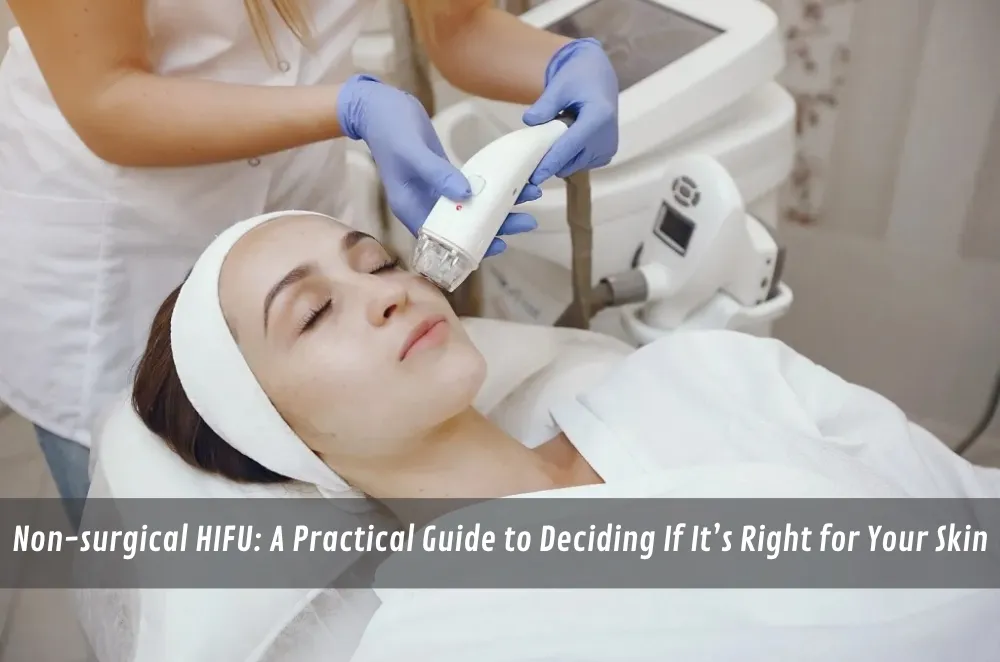
HIFU (high-intensity focused ultrasound) sits in the “non-invasive tightening” category: no needles, no surgery, and no long recovery period.
It’s often discussed as a way to support firmer-looking skin around areas like the lower face, jawline, and neck, where laxity can creep in gradually.
If you’ve been weighing a non surgical hifu treatment but feel unsure about what’s realistic, the most helpful approach is to treat it like a buying decision: define the problem, understand the trade-offs, and choose the provider and plan that match your goals.
What HIFU is in plain English
HIFU uses focused ultrasound energy to create tiny points of heat at targeted depths beneath the skin’s surface.
The goal is to trigger a wound-healing response that can support collagen remodelling over time, which is why results are typically described as gradual rather than instant.
Different devices and protocols may target different depths, which matters because the face and neck aren’t “one layer” and outcomes depend on matching depth, area, and energy to the individual.
What it can help with, and what it can’t
HIFU is most commonly chosen for mild-to-moderate skin laxity and early “softening” of facial structure.
It’s not a direct substitute for surgical lifting in cases of significant excess skin, and it won’t replicate the impact of volume restoration (fillers) when the main issue is deflation rather than looseness.
It can also be a frustrating choice when someone is chasing a dramatic change on a tight timeline, because the more honest promise is subtle improvement that continues over weeks.
Who it tends to suit, and who should pause
HIFU tends to suit people who want natural-looking tightening, are comfortable with incremental change, and prefer low downtime.
It may be less suitable if there’s very thin skin in certain areas, significant laxity that needs repositioning, active skin infections, or if the expectations are “one session should fix everything.”
A good consultation should explore skin quality, laxity level, facial structure, and whether the “best next step” is actually a different modality or a staged plan.
Results timelines and trade-offs to understand early
Some people notice a small change sooner, but the more typical pattern is gradual improvement as collagen remodelling progresses.
That timeline is both the appeal and the drawback: it can look more natural, but it also requires patience and a plan.
Trade-offs can include variability in response, the need for maintenance, and the fact that technique matters—device settings and targeting are not “set and forget.”
Operator Experience Moment
A pattern that shows up again and again is that people don’t regret choosing HIFU—they regret choosing it without a clear target and a clear definition of “success.”
When the consult is vague (“I just want to look fresher”), treatment planning becomes guesswork, and guesswork is where disappointment starts.
The best outcomes I’ve seen come from simple specificity: one or two areas, one timeline, and one agreed way to measure progress.
Common mistakes people make before booking
Many people treat HIFU like a commodity and shop only on price, without asking what device is used, what depths are targeted, or how the plan is personalised.
Another common mistake is stacking too many treatments too close together (or mixing modalities without a timeline), which can create irritation, confusion about what worked, and inconsistent aftercare.
The third mistake is expecting a “lift” when the real need is addressing volume loss, skin quality, or lifestyle factors that affect collagen health.
Decision factors that matter more than hype
1) The consult quality and assessment process
A consult should explain why HIFU is being recommended for specific zones and why not for others.
Look for an approach that discusses facial structure, skin laxity, and a staged plan, rather than a one-size-fits-all menu choice.
2) The device, the protocol, and the targeting logic
Device brand alone isn’t the whole story, because settings, depths, and technique influence comfort and outcomes.
Ask what depths will be treated, how many passes are typical for the targeted zones, and how the plan changes for the jawline versus the neck.
3) Comfort management and realistic sensation expectations
HIFU can feel warm, prickly, or sharp in certain areas, and discomfort varies person to person.
A responsible provider will discuss comfort strategies and set expectations upfront rather than minimising the experience.
4) The “what happens after” plan
Aftercare usually isn’t complicated, but it does matter: managing exercise intensity, heat exposure, and skin irritation can support a smoother week post-treatment.
It also matters that follow-up timing is planned, because checking too early can lead to false disappointment.
5) Pricing structure and what’s included
Good value isn’t the cheapest session; it’s a plan that matches the right zones and includes appropriate assessment and follow-up.
If a practical reference would help structure the conversation, the PAUSE Cosmetic Skin Clinic HIFU guide can be used as a checklist-style starting point for questions about suitability, areas, and expectations.
A simple 7–14 day plan before committing
Day 1–2: Define the outcome in one sentence.
Pick one primary concern (e.g., jawline softening, neck laxity, lower-face looseness) and one “success signal” (photos, how makeup sits, how a neckline looks).
Day 3–5: Book a consult with a questions list.
Bring your medical history, current skincare/actives, and a note of previous aesthetic treatments and dates.
Day 6–7: Compare plans, not promises.
Choose the option that clearly explains zones, depths, number of sessions if relevant, and follow-up timing.
Day 8–10: Map your calendar.
Plan around big events and avoid squeezing treatment into a week where stress, heat, or travel will derail aftercare.
Day 11–14: Decide your “maintenance mindset.”
If the goal is gradual, natural improvement, think in seasons, not days: plan to reassess rather than chase instant change.
Local SMB mini-walkthrough: Pimlico / Townsville lens
A clinic owner in Pimlico might notice their face looks more tired under harsh shop lighting by mid-afternoon.
They want tightening but can’t take visible downtime because they’re client-facing all week.
They book a consult for a plan that targets lower face and neck, with clear comfort expectations and aftercare that fits hot, active North Queensland days.
They schedule treatment away from long weekend events and reduce heat-heavy workouts for a short period after.
They set a reminder to take baseline photos in the same bathroom lighting for a fair comparison later.
They check progress at the recommended follow-up window, not at day five when nothing “dramatic” has happened.
Practical Opinions
If the plan isn’t specific about zones and expectations, it’s usually not specific enough to deliver consistent satisfaction.
When choosing between options, prioritise consult quality and technique over bargain pricing.
For busy schedules, pick the modality that fits aftercare reality in North Queensland heat, not the one that sounds most impressive.
Key Takeaways
- HIFU is best thought of as gradual tightening support, not an instant lift or a surgical substitute.
- The consult and plan quality (zones, depths, expectations, follow-up) matter more than hype.
- Avoid price-only decisions, unclear timelines, and stacking treatments without a strategy.
- A 7–14 day pre-booking plan helps align expectations, calendar, and aftercare.
Common questions we get from Aussie business owners
Q1: Is HIFU a good option if there’s an event coming up soon?
Usually… it’s better to avoid relying on HIFU for a near-term “big reveal,” because changes are typically gradual. A practical next step is to map the event date and ask for a timeline that matches realistic collagen remodelling. In Townsville’s warmer months, also factor in heat, sun exposure, and workout routines that can complicate the first week of aftercare.
Q2: How do you compare providers if you’re not an expert?
In most cases… the simplest comparison is the consult: clarity on zones, depth targeting, comfort expectations, and follow-up timing. A practical next step is to bring the same three questions to each consult (what areas, what timeline, what aftercare) and choose the plan that answers them without vagueness. In smaller metro areas like Townsville, consistency and follow-up access can be as important as the device brand.
Q3: Can HIFU be combined with other treatments?
It depends… on what the primary issue is (laxity vs volume loss vs skin texture) and how the timeline is structured. A practical next step is to ask for a staged plan that avoids overlapping recovery or confounding results—so it’s clear what’s helping. Locally, consider seasonal sun exposure and whether outdoor work makes aggressive stacking unrealistic.
Q4: What should someone do if they’re worried about discomfort?
Usually… discomfort can be managed, but it varies by person and by treatment area, so it’s worth discussing openly. A practical next step is to ask what comfort strategies are used and what sensations are normal for the zones being treated. In North Queensland, also talk through post-treatment heat management (saunas, hot yoga, long beach days) so comfort doesn’t turn into irritation.




























Sign in to leave a comment.