

For many New Yorkers, the subway is simply part of the day. It gets them to work. It gets them home. It becomes so familiar that they stop thinking about it as a place that requires active attention.
That familiarity can be useful. It helps people move quickly, understand routes, and function in a crowded city. It can also create a blind spot. The subway places people in close contact with strangers, tight spaces, limited exits, changing crowds, and unpredictable behavior. Most of the time, nothing happens. That is exactly why awareness matters.
After teaching adults throughout New York City for many years, one pattern becomes clear. People who ride the subway every day do not only ask how to fight. They want to know how to recognize problems earlier, make better decisions, create space, and feel more confident moving through the city.
That is why practical self-defense on the subway begins long before anything becomes physical.
The Subway Trains People To Pay Attention
Every subway ride is different. The station changes. The crowd changes. The time of day changes. The energy of the platform changes. A train at 8:00 AM feels different from a train at midnight. A crowded car feels different from an empty one. A delay changes how people behave.
Good awareness is not about expecting danger everywhere. That mindset becomes exhausting and unrealistic. Real awareness means knowing what is normal enough to notice when something changes.
Someone repeatedly adjusts position to stay close. A conversation continues after clear signals that it should end. A person’s attention remains fixed while everyone else is moving naturally. Someone enters a car and immediately changes the feeling of the space.
These observations often matter more than any physical technique because they give a person time to make decisions early.
Most Subway Self-Defense Is Decision Making
People often think self-defense means fighting. In real life, especially on the subway, most useful self-defense decisions happen before physical contact.
Should I move to another part of the platform? Should I change train cars? Should I stand closer to the exit? Should I wait for the next train? Should I end this conversation now? Should I make eye contact, use my voice, or create distance?
None of these decisions require advanced physical skill. They require awareness, judgment, and the confidence to act without waiting for perfect certainty.
That is where many students begin to understand self-defense differently. The goal is not to win a fight on the subway. The goal is to avoid being trapped in one.
This is why many New Yorkers look for self-defense classes in NYC that address real environments, including public transportation, tight spaces, and situations where walking away may take planning.
Familiar Routes Can Create False Confidence
The subway becomes familiar very quickly. People ride the same route every day. They know which entrance is fastest. They know where to stand for the right exit. They recognize the usual crowd.
That routine can make people feel safe because the environment feels known. The problem is that familiar places can still change. A person may be in the same station, but the situation around them may be different.
Training helps people stay attentive without becoming anxious. That distinction matters. The goal is not to scan every person as a threat. The goal is to notice behavior, distance, tone, movement, and options.
A person who trains well becomes more present. They are less buried in the phone. They notice exits. They notice who is moving naturally and who is not. They understand that a small early decision can prevent a bigger problem later.
Subway Safety Depends On Space And Position
Space matters on the subway because space is limited. A person may not be able to move freely. A platform edge, a closing train door, a crowded car, or a narrow stairwell can change the entire situation.
Good self-defense training teaches students to think about position. Where are the exits? Is there room to move? Is someone blocking the path? Am I standing where I can leave if needed? Is my back against something solid, or am I being boxed in?
These are simple questions, but they change how a person experiences the subway. A trained person does not need to be afraid. A trained person needs to be awake.
At Krav Maga Experts, this type of thinking is part of the larger self-defense mindset. Physical techniques matter, but judgment, awareness, and positioning often decide whether those techniques are ever needed.
A Situation Many Commuters Recognize
A person boards a train after work. The ride begins like every other commute. A few stops later, they notice someone repeatedly looking in their direction. When they move to another part of the car, the same person moves too. When they change cars, the person changes cars as well.
Nothing openly threatening has happened. No one has touched them. No one has said anything directly. Still, the uncertainty is real.
Before training, many people spend most of their energy asking one question: am I imagining this?
After training, the thought process becomes more useful. What is the behavior? Has the pattern repeated? What options do I have? Can I create distance? Can I step into a more populated area? Can I exit with other people? Can I ask for help before the situation becomes worse?
The situation may turn out to be harmless. That is possible. The point is that the response becomes deliberate instead of frozen.
Physical Skills Still Matter
Awareness and decision making are the first layers of self-defense. They are not the only layers.
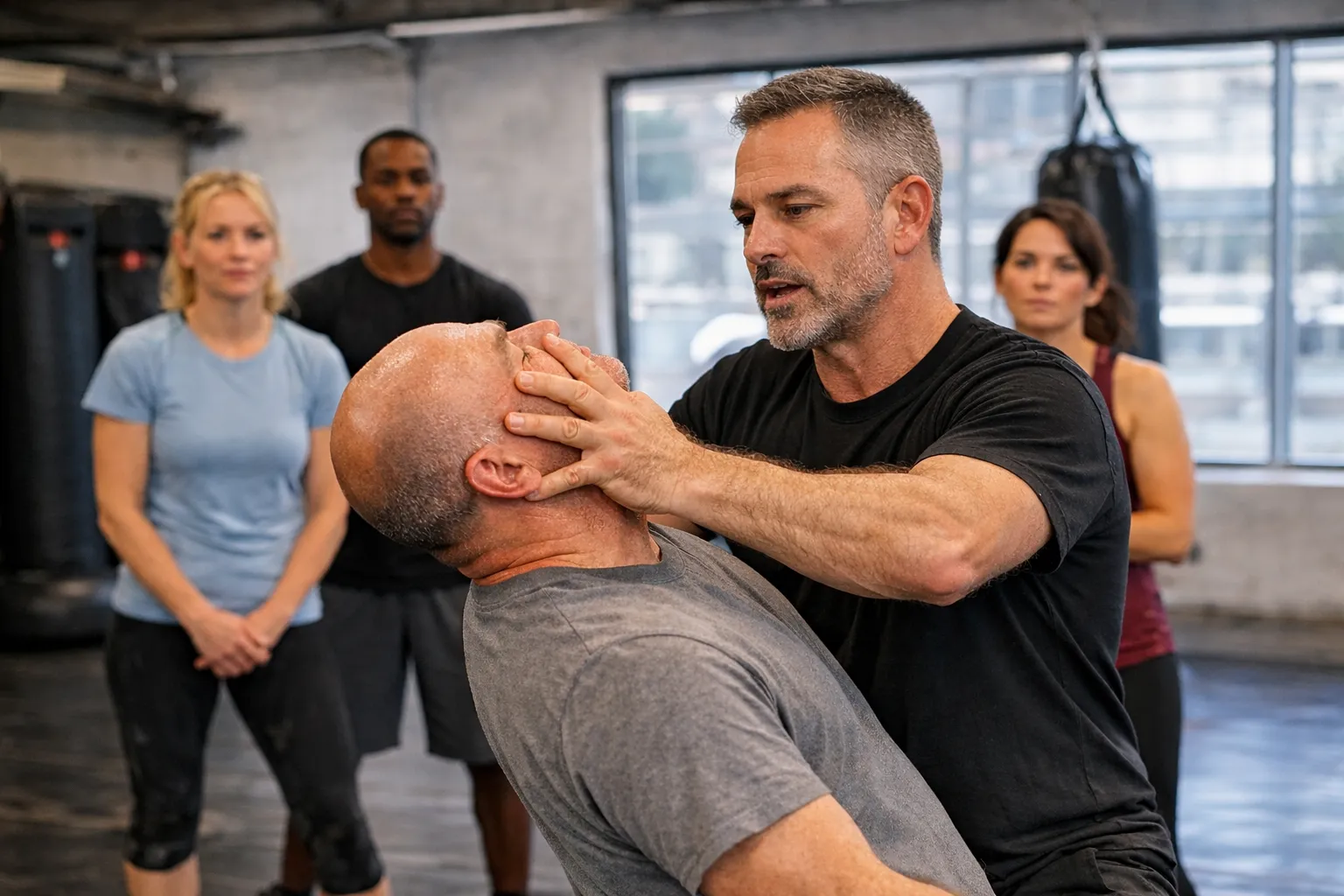
Sometimes distance fails. Sometimes someone grabs, blocks, threatens, or attacks. In those moments, physical skills matter. A person may need to strike, release from a grab, protect the head, stay on the feet, or create enough space to escape.
This is why subway self-defense cannot be only advice. Telling someone to “be aware” is not enough. Awareness must connect to action. A person needs to know what to do if avoidance fails.
Krav Maga is useful for this because it is built around real situations where there are no rules, no referee, and no ideal conditions. For subway riders, that matters. Tight spaces, surprise, imbalance, multiple people, noise, fear, and limited exits are part of the environment.
People who want structured training can review the current Krav Maga class schedule and choose a class that fits their routine.
Subway Awareness Carries Into Everyday Life
Many people begin training because they want to feel safer during their commute. Over time, they notice the same skills showing up elsewhere.
They pay attention while walking home. They notice who enters the building behind them. They make better decisions in parking garages, elevators, stairwells, crowded sidewalks, bars, restaurants, and workplaces. They become more comfortable trusting what they see.
That is one reason subway commuters often stay with training. They realize self-defense is not only about a dangerous moment. It is about how they move through the city every day.
This is especially true in New York. The city is dense, fast, and constantly changing. A person does not need to live in fear to admit that awareness has value.
Self-Defense Starts Before Anything Happens
People who ride the NYC subway often think differently about self-defense because the subway teaches a hard lesson. Waiting until something becomes obvious can leave a person with fewer options.
The earlier you notice, the more choices you have. You can move. You can create distance. You can change cars. You can leave the station. You can use your voice. You can ask for help. You can prepare physically if the situation continues.
That is the real value of training. It gives the mind and body a reference point before pressure arrives.
For subway riders, self-defense begins before anything happens. It begins with awareness, positioning, decision making, and the willingness to act early. The physical skills matter. The judgment that helps you avoid needing them matters just as much.
FAQs
Why do NYC subway riders think differently about self-defense?
NYC subway riders move through changing environments every day. Platforms, train cars, stairwells, crowds, and delays all require awareness and decision making. Because of that, many commuters understand that self-defense begins before a situation becomes physical.
Is self-defense on the subway mostly physical?
Most subway self-defense is not physical at first. It usually begins with awareness, positioning, distance, and early decisions. Physical skills become important if avoidance, movement, and verbal boundaries are no longer enough.
Can Krav Maga help with subway safety?
Yes. Krav Maga can help subway riders build awareness, improve decision making, create space, use verbal boundaries, and respond physically if necessary. The goal is to get away from danger, not stay and fight.
What should commuters pay attention to on the subway?
Commuters should pay attention to behavior, distance, exits, crowd movement, and repeated patterns. A person standing nearby is usually meaningless. A person repeatedly adjusting position to stay close may deserve more attention.
Do beginners need experience before taking self-defense classes?
No. Most adults begin with no martial arts or fighting background. A good self-defense program should build skills gradually and help students become more confident, aware, and capable over time.































Sign in to leave a comment.