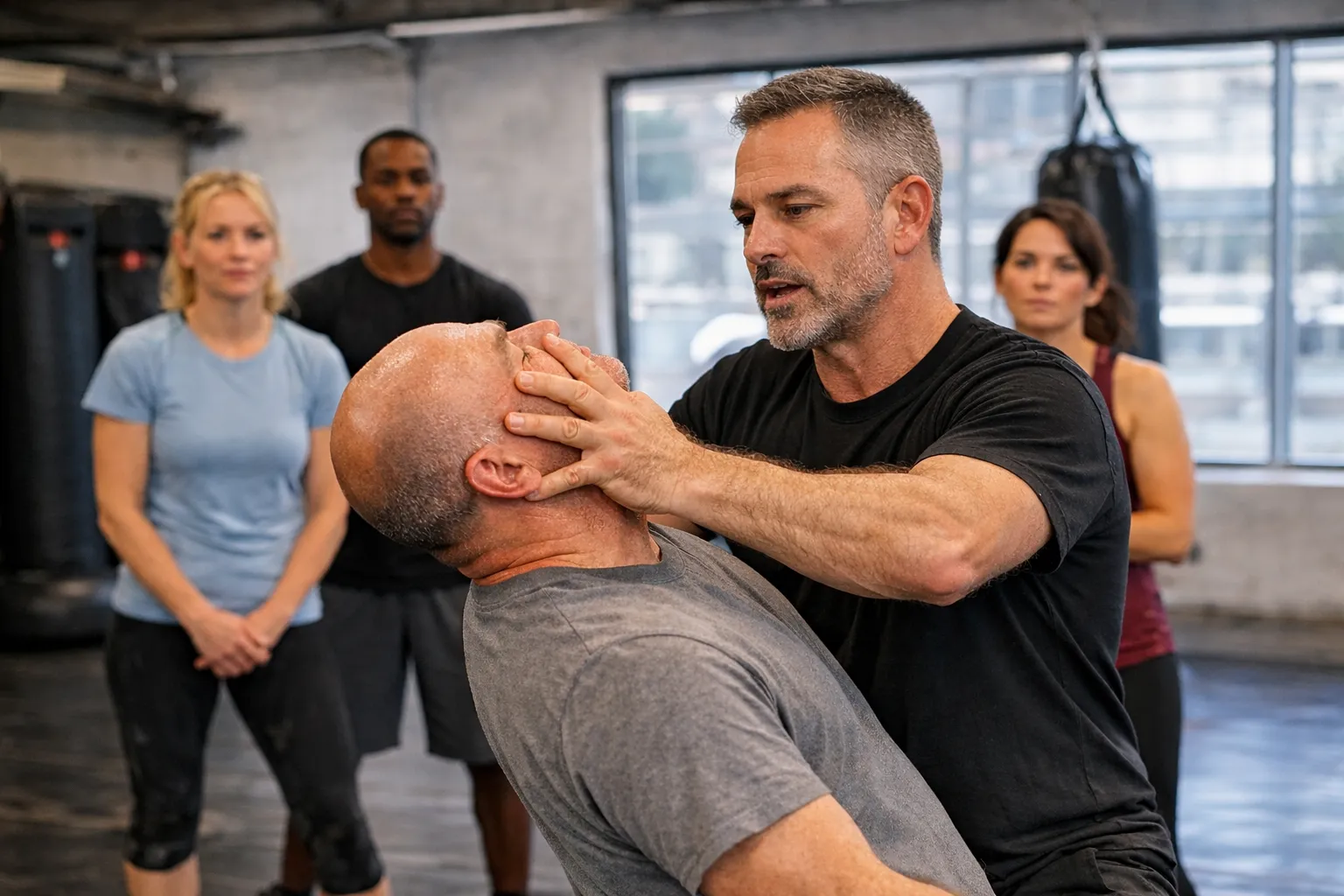

Most people walk into their first class expecting to learn how to defend themselves: what to do if they're grabbed, cornered, or confronted. That's a reasonable reason to show up, and the physical skills are still a real part of what we teach. But ask someone who's been training for six months what actually changed, and technique is rarely the first thing they mention. More often they'll say a crowded train doesn't rattle them the way it used to, or that they didn't spend the whole walk home replaying a tense conversation from work.
Training Doesn't Stop When Class Does
It's easy to think of a class as something contained: you learn a technique, you drill it, you go home. But the habits that actually carry over come from repetition, not from being told something once. Students practice making a decision under pressure, staying oriented when something unexpected happens, and solving a problem while their heart rate is up instead of freezing. None of that is a conversation you have. It's something you do, badly at first, until it isn't.
What Controlled Pressure Actually Teaches You
Pressure isn't limited to a self-defense scenario. It shows up in a disagreement at home, a deadline at work, a subway platform when three trains in a row are delayed and everyone's temper is short. Most people handle that kind of pressure the same way they always have, because the reaction is a habit, not a decision. In class, students get repeated, low-stakes reps at exactly that: something goes wrong in a drill, they react, sometimes it works and sometimes it doesn't, and then they go again immediately. Over months, that repetition does something specific: mistakes stop feeling like a verdict on you and start feeling like information you use on the next rep. That shift, treating a bad moment as data instead of failure, is the part that tends to show up outside the gym without anyone deciding to apply it on purpose.
Judgment Comes Before Technique
A lot of what looks like self-defense from the outside is really judgment: when to create distance, when to walk away, or when the smartest move is avoiding the situation before it starts. Students who start Krav Maga training in NYC usually assume the physical technique is the main event. What they find is that the technique only matters after a decision has already been made, and a lot of training time goes into the decision itself, reading a situation early enough that you still have options, instead of reading it correctly but too late.
What This Doesn't Promise
None of this happens in a week, and it doesn't happen the same way for everyone. Training also isn't a substitute for ordinary awareness. It won't make every commute pleasant or every hard conversation easy, and nobody should expect to feel permanently unbothered by pressure just because they've been coming to class. What it does, for most students who stick with it past the first few months, is make the gap between noticing something's off and doing something about it noticeably shorter, whether that's on a subway platform, in a meeting, or at home.
Families sometimes notice this before students do. A spouse mentions someone seems steadier during an argument. A coworker notices they didn't rattle when a plan fell apart. Students usually laugh when they hear it, because they were thinking about their footwork, not their patience.
FAQs
Does Krav Maga training in NYC improve more than physical fitness?
Yes. Alongside the physical skills, most students report handling pressure and making decisions more calmly, though that tends to show up months into consistent training, not in the first few weeks.
Why do students keep training after they've learned the basics?
Most stay for the same reason they started noticing changes outside the gym: the habits built through repeated, controlled pressure, staying oriented, deciding quickly, treating mistakes as information, keep paying off long after the basic techniques are second nature.
How does training carry over outside the gym?
It doesn't transfer through anything students are told. It transfers because the same decision-making reps they run in class under pressure are the ones they end up using on a stressful commute or a hard conversation at work.
Is Krav Maga only about self-defense technique?
No. Instructors spend real time on strikes and escapes, but just as much on the judgment that decides whether you ever need them: when to create distance, when to leave, when to avoid a situation altogether.
How long does it take to notice changes beyond physical ability?
It varies by student, but most people report noticing it after several months of consistent training, usually before they'd call their technique "good."




























Sign in to leave a comment.