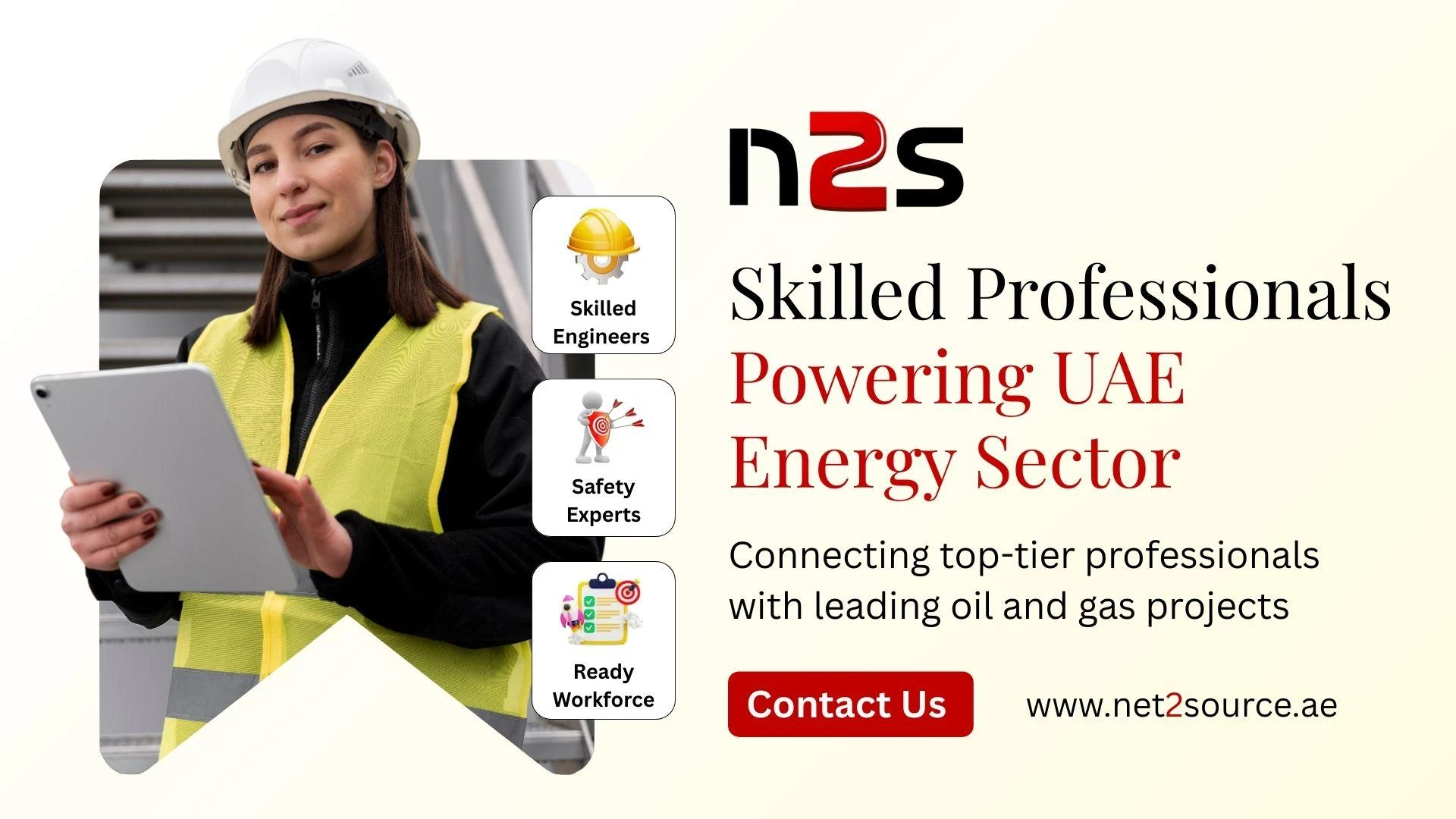
The oil and gas sector in the United Arab Emirates remains a pillar of the economy, even as it faces evolving demands and new technologies. For companies in this space, staffing remains one of the most critical issues. Finding the right professionals, balancing permanent and contract talent, and adapting to rapid project cycles are all part of the new hiring story.
What’s Driving Staffing Needs in Oil and Gas
Several factors are pushing staffing strategy to the top of the agenda in the UAE oil and gas industry:
• Large-scale upstream, midstream, and downstream projects are under way. These require engineers, technicians, project managers, safety specialists, and more.
• Global demand for energy remains strong, which means firms must ramp up operations, adjust to supply chain challenges, and keep skilled teams in place.
• Technology and automation are changing the skill sets needed. Digital oilfields, data analytics, remote monitoring, drones, and robotics are creating new roles and expectations.
• The business environment is more volatile than ever. Price swings, regulation, sustainability goals, and geopolitics all affect workforce plans. In this context, staffing must be flexible to meet changing needs.
Key Staffing Challenges
Organisations operating in oil and gas in the UAE encounter several staffing-related hurdles:
• Specialist talent shortage: Roles in drilling, process operations, maintenance, HSE (health, safety and environment), and new energy are hard to fill, especially when local experience is limited.
• Project-driven timelines: Many projects have strict schedules and require bursts of manpower. Permanent hires may not always be the best fit for short-term spikes.
• Compliance and safety standards: The industry demands rigorous safety credentials, certifications, and regulatory compliance. Candidates must meet these standards.
• Retaining talent: Once specialists are hired, keeping them can be challenging. Turnover is expensive, disrupts continuity, and impacts project performance.
• Balancing permanent versus contract staffing: Firms must decide when to invest in long-term salaries and benefits versus when to use contract professionals for flexibility and cost control.
Effective Strategies for Staffing Success
Here are some practical steps companies can take to strengthen their staffing outcomes in the UAE oil and gas space:
1. Map critical roles and skills: Identify which positions are core to your business and likely to drive future growth. Also recognise roles that may be project-based or short-term.
2. Blend permanent and contract workforce: Use permanent hires for essential operations, leadership, and skills you need long-term. Use contract or project-based talent for surge demands or specialised tasks.
3. Build and maintain a talent pipeline: Stay connected with potential candidates even when you do not have immediate vacancies. Engage candidates with insight, events, and networking so you can move faster when roles open.
4. Prioritise training and upskilling: Given the advances in digital tools and automation, invest in developing talent who can work with new systems, data-driven operations, and remote monitoring.
5. Focus on safety and credentials: HSE credentials and regulatory compliance are non-negotiable. Ensure candidate vetting covers certifications, safety training, and readiness to operate in challenging environments.
6. Measure staffing performance: Time to fill, cost per hire, retention rate, and contractor productivity are key metrics. Use them to refine your workforce strategy and hiring processes.
Frequently Asked Questions
Which roles are most in demand in UAE oil and gas staffing?
Engineers (mechanical, process, instrumentation), maintenance technicians, project managers, HSE specialists, and automation experts are among those in high demand.
When should firms favour contract over permanent staffing?
When the role is tied to a specific project timeline, requires special skills that may not be needed long-term, or when speed and flexibility are more important than permanent integration.
What are the risks of relying only on permanent staffing?
High fixed costs, insufficient flexibility, difficulty scaling up or down during project cycles, and potential mismatch of skills if the business pivots.
How should companies retain critical talent in this sector?
Offer clear development paths, competitive rewards, strong onboarding, work-life balance where possible, and engagement in meaningful projects that align with their skills and ambitions.
Moving Forward with a Resilient Workforce
The UAE oil and gas industry is at a pivotal moment. Staffing remains the bridge between strategic investment and operational success. Firms that build thoughtful workforce strategies—combining agility, skill alignment, and long-term planning—will be better placed to move forward. Whether the priority is ramping up for a major project, implementing new technology, or improving operational resilience, the right talent strategy will make all the difference.






























Sign in to leave a comment.