

The on-demand economy has transformed how people access services in their daily lives. From booking a taxi and ordering food to hiring a plumber or scheduling a doctor consultation, users now expect instant solutions at their fingertips. This shift in consumer behavior has made on-demand app development one of the most profitable and future-ready opportunities for startups and established businesses alike.
In this complete guide, we’ll explore what on-demand apps are, how they work, their key features, benefits, development process, cost factors, and why choosing the right development partner is crucial for success.
What Is On-Demand App Development?
On-demand app development refers to the process of creating mobile or web applications that connect users with service providers in real time. These apps act as digital marketplaces where customers can request services instantly or schedule them for later, while providers can accept, manage, and deliver those services efficiently.
Popular examples of on-demand apps include food delivery platforms, ride-hailing services, grocery delivery apps, home service apps, healthcare apps, and beauty service platforms. The success of these platforms lies in convenience, speed, transparency, and personalization.
Why On-Demand Apps Are in High Demand
The global on-demand market is growing rapidly due to several factors:
- Increased smartphone penetration
- Faster internet connectivity
- Busy lifestyles and time constraints
- Preference for contactless and digital services
- Growing trust in online payments
For businesses, on-demand apps open new revenue streams, improve customer engagement, and offer data-driven insights to optimize operations.
Types of On-Demand Apps
Before starting development, it’s important to understand the different categories of on-demand apps:
1. On-Demand Services Apps
These apps connect users with service professionals such as electricians, cleaners, tutors, or fitness trainers.
2. On-Demand Delivery Apps
Food, grocery, medicine, and package delivery apps fall under this category.
3. On-Demand Transportation Apps
Taxi booking, bike rentals, and logistics apps are classic examples.
4. On-Demand Healthcare Apps
Doctor consultations, lab test bookings, and medicine delivery apps are rapidly gaining popularity.
5. On-Demand Marketplace Apps
These platforms combine multiple services under one app, offering users a wide range of options.
Core Components of an On-Demand App
A successful on-demand app usually consists of three main components:
- User App – For customers to browse services, place requests, make payments, and track orders.
- Service Provider App – For vendors or professionals to accept requests, manage schedules, and receive payments.
- Admin Panel – For business owners to manage users, providers, services, pricing, commissions, and analytics.
Must-Have Features of an On-Demand App
User Panel Features
- Easy sign-up and login
- Service search and filters
- Real-time booking or scheduling
- Live tracking
- Secure payment options
- Ratings and reviews
- Push notifications
Service Provider Panel Features
- Profile management
- Request acceptance or rejection
- Availability management
- Earnings dashboard
- In-app chat or call
Admin Panel Features
- User and provider management
- Commission and pricing control
- Analytics and reports
- Content and offer management
- Dispute and support management
Advanced Features to Gain a Competitive Edge
To stand out in a competitive market, businesses often integrate advanced features such as:
- AI-based recommendations
- Dynamic pricing models
- In-app wallets
- Multi-language and multi-currency support
- Loyalty programs and referral systems
- Chatbots for instant support
These features enhance user experience and improve customer retention.
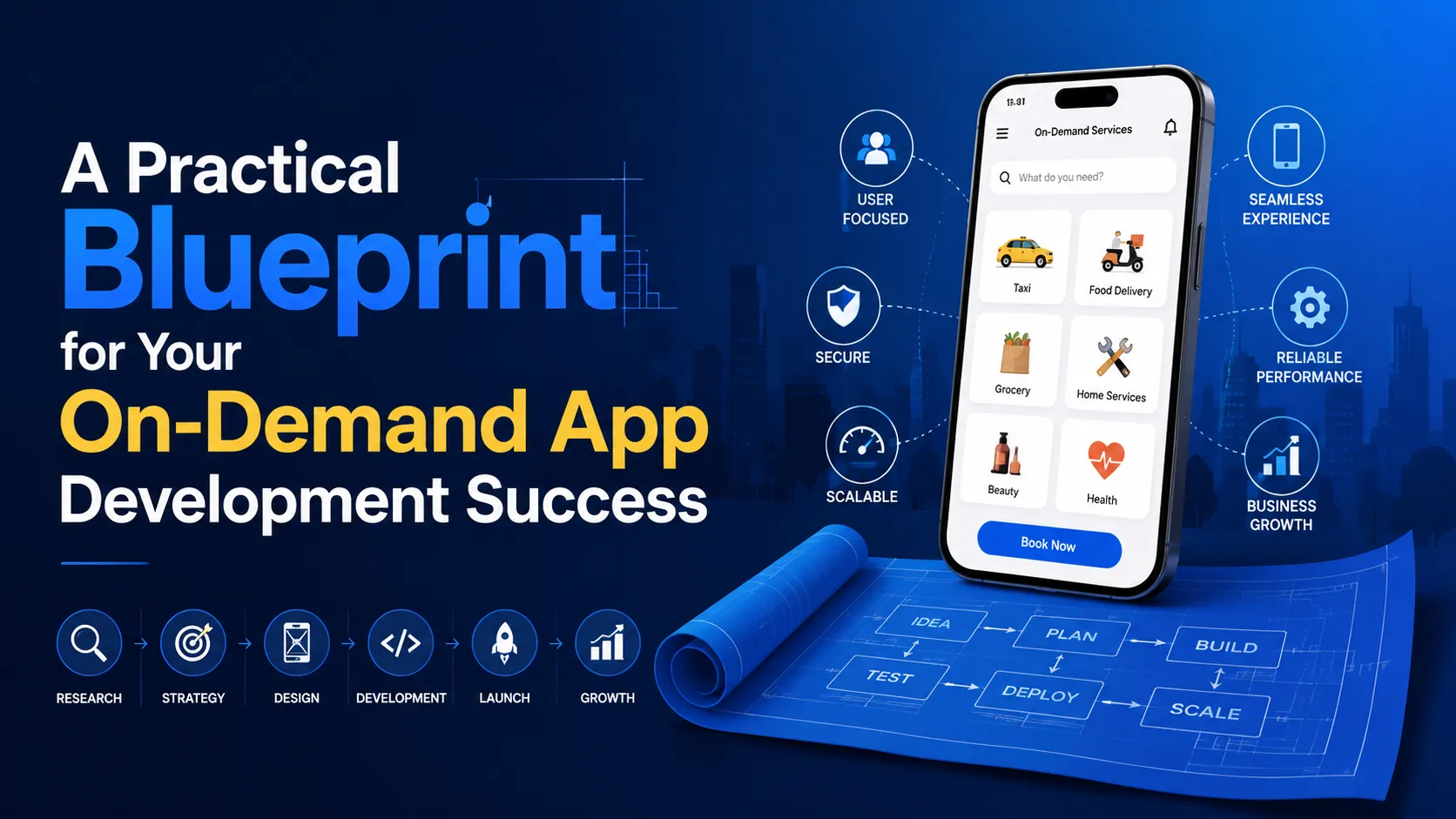
The On-Demand App Development Process
Building a robust on-demand application requires a structured and strategic approach:
1. Idea Validation and Market Research
Analyze your target audience, competitors, and market demand. This step helps you define your unique value proposition.
2. Feature Planning and Wireframing
Decide on core and advanced features. Create wireframes to visualize the app’s user flow and interface.
3. UI/UX Design
A clean, intuitive, and user-friendly design plays a crucial role in app adoption and engagement.
4. App Development
This stage involves front-end and back-end development using suitable technologies for performance, scalability, and security. Partnering with a company that offers reliable On-Demand App Development services ensures technical excellence and faster time-to-market.
5. Testing and Quality Assurance
Rigorous testing is done to eliminate bugs, improve performance, and ensure a seamless user experience across devices.
6. Deployment and Launch
The app is launched on app stores or web platforms after meeting all compliance and performance standards.
7. Maintenance and Updates
Post-launch support, updates, and feature enhancements are essential to keep the app competitive.
Cost of On-Demand App Development
The cost of developing an on-demand app depends on multiple factors, including:
- App complexity and features
- Number of platforms (Android, iOS, web)
- UI/UX design requirements
- Technology stack
- Development team location
- Third-party integrations
On average, a basic on-demand app may cost less, while a feature-rich, scalable solution requires a higher investment. Choosing experienced mobile app development services helps optimize costs without compromising quality.
Benefits of On-Demand App Development for Businesses
1. Increased Revenue Opportunities
On-demand apps enable multiple monetization models such as commissions, subscriptions, ads, and surge pricing.
2. Enhanced Customer Convenience
Instant access to services improves customer satisfaction and loyalty.
3. Operational Efficiency
Automation reduces manual work and streamlines business operations.
4. Scalability
On-demand platforms can easily scale as user demand grows.
5. Data-Driven Decisions
Analytics and user insights help businesses improve services and marketing strategies.
Challenges in On-Demand App Development
While on-demand apps offer numerous benefits, businesses may face challenges such as:
- High competition
- User and provider retention
- Real-time service management
- Security and data privacy concerns
These challenges can be effectively managed by working with an experienced development partner and adopting best practices.
Choosing the Right On-Demand App Development Partner
Selecting the right development company is critical for your app’s success. Look for a partner that offers:
- Proven experience in on-demand solutions
- End-to-end development support
- Transparent communication
- Scalable and secure architecture
- Post-launch maintenance and support
A trusted provider of On-Demand App Development services can turn your idea into a high-performing digital product while aligning with your business goals.
Future of On-Demand Apps
The future of on-demand apps looks promising with the integration of emerging technologies such as AI, machine learning, IoT, and blockchain. Personalization, automation, and predictive analytics will further enhance user experiences and operational efficiency.
As consumer expectations continue to evolve, businesses that invest in innovative and scalable on-demand solutions will stay ahead of the curve.
Conclusion
On-demand app development is no longer just a trend it’s a necessity for businesses aiming to thrive in the digital-first world. Whether you are a startup looking to disrupt the market or an established enterprise seeking digital transformation, building an on-demand app can unlock immense growth opportunities.
By focusing on user experience, smart features, and partnering with reliable mobile app development services, you can create a powerful on-demand platform that delivers value to users and drives long-term business success.



Sign in to leave a comment.