
Most people don't go looking for a Linphone alternative because Linphone is bad. They go looking because something specific broke, usually at the worst possible moment, and the free open-source softphone that had been quietly doing its job suddenly wasn't.
I've watched this happen enough times that the story is almost always the same. A team starts with Linphone because it's free and it works. Things go fine for a while. Then they grow, or they take on a client who wants their own branding, or someone's phone stops ringing for incoming calls and nobody can figure out why. And that's when the search starts.
If that's where you are, here's the honest rundown of what businesses move to and how to figure out which one fits.
First, why Linphone stops being enough
Worth saying clearly: outgrowing Linphone isn't a criticism of Linphone. It's free, open source, runs on basically everything, and handles SIP calling cleanly. For a developer or a hobbyist or a small technical setup, it's a genuinely good choice.
The trouble is that "free and general-purpose" and "reliable branded business phone" are two different products, and Linphone was only ever trying to be the first one.
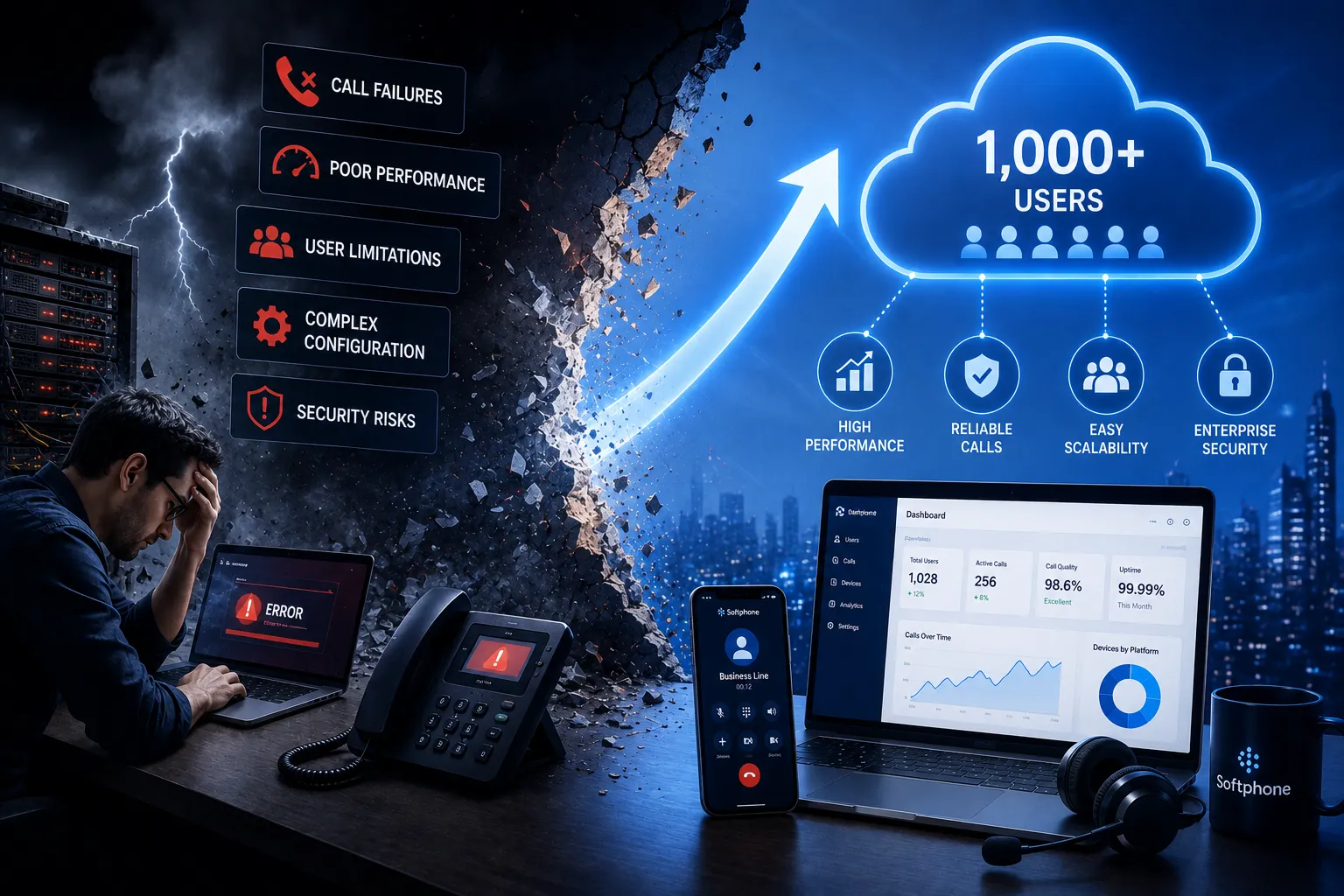
The thing that breaks first, almost every time, is mobile push. Getting a phone to ring reliably when the app has been backgrounded for an hour takes real push infrastructure underneath, APNs on iOS and FCM on Android. Free clients don't always build this out as solidly as a business needs. The result is the nightmare scenario for any company: calls that just don't come through, with no obvious reason why.
Linphone is Linphone. If you want your customers using an app with your name on it, you'd have to fork the open-source code and maintain your own version, which is a real engineering project, not a weekend rebrand.
Support is the other one. When something breaks at 2am, free software gives you a community forum and your own debugging skills. That's a fair deal for free. It's just not what a business wants when the phones are how it makes money.
What businesses actually switch to
The annoying-but-true answer is that it depends on why you left. But the options sort out into a few clear buckets.
If you need your own branded app, you're looking at white-label softphones, not another free client, because you can't paint your brand onto open-source software without owning the fork. Tragofone lives in this space, built for service providers and resellers who want a branded app across iOS, Android, desktop, and web without maintaining the codebase themselves, with the push reliability and provisioning that the free clients tend to miss. Acrobits and Bria are also worth a look here, each with their own strengths. There's a decent breakdown of the white-label alternatives to Linphone if you want to compare them side by side.
If you're an enterprise wanting a polished commercial client, Bria (from CounterPath) is the usual pick. Desktop and mobile, team messaging, a more finished feel than a free client, and it costs accordingly.
If you just need a better desktop dialer, you might not need to leave the open-source world at all. MicroSIP on Windows or Zoiper's free tier could be the whole answer, and there's no sense paying for a platform you won't use.
If mobile was the whole problem, prioritize whatever passes the simplest test in this entire category: lock a phone, wait an hour, then call it. If it rings, the push works. If it doesn't, keep moving down the list.
The mistake worth avoiding
Here's the one trap I've seen people fall into. They leave Linphone for business reasons, then pick another free client to save money, and six months later they're hitting the exact same walls. Same missed calls, same branding limits, same nobody-to-call-when-it-breaks.
If you're leaving Linphone because it wasn't built for business use, the fix isn't a different free client that also wasn't built for business use. The fix is deciding what you're actually willing to pay, in money or in your own engineering time, and picking accordingly.
How to actually decide
Strip it down to one question: what made you start looking?
If it was branding, you need white-label, full stop. If it was mobile reliability, test the locked-phone scenario on every candidate before you commit. If it was support, eliminate everything free. If it was just a clunky desktop experience, a simpler free client might do.
And whatever you land on, test it on a real network before signing anything. Not office wifi. Cellular, in a parking lot, on the kind of connection your users actually have. The demo always looks perfect. Real conditions are where you find out whether you've actually solved your problem or just moved it somewhere new.
Linphone got you this far, and that's worth something. The next tool just needs to be the one built for where you're going.
If you want the longer, more detailed walkthrough of each alternative and who it's best for, I covered all of that in this comparison of the best Linphone alternatives for business.
























Sign in to leave a comment.