
Outsourcing app development is a smart choice for businesses. It helps them create high-quality digital products and save on costs and time. In a tough digital world, companies need to innovate. They must launch their products without delay. They also need to scale in a manner that maximizes efficiency. Outsourcing gives access to global talent and advanced technologies. It also offers flexible development models. Plus, it avoids the costs of keeping an in-house team.
But, outsourcing involves more than hiring an external team and expecting results. It requires careful planning, clear communication, and a deep understanding of the process. Without these, businesses may encounter delays, cost overruns, or subpar outcomes.
This article covers what businesses need to know before outsourcing app development. It includes key factors, risks, and best practices for success.
Understanding Outsourcing in App Development
Outsourcing app development means hiring another team. They handle design, development, and testing. Sometimes, it also includes maintenance. This method is popular. It works well for mobile apps, web apps, SaaS platforms, and enterprise software.
Common outsourcing models include:
- Project-Based Model: It has a fixed scope, timeline, and budget. This model works well for projects with clear definitions.
- Dedicated team model: A long-term partnership. Here, a team focuses only on your project.
- Staff augmentation: Extending your in-house team with external developers.
Each model meets different business needs. Choosing the right one depends on your project's complexity, budget, and long-term goals.
Why Businesses Opt for Outsourcing
Before outsourcing, it is important to understand the key motivations behind it.
Major benefits include:
- Cost efficiency: Reduces expenses related to hiring, infrastructure, and training
- Access to expertise: Skilled professionals with specialized knowledge
- Faster development cycles: Parallel workflows speed up delivery
- Flexibility and scalability: Adjust team size based on project needs with minimal effort.
Outsourcing helps businesses focus on what they do best. They can use outside experts for technical tasks.
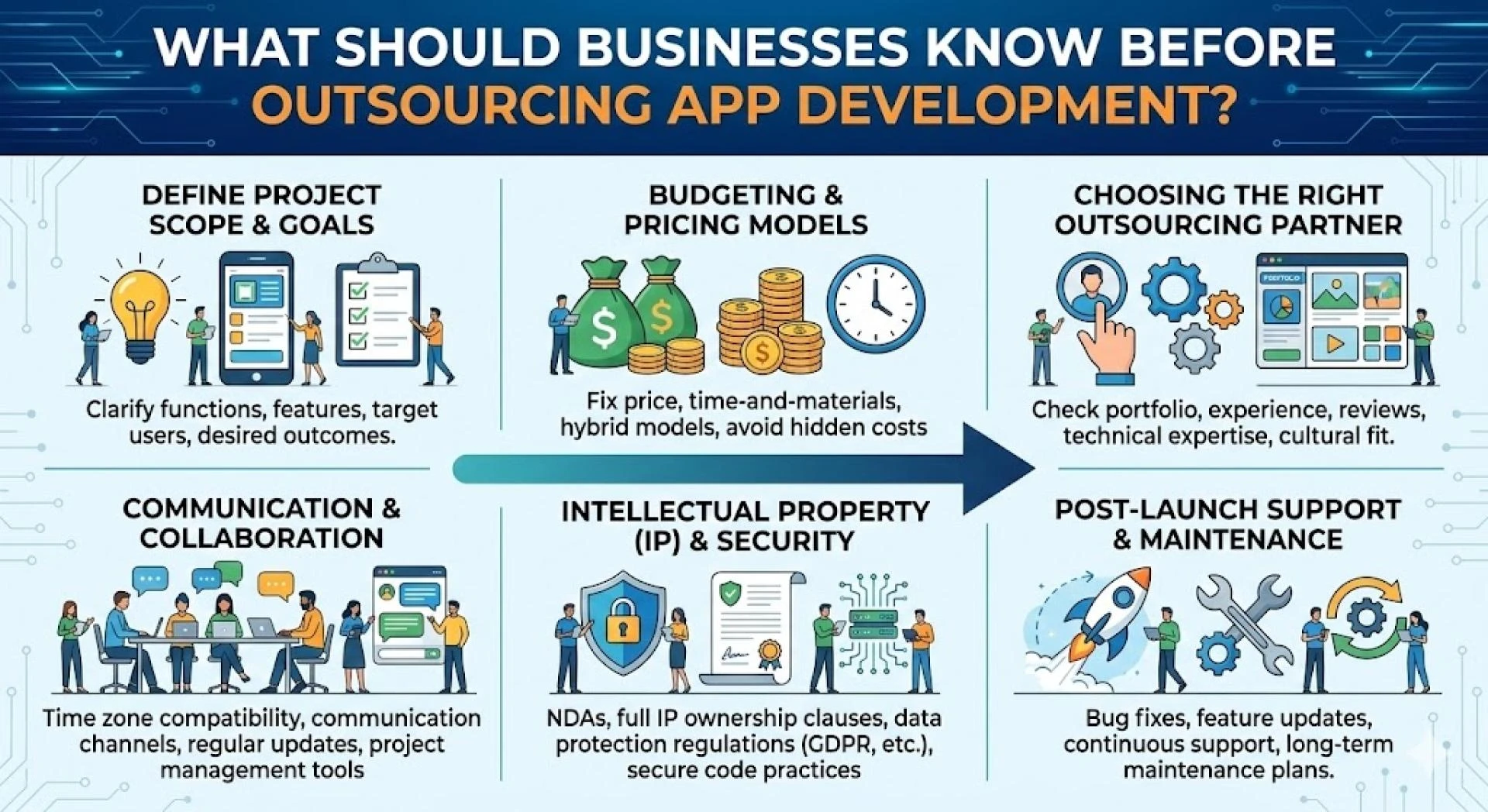
Defining Clear Project Requirements
Outsourcing projects often fail due to unclear requirements. Using professional white label application development, businesses need a well-documented plan to ensure clarity, reduce risks, and achieve successful outcomes.
Key elements to define:
- Project objectives and goals
- Target audience and user personas
- Core features and functionalities
- Platform preferences (iOS, Android, web)
- Budget and timeline constraints
Importance of clarity:
- Reduces miscommunication
- Aligns expectations between stakeholders
- Improves development efficiency
A detailed project scope acts as a blueprint, guiding the entire development process.
Choosing the Right Development Partner
Selecting the right outsourcing partner is one of the most critical decisions.
Factors to check:
- Portfolio and experience: Look for similar projects
- Technical expertise: Ensure skills in required technologies
- Client reviews: Assess credibility and reliability
- Communication skills: Clear and consistent communication is essential
Warning signs to avoid:
- Pricing that is well below market standards.
- Lack of transparency
- Poor responsiveness
A strong development partner does more than complete tasks. They also offer strategic insights to enhance your product.
Role of White Label Application Development
Many businesses consider white-label application development as part of their outsourcing strategy. This method uses ready-made apps. You can customize and brand them to fit your business needs.
Benefits of this approach:
- Faster deployment
- Reduced development costs
- Proven frameworks and functionalities
Limitations to consider:
- Limited customization flexibility
- Dependency on third-party providers
- Potential scalability constraints
This model is perfect for startups or businesses. It helps them enter the market with speed and minimal investment.
Communication and Collaboration Challenges
Effective communication is often the biggest challenge in outsourcing.
Common issues include:
- Time zone differences
- Language barriers
- Misaligned expectations
Best practices for effective communication:
- Use collaboration tools like Slack, Jira, or Trello
- Schedule regular meetings and updates
- Maintain clear documentation
- Define roles and responsibilities
Strong communication ensures that all stakeholders remain aligned throughout the project lifecycle.
Cost Management and Budget Planning
While outsourcing can reduce costs, poor financial planning can lead to unexpected expenses.
Factors influencing cost:
- Project complexity
- Developer expertise
- Geographic location of the team
- Duration of the project
Cost control strategies:
- Define the project scope with precision.
- Avoid frequent changes in requirements.
- Choose the appropriate pricing model (fixed vs. hourly).
Proper budgeting helps businesses avoid financial strain and ensures smoother project execution.
Ensuring Quality Assurance and Testing
Quality is a critical factor in app development. A poorly developed app can harm brand reputation and reduce user trust.
Key quality considerations:
- Performance and speed
- User experience (UX/UI)
- Bug-free functionality
- Compatibility across devices
Best practices:
- Install continuous testing
- Conduct usability testing
- Request regular demos and updates
Quality assurance needs to be part of the entire development process. It shouldn't be a final step.
Data Security and Confidentiality
Outsourcing often involves sharing sensitive data, making security a top priority.
Potential risks:
- Data breaches
- Intellectual property theft
- Unauthorized access
Security measures:
- Sign Non-Disclosure Agreements (NDAs)
- Use secure communication channels
- Install access control systems
Ensuring data security builds trust and protects business interests.
Scalability and Future-Proofing
An app should not only meet current needs but also adapt to future growth.
Important considerations:
- Ability to handle increased user traffic
- Flexibility to add new features
- Integration with emerging technologies
Why scalability matters:
- Reduces long-term costs
- Supports business expansion
- Enhances user experience over time
Planning for scalability ensures that your app remains relevant and competitive.
Post-Launch Support and Maintenance
Launching the app is only the beginning. Continuous maintenance is essential for long-term success.
Key aspects include:
- Bug fixes and updates
- Performance optimization
- Security patches
- Feature enhancements
Questions to ask your partner:
- Do they offer ongoing support?
- What are the maintenance costs?
- How fast do they respond to issues?
Reliable post-launch support ensures smooth operation and user satisfaction.
Legal and Contractual Considerations
A well-structured contract is crucial for outsourcing.
Important components:
- Scope of work
- Payment terms
- Intellectual property rights
- Delivery timelines
Benefits of clear contracts:
- Prevent disputes
- Ensure accountability
- Protect both parties
Legal clarity minimizes risks and ensures a professional working relationship.
Common Challenges and How to Overcome Them
Outsourcing has its challenges, but you can handle them well.
Common challenges:
- Communication gaps
- Delayed timelines
- Quality inconsistencies
- Cultural differences
Solutions:
- Establish clear communication channels
- Set realistic deadlines
- Check progress regularly
- Build strong relationships with the team
Proactive management is key to overcoming these obstacles.
Emerging Trends in Outsourcing App Development
The outsourcing landscape is changing rapidly. This is due to new technologies and methods.
Key trends in 2026:
- AI-assisted development
- Growth of low-code and no-code platforms
- Increased focus on cybersecurity
- Expansion of remote development teams
Impact on businesses:
- Faster development cycles
- Reduced technical barriers
- Improved efficiency
Staying updated with these trends helps businesses remain competitive and innovative.
Strategic Considerations Before Outsourcing
Before making the final decision, businesses should test their long-term strategy.
Key questions to ask:
- Is outsourcing aligned with business goals?
- What level of control must we have?
- How will we manage communication?
- What are the risks involved?
Answering these questions helps make informed decisions and set realistic expectations.
Conclusion
Outsourcing app development is a smart move. It helps businesses create excellent apps with speed and simplicity. It provides many benefits. These include cost savings, access to global expertise, and a quicker time to market. Yet, success depends on careful planning, clear communication, and choosing the right partner.
Grasping key points is important. Focus on project needs, development models, security, scalability, and support. This helps businesses avoid mistakes. This knowledge leads to achieving their goals. Choosing custom or white-label app development can change your product's success. Each option has a big impact.
Outsourcing is more than cutting costs. It’s about finding the right experts. This helps you create apps that are easy to use and can grow with your needs. This supports lasting business growth.






















Sign in to leave a comment.