

I’ve spent twenty years in the Canadian telecom trenches. I have watched CEOs lose sleep over dropped calls during million-dollar acquisitions because they went with the "cheapest" option. This guide isn't here to hold your hand. It’s here to give you the forensic truth about what works in the Great White North right now.
What is a PBX Telephone System in 2026?
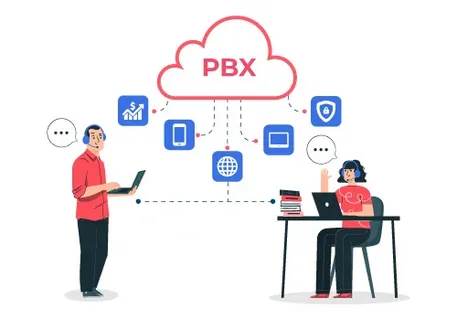
Modern PBX is about Unified Communications as a Service (UCaaS). It is the integration of voice, video, messaging, and AI-driven analytics into one dashboard. For a Canadian CXO, this means your team in Vancouver can seamlessly transfer a call to an agent in Halifax, while the system automatically logs the transcript into your Salesforce or HubSpot CRM.
The 2026 Evolution: Beyond Dial Tones
Two years ago, we talked about "cloud migration." Today, we talk about Cognitive Communications.
- AI Voice Agents: These aren't the robotic IVRs that make you scream "representative" into the receiver. They are sophisticated LLM-powered interfaces that handle tier-1 support autonomously.
- 5G Integration: Modern PBX systems now leverage Canada's expanded 5G infrastructure to ensure that mobile softphones have the same Quality of Service (QoS) as a wired desk phone.
- PIPEDA Compliance: Every byte of voice data must stay compliant with the Office of the Privacy Commissioner of Canada. If your provider stores call recordings in a server farm in a jurisdiction with lax privacy laws, you are liable.
The Forensic Checklist for CXOs
If you’re the person signing the check, you shouldn't care about "cool features." You should care about ROI, security, and employee productivity. Here is what I demand from the best cloud pbx provider in Canada before I even look at their sales deck.
1. Data Residency and PIPEDA
The Personal Information Protection and Electronic Documents Act (PIPEDA) is the law of the land. In 2026, hackers target voice data for "vishing" (voice phishing). If your call recordings sit on a server in a country without strict privacy laws, you’re asking for a lawsuit.
Expert Tip: Ask for a written guarantee that your data stays within Canadian borders. If they hesitate, walk away.
2. The ROI of "Softphones"
Physical desk phones are becoming museum pieces. Your workforce is hybrid. A proper pbx telephone system must have a world-class mobile and desktop app. This eliminates hardware costs (CapEx) and moves everything to a predictable monthly subscription (OpEx).
3. CRM Integration is Non-Negotiable
Your phone system should not be an island. It must talk to your business tools. When a client calls, their entire purchase history should pop up on the screen before your agent even says "hello." This isn't magic; it’s an API integration.
Implementation Roadmap: The No-Downtime Transition
I’ve seen "simple" migrations turn into three-day outages because of poor planning. Here is my proven roadmap for a seamless switch to a business pbx phone system.
Phase 1: The Site Audit
Check your bandwidth. A cloud PBX needs about 100kbps per concurrent call. If your office internet is struggling with just emails, it will choke on 20 high-def voice calls.
Phase 2: Number Porting
Don't lose your business identity. Ensure your new provider has a dedicated porting team. In Canada, this can take anywhere from 3 to 10 business days. Do not cancel your old service until the new numbers are live.
Phase 3: Auto-Attendant Logic
Visual dial plans are your friend. Map out the caller journey. "Press 1 for Sales, 2 for Support." Keep it simple. Nobody wants to navigate a seven-level menu just to find out your office hours.
FAQ: What Business Owners Ask Me in 2026
Q: Can I keep my old analog phones?
A: Yes, using an ATA (Analog Telephone Adapter). But honestly? It’s like putting a lawnmower engine in a Tesla. You lose 90% of the features that make a modern system worth the investment.
Q: Is "Cloud PBX" safer than "On-Premise"?
A: In 99% of cases, yes. Unless you have a dedicated 24/7 cybersecurity team in your office, providers like CanComCo have far better encryption and redundancy than your local server room.
Q: What about emergency services (E911)?
A: This is critical. In Canada, you must register a physical address for every VoIP user. If an employee calls 911 from their home office, the responders need to know where they are, not where your headquarters is located.
The Verdict: Why the "Wait and See" Approach is Failing
The world isn't slowing down. Your competitors are already using AI to analyze customer sentiment on every call. They are using automated follow-ups to close leads while your team is still trying to figure out how to transfer a call without hanging up.
A pbx telephone system is no longer a utility. It is a competitive advantage. You need a partner that understands the specific nuances of the Canadian market, from the regulatory hurdles to the geographical sprawl.
If you are ready to stop wasting money on outdated hardware and start scaling your communications, you need a solution built for Canada. CanComCo provides the reliability, security, and local expertise that Canadian CXOs demand in 2026.
Stop settling for dial tones. Start building a communication strategy that actually drives your business forward.
























Sign in to leave a comment.