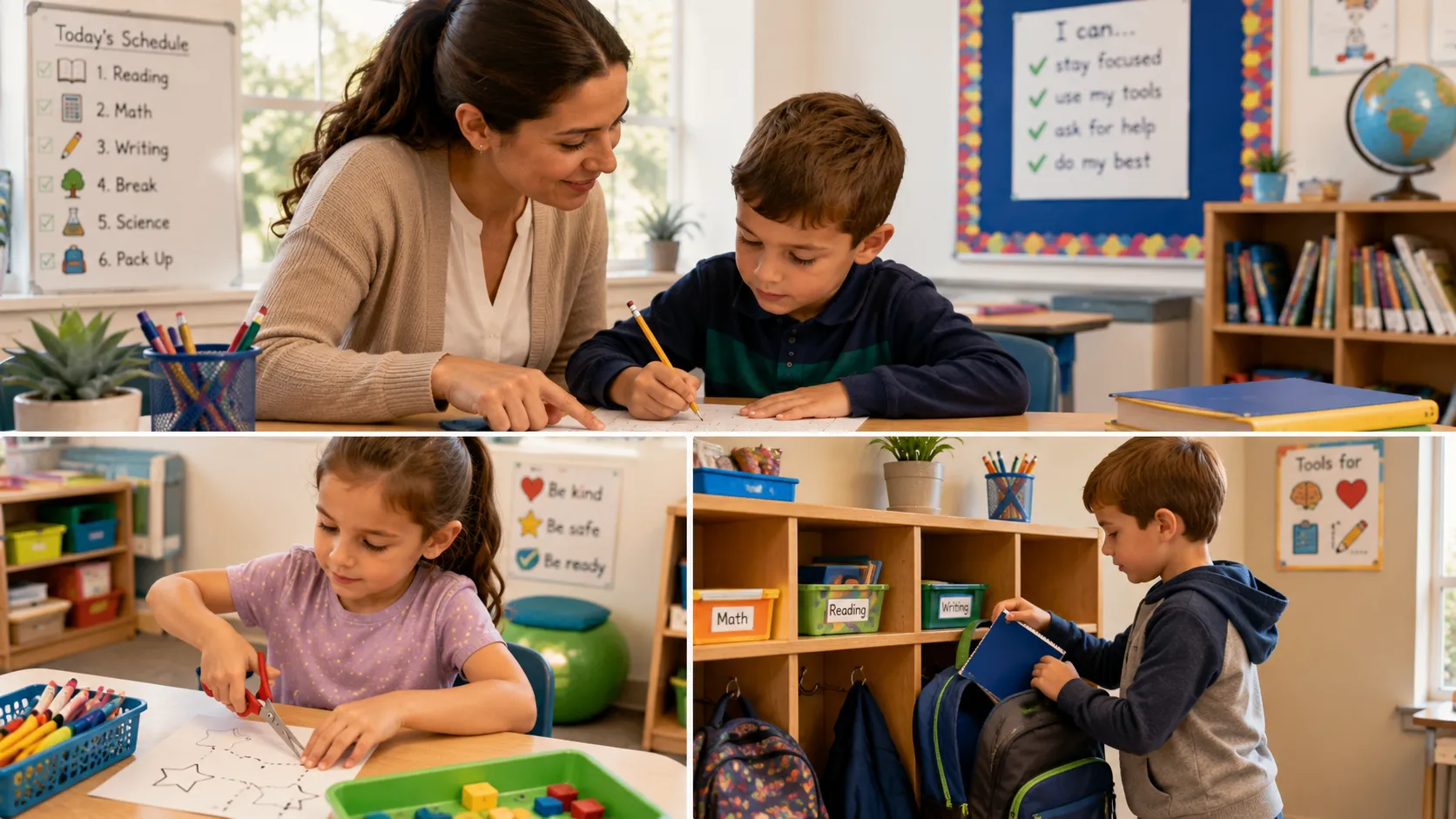

A child can understand a lesson and still struggle to show what they know. Writing may take so much effort that ideas disappear before reaching the page. Noise, visual distractions, transitions, or the physical demands of classroom tools may also interfere with learning.
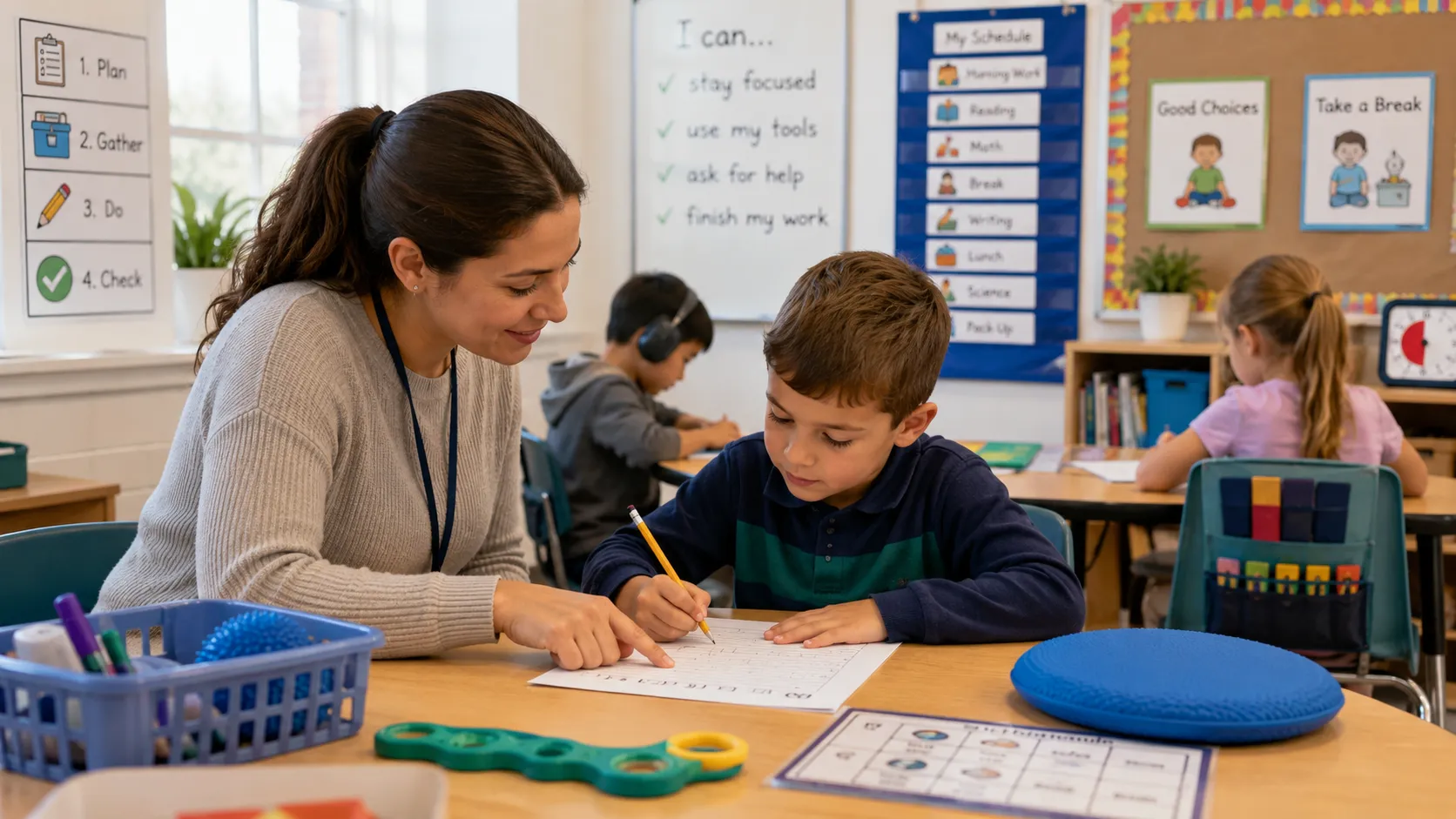
Pediatric Occupational Therapy Schooling examines the abilities children use throughout the school day. It identifies barriers, teaches useful strategies, and gradually reduces adult help. When intervention reflects real classroom demands, children can participate with greater confidence and independence.
What Independence at School Really Means
Independence does not mean never asking for help. An independent learner can recognize a problem, select a strategy, request appropriate support, and return to the task. Depending on age, this may include unpacking a backpack, following a schedule, organizing materials, starting assignments, producing written work, or transitioning between activities.
Occupational therapy focuses on participation rather than isolated performance. A student may form letters correctly but write slowly because of poor endurance. Another may rush when the room becomes noisy. Looking at the child, task, and environment together helps explain the difficulty.
School-based occupational therapy practitioners collaborate with educators and support goals connected to students’ access to and participation in their educational programs.
How Pediatric Occupational Therapy Schooling Finds Learning Barriers
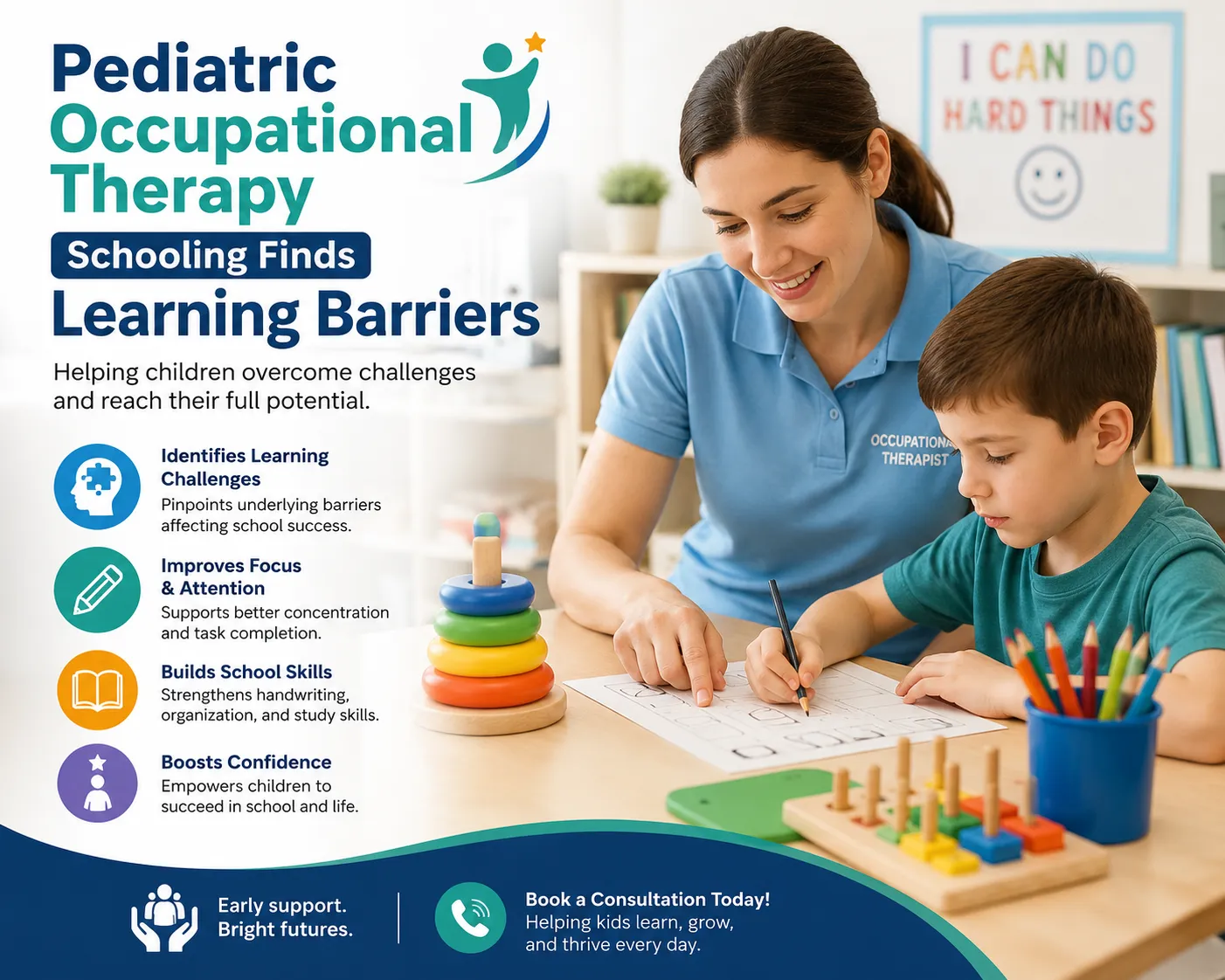
A useful evaluation asks what happens before, during, and after a challenging activity. Does the child avoid writing before touching the pencil? Do they lose their place while copying? Are they unsure how to begin? Does frustration increase during busy parts of the day?
The therapist may examine posture, hand use, visual-motor skills, motor planning, sensory responses, attention, work pace, and self-regulation. Work samples and classroom observations can reveal patterns that may not appear in a quiet therapy room.
Families exploring occupational therapy schools san diego resources should look for recommendations that connect findings to daily routines. “Improve focus” is too broad. A helpful plan explains what support to use, when to use it, and how adults will know whether it works.
Making Handwriting More Functional
Handwriting combines posture, shoulder stability, hand control, visual attention, letter knowledge, spacing, motor memory, and idea organization. Difficulty in one area can make written work slow, tiring, or hard to read.
Therapy may address pencil control, letter formation, spacing, sizing, copying, paper position, fluency, and use of the assisting hand. Adapted paper, keyboarding, shorter writing periods, or reduced copying may also help a child demonstrate knowledge more accurately.
The American Occupational Therapy Association reports strong evidence for therapeutic handwriting practice and emphasizes practicing the actual writing task rather than relying only on unrelated component activities.
The goal is functional communication. As letter production becomes more efficient, the child can direct more attention toward spelling, sentence construction, and ideas.
Fine Motor Skills for Classroom Participation
Fine motor skills affect cutting, turning pages, using math tools, opening packages, managing fasteners, and organizing small materials. Poor dexterity or weak coordination may cause slow work, avoidance, or dependence on adults.
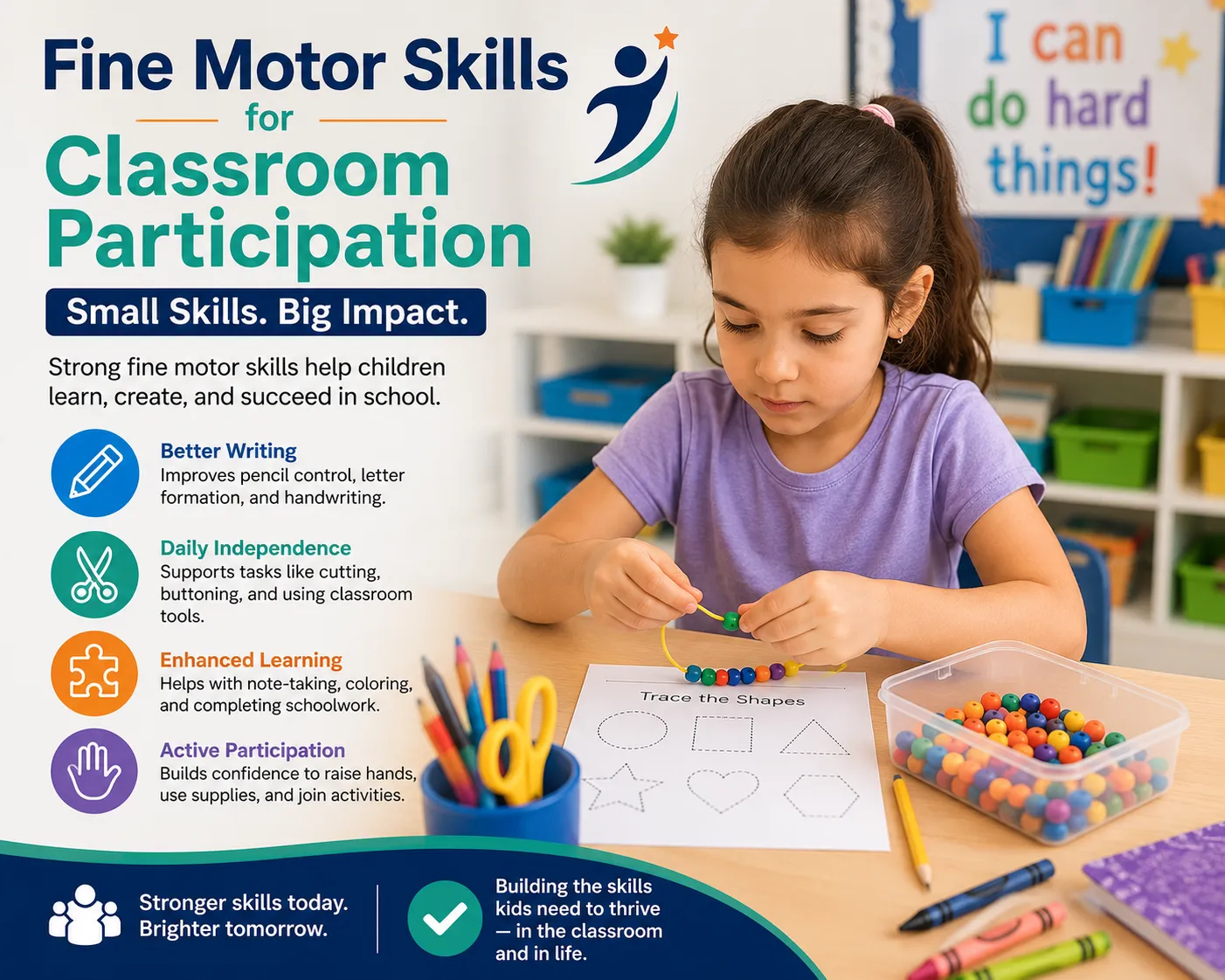
Pediatric Occupational Therapy Schooling develops these abilities through purposeful activities related to the child’s school needs. Construction tasks may strengthen the hands, crafts may support cutting and sequencing, and games may build finger control. However, preparatory exercises should lead back to meaningful tasks. A child working on hand strength also needs opportunities to use scissors, manage a ruler, or sustain a pencil during realistic activities.
Clear connections between therapy and classroom function make practice easier for teachers and parents to reinforce.
Sensory Regulation and Readiness to Learn
Children learn more efficiently when their level of alertness matches the task. Some become distracted by conversation, lighting, touch, or movement. Others seek frequent motion, chew objects, press too hard, shut down, or leave an overwhelming activity.
Sensory responses should not automatically be treated as misbehavior. Occupational therapy considers how sensory input affects participation and helps the child notice body signals. Strategies may include planned movement, seating changes, a quieter work area, predictable transitions, visual supports, heavy-work activities, or an appropriate calming tool.
Families sometimes use the term sensory motor processing disorder to describe combined sensory-regulation and motor-planning challenges. Individual assessment matters because similar behaviors can have different causes. A movement break may organize one student but overactivate another. Strategies should be chosen from observed needs and reviewed for measurable results.
Building Executive Function Through Routines
A student may have the motor ability to complete an assignment but struggle to start, plan, remember directions, organize materials, or check finished work. These executive-function demands become more complex as children manage longer projects and multiple teachers.
Pediatric Occupational Therapy Schooling can make invisible thinking steps easier to see. A therapist may teach the child to preview the task, gather materials, divide work into steps, estimate time, use a checklist, and review the result. Visual schedules, color-coded folders, timers, and consistent workspace routines can reduce the mental load of getting organized.
Responsibility should transfer gradually. An adult may initially model the routine, then move from verbal prompts to visual cues, and finally allow the student to manage the system. Progress includes both task completion and reduced dependence on prompting.
Turning Therapy Skills Into Classroom Habits
A skill performed once in therapy is not yet an independent habit. Children need repeated opportunities to use strategies across subjects, settings, and levels of stress. Collaboration helps parents, educators, and therapists use consistent language and expectations.
School consultation can include classroom observation, teacher coaching, written recommendations, sensory supports, writing or seating accommodations, and participation in IEP or 504 discussions. The aim is to understand the child in context and provide practical strategies for ordinary school routines.
A child learning a checklist should use it during real morning work. A student using a movement strategy should know when to use it and how to return to classwork. Families comparing “occupational therapy schools san diego” options should ask how recommendations will be communicated.
Recognizing Meaningful Progress
Improvement may appear before it affects grades. A child may start work after one reminder instead of four. Written assignments may become clearer, transitions smoother, or the child may use a regulation strategy before frustration increases.
Pediatric Occupational Therapy Schooling should change as the student develops. A strategy that works in kindergarten may not suit third grade, while a middle-school student may need stronger systems for planning, note-taking, and managing multiple classes. Regular review keeps support relevant and prevents well-intended assistance from creating unnecessary dependence.
How Parents Can Encourage Independence
Home practice does not need to feel like another school day. Use meaningful routines such as packing a backpack, preparing a snack, organizing a workspace, writing a short list, or following steps for a household task. Give the child time to attempt the activity before stepping in.
Questions such as “What is the first step?” encourage problem-solving. Praise persistence, strategy use, and self-advocacy rather than speed. Share repeated struggles so the task, environment, or support can be adjusted.
Consistency is more useful than intensity. A practical strategy used briefly each day often supports better carryover than an occasional long practice session.
Supporting Independent Learners in San Diego
Every child’s path toward independence is different. Effective therapy begins with strengths, meaningful tasks, and the settings where participation becomes difficult. It then creates measurable goals and realistic strategies.
WriteSteps offers one-on-one pediatric occupational therapy and school consultation services in San Diego, addressing handwriting, fine motor development, sensory processing, classroom participation, and collaboration with families and educators. Through WriteSteps, families can receive recommendations designed for their child’s actual routines rather than a generic list of exercises.
When Pediatric Occupational Therapy Schooling is connected to everyday school activities, children learn more than isolated skills. They learn to prepare themselves, choose useful tools, solve problems, communicate needs, and participate with increasing confidence.
Frequently Asked Questions
1. How does an occupational therapist identify the cause of a school difficulty?
The therapist studies the task, environment, work samples, and the child’s response across situations. Testing may be combined with observation and parent or teacher input. Because several systems may contribute, the goal is to identify the barriers that most affect participation and test strategies that create meaningful change.
2. Can therapy help a child who earns good grades but needs constant prompting?
Yes. Grades may hide the effort or adult support required. A child may understand the curriculum while struggling with initiation, organization, writing speed, or regulation. Therapy can introduce systems that reduce prompts. Progress may appear as faster task initiation, improved endurance, or independent use of supports.
3. What is the difference between skill-building and an accommodation?
Skill-building increases an ability, such as forming letters or organizing materials. An accommodation changes how a task is accessed, such as adapted paper, extra time, reduced copying, or a quieter workspace. Many children need both so that skills improve without limiting access to learning.
4. How can sensory strategies fit into a regular classroom?
Useful strategies are brief, predictable, and part of normal routines. Examples include carrying materials, flexible seating, a movement job, a less distracting work area, or a visual transition cue. The therapist should explain when to use each strategy, and the team should review whether it improves participation.
5. When is a school consultation helpful in addition to clinic therapy?
A consultation may help when therapy gains are not transferring to class, problems occur mainly at school, or teachers need clearer recommendations. It can also support writing, seating, sensory, or organizational decisions. Classroom observation often reveals demands that are difficult to reproduce in a clinic.



























Sign in to leave a comment.