
In pharmaceutical manufacturing, cleanliness is not simply about having a tidy workplace. It is part of the production process itself. Medicines, vaccines, laboratory materials, and other healthcare products may be extremely sensitive to dust, particles, microorganisms, moisture, and changes in the surrounding environment. Even a small amount of unwanted contamination can create serious quality problems.
That is why pharmaceutical facilities use carefully controlled rooms known as cleanrooms. These spaces are designed to limit contamination and maintain specific environmental conditions. But a cleanroom is only as effective as its weakest point. If people, equipment, or materials move through poorly designed openings, contaminants can enter and controlled conditions can be disturbed.
This is where pharmaceutical cleanroom doors become important.
A cleanroom door does much more than provide a way to enter and exit a room. It can help separate different areas, support controlled airflow, reduce unwanted particle movement, and make daily operations safer and more efficient. The right door also needs to withstand frequent use, cleaning, and the demanding conditions found inside pharmaceutical facilities.
Understanding what these doors do and what features matter can make it easier to select the right solution for a new facility, renovation, or production area.
What Are Pharmaceutical Cleanroom Doors?
Pharmaceutical cleanroom doors are specially designed doors used in controlled environments where cleanliness and contamination control are important.
A standard commercial door may work perfectly well in an office or warehouse. A pharmaceutical cleanroom has very different requirements. Doors in these areas may need smooth surfaces, tight seals, durable construction, and designs that make cleaning easier.
Think of a cleanroom like a protected bubble. The room's walls, ceiling, ventilation system, workers, equipment, and doors all have a role in keeping that bubble intact. A poorly suited door can create an unnecessary weak point.
These doors can be installed between cleanrooms and less-controlled spaces, between rooms with different cleanliness requirements, or around areas where products and materials are processed.
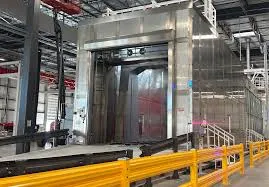
Depending on the application, facilities may use sliding doors, swing doors, high-speed doors, or specialized automated systems.
Why Doors Matter in Pharmaceutical Facilities
It is easy to think of a door as simply a movable panel in a wall. In a pharmaceutical environment, however, every opening can affect the conditions inside the room.
Whenever a door opens, air can move between two areas. People can pass through. Dust particles can travel. Equipment and materials can cross the boundary. The longer the door remains open, the greater the opportunity for unwanted exchange between spaces.
A well-designed door helps make this movement more controlled.
For example, imagine two rooms separated by a doorway. One room has a higher cleanliness requirement than the other. If the door does not close properly, air and particles can move between the rooms more easily. A properly designed cleanroom door can help maintain the separation between those areas.
This does not mean the door alone controls contamination. Air-handling systems, cleaning procedures, personnel practices, filtration, room design, and many other factors are also involved. The door is one part of the overall system.
Key Features of a Good Cleanroom Door
Not every cleanroom application requires the same type of door. However, several characteristics are commonly important when choosing a door for pharmaceutical environments.
Smooth and Easy-to-Clean Surfaces
Cleanroom doors should have surfaces that can be cleaned effectively. Complicated shapes, unnecessary grooves, exposed hardware, or difficult-to-reach areas can make cleaning more challenging.
A smooth door surface is similar to a simple kitchen countertop. If the surface is flat and easy to reach, wiping it down is straightforward. If it contains numerous cracks and complicated corners, cleaning takes more time and may be less effective.
For pharmaceutical applications, this simple principle can be especially valuable because cleaning and sanitation are routine parts of facility operations.
Durable Construction
Pharmaceutical doors may be opened and closed many times each day. They can also be exposed to repeated cleaning and disinfecting.
A door that looks attractive but cannot tolerate constant use may become a maintenance problem. Hinges, seals, handles, tracks, panels, and other components all need to be appropriate for the environment.
Durability is therefore not just about preventing physical damage. It can also help reduce downtime and maintain reliable operation over the useful life of the door.
Effective Sealing
A cleanroom door may need to provide a close-fitting barrier between adjacent spaces. Seals around the door can help limit unwanted air movement when the door is closed.
This becomes particularly relevant when rooms operate under different pressure conditions. In some cleanroom designs, air pressure is managed so that air moves in a preferred direction when doors or other openings are used.
The exact requirements depend on the facility's design and the processes taking place there.
Reliable Closing
A door that stays open when it should be closed can interfere with the separation between controlled areas.
Automatic closing mechanisms can help address this problem. Some systems can be integrated with sensors, access controls, or other building systems so that the door operates according to the facility's workflow.
For busy pharmaceutical facilities, dependable closing can also reduce the need for employees to manually check whether doors have been left open.
Different Types of Cleanroom Doors
There is no single door design that fits every pharmaceutical facility. The appropriate choice depends on room layout, traffic levels, available space, cleaning requirements, and the type of operation taking place.
Swing Doors
Swing doors are familiar and straightforward. They can be suitable for areas where traffic is moderate and there is enough room for the door to move through its opening path.
They can be designed with materials and finishes suitable for controlled environments.
However, the space needed for the door to swing can become an issue in smaller rooms or busy production areas.
Sliding Doors
Sliding doors move horizontally instead of swinging into the room.
This can be useful where floor space is limited. They can also make movement through certain controlled areas more convenient because the door does not require a large clearance zone.
Automatic sliding systems may be particularly useful where employees frequently move between rooms or where hands-free operation is desirable.
High-Speed Doors
High-speed doors are designed to open and close quickly. Their speed can be useful in areas with frequent traffic.
Consider a busy production corridor where employees and materials move through an opening dozens or hundreds of times during a shift. A door that remains open for several seconds every time can create unnecessary exposure between spaces. A faster system can reduce the amount of time the opening remains accessible.
High-speed designs can therefore support workflow as well as environmental control when properly selected and installed.
Automated Doors
Automation can reduce the amount of physical contact required to operate a door. Sensors, switches, access-control systems, and other devices can be used depending on the application.
This can be helpful in pharmaceutical environments where employees may be wearing protective clothing or carrying materials.
Automation should not be viewed simply as a convenience feature. When designed correctly, it can help make door operation more consistent and predictable.
Choosing Materials for Pharmaceutical Applications
The material used to construct a cleanroom door matters because the door must withstand its surroundings.
Some pharmaceutical areas are cleaned frequently with detergents or disinfectants. Others may have special environmental requirements. The selected door materials and finishes should therefore be compatible with the cleaning program and operating conditions.
Stainless steel is commonly associated with pharmaceutical and hygienic environments because of its durability and cleanable surface. Other materials and coated finishes may also be appropriate depending on the application.
The important point is that material selection should be based on the actual environment rather than appearance alone.
A door may look suitable when it is installed, but if its surface deteriorates quickly under repeated cleaning, it can become a long-term maintenance concern.
Doors and Contamination Control
Contamination control is one of the central reasons cleanrooms exist.
Contaminants can come from many sources, including people, raw materials, equipment, packaging, and surrounding spaces. Dust and particles can also become airborne when people move or when equipment operates.
Doors influence how these sources move through a facility.
For instance, a pharmaceutical plant may have different areas for receiving materials, preparing products, manufacturing, packaging, and storage. These spaces may have different cleanliness requirements.
A thoughtfully designed door system can help maintain boundaries between those areas.
Airflow remains a critical part of the picture. Cleanroom ventilation systems are designed to manage air movement and filtration, while doors help maintain physical separation when closed. Neither component should be treated as a replacement for the other.
The Importance of Door Traffic
Before selecting a cleanroom door, facility managers should consider how frequently it will be used.
A door serving a storage room may have relatively little traffic. A door connecting two busy manufacturing areas could operate continuously throughout a shift.
High-traffic openings may benefit from automated or high-speed designs that are built for frequent cycling.
The type of traffic matters as well. Employees walking through a doorway create different requirements from forklifts, carts, production equipment, or large material containers.
Understanding the actual movement pattern can prevent a facility from choosing a door based only on the size of the opening.
Safety Should Be Part of the Design
A cleanroom door must support cleanliness without creating unnecessary safety risks.
Automatic doors, for example, should be designed with appropriate safety features to help prevent people or equipment from being struck or trapped. Sensors and controls can play an important role in this area.
Emergency access and safe exit requirements must also be considered during facility planning.
Another practical concern is visibility. In some locations, windows or vision panels may allow workers to see approaching people or equipment before passing through a doorway.
The correct safety features depend on the door type, location, facility layout, and applicable requirements.
Cleaning and Maintenance Considerations
Even a high-quality door requires routine care.
Cleaning schedules should account for the door surface, frame, seals, hardware, tracks, and other components. Staff should use cleaning products and procedures appropriate for the materials and facility requirements.
Maintenance is equally important.
A damaged seal, misaligned door, worn hardware, or malfunctioning sensor can affect performance. Small problems are often easier to correct before they become major operational issues.
Facilities can benefit from keeping records of inspections, maintenance, repairs, and replacement of wear components. This creates a clearer picture of the door system's condition over time.
How the Right Door Supports Workflow
Cleanroom performance is important, but pharmaceutical facilities also need to operate efficiently.
A door that is difficult to use can slow down employees. If workers must repeatedly stop what they are doing to manually open heavy doors, productivity can suffer.
Likewise, a door that opens too slowly in a busy material-handling area can create unnecessary delays.
The goal is to find a balance between environmental control, durability, safety, and everyday usability.
Newport Company provides specialized door solutions for demanding controlled environments, where the door must work as part of the broader facility design rather than simply function as a basic entrance.
Planning for Installation
Door selection should happen early enough in the facility planning process to account for the surrounding construction.
The opening size, wall construction, ceiling height, available floor space, electrical requirements, traffic pattern, and nearby equipment can all affect installation.
It is also important to consider how the door will be serviced after installation. A design that performs well but is extremely difficult to access for maintenance may create unnecessary downtime later.
Working with experienced professionals can help identify these considerations before construction or renovation reaches an advanced stage.
Common Mistakes to Avoid
One common mistake is choosing a cleanroom door based solely on its appearance.
A door may look sleek and modern but still be unsuitable for heavy traffic or frequent sanitation.
Another mistake is overlooking the surrounding workflow. A door designed for occasional pedestrian traffic may not be appropriate for an opening used constantly by carts and equipment.
Ignoring maintenance is another potential problem. Facilities should think about replacement parts, inspections, cleaning procedures, and service access before installation.
Finally, it is important not to treat the door as an isolated component. The best results come from considering the door alongside airflow, room classification, pressure relationships, personnel movement, material movement, and sanitation procedures.
Benefits of Investing in the Right Door System
The right pharmaceutical cleanroom doors can contribute to several aspects of facility operation.
They can help maintain separation between controlled spaces, support cleaning practices, handle repeated traffic, and make movement through the facility more predictable.
They can also help reduce operational interruptions when properly matched to the application.
For pharmaceutical manufacturers, these advantages are particularly meaningful because consistency matters. Manufacturing environments are built around controlled processes, and small details can have an impact on how smoothly those processes operate.
A properly selected door is therefore more than a construction component. It becomes part of the facility's contamination-control and workflow strategy.
Final Thoughts
Pharmaceutical manufacturing demands a carefully controlled environment, and every part of that environment has a purpose. Walls, ventilation systems, filtration, cleaning procedures, personnel practices, equipment, and doors all work together to support the required conditions.
Pharmaceutical cleanroom doors play an important role by controlling access between spaces while supporting cleanliness, safety, and efficient movement.
The best choice depends on the facility. A low-traffic laboratory may have different needs from a high-volume manufacturing area. A small room may benefit from a sliding design, while a busy production opening may require a fast, automated solution.
By considering traffic, cleaning, materials, sealing, automation, safety, maintenance, and the overall cleanroom design, facility managers can choose a door system that fits the real demands of the operation.
In a pharmaceutical facility, a door may seem like a small detail. In practice, it can be an important part of keeping controlled areas separated, processes running smoothly, and the facility prepared for the demands of daily production.





























Sign in to leave a comment.