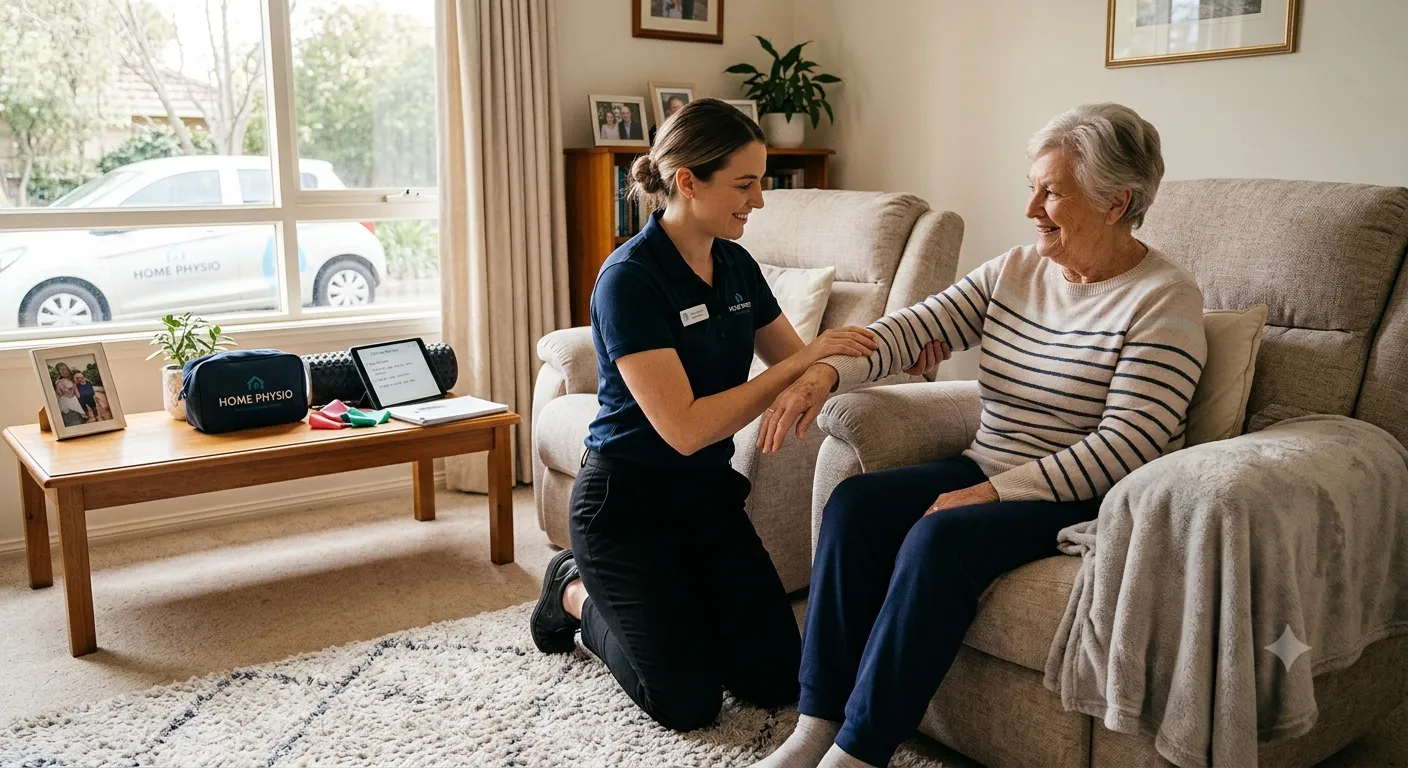

Getting to a clinic three times a week sounds manageable on paper — until pain, mobility limitations, or an unpredictable work schedule make it anything but. For many patients, the effort required to simply reach a physiotherapy appointment becomes its own obstacle to healing.
This article explains how physiotherapy delivered at home addresses that problem directly, what patients can expect from the process, and why consistency in care often matters more than the setting it happens in. It's written for patients and families weighing whether home-based care makes sense for their specific situation.
Why Getting to the Clinic Isn't Always the Easy Part
Consider someone recovering from hip replacement surgery. Sitting in a car for twenty minutes, navigating a parking lot, and then walking into a clinic can undo much of the caution built into their recovery plan. The same holds true for stroke patients managing limited mobility, or elderly individuals for whom a short trip outside becomes a genuine physical undertaking.
This is where physiotherapy at home changes the equation. Instead of the patient adapting their recovery around logistics, the care adapts around the patient.
What Makes Home-Based Physiotherapy Different
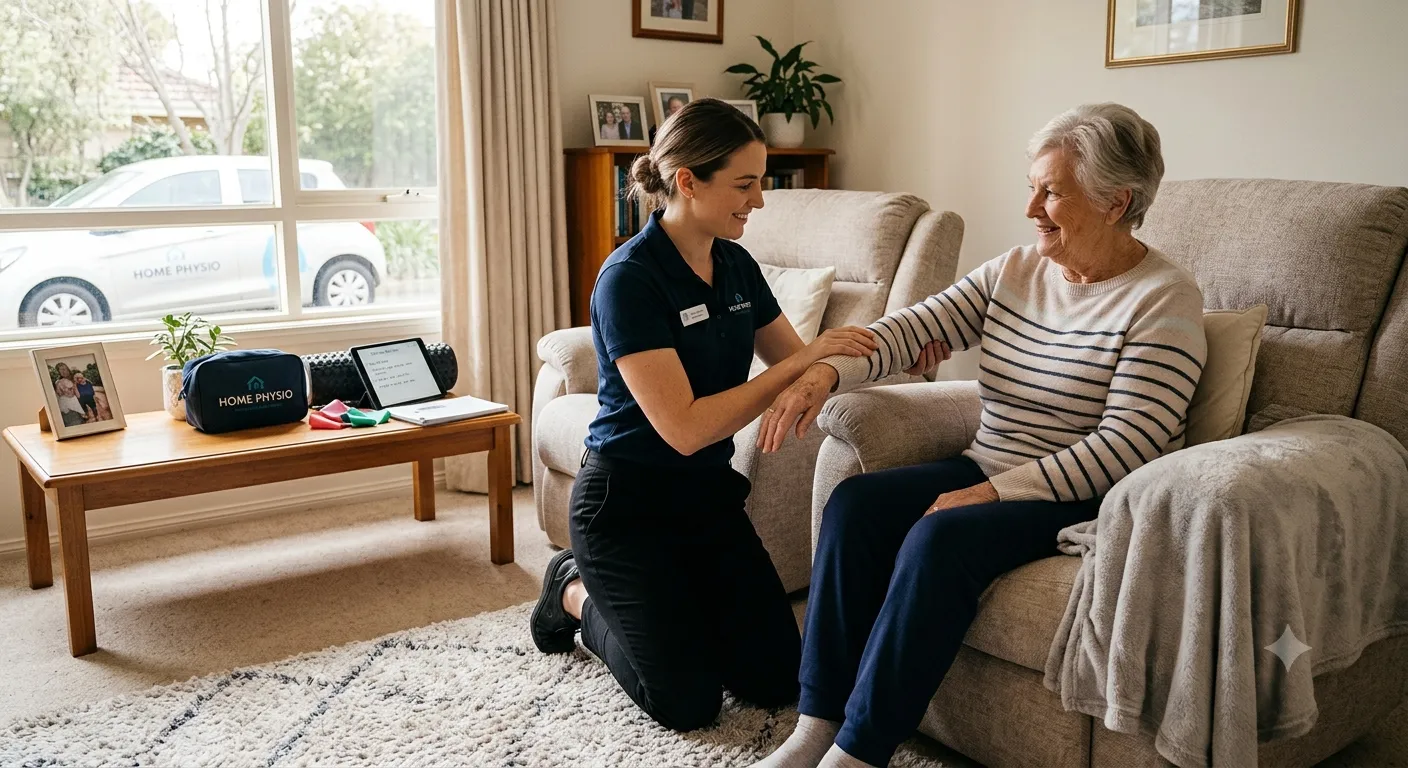
Home visits aren't simply a relocated version of a clinic appointment. The structure, pacing, and attention given to each session tend to look different when a therapist is working within a patient's actual living environment.
Certified Therapists, Verified Credentials
A common hesitation among patients and families involves trust — specifically, uncertainty about who is actually providing treatment. Working with certified, RCI-registered therapists removes that ambiguity. Credentials can be confirmed before a single session begins, rather than assumed.
A Personalized Treatment Plan, Not a Template
Clinic settings, by their nature, often move patients through standardized routines shaped by time constraints and patient volume. A personalized physiotherapy treatment plan, built around a specific diagnosis and home environment, allows for adjustments that a generic clinic session simply isn't designed to accommodate — whether that means modifying exercises for a smaller living space or pacing sessions around a patient's energy levels throughout the day.
One-on-One Attention, Without Distraction
A one-on-one physiotherapy session at home means the therapist's full attention remains with a single patient for the duration of the visit. There's no shared equipment, no overlapping appointments, and no rushing to the next patient waiting in another room.
Scheduling Built Around Real Life
Clinic hours are fixed. Life, particularly during recovery, rarely is. Flexible physiotherapy scheduling allows sessions to be arranged around a patient's actual availability — whether that's early morning before a caregiver leaves for work, or a quieter afternoon slot for an elderly patient who tires easily later in the day.
Addressing What Patients and Families Actually Worry About
Recovery involves more than physical rehabilitation. It often carries a logistical and emotional weight that's easy to underestimate.
- Difficulty traveling to a clinic is removed entirely when sessions take place at home
- Inconsistent treatment, often caused by missed or rescheduled clinic visits, becomes less likely with a therapist committed to a regular home schedule
- Generic, rushed sessions give way to focused, unhurried care tailored to the individual
- Uncertainty about credentials is resolved through verified, RCI-registered professionals
- Family and caregiver logistical burden decreases significantly — no arranging transport, no waiting rooms, no rearranged workdays
- Lack of progress tracking is replaced with structured, visible monitoring across sessions
- Rigid clinic timings are replaced with a schedule shaped around the patient, not the facility
For a family managing an elderly parent's post-surgical recovery, this shift often matters as much as the therapy itself. Removing the transportation burden alone can meaningfully ease the pressure on caregivers juggling their own responsibilities.
Who This Approach Tends to Serve Best
Certain patient groups benefit particularly from in-home rehabilitation services:
- Post-surgery and post-hospitalization patients, especially in early recovery when travel is discouraged
- Elderly patients managing mobility limitations, arthritis, or balance concerns
- Chronic pain sufferers, including those with back pain or joint-related conditions
- Stroke and neurological rehabilitation patients, who often require sustained, long-term therapy
- Sports injury patients looking to rehabilitate without disrupting training or work routines
- Patients recovering from accidents or trauma, where mobility and pain make travel especially difficult
A Practical Look at How It Works
Take a patient recovering from a fractured hip. In a clinic-based model, each visit begins with the physical toll of getting there — before treatment has even started. With certified physiotherapist home care, a therapist arrives at a scheduled time, assesses progress from the previous session, and adjusts the treatment plan accordingly.
Over successive weeks, both the patient and their family can observe tangible changes — improved range of motion, reduced reliance on mobility aids, and a clearer sense of how recovery is progressing. That visibility, often missing in fragmented clinic visits, becomes one of the more reassuring aspects of the process.
Considering the Right Fit for Your Recovery
Choosing between clinic-based and home-based physiotherapy often comes down to a simple question: what does consistency actually look like for this particular patient? For many recovering from surgery, managing chronic pain, or supporting a loved one through rehabilitation, the answer points toward care that meets them where they are.
Those exploring the best physiotherapy at home visit options, or specifically searching for physiotherapy home services in their residential community — whether physiotherapy at home in Jaypee Green, physiotherapy at home in ATS Dolce, physiotherapy at home in ATS Paradiso, or physiotherapy at home in Eldeco Green — can begin by discussing their specific condition and recovery goals with a qualified provider.
Recovery rarely follows a fixed schedule, and the right care shouldn't demand more from a patient than the healing process already does. Reaching out for an initial consultation remains a practical first step toward care that's structured around the patient, not the other way around.



























Sign in to leave a comment.