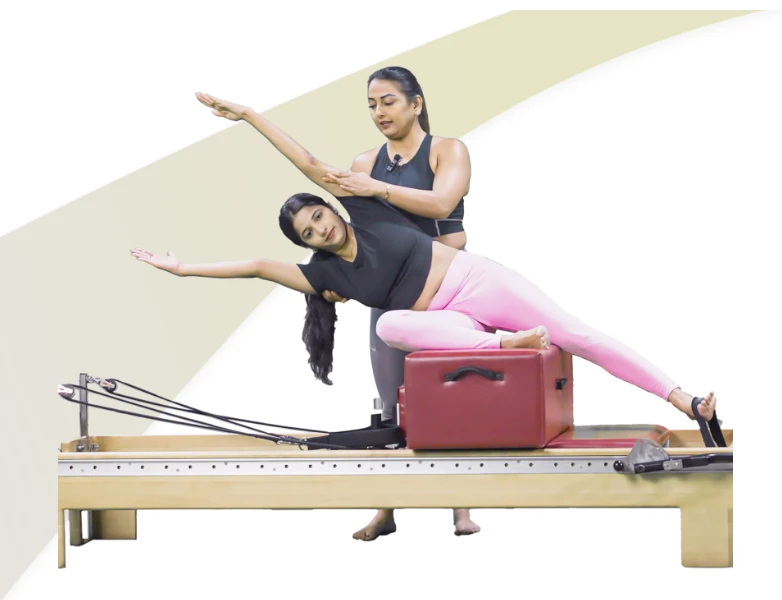

Pilates has evolved far beyond its early 20th-century origins into a sophisticated mind-body workout system that strengthens, tones, and improves posture, flexibility, and core stability. While mat and reformer Pilates remain the most commonly discussed forms, a Pilates bench workout — using a specialized Pilates bench — are gaining traction for their versatility and strength benefits in both studio and home settings.
What Is a Pilates Bench?
A Pilates bench is a stable, padded piece of equipment designed specifically for Pilates methodology. It provides support and resistance options for a wide range of exercises targeting the core, glutes, legs, arms, and back. Unlike a reformer that uses a sliding carriage with springs, a Pilates bench offers a smaller footprint and often integrates adjustable angles or attachments to tailor workouts. Pilates benches are excellent for strength and stability work that bridges mat and reformer practice.
Why Add Bench Workouts to Your Pilates Practice?
1. Full-Body Strength and Stability
Bench workouts allow you to perform exercises that engage multiple muscle groups simultaneously. You can incorporate hip thrusts, glute bridges, split squats, seated core work, and more — all while challenging balance and stability from a supportive base.
2. Scalable for All Fitness Levels
Whether you’re a beginner or an advanced trainee, the bench can be adjusted to make exercises easier or more difficult — for example, by changing seat angles or adding resistance bands.
3. Enhances Pilates Principles
Pilates emphasizes precision, control, breath, and centering. The bench supports these principles by allowing you to isolate and strengthen deeper stabilizing muscles more effectively than some mat exercises alone.
Top Pilates Bench Exercises (Step-by-Step)
Here’s a selection of high-impact bench exercises you can include in your routine:
1. Glute Bridge on Bench
- How: Lie back with shoulders on the bench, feet flat on the floor. Push through heels, lift hips toward the ceiling, and squeeze the glutes.
- Focus: Core, glutes, hamstrings.
2. Seated Twists
- How: Sit on the bench, feet anchored. Extend arms and rotate torso side to side with control.
- Focus: Obliques, spinal mobility.
3. Bench Split Squat
- How: One foot behind on the bench, other foot forward. Lower into a lunge, keeping torso tall.
- Focus: Quadriceps, glutes, balance.
4. Bench Plank Variations
- How: Hands or forearms on bench, feet on floor. Hold plank or push into side planks.
- Focus: Core strength, shoulder stability.
5. Hip Thrust with Band
- How: Add a resistance band above knees for bench hip thrusts to increase lower-body activation.
- Focus: Glutes and hip stabilizers.
How to Structure a Pilates Bench Workout (Example)
Warm-Up (5–7 minutes)
- Deep breathing + pelvic tilts
- Gentle hip openers
Main Circuit (20–25 minutes)
- Glute Bridge – 3 sets of 12
- Seated Twists – 2 sets of 15 each side
- Split Squats – 3 sets of 10 each leg
- Bench Plank – 2 rounds of 45 seconds
- Hip Thrust with Band – 3 sets of 15
Cool-Down (5 minutes)
- Hamstring stretch
- Spinal mobility roll-downs
How Bench Workouts Compare With Other Pilates Equipment
Pilates practitioners often choose between bench, reformer, chair, or mat work — and each has unique benefits:
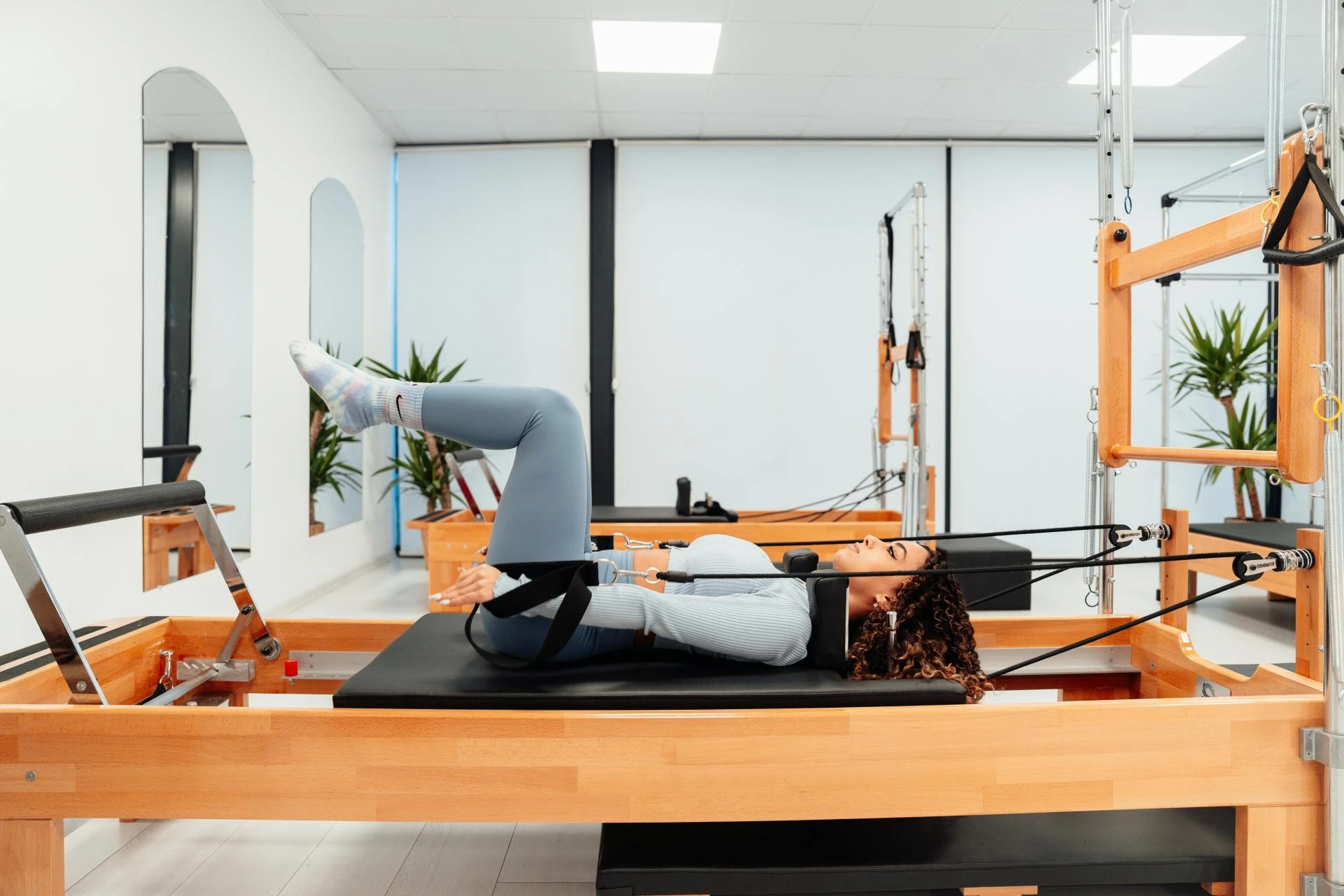
- Bench vs. Reformers: Reformers offer spring-based resistance and dynamic movement, which can improve coordination and agility more intensely than benches. However, bench workouts are easier to access and often simpler for beginners.
- Bench vs. Mat Pilates: Bench workouts add a level of structural support that helps activate deeper muscles with more precision than many mat exercises alone.
- Bench vs. Pilates Chair: The Pilates chair targets stability and smaller muscle groups, while the bench is versatile and excellent for compound movements.
Benefits of Pilates (Including Bench Work)
Pilates — in any form — offers wide-ranging physical and mental benefits:
- Core Strength & postural alignment
- Improved flexibility, balance, coordination
- Lean muscle tone without bulk
- Low-impact, joint-friendly movement
- Enhanced body awareness and mind-body control
Who Should Try Pilates Bench Workouts?
Bench workouts are especially helpful for:
- Anyone looking to progress beyond mat workouts
- Those with limited space or no access to a reformer
- People recovering from some injuries (with proper guidance)
- Fitness enthusiasts wanting a balanced strength and mobility routine
Before beginning any new regimen — especially equipment-based — consulting a Pilates instructor or fitness professional ensures safety and proper form.



















Sign in to leave a comment.