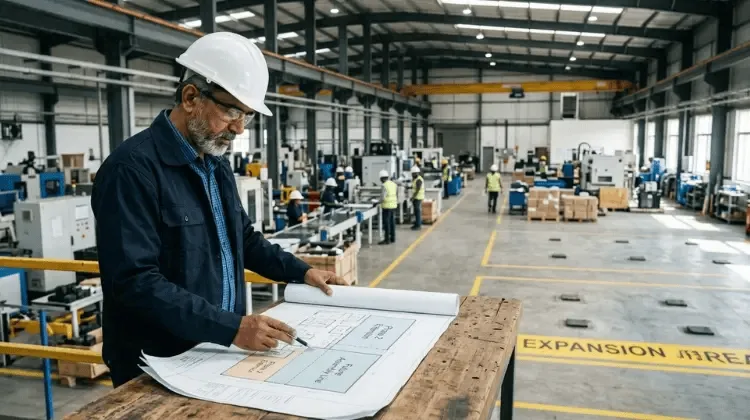


Material handling can become increasingly important as manufacturing operations grow. Many factories use overhead cranes, hoists, or similar systems to move heavy components, machinery, raw materials, and finished products. If these systems may be required now or in the future, crane requirements should be discussed before factory construction.
Gsf Industries understands that material-handling requirements can influence industrial building design. Overhead crane systems are not simply equipment added to an empty building. Their loads, supporting structures, runway arrangements, operating clearances, and movement areas can affect the overall structural design.
Manufacturers should begin by identifying what materials need to be lifted and moved. The weight and dimensions of components can help determine the required crane capacity. The frequency of lifting operations and the areas where cranes will operate are also important.
Clearance is another consideration. A crane system needs adequate space to operate without interfering with the roof structure, machinery, lighting, ventilation systems, or other building components. Future machinery should also be considered where possible.
The building's structural system needs to accommodate the loads associated with crane operation. If a manufacturer expects to install an overhead crane in the future, that requirement should be communicated during the initial engineering stage. Trying to add crane provisions later can involve structural modifications that may disrupt existing operations.
Column spacing can also affect crane movement. The building should provide an arrangement that supports the intended crane runway and production areas. If columns or structural members interfere with the planned lifting path, material handling may become less efficient.
Future production expansion adds another layer to the planning process. A factory may begin with one production area and later add machinery or extend the building. If crane requirements are expected to change, future operating areas should be considered during the initial planning process.
A PEB manufacturer in India can evaluate structural and operational requirements when designing a pre-engineered building. Manufacturers should provide information about crane capacity, runway requirements, lifting zones, clearances, equipment dimensions, and potential future requirements.
The relationship between cranes and production flow is also important. Heavy materials may need to move from receiving areas to production lines and then toward storage or dispatch. A properly planned crane system can support this movement while reducing unnecessary handling.
Safety and maintenance access should also be considered. Crane systems require inspection and maintenance, so the building should provide practical access to relevant equipment and structural components.
Factory expansion should not be viewed only as adding more floor space. New production areas may also require additional material-handling capabilities. Planning these systems together can help avoid operational limitations later.
Manufacturers do not need to install every future crane on day one. Instead, they can communicate likely future requirements and evaluate whether structural and layout provisions should be incorporated into the original building.
This approach allows the factory to remain practical for current operations while providing options for future growth. By considering crane loads, structural support, clearance, column spacing, production flow, and possible expansion before construction, manufacturers can create a facility that is better prepared for changing material-handling needs.
Read More: How to Plan a Factory Building for Future Production Expansion?























Sign in to leave a comment.