

Key Takeaways:
- Start your ESA letter process 45-60 days before moving to California to meet AB 468's 30-day therapeutic relationship requirement
- Out-of-state ESA letters don't meet California's AB 468 standards and won't be accepted by California landlords
- California-licensed mental health professionals only can issue valid ESA documentation under AB 468
- Telehealth appointments count toward the 30-day relationship requirement
- Minimum two consultations required over at least 30 days to establish legitimate therapeutic relationship
Why California's AB 468 Requires Advance Planning for Relocating ESA Owners
California Assembly Bill 468, which took effect on January 1, 2022, fundamentally changed how emotional support animal documentation works in the state. For individuals planning to relocate to California with an ESA, understanding AB 468's requirements is essential to avoid housing complications upon arrival.
AB 468 mandates that healthcare providers establish a therapeutic relationship with a client for at least 30 days before issuing ESA documentation. This requirement cannot be waived, shortened, or circumvented, regardless of your circumstances. For people moving to California, this means you cannot obtain valid California ESA documentation the week before your move or even the day you arrive in the state. Anyone searching for best site for emotional support animal letter while planning a California move must understand this critical timeline.
The law applies to all California housing situations, from apartments and condos to single-family rentals and student housing. Landlords throughout California now expect ESA documentation that demonstrates compliance with AB 468's 30-day rule. Out-of-state letters, even if legitimate in their state of origin, do not satisfy California's specific requirements.
According to California Civil Code § 54.2, the therapeutic relationship must involve actual clinical services, not merely scheduling an appointment and waiting for time to pass. This means at least two separate consultations over a minimum 30-day period, with genuine mental health evaluation and treatment occurring throughout.
Understanding California's 30-Day Rule
California's 30-day therapeutic relationship requirement under AB 468 establishes specific standards that healthcare providers must meet before certifying an individual's need for an emotional support animal. This rule directly addresses the proliferation of fraudulent ESA letter mills that previously issued documentation without meaningful clinical evaluation.
The 30-day requirement means a California-licensed mental health professional must provide clinical services to you for at least 30 consecutive days before issuing ESA documentation. During this period, the provider must conduct an initial evaluation, provide ongoing care or treatment, and develop sufficient clinical knowledge of your mental health condition to make an informed determination about whether an ESA would provide therapeutic benefit.
The therapeutic relationship must be documented and verifiable. California landlords can request confirmation that the 30-day relationship was established, and healthcare providers must be able to demonstrate compliance if questioned. Providers who violate AB 468's requirements face professional disciplinary action, including potential license suspension or revocation.
For relocating individuals, the 30-day rule creates a timeline challenge. You cannot wait until after you move to California to start the process, because you will not have valid documentation by your move-in date. Instead, you must establish care with a California-licensed provider before relocating, even while you still live in another state. Understanding California AB 468 requirements helps avoid documentation gaps during relocation.
Timeline: When to Start Your California ESA Letter Process
For individuals planning to move to California who need an ESA letter for their new housing, the ideal timeline begins 45-60 days before your anticipated move-in date. This buffer period accounts for the mandatory 30-day therapeutic relationship plus additional time for scheduling appointments, completing evaluations, and receiving final documentation.
Recommended Timeline:
60 days before move: Begin researching California-licensed mental health professionals who provide ESA evaluations. Verify they hold active California licenses and understand AB 468 requirements. Schedule your initial consultation as soon as possible.
45-55 days before move: Complete your first clinical consultation with the California-licensed provider. This appointment should involve a comprehensive mental health evaluation where you discuss your condition, treatment history, and how an emotional support animal would provide therapeutic benefit.
30-45 days before move: Participate in at least one follow-up appointment with the same provider. This second consultation demonstrates the ongoing therapeutic relationship required under AB 468. Some providers may schedule additional sessions depending on clinical needs.
15-30 days before move: After the 30-day relationship has been established, your provider can issue ESA documentation that complies with California law. Request the letter and verify it includes all required elements before presenting it to your new California landlord.
Before move-in: Submit your California-compliant ESA letter to your landlord as part of your reasonable accommodation request. Having documentation ready before move-in prevents delays in getting your ESA approved for your new residence.
Starting earlier than 60 days provides even more flexibility and reduces stress during an already complicated relocation process. Resources explaining California ESA timeline help coordinate mental health care with moving logistics.
Finding a California-Licensed Mental Health Professional
AB 468 requires that ESA documentation come from healthcare providers licensed in California. This means psychiatrists, psychologists, licensed clinical social workers (LCSWs), licensed professional clinical counselors (LPCCs), licensed marriage and family therapists (LMFTs), or advanced practice registered nurses (APRNs) who hold active California licenses.
For individuals relocating from other states, finding a California-licensed provider while still living elsewhere presents a challenge. However, telehealth services make this process manageable. California law allows licensed mental health professionals to provide telehealth services to individuals who will become California residents, and these virtual appointments count toward the 30-day therapeutic relationship requirement.
When searching for a California-licensed provider, verify the following:
Active California license: Check the provider's credentials through California's Department of Consumer Affairs online license verification system. Ensure the license is current, active, and not subject to any restrictions or disciplinary actions.
AB 468 compliance: Confirm the provider understands California's 30-day rule and will not issue documentation until the therapeutic relationship has been established for the required period.
Telehealth availability: If you currently live out of state, ensure the provider offers telehealth appointments that California law recognizes as valid for establishing therapeutic relationships.
ESA evaluation experience: Work with providers who regularly conduct ESA evaluations and understand both the clinical standards and legal requirements involved.
Legitimate telehealth platforms connect relocating individuals with California-licensed mental health professionals who conduct compliant evaluations. These services schedule the required appointments over the 30-day period and issue documentation that meets all AB 468 requirements.
Why Out-of-State ESA Letters Don't Meet California Requirements
Many people relocating to California assume their existing ESA letter from their previous state will be accepted by California landlords. This assumption creates significant problems when landlords reject out-of-state documentation based on AB 468 compliance issues.
Out-of-state ESA letters fail California's requirements for several reasons:
Provider licensing: AB 468 requires documentation from California-licensed healthcare providers. A psychologist licensed in Texas, New York, or any other state cannot issue valid California ESA documentation unless they also hold an active California license. The provider's home state license is irrelevant for California housing purposes.
30-day relationship verification: Even if your out-of-state provider established a 30-day relationship, California landlords need documentation that explicitly confirms AB 468 compliance. Out-of-state letters typically don't reference California's specific requirements or provide the verification California law mandates.
Different state standards: Many states have no 30-day rule or have different requirements altogether. A letter that was perfectly valid in your previous state may not meet California's stricter standards. Understanding California ESA laws clarifies why out-of-state documentation is insufficient.
Landlord liability concerns: California landlords face potential penalties for accepting non-compliant ESA documentation. To protect themselves, many housing providers strictly verify that letters meet AB 468 requirements and reject any documentation that doesn't explicitly demonstrate California compliance.
For relocating individuals, this means you cannot simply transfer your existing ESA letter to California. You must obtain new documentation from a California-licensed provider following AB 468's process. The expense and time investment in getting California-compliant documentation is unavoidable for anyone moving to the state with an emotional support animal.
How Telehealth Appointments Qualify for the Relationship Requirement
California law explicitly recognizes telehealth appointments as valid for establishing the therapeutic relationship required under AB 468. This provision is particularly important for individuals relocating from other states who need to begin the ESA letter process before physically moving to California.
Telehealth appointments conducted via video conferencing platforms satisfy AB 468's requirements as long as the provider is California-licensed and the appointments involve genuine clinical evaluation and treatment. The therapeutic relationship established through telehealth carries the same legal weight as in-person appointments for ESA documentation purposes.
To ensure telehealth appointments qualify under AB 468:
Use video conferencing, not just phone calls: California law requires that telehealth appointments for mental health services involve visual interaction, not audio-only communication. Phone consultations typically don't satisfy the therapeutic relationship requirement.
Ensure HIPAA compliance: The telehealth platform must meet healthcare privacy standards. Legitimate providers use secure, encrypted video conferencing systems designed for medical use.
Participate actively in treatment: The appointments must involve actual clinical services such as mental health evaluation, symptom assessment, treatment planning, and therapeutic discussion. Simply appearing on video without meaningful clinical engagement doesn't establish the required relationship.
Complete at least two appointments: AB 468's 30-day rule implies multiple clinical encounters over the required period. Most providers schedule an initial comprehensive evaluation followed by at least one follow-up appointment 30+ days later.
Telehealth appointments allow you to establish the required therapeutic relationship with a California-licensed provider while still living in your current state. This enables you to have California-compliant ESA documentation ready by the time you move, preventing housing complications upon arrival. Resources explaining are online ESA letters legit help identify compliant telehealth services.
Establishing the Therapeutic Relationship: What to Expect
The process of establishing a therapeutic relationship for ESA certification under AB 468 involves multiple steps and genuine clinical engagement. Understanding what to expect helps you participate effectively and ensures the relationship meets California's legal standards.
First Consultation (Day 1): Your initial appointment typically lasts 45-60 minutes and involves a comprehensive mental health evaluation. The provider will ask about your psychiatric history, current symptoms, previous treatments, medications, and how your mental health condition affects your daily life. You'll discuss whether an emotional support animal would provide therapeutic benefit specific to your diagnosed condition.
During this first session, be prepared to honestly describe your mental health challenges and why you believe an ESA would help. The provider needs sufficient clinical information to make a professional determination about whether ESA certification is appropriate for your situation.
Ongoing Period (Days 2-30): The therapeutic relationship continues during the 30-day waiting period. Some providers schedule additional appointments during this time, while others may conduct the required follow-up at the end of the period. The provider must maintain clinical responsibility for your care throughout, even if you don't have appointments every week.
Follow-Up Consultation (Day 30+): After at least 30 days, you'll have a follow-up appointment to reassess your condition and finalize the ESA evaluation. This appointment confirms that the therapeutic relationship has been maintained and allows the provider to make a final determination about issuing ESA documentation.
If the provider determines an ESA is clinically appropriate, they will issue a letter that includes all elements required under California law: provider credentials, confirmation of the 30-day relationship, statement of your disability, and verification that the animal provides therapeutic emotional support. Understanding what does an ESA letter look like helps you verify your documentation is complete.
Coordinating with California Landlords During the Waiting Period
For individuals who have already secured California housing before obtaining ESA documentation, coordinating with landlords during AB 468's 30-day waiting period requires clear communication and realistic expectations.
Timing your accommodation request: If possible, submit your formal reasonable accommodation request for an ESA after you have California-compliant documentation in hand. This prevents landlords from denying requests based on incomplete or non-compliant documentation.
If you must request before documentation is ready: Explain to your landlord that you are in the process of obtaining California-compliant ESA documentation and provide an estimated timeline for when it will be available. California landlords familiar with AB 468 understand the 30-day requirement and may be willing to conditionally approve your request pending receipt of compliant documentation.
Avoid moving in with your ESA before approval: Do not bring your emotional support animal to your California residence until your landlord has approved your reasonable accommodation request. Moving in with an unapproved animal can result in lease violations, eviction proceedings, and damage to your relationship with the landlord.
Provide updates on your progress: Keep your landlord informed about where you are in the process. When you complete your initial consultation, let them know. When the 30-day period is satisfied and you receive your letter, submit it promptly.
Be prepared for verification: California landlords may verify your ESA documentation by contacting your healthcare provider to confirm the letter's authenticity and AB 468 compliance. Ensure your provider is prepared to respond to such verification requests.
Most California landlords are familiar with AB 468's requirements and understand that legitimate ESA documentation takes time to obtain. Resources explaining ESA letter for tenants housing clarify tenant rights and landlord obligations during the accommodation process.
Common Mistakes Relocating Individuals Make
People moving to California with emotional support animals frequently make mistakes that delay their housing accommodations or result in denied requests. Avoiding these common errors ensures a smoother transition.
Mistake 1: Waiting until after the move to start the process. The most common error is assuming you can obtain ESA documentation after arriving in California. By the time you move in, you need documentation ready. Starting the process after relocating creates a minimum 30-day delay before you can have your ESA in your new home.
Mistake 2: Using out-of-state providers. Many relocating individuals continue working with their previous mental health providers and assume those providers can write California ESA letters. Unless your out-of-state provider also holds an active California license, their documentation won't meet AB 468 requirements.
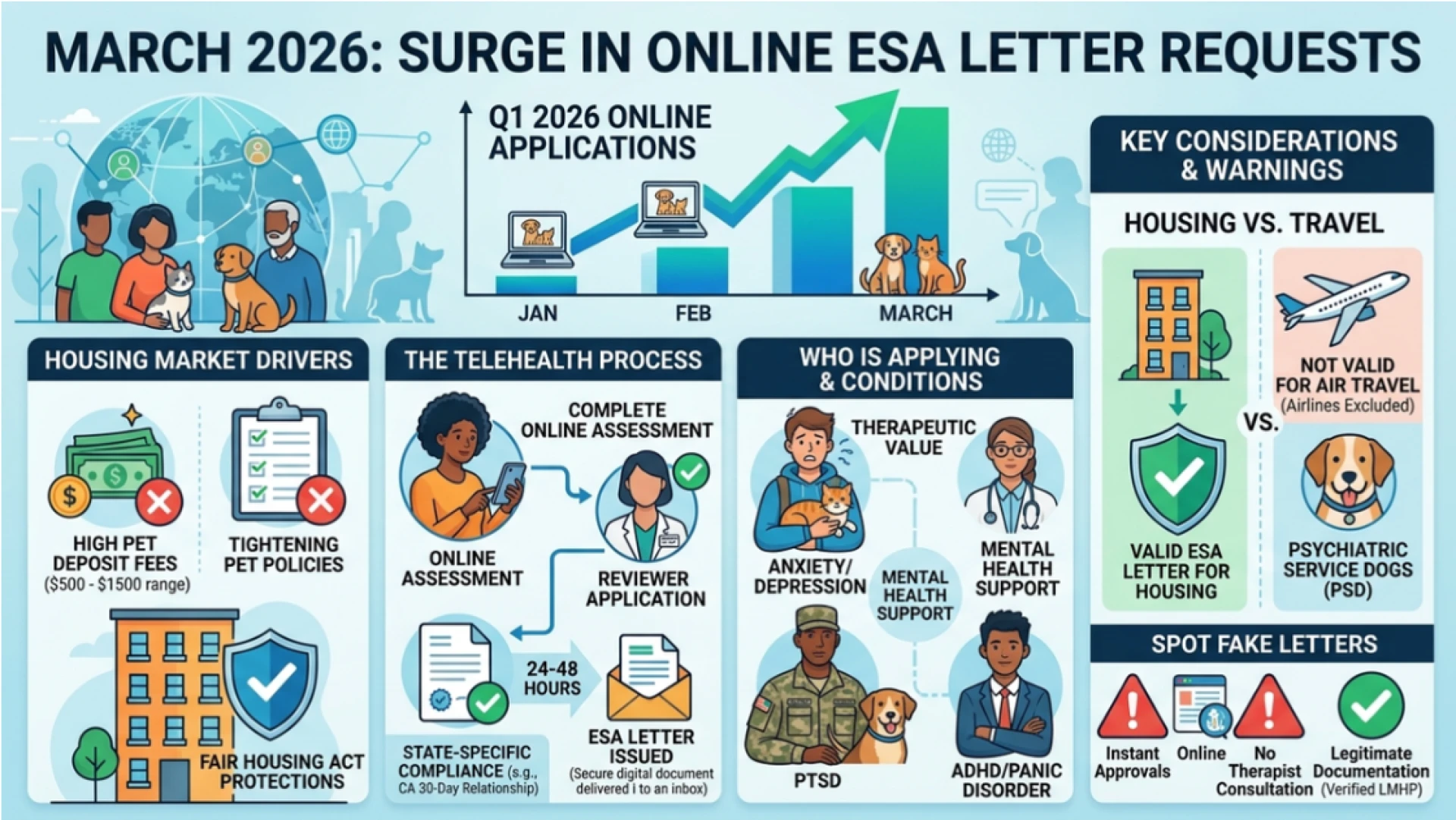
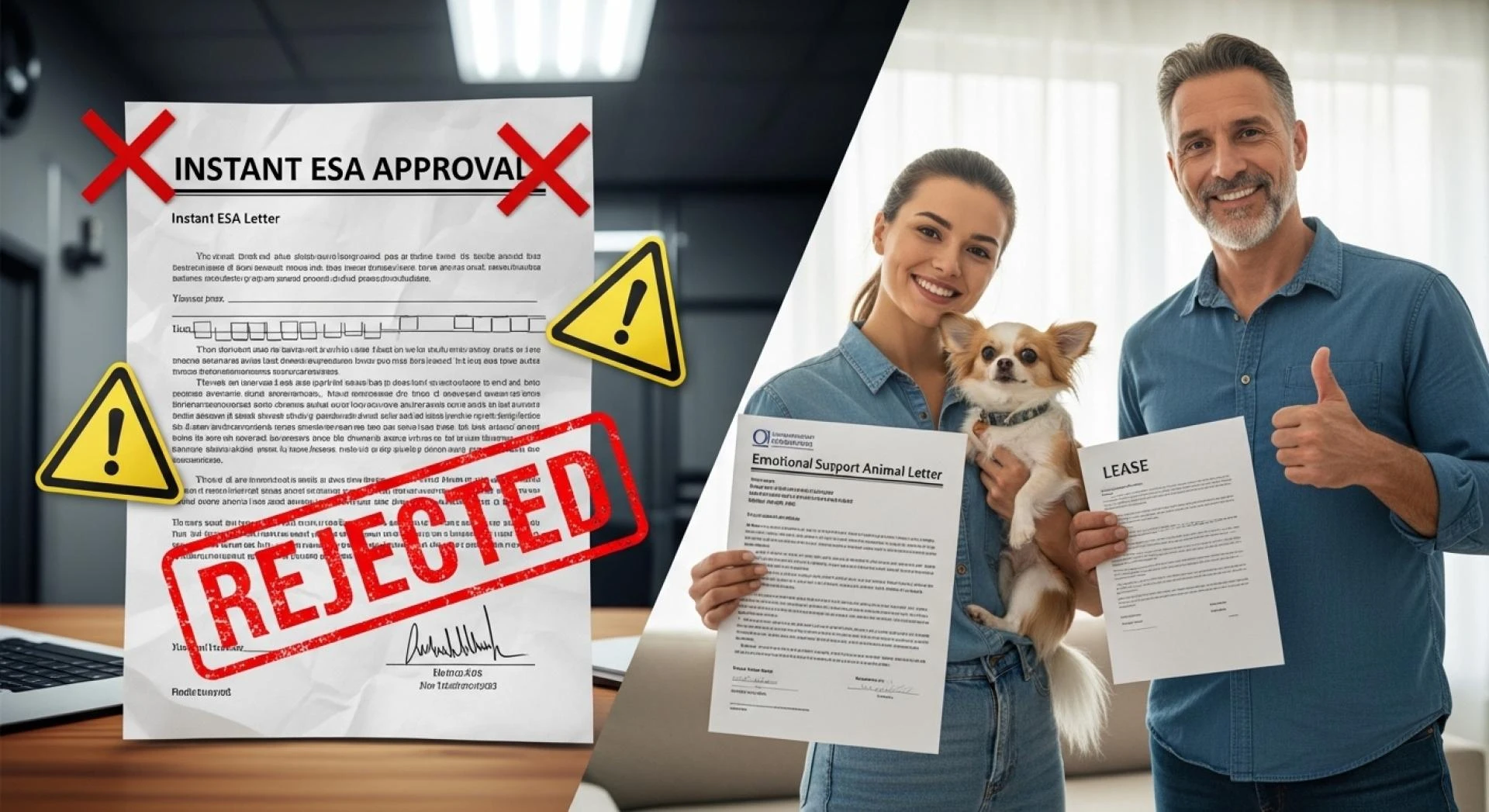
Mistake 3: Relying on instant-letter websites. Commercial websites promising same-day ESA letters violate California law and produce fraudulent documentation. California landlords recognize these services and reject their letters. Understanding cheap ESA letter scam warning signs helps avoid illegitimate providers.
Mistake 4: Bringing the ESA before approval. Moving into California housing with your emotional support animal before receiving landlord approval for your reasonable accommodation violates lease terms and puts your tenancy at risk.
Mistake 5: Incomplete documentation. Some individuals obtain letters that don't include all elements required under AB 468, such as explicit confirmation of the 30-day relationship or proper provider credentials. Incomplete documentation results in denied requests that must be resubmitted with corrected letters.
Mistake 6: Not verifying provider licenses. Always verify that the mental health professional you work with holds an active, unrestricted California license. Check credentials through California's official licensing databases before beginning treatment.
Special Considerations for College Students Moving to California
College students relocating to California for school face unique challenges regarding ESA documentation. University of Michigan ESA Policy 2026 illustrate how universities increasingly enforce strict, state-compliant ESA documentation standards for student housing. Most California universities require students living in campus housing to provide ESA letters that comply with AB 468, and university housing offices verify these requirements carefully.
Students should begin the ESA letter process during summer before fall enrollment, allowing sufficient time to establish the required 30-day therapeutic relationship. Starting in June or early July ensures documentation is ready before move-in day in August or September.
Many universities have specific ESA request procedures beyond simply providing a letter. Students typically must complete accommodation request forms through disability services offices, submit comprehensive documentation, and sometimes participate in additional evaluations by university-appointed healthcare providers. Understanding college ESA letter requirements helps navigate these institutional processes.
Students using campus health services for mental health care should verify whether campus providers are California-licensed and authorized to issue AB 468-compliant ESA documentation. Some university counseling centers issue ESA letters for campus housing but may not provide documentation valid for off-campus apartments.
Out-of-state students should not assume their home-state ESA letters will be accepted by California universities. Campus housing is subject to the same AB 468 requirements as private landlords, and university housing offices consistently reject non-compliant documentation.
Cost Considerations for California ESA Evaluations
Obtaining California-compliant ESA documentation involves professional healthcare costs that relocating individuals should budget for as part of their moving expenses.
Initial consultation: The first comprehensive mental health evaluation typically costs $150-$300, depending on the provider and whether you use insurance. Most ESA evaluation services do not accept insurance for this specific purpose, requiring out-of-pocket payment.
Follow-up appointments: Additional consultations during and after the 30-day period may cost $100-$200 each. The total number of appointments depends on your provider's practice and your clinical needs.
Documentation fees: Some providers charge separate fees for preparing and issuing the ESA letter, typically $50-$150. This covers the time involved in drafting the letter and ensuring it includes all required elements.
Total expected cost: For most individuals, obtaining California-compliant ESA documentation costs $300-$600 total. While this represents a significant expense, it's substantially less than pet deposits, pet rent, and pet fees that California landlords cannot charge for ESAs.
Be wary of services charging exceptionally low prices (under $100 total) or extremely high prices (over $1,000). Both extremes often indicate problematic services—either fraudulent instant-letter mills or exploitative operations taking advantage of desperate individuals.
Understanding California ESA letter cost helps budget appropriately while identifying reasonably priced legitimate providers.
Frequently Asked Questions About Moving to California with an ESA
When should I start the ESA letter process before moving to California?
Start at least 45-60 days before your planned move-in date. This allows time to establish the required 30-day therapeutic relationship with a California-licensed provider, complete all necessary appointments, and receive final documentation before you need it.
Will my out-of-state ESA letter work in California?
No. California AB 468 requires ESA documentation from California-licensed healthcare providers who have established 30-day therapeutic relationships. Out-of-state letters, even if legitimate in their state of origin, do not meet California's specific requirements and will be rejected by California landlords.
Can I use telehealth appointments to get a California ESA letter while living in another state?
Yes. California law recognizes telehealth appointments with California-licensed providers as valid for establishing therapeutic relationships. You can complete video consultations while still living in your current state, as long as the provider holds an active California license.
How many appointments do I need for a California ESA letter?
Minimum two appointments over at least 30 days. The first appointment involves comprehensive evaluation, and at least one follow-up appointment after 30+ days demonstrates the ongoing therapeutic relationship required under AB 468.
What happens if I move to California before getting my ESA letter?
You cannot have your ESA in your California residence until you obtain compliant documentation and receive landlord approval. Moving in with an unapproved animal violates lease terms. You may need to arrange temporary care for your ESA until your accommodation is approved. Understanding ESA letter California requirements helps avoid this situation.
Can my current therapist write a California ESA letter for me?
Only if your current therapist holds an active California license. Most out-of-state providers cannot issue California-compliant ESA documentation unless they are licensed in California or participate in interstate compacts recognized by California.
How long is a California ESA letter valid?
Most ESA letters remain valid for one year. California landlords can request updated documentation annually. Plan to maintain your therapeutic relationship with your California provider to obtain renewals when needed.
Do I need a new ESA letter if I move between California cities?
No. Once you have California-compliant ESA documentation, it remains valid throughout California. You don't need separate letters for different cities, though you may need to submit new reasonable accommodation requests to each new landlord.
Conclusion: Planning Ahead Ensures Smooth California Relocation
Relocating to California with an emotional support animal requires careful planning and advance preparation to meet AB 468's strict requirements. The state's 30-day therapeutic relationship rule means you cannot obtain valid ESA documentation quickly or wait until after you move to start the process.
By beginning your ESA letter process 45-60 days before your move-in date, establishing care with a California-licensed mental health professional, completing the required appointments over the mandatory 30-day period, and obtaining compliant documentation before relocating, you ensure your ESA will be approved for your new California residence without delays or complications.
The investment of time and planning pays off by preventing housing problems that could otherwise delay your move, force temporary separation from your ESA, or result in denied accommodation requests. California's requirements exist to eliminate fraudulent ESA claims while protecting legitimate disability accommodations for individuals who genuinely need emotional support animals.
Ready to get your California ESA letter before your move?RealESALetter reviewed by EDUCBA connects relocating individuals with California-licensed mental health professionals who conduct AB 468-compliant evaluations. Start your process today and ensure your ESA documentation is ready when you need it.






























Sign in to leave a comment.