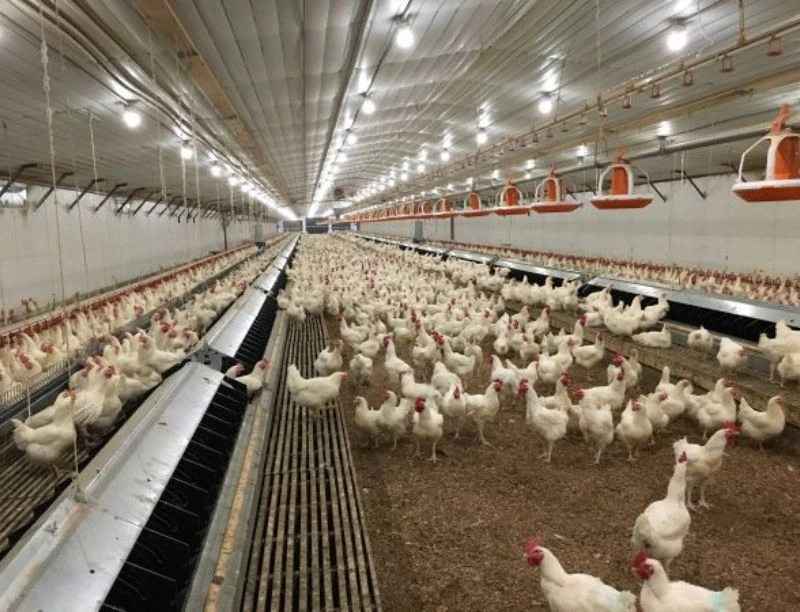

The poultry housing system is crucial to a poultry farming operation’s success. It directly affects the farm’s profitability and the birds’ welfare, production, and health. Whether you are a smallholder farmer or a large-scale poultry producer, understanding the different poultry housing systems and their advantages is essential.
In this article, we’ll examine the types of poultry housing systems, their components, ideal housing conditions, poultry management practices, and recent innovations in poultry housing.
A poultry housing system refers to the physical structure and arrangement designed to provide shelter and a controlled environment for poultry birds such as chickens, ducks, turkeys, and quails. The main objectives of a poultry housing system are:
- To protect birds from extreme weather, predators, and theft.
- To provide a comfortable environment for optimum growth and egg production.
- To facilitate efficient feeding, watering, and waste management.
- To control diseases through proper hygiene and ventilation.
Importance of a Proper Poultry Housing System
A well-planned poultry housing system has several benefits:
- It enhances bird health by preventing stress and reducing exposure to diseases.
- Improves productivity in terms of egg laying and weight gain.
- Reduces mortality rates and boosts overall profitability.
- Ensures biosecurity by limiting contact with external threats.
- Optimizes labor and feed efficiency, saving time and resources.
Factors to Consider Before Designing a Poultry Housing System
When setting up a poultry house, it is essential to consider the following factors:
- Type of Poultry: Different types of poultry (broilers, layers, breeders, or free-range birds) require specific housing systems to meet their unique needs.
- Land Availability: The amount of available land determines whether you can opt for a deep litter system, a battery cage system, or a free-range system.
- Budget: Capital investment influences the choice between intensive, semi-intensive, and extensive housing systems.
- Biosecurity Measures: The housing must allow easy implementation of biosecurity measures such as isolation, disinfection, and controlled access.
Types of Poultry Housing Systems
There are three main types of poultry housing systems: Extensive, Semi-intensive, and Intensive. Each has its characteristics, advantages, and limitations.
Extensive System
In the extensive system, poultry birds can roam freely in open fields or pastures. This traditional method is mainly used in rural areas.
Advantages:
- Low cost
- Natural behavior and foraging
- Low labor requirement
Disadvantages:
- High exposure to predators and diseases
- Low productivity
- Difficult to manage and monitor
Semi-Intensive System
In this system, birds are confined at night and allowed to roam in a fenced area during the day. It’s a balance between the extensive and intensive systems.
Advantages:
- Better disease control than extensive systems
- Improved productivity
- Birds can forage and exercise
Disadvantages:
- Moderate cost of setup
- Requires more space than intensive systems
Intensive System
The intensive poultry housing system confines birds entirely within a building. It is the most productive and commonly used system in commercial poultry farms.
There are three popular intensive systems:
Deep Litter System
Poultry are kept on a floor covered with litter like sawdust, rice husk, or straw.
For More Detail, Click Here
















Sign in to leave a comment.