CNC (Computer Numerical Control) machines are vital in modern manufacturing, requiring precise power specifications to function optimally. Choosing the right power setup affects not just efficiency but also safety and machine longevity. Incorrect power configurations can lead to downtime, equipment damage, and even fire hazards. Understanding CNC power requirements helps manufacturers optimize their setups while avoiding costly mistakes.
According to industry reports, power-related failures account for 15-20% of CNC machine malfunctions, leading to expensive repairs and lost productivity. Proper knowledge of voltage, amperage, and power conditioning can extend the lifespan of your machine and improve overall operational efficiency.
This article explores all aspects of CNC power requirements, from electrical specifications and safety considerations to cost factors and efficiency improvements.
1. Understanding CNC Machine Power Specifications
Voltage Requirements
CNC machines require specific voltage levels based on their size and type. The most common voltage classifications include:
- 120V (Single-phase) – Used for small desktop CNC machines and hobbyist models.
- 240V (Single-phase) – Suitable for medium-sized machines and some entry-level industrial models.
- 208V, 220V, 380V, 415V, or 480V (Three-phase) – Used for large industrial CNC machines, offering more stable power delivery.
A study by the National Electrical Manufacturers Association (NEMA) found that CNC machines operating on properly matched voltage experience 30% fewer breakdowns than those on inconsistent power supplies.
Amperage Considerations
Amperage determines how much current a CNC machine draws. Here’s a general estimate based on machine size:
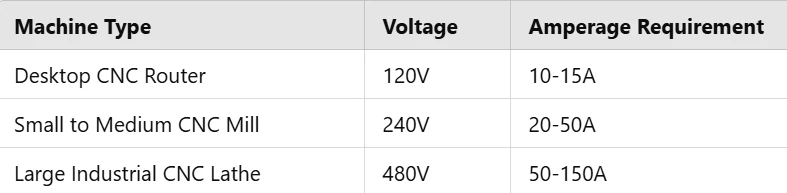
Using improper amperage can cause circuit overloads, tripping breakers, or damaging machine components. It’s crucial to have an electrician verify the amperage needs before installation.
Phase Configuration
Most industrial CNC machines require three-phase power, which provides better efficiency and power balance. However, if your facility only has single-phase power, you may need a phase converter to transform single-phase to three-phase electricity.
2. Power Quality and Stability
Why Power Quality Matters
Poor power quality can lead to machine faults, overheating, erratic performance, and even motor failure. Key factors affecting power quality include:
- Voltage Fluctuations – Can cause unpredictable CNC behavior and shutdowns.
- Harmonic Distortions – Introduced by variable frequency drives (VFDs), leading to electrical noise.
- Power Surges & Spikes – Sudden increases in power can fry sensitive components.
- Brownouts (Low Voltage Conditions) – Can result in loss of accuracy in machining operations.
How to Improve Power Quality
✅ Install uninterruptible power supplies (UPS) to protect against outages.
✅ Use voltage stabilizers to maintain consistent voltage levels.
✅ Employ surge protectors to safeguard sensitive electronics.
✅ Regularly inspect wiring and connections to prevent power losses.
A survey of CNC operators found that machines equipped with power conditioning systems experienced 40% fewer operational issues compared to unprotected units.
3. Grounding and Electrical Safety
Why Grounding is Essential
Proper grounding prevents:
- Electrical shocks to operators
- Damage to machine electronics due to power surges
- Malfunctions caused by electrical noise
Best Practices for CNC Machine Grounding
✅ Use dedicated grounding rods to minimize interference.
✅ Ensure your facility's electrical system meets National Electrical Code (NEC) standards.
✅ Check grounding resistance regularly using an ohmmeter.
Electrical Panel and Circuit Protection
Industrial-grade CNC machines should have dedicated electrical panels with circuit breakers rated for the machine’s load. Overloading a panel with multiple machines can lead to inefficiency and safety hazards.
4. Energy Efficiency and Cost Considerations
Reducing CNC Machine Power Consumption
CNC machines consume substantial electricity, leading to high operational costs. Consider these strategies to improve energy efficiency:
✅ Use servo motors instead of stepper motors, which consume less energy.
✅ Implement idle mode settings to reduce power consumption during inactivity.
✅ Upgrade to energy-efficient drives and inverters.
✅ Maintain proper lubrication and calibration to reduce mechanical resistance.
A study by the Department of Energy found that energy-efficient CNC upgrades can reduce power consumption by 10-20%, translating to thousands of dollars in savings annually.
Calculating CNC Power Costs
To estimate the power costs of running a CNC machine, use this formula:
Power Cost = (Voltage × Amperage × Hours Used × Electricity Rate) / 1000
For example, if a 10kW CNC machine runs for 8 hours daily and the electricity cost is $0.12 per kWh, the daily cost would be:
(10 × 8 × 0.12) = $9.60 per day
Annual cost: $9.60 × 250 working days = $2,400 per year
By improving efficiency, businesses can significantly cut energy expenses over time.
5. Preparing Your Facility for CNC Power Requirements
Electrical Load Planning
Before installing a CNC machine, conduct an electrical load analysis to ensure your facility can handle the additional power draw. Consult an industrial electrician to assess:
- Available electrical capacity
- Need for power upgrades (e.g., transformers, phase converters)
- Required circuit breaker ratings
Backup Power Solutions
To prevent disruptions due to power failures, consider industrial-grade backup generators or battery backup systems. These solutions are particularly crucial in industries with tight production deadlines
Conclusion
Ensuring your CNC machine has the correct power setup is critical for optimal performance, efficiency, and safety. By understanding voltage, amperage, power quality, grounding, and energy costs, manufacturers can avoid costly breakdowns and improve operational efficiency.
Need Assistance with CNC Power Setup?
At MachineStation, we provide expert advice on CNC power configurations and offer a wide selection of high-quality used CNC machines. Contact us today to optimize your shop’s power infrastructure!





























Sign in to leave a comment.