
Clean air is critical in modern industrial environments. Manufacturing plants, pharmaceutical facilities, hospitals, data centers, and cleanrooms all rely on effective air filtration to maintain air quality and protect both equipment and people. Air filtration systems are designed to remove dust, airborne particles, microorganisms, and contaminants from the air before it circulates through the facility.
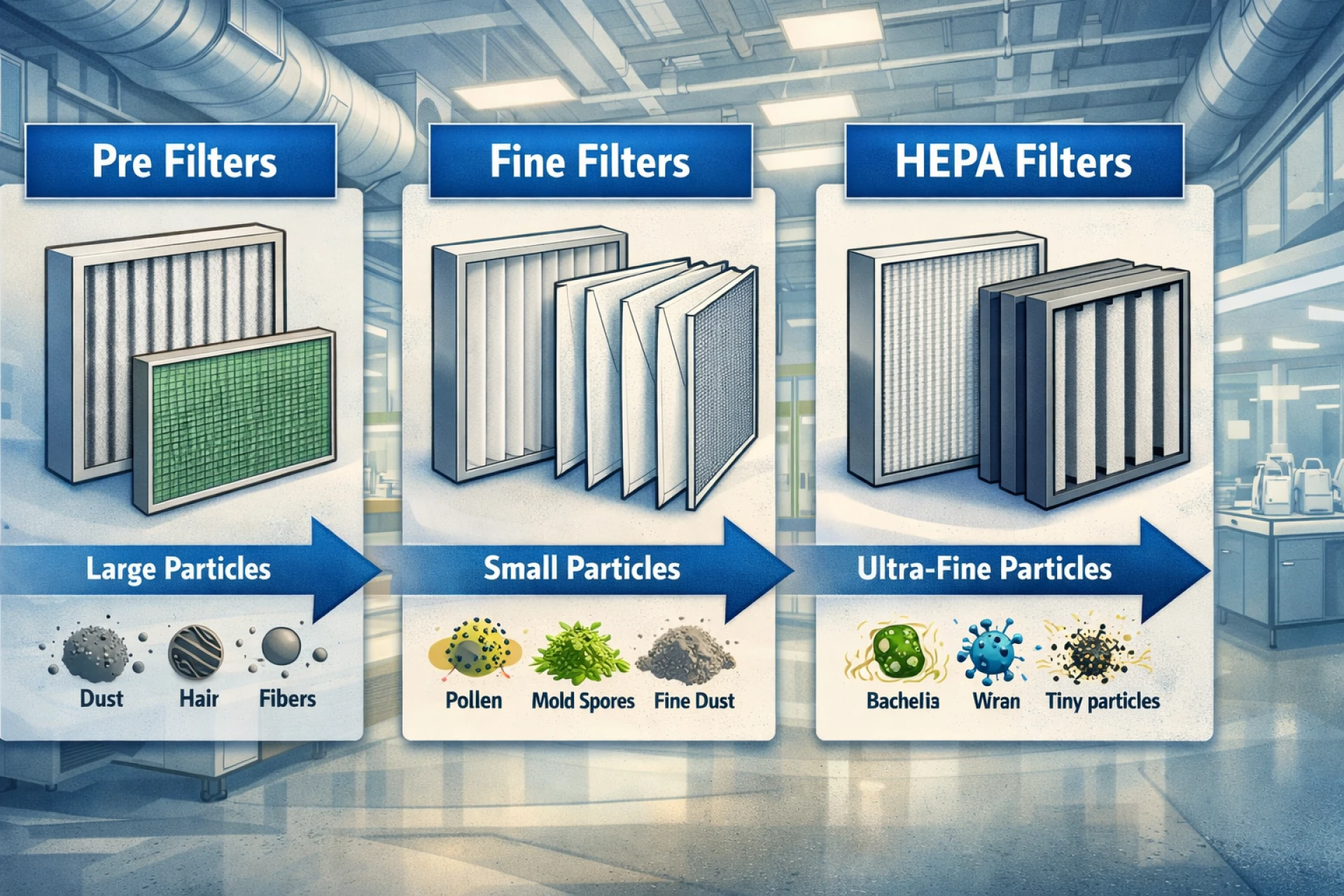
To achieve high air quality, most industrial systems use multiple stages of filtration. The most common stages include pre filters, fine filters, and HEPA filters. Each type plays a different role in capturing particles and ensuring optimal air purity.
Many Industrial air filter manufacturers design filtration systems that combine these three filter types to create an efficient and cost effective air cleaning process. Understanding the difference between them helps businesses choose the right filtration strategy for their facility.
Why Multi Stage Filtration Is Important in Industrial Systems
Industrial environments often contain a wide range of airborne contaminants such as dust, pollen, metal particles, smoke, and microorganisms. A single filter cannot efficiently capture every type of particle.
This is why air filter manufacturer companies design systems using multiple filtration stages.
A multi stage filtration system offers several advantages:
• Improves overall air purification efficiency
• Extends the lifespan of high efficiency filters
• Reduces maintenance and operating costs
• Protects sensitive machinery and processes
• Maintains consistent indoor air quality
In a typical industrial HVAC or air handling unit system, air passes through pre filters first, followed by fine filters, and finally HEPA filters when extremely clean air is required.
What Are Pre Filters
Pre filters are the first line of defense in an industrial air filtration system. They are designed to capture larger airborne particles before the air reaches more advanced filtration stages.
These filters typically remove dust, lint, fibers, hair, and other large contaminants.
Key Characteristics of Pre Filters
• Capture larger particles typically above 10 microns
• Installed at the first stage of filtration
• Lower filtration efficiency compared to other filters
• Affordable and easy to replace
• Protect downstream filters from heavy contamination
By removing larger particles early in the filtration process, pre filters help prevent clogging in fine and HEPA filters. This significantly increases the life of more expensive filters.
Common Applications of Pre Filters
Pre filters are widely used in:
• Industrial HVAC systems
• Air handling units
• Commercial buildings
• Manufacturing plants
• Food processing facilities
Most Industrial air filter manufacturers recommend regular replacement of pre filters because they accumulate large amounts of dust and debris over time.
What Are Fine Filters
Fine filters are the second stage in many industrial filtration systems. They capture smaller particles that pass through the pre filter.
Fine filters provide a higher level of filtration and are designed to remove particles such as fine dust, mold spores, and smaller airborne contaminants.
Key Characteristics of Fine Filters
• Capture particles between 1 and 10 microns
• Higher filtration efficiency than pre filters
• Often classified under MERV or F series ratings
• Used as intermediate filtration stage
• Help protect HEPA filters in advanced systems
Fine filters significantly improve indoor air quality by removing particles that are too small for pre filters to capture.
Common Applications of Fine Filters
Fine filters are commonly used in:
• Pharmaceutical facilities
• Electronics manufacturing plants
• Healthcare facilities
• Laboratories
• Food production units
A reliable Air filter manufacturer designs fine filters using advanced filter media that balance airflow and filtration efficiency.
What Are HEPA Filters
HEPA filters represent the highest level of air filtration used in industrial environments. HEPA stands for High Efficiency Particulate Air.
These filters are capable of removing extremely small particles that cannot be captured by pre or fine filters.
A standard HEPA filter can remove at least 99.97 percent of particles that are 0.3 microns in size. This makes them essential in environments that require extremely clean air.
Key Characteristics of HEPA Filters
• Capture ultra fine particles as small as 0.3 microns
• Extremely high filtration efficiency
• Used as final stage filtration
• Designed for critical environments
• Require proper maintenance and replacement
Because HEPA filters are expensive and sensitive, they are always used after pre and fine filters. This protects them from large particle buildup and ensures long operational life.
Common Applications of HEPA Filters
HEPA filters are widely used in environments where air purity is essential.
These include:
• Pharmaceutical manufacturing
• Cleanrooms
• Semiconductor manufacturing
• Hospital operating rooms
• Biotechnology laboratories
• Aerospace manufacturing
Many Industrial air filter manufacturers develop specialized HEPA filters designed for specific industrial standards and cleanroom classifications.
Comparison Between Pre Filters, Fine Filters, and HEPA Filters
Understanding the differences between these filters helps organizations select the right combination for their facility.
Pre Filters
• First stage filtration
• Capture large particles
• Lower filtration efficiency
• Lower cost
• Protect other filters
Fine Filters
• Second stage filtration
• Capture medium sized particles
• Moderate filtration efficiency
• Improve indoor air quality
• Extend HEPA filter life
HEPA Filters
• Final stage filtration
• Capture extremely small particles
• Very high filtration efficiency
• Used in critical environments
• Higher cost and maintenance requirements
Each filter stage plays a vital role in creating a balanced and effective air purification system.
How Industrial Air Filter Manufacturers Design Filtration Systems
Leading Industrial air filter manufacturers design filtration systems based on several important factors. Every industrial facility has different air quality requirements depending on its processes and regulatory standards.
When designing filtration systems, manufacturers typically evaluate:
• Type of airborne contaminants present
• Required air cleanliness standards
• Airflow volume and HVAC capacity
• Energy efficiency requirements
• Maintenance and operational costs
A trusted Air filter manufacturer will often recommend a multi stage filtration system that combines pre filters, fine filters, and HEPA filters for optimal performance.
This layered approach ensures that each filter stage removes specific particle sizes, improving efficiency while reducing operational costs.
Benefits of Using Multi Stage Air Filtration in Industrial Facilities
Industrial facilities that implement multi stage filtration systems experience several long term benefits.
Improved Workplace Air Quality
Cleaner air protects workers from inhaling harmful particles and allergens.
Protection of Sensitive Equipment
Dust and contaminants can damage machinery and electronic equipment. Effective filtration prevents this problem.
Compliance with Industry Regulations
Industries such as pharmaceuticals and healthcare must meet strict air quality standards. Proper filtration helps achieve compliance.
Lower Maintenance Costs
Pre filters and fine filters reduce the load on expensive HEPA filters, extending their lifespan.
Higher Energy Efficiency
Modern filtration systems designed by experienced Industrial air filter manufacturers maintain optimal airflow while ensuring effective filtration.
Choosing the Right Air Filter Manufacturer
Selecting a reliable Air filter manufacturer is important for ensuring long term performance of industrial filtration systems.
When evaluating manufacturers, companies should consider:
• Product quality and certification standards
• Range of filtration solutions available
• Custom filtration capabilities
• Industry experience and expertise
• Technical support and service
Experienced Industrial air filter manufacturers provide guidance on selecting the correct filters and maintaining filtration systems for maximum efficiency.
Conclusion
Pre filters, fine filters, and HEPA filters each serve a unique role in industrial air filtration systems. Pre filters capture large particles and protect downstream filters. Fine filters remove smaller contaminants and improve air quality. HEPA filters provide the highest level of filtration by capturing microscopic particles.
When used together, these filters create an effective multi stage filtration system that ensures clean and safe air in industrial environments.
Industrial air filter manufacturers design these systems to meet the specific needs of different industries, from manufacturing plants to pharmaceutical cleanrooms. Partnering with a trusted Air filter manufacturer ensures reliable filtration performance, regulatory compliance, and long term operational efficiency.
Understanding the differences between these filter types allows businesses to build better air management systems and maintain healthier industrial environments.

















Sign in to leave a comment.