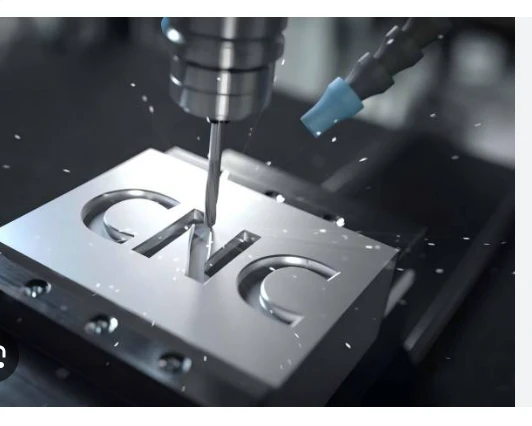
In the rapidly evolving world of healthcare, innovation and accuracy go hand in hand. Whether it's a life-saving surgical tool or a prosthetic limb tailored to a patient’s anatomy, the demand for high-precision, reliable components has never been higher. One of the most pivotal technologies fulfilling this demand is medical CNC machining It stands at the intersection of engineering and healthcare, ensuring that every device and instrument meets strict safety, quality, and performance standards.
This article delves into the essentials of medical CNC machining, exploring how it works, where it's applied, the materials it uses, and why it's so crucial for modern medical advancements.
What Is Medical CNC Machining?
Medical CNC machining is the process of fabricating components for medical applications using computer numerical control (CNC) equipment. It enables the automated, accurate shaping of materials like metals and plastics into complex parts used in surgery, diagnostics, prosthetics, and more.
With CNC machining, a computer program guides cutting tools to follow a precise path, creating parts with incredibly tight tolerances. These machines are capable of executing highly detailed operations such as drilling, milling, turning, and grinding with remarkable consistency. In the medical industry, where even a micron deviation can make a significant difference, this precision is invaluable.
How CNC Machining Supports the Medical Industry
The medical industry demands absolute reliability. Products must not only perform as expected but also be safe for the human body. This is where medical CNC machining plays a vital role. The technology supports:
- Highly accurate parts that are essential for implantable and surgical devices.
- Rapid prototyping for product development and clinical testing.
- Mass production without compromising quality or consistency.
- Customization to meet the specific needs of patients or procedures.
Medical CNC machining bridges the gap between design and function, allowing healthcare providers to depend on equipment that works seamlessly every time.
Applications of Medical CNC Machining
CNC machining is used in nearly every corner of the medical manufacturing space. Its applications include:
1. Surgical Instruments
Scalpels, clamps, scissors, forceps, and retractors must meet exact specifications to ensure safety and effectiveness. CNC machining allows for the high-volume production of these instruments with perfect repeatability and fine surface finishes.
2. Orthopedic and Dental Implants
CNC machines create titanium and stainless-steel implants for hips, knees, spines, and teeth. These parts must align with the patient’s body and maintain structural integrity for years, often in challenging biological environments.
3. Diagnostic Equipment Components
Parts for X-ray machines, MRI scanners, and blood analyzers often contain intricate housings and supports. CNC machining produces these components to exact specifications for proper device function.
4. Prosthetics and Assistive Devices
From sockets to joints and custom connectors, CNC machining enables prosthetic manufacturers to produce lightweight, strong, and comfortable solutions for patients with limb differences.
5. Micro-Machined Devices
The field of microsurgery and minimally invasive tools requires components measured in millimeters or smaller. CNC micro-machining produces the intricate shapes necessary for these sensitive applications.
Materials Used in Medical CNC Machining
Medical devices must be made from biocompatible, corrosion-resistant, and durable materials. CNC machining can process a wide variety of these materials, including:
- Titanium – Commonly used in implants due to its strength, lightweight, and biocompatibility.
- 316L Stainless Steel – Corrosion-resistant and suitable for surgical instruments and structural parts.
- PEEK (Polyether ether ketone) – A high-performance thermoplastic for spinal implants and surgical equipment.
- Aluminum – Lightweight and non-magnetic, often used for device housings.
- Delrin (Acetal) – Low-friction, FDA-approved plastic used in various non-implantable parts.
- Polycarbonate and Acrylic – Transparent plastics used for housings and enclosures.
Each material has unique machining requirements, and CNC systems can adapt to these needs, delivering precision regardless of the material.
Benefits of Medical CNC Machining
✅ Unmatched Precision
CNC machines can achieve tolerances as tight as ±0.001 mm, essential for medical devices that must function flawlessly in the human body.
✅ Consistency
Thanks to automation and digital control, CNC machining ensures identical parts are produced repeatedly, whether in batches of ten or thousands.
✅ Faster Time-to-Market
Medical innovations require rapid prototyping and fast product cycles. CNC machining accelerates this process, helping bring new devices to market quickly.
✅ Cost-Effective for Complex Parts
While initial setup costs may be high, CNC machining becomes cost-effective in medium to high-volume production, especially for intricate or custom parts.
✅ Sterile and Clean-Friendly
Machined parts can be finished to ultra-smooth surfaces, reducing the risk of bacterial contamination and simplifying sterilization.
Quality and Regulatory Compliance
Medical device manufacturers must adhere to strict regulations. CNC machining supports compliance with:
- ISO 13485 – Quality management systems for medical devices.
- FDA guidelines – Ensuring product safety and traceability.
- CE Marking (Europe) – Indicating product conformity for European markets.
To meet these requirements, manufacturers implement rigorous inspection processes, such as:
- First article inspections (FAI)
- Coordinate Measuring Machine (CMM) verification
- In-process quality checks
- Final part validation and documentation
These steps guarantee that each part is within the required tolerances and is safe for medical use.
Challenges in Medical CNC Machining
Despite its many advantages, medical CNC machining presents some challenges:
Challenge
Description
Regulatory Hurdles
Meeting global compliance standards requires rigorous documentation.
Complex Geometry
Some implant or device designs are extremely difficult to machine.
Material Sensitivity
Certain medical materials are hard on tools and require specific care.
Cleanroom Production
Some components must be machined in sterile environments.
High Initial Costs
Setting up CNC systems can be expensive, though they pay off over time.
Skilled machinists and engineers are essential to overcoming these issues and ensuring consistent high-quality output.
Trends Shaping the Future
Medical CNC machining continues to evolve. Some emerging trends include:
- 5-axis and multi-axis machining for creating complex parts in a single setup.
- Integration of AI for predictive maintenance and automated process control.
- Micromachining to produce even smaller, more precise components for wearable and implantable devices.
- Digital twins to simulate machining processes and improve production planning.
- Hybrid manufacturing combining CNC machining with additive manufacturing (3D printing) for improved part complexity and efficiency.
These trends promise better healthcare devices, faster innovation cycles, and more personalized medical solutions.
Conclusion
As medicine pushes the boundaries of what's possible, the tools and devices used must rise to the challenge. Medical CNC machining plays an essential role in this evolution by delivering the precision, reliability, and flexibility necessary for modern healthcare. From surgical instruments to advanced implants, the benefits of CNC technology are clear—and its future is even more promising.
Whether it’s saving lives in the operating room or improving quality of life with prosthetics, CNC machining ensures that every medical component is crafted with care, quality, and confidence.





























Sign in to leave a comment.