
Precision in Progress: Navigating the Future with Stacker/Drill Automation
Introduction
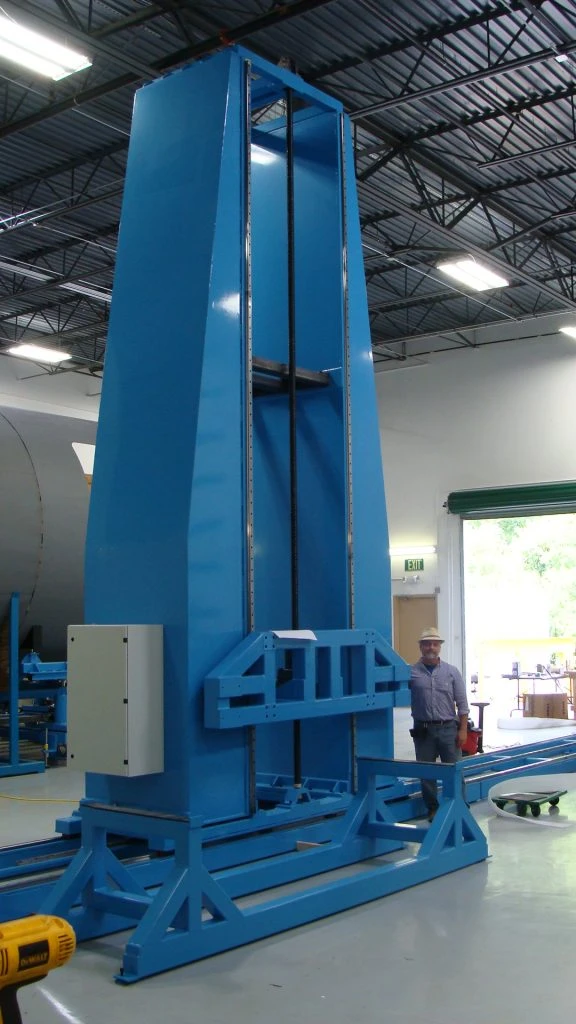
As technology continues to transform the aerospace manufacturing industry, the Stacker/Drill Automation system continues to be a shining example of accuracy and advancement. With a strong emphasis on accuracy and efficiency, this article explores the role that this revolutionary technology will play in influencing aerospace manufacturing in the future by going into great detail about it.
The Aerospace Manufacturing Evolution
Aerospace manufacturing has always involved complex procedures that call for a careful balancing act between accuracy and productivity. Automation is a paradigm shift, and the Stacker/Drill Automation system is a prime example of how aerospace manufacturing has developed.
Unveiling the Stacker/Drill Automation System
Fundamentally, the goal of the Stacker/Drill system is to completely transform bulkhead drilling and assembly procedures in large cargo aircraft. The ambitious objective of this system is to increase productivity by an astounding 400% while also reducing the amount of floor space needed.
Efficiency Redefined: 70% Floor Space Reduction
The Stacker/Drill Automation system's remarkable accomplishment is its capacity to significantly lower floor space requirements. The system achieves a remarkable 70% reduction in the space traditionally allocated to such manufacturing setups by automating the entire process and streamlining the workflow.
Flexible Automated Process
This system's automated workflow dynamics are its lifeblood. The system begins with a straightforward barcode scan and proceeds to perform a series of coordinated actions, including retrieving the appropriate jig, loading it, and smoothly switching between drilling passes. This automation reduces error margins while also speeding up the manufacturing process.
The Precision Function of Machine Vision
Machine vision integration is a key player in the precision game. Machine vision is used as the Auto-Drill gets ready for the first drilling pass, carefully generating X-Y offsets for every hole with a pilot. This proactive strategy not only increases accuracy but also reduces the possibility of cutter breakage, establishing new benchmarks for careful planning in the aerospace industry.
Adaptive Interface for Decision-Making
Automation systems' success is frequently determined by their user interfaces. An easy-to-use interface in the Stacker/Drill system enables operators to make wise decisions. The interface serves as a link between human decision-making and automated execution, indicating everything from readiness to starting a jig to indicating partial loading or completion.
Smooth Queue Handling
The seamless queue management feature of the system adds to its efficiency. The queue, which can be dynamically reprioritized, represents the Jig processing order. Bility makes sure that adjustments can be made to the manufacturing process without sacrificing productivity.
Overview of Current Status in Real Time
The user screen gives a current status report on the system. Visual cues that range from "Ready to Populate" to "Drill Pass Complete" provide operators with a thorough overview of each bulkhead's manufacturing stage. When proactive interventions are needed, this transparency helps to improve decision-making.
Conclusion
To sum up, the Stacker/Drill Automation System is evidence of the accuracy and advancement that can be attained in aerospace manufacturing through sophisticated automation. This system acts as a beacon of hope for the industry as it plots its future and demonstrates the revolutionary power of technology in simplifying intricate production procedures.
FAQ
Q1: How does the system handle interruptions in the drilling process?
The workflow can be interrupted and still continue from the last completed step without losing any data because the system is built to handle disruptions gracefully.
Q2: Can the queue be adjusted during operation?
Indeed, operators can reorder jigs in the queue in real-time in response to shifting manufacturing demands.
Q3: What safeguards are in place to prevent errors in the drilling process?
Because the system uses automated decision-making and machine vision, the possibility of errors is greatly reduced. Furthermore, the interface gives operators visual cues so they can intervene proactively.
Q4: How does the system adapt to different bulkhead configurations?
The system's versatility is demonstrated by its capacity to manage a wide range of bulkhead configurations, easily accommodating different sizes and assembly needs.
Q5: What measures are in place to ensure data accuracy in the system's database?
Bulkhead status records are maintained with accuracy thanks to the robust data tracking features of the system. Every movement or alteration is painstakingly recorded, creating a trustworthy database for making decisions.


























Sign in to leave a comment.