

A buyer once told a developer: "I visited your site three times and I still couldn't picture the finished building."
Three visits. Three separate Sundays. Three car journeys through traffic. And still, at the end of it, the project lived in that buyer's mind as a collection of site photographs, a scale model, and a vague sense of potential.
They didn't book. Not because the project was bad — it wasn't. But because they never truly saw it. They saw documentation of a construction site. They saw an aspiration described in square feet. What they never got was the experience of the actual finished property.
This is the walkthrough problem in real estate, and it is far more common and far more costly than developers tend to acknowledge.
Why Traditional Site Visits Fall Short
A site visit is valuable. Don't misread this. Standing on the land, feeling the scale of the development, understanding the neighbourhood — these are things a digital experience can supplement but not fully replace.
But a site visit to an under-construction property has serious limitations that directly affect buyer decision-making:
Construction sites are disorienting. Concrete columns, bare floors, temporary lighting, the noise and dust of ongoing work — none of this helps a buyer visualise the finished home. If anything, it actively works against imagination. The brain sees what's in front of it, and what's in front of it is an incomplete structure.
Sales executives become tour guides for abstraction. "This will be the lobby." "That column will be enclosed." "Through here is where the amenity deck will be." Every sentence is asking the buyer to mentally transform present reality into future possibility. That's cognitive work that costs energy and builds uncertainty.
Not everything is accessible. Higher floors may not be reachable. The penthouse terrace may not exist yet. The clubhouse is four months away from being framed. But these are often the features that differentiate a project and justify its pricing.
Buyers visiting multiple projects become confused. After two or three site visits in a day, each project blends into the others in the buyer's memory. They all looked like construction sites. They all had scale models at the sales office. Only the ones that created a clear, distinct emotional impression will be remembered clearly.
This is the gap that 3D visualization real estate walkthroughs are designed to close.
What a Real 3D Walkthrough Experience Delivers
When V-Estate builds a virtual walkthrough for a project, they're not producing a marketing video. The distinction is important.
A marketing video is a passive experience — the producer controls every camera angle, every transition, every moment. The buyer watches. They are an audience.
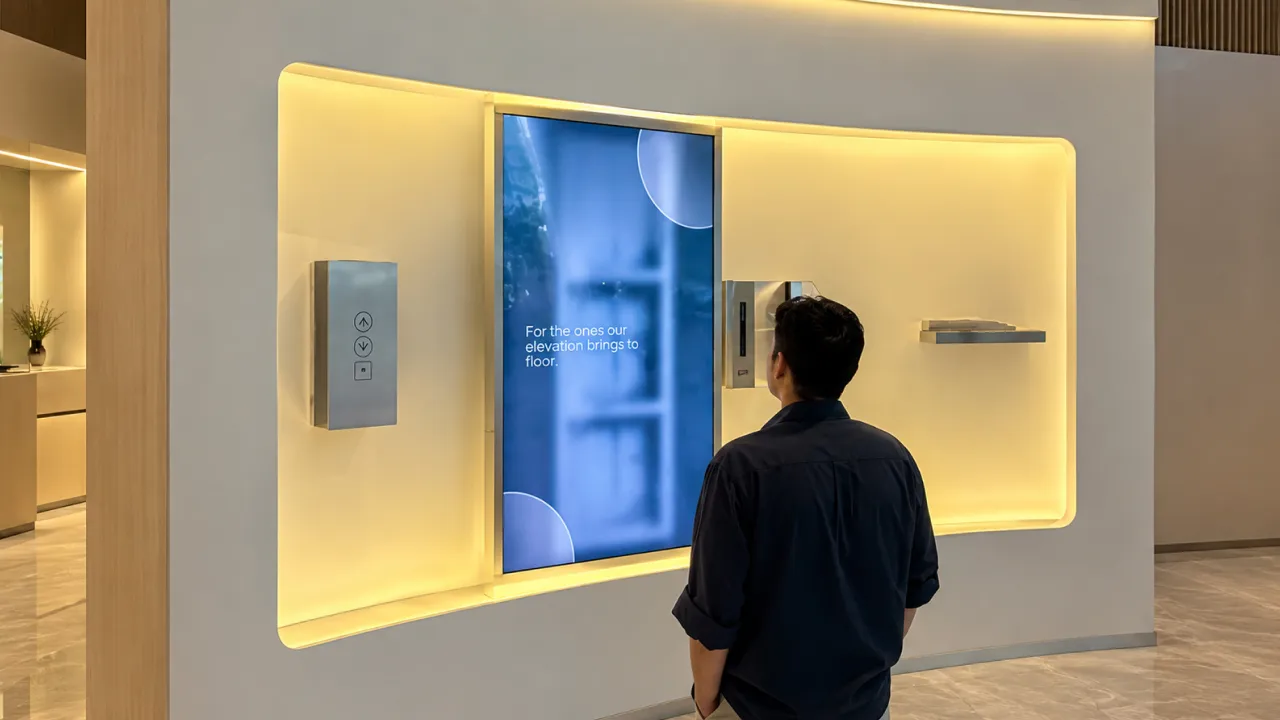
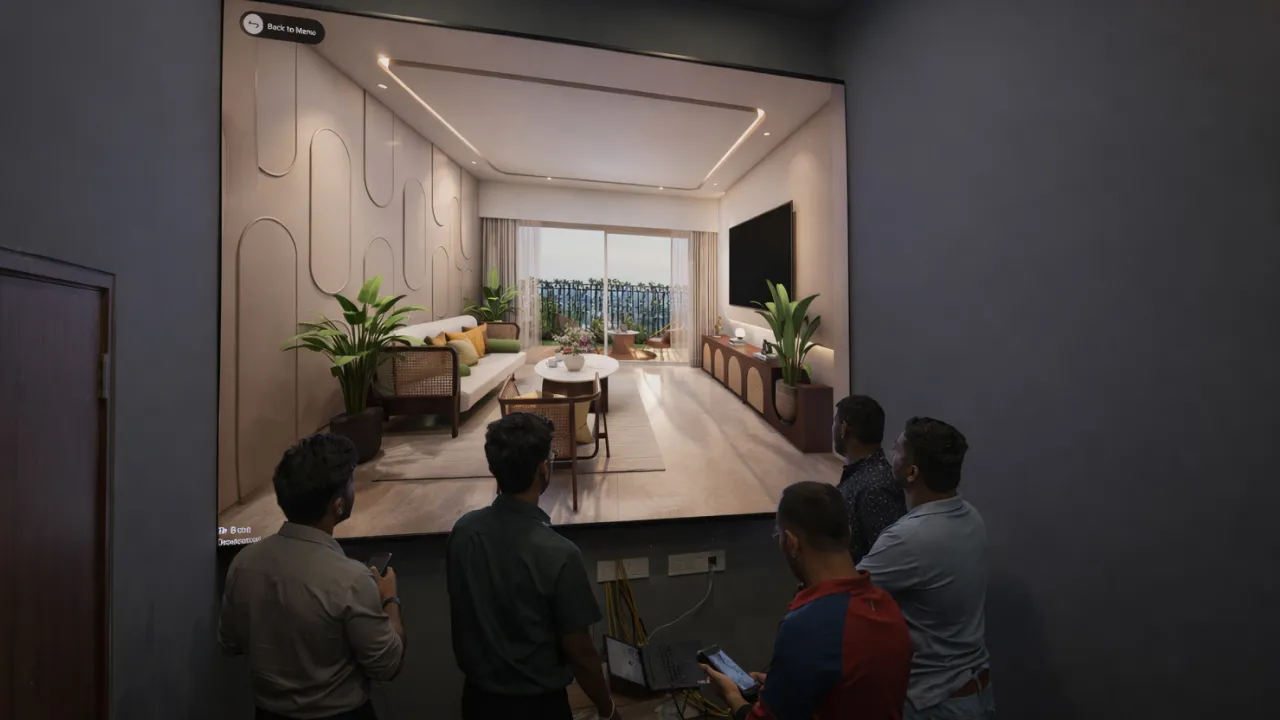
A V-Estate virtual walkthrough is an interactive experience. The buyer drives. They choose where to go, what to look at, how long to spend in each space. They have agency. And that agency changes the psychological relationship they form with the property.
Here's what buyers can do inside a V-Estate walkthrough:
Navigate freely through every unit type. 1BHK, 2BHK, 3BHK — each with accurate dimensions, realistic finishes, and natural lighting conditions. The buyer isn't limited to the show flat. They can explore the layout on the 8th floor that interests them specifically.
Experience the view from their unit. One of the most underrated drivers of property purchase decisions is the view. V-Estate renders accurate view corridors from specific floors and orientations. A buyer interested in a corner unit on the 15th floor can see exactly what they'd see from their living room window.
Walk through amenities that don't exist yet. The rooftop pool. The co-working space. The children's play area. The lobby with double-height ceiling. V-Estate brings all of it to life with the same level of detail as the individual units.
Explore the property at different times of day. The dynamic day-to-night cycle simulation answers one of the most commonly asked but hardest-to-answer questions in real estate: "What is the light like?" Buyers can see morning, afternoon, and evening in the same space within minutes.
The Benefits of 3D Visualization in Walkthroughs: A Ground-Level Look
The case for investing in proper 3D walkthrough technology is not theoretical. The outcomes it creates are measurable and practical:
Buyer confidence increases. When someone has walked through a property — even virtually — they carry a much more complete picture of it. Their remaining questions tend to be specific and manageable rather than broadly uncertain. "Is there adequate storage?" "Can I see the powder room?" — these are answerable questions from buyers who are already close to a decision.
Revisit rates drop. A buyer who has done a thorough virtual walkthrough often needs fewer physical site visits to reach confidence. This reduces the sales cycle length and the resource cost of managing undecided buyers.
Premium inventory moves faster. Large units, penthouses, high-floor apartments — these are the inventory pieces that require the most imagination to sell, and therefore benefit most dramatically from immersive walkthroughs. Being able to show a buyer the actual experience of a penthouse duplex before it's built is a significant competitive advantage.
Distance is no longer a barrier. Not every serious buyer can easily visit a project multiple times. NRI buyers, buyers from other cities considering relocation, buyers with demanding schedules — all of them can have a complete walkthrough experience without being physically present. V-Estate's platform enables this while maintaining the quality of an in-person experience.
The Anamorphic Layer: When the Walkthrough Becomes a Spectacle
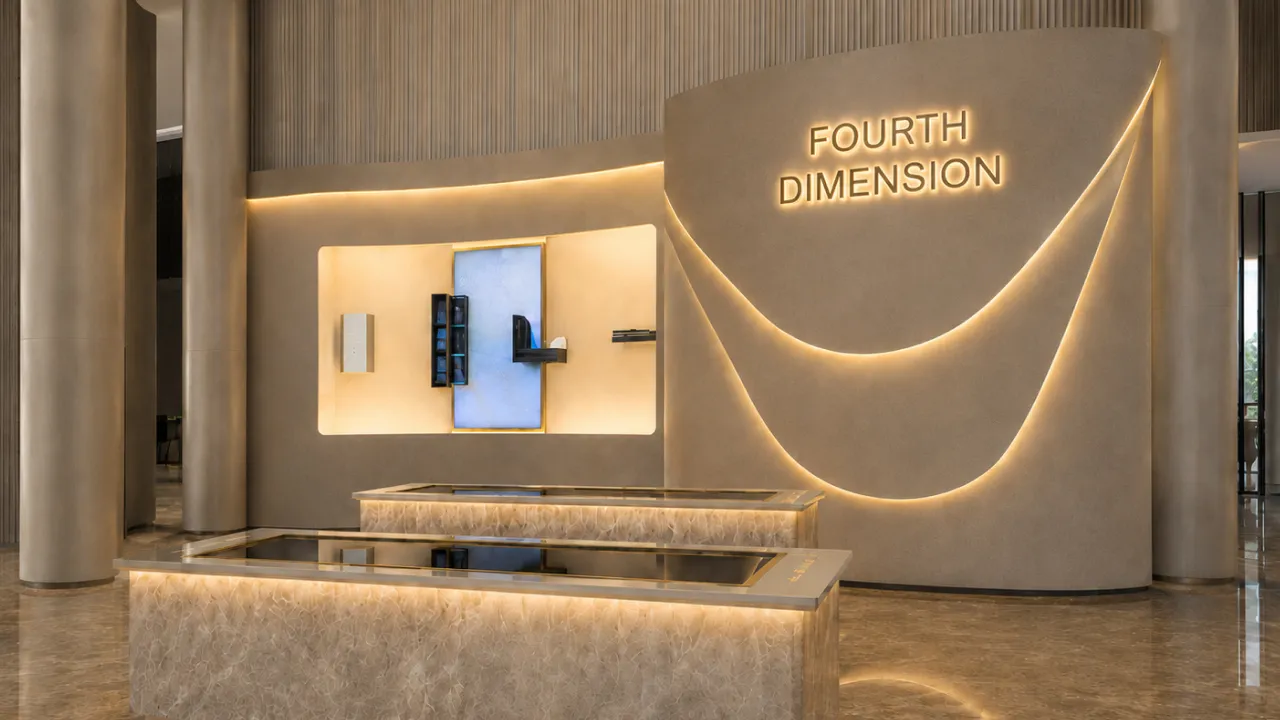
V-Estate's experience centre solution incorporates anamorphic illusion technology as part of the physical activation layer. This is where the walkthrough experience becomes genuinely unforgettable.
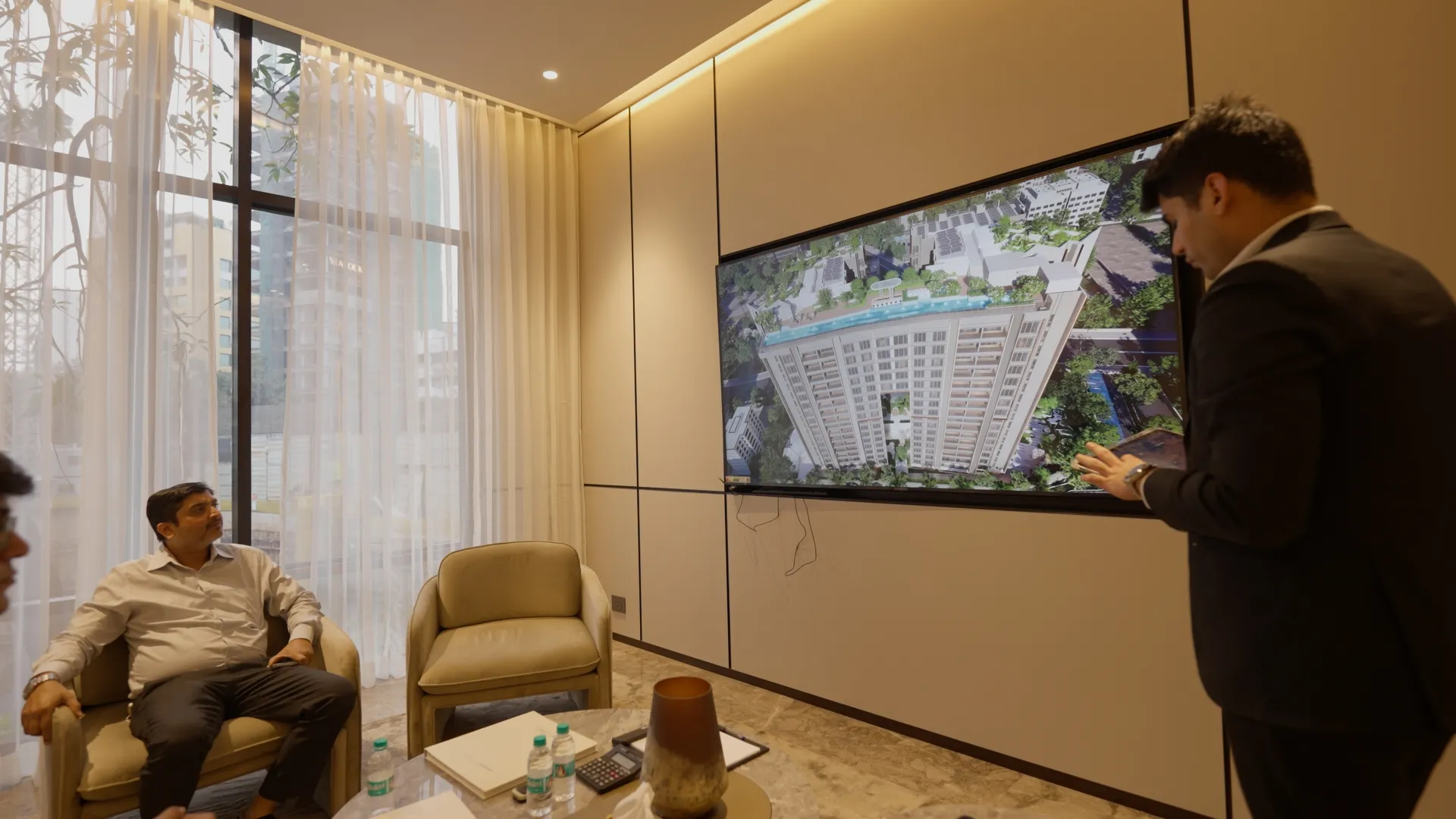
Anamorphic displays create the visual impression of three-dimensional depth on a flat screen through carefully calibrated perspective distortion. When a prospect stands at the designated viewing point in an experience centre, the building appears to project forward into the room. It's the same perceptual technique used in major brand activations and public art installations — applied here to real estate presentation.
The effect is visceral. Buyers describe it consistently with the same words: wow, unreal, I didn't expect that. That emotional spike — that moment of genuine surprise and delight — is the brand impression your project leaves behind. It's what differentiates your experience centre from every other one the buyer has visited that month.
And importantly, it serves a functional purpose. The anamorphic display is typically used to showcase the building's exterior in full architectural detail — height, massing, facade treatment, landscaping. It gives buyers a sense of the building's presence that no scale model or printed render can match.
The Real Estate Visualization Standard Has Moved — Have You?
Five years ago, a well-produced render and a professional scale model were considered strong project presentation. Today, they're the baseline. Buyers who have experienced immersive walkthroughs elsewhere — and increasingly, they have — find static presentation underwhelming.
The bar has moved. The question for every developer preparing a project launch in 2025 is whether their presentation tools reflect where the market is now, or where it was.
V-Estate offers the complete walkthrough solution — interactive virtual tours, digital twins, dynamic simulations, and physical experience centre activations — in a single platform designed specifically for Indian real estate developers. It's an offline activation software, which means your experience centre runs without dependency on live connectivity. The walkthrough is always on.
Give your buyers the walkthrough that converts. Explore V-Estate's platform or book a demo to see exactly what your project could look like.
























Sign in to leave a comment.