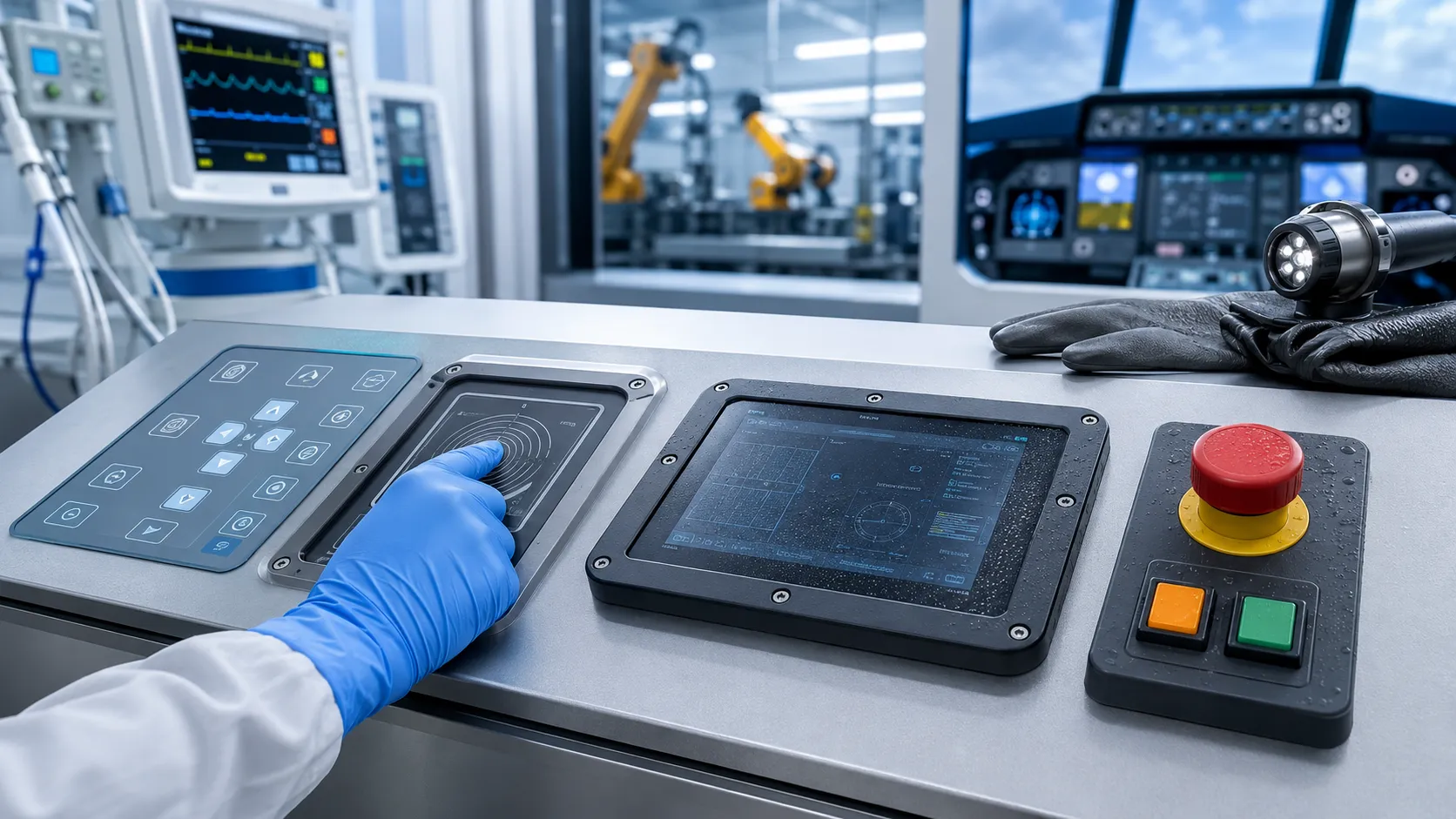

In low-risk environments, an input mistake costs a few seconds.
In a hospital, a chemical plant, an aircraft cockpit, or a defense system, the same mistake costs much more. A wrong button, a missed input, a delayed actuation, or a false reading can lead to injury, equipment damage, or worse.
Precision input devices exist for this reason. They are not just refined versions of regular controls. They are engineered to make accurate, reliable interaction the default behavior, even under stress.
What Counts as a High Risk Environment
High-risk environments share a few common traits.
- The cost of an error is high
- Operators work under time pressure or stress
- Conditions are physically demanding
- The system itself is safety-critical
Examples include:
- Medical devices and surgical systems
- Aerospace and defense controls
- Industrial process control in chemical, energy, and food production
- Heavy equipment, mining, and construction
- Public safety, emergency response, and transportation
In each case, the input device is part of the safety system, whether or not it is treated that way.
Why Standard Controls Fall Short
Many high-risk failures trace back to inputs that were never designed for those conditions.
- Buttons that feel the same as the others around them
- Touch surfaces that respond inconsistently with gloves or moisture
- Controls without clear tactile feedback
- Layouts that invite the wrong action under pressure
- Interfaces that drift, lag, or misread in cold, hot, or vibrating conditions
The control may be technically functional. It is just not precise enough for the moment that matters.
What Precision Actually Means in Input Design
Precision is not just accuracy. It is the combination of several engineering qualities.
- Repeatable input behavior under varying conditions
- Clear, predictable tactile or visual feedback
- Resistance to false or accidental actuation
- Consistent response across temperature, vibration, and time
- Tolerances tight enough that the user can rely on muscle memory
A precision input device is one that the operator can trust without thinking about it.
The Role of Tactile Feedback
Tactile feedback is one of the most important design elements in high-risk input devices.
- Domes and embossed key areas give the operator a defined press
- Confirming clicks, snaps, or resistance reduces uncertainty
- Different feedback profiles can distinguish critical from routine controls
- Tactile guidance allows operation without visual focus, important in low-light or high-stress moments
Membrane switches and tactile keypads are some of the most common precision input components in these environments precisely because tactile feedback is designed in from the start.
The Role of Force Sensing
Some high-risk applications cannot rely on simple on or off inputs.
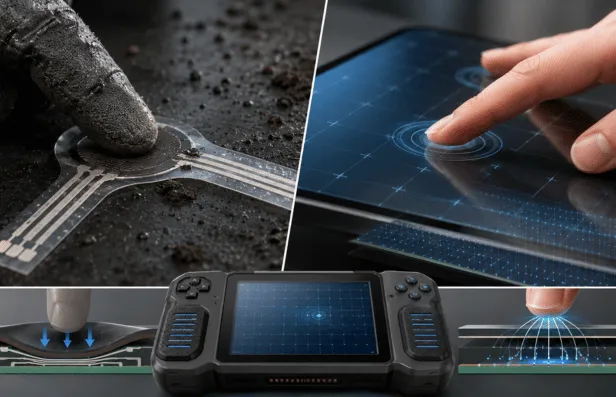
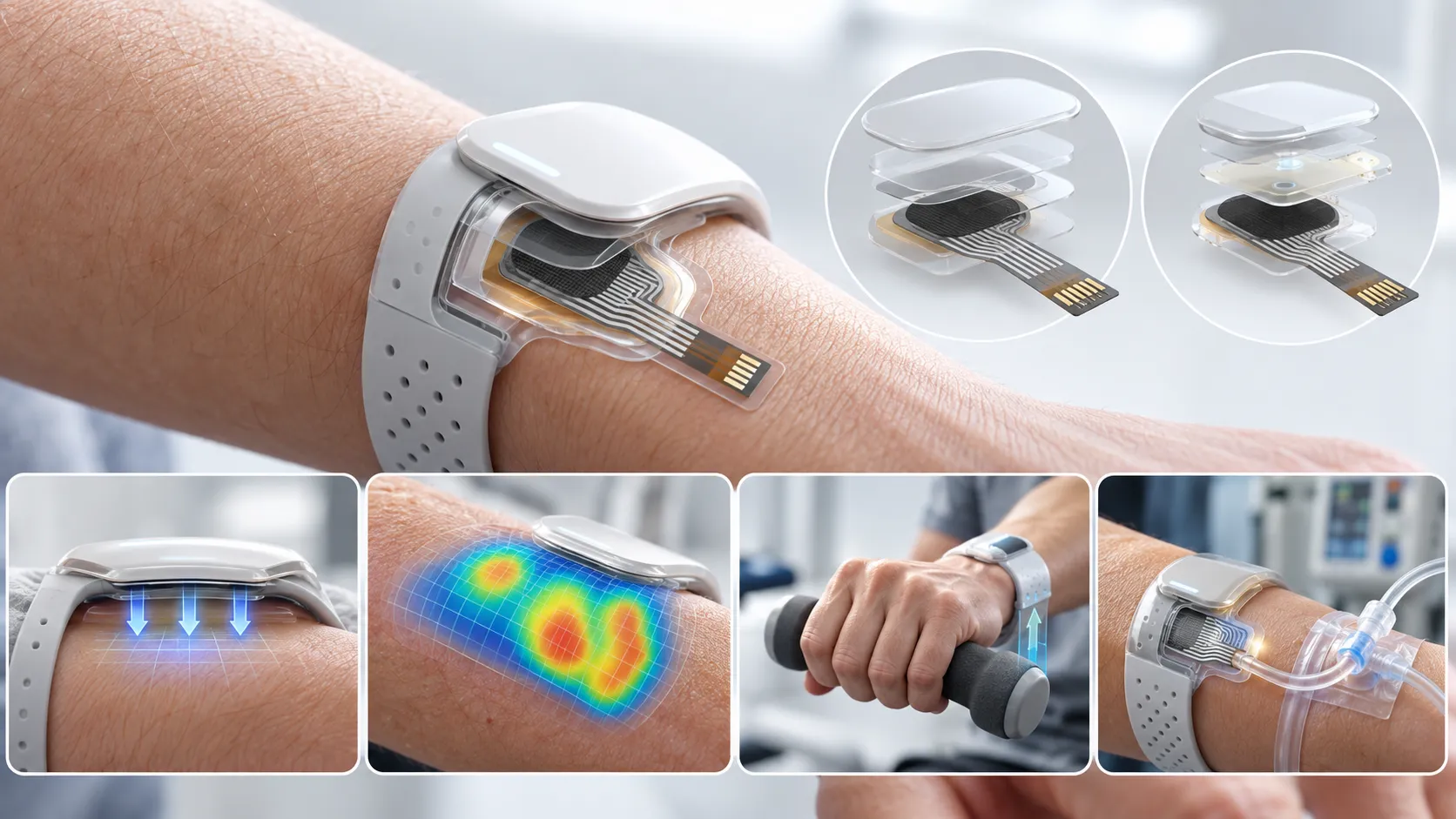
Force sensing resistors and pressure sensors enable:
- Variable input based on how hard a control is pressed
- Detection of grip strength, intent, and proximity
- Layered control schemes in space-constrained interfaces
- Subtle, ergonomic input in surgical, robotic, and prosthetic systems
In environments where a binary control is too coarse, force sensing creates the resolution required for safety and performance.
Touch Screens in High-Risk Use
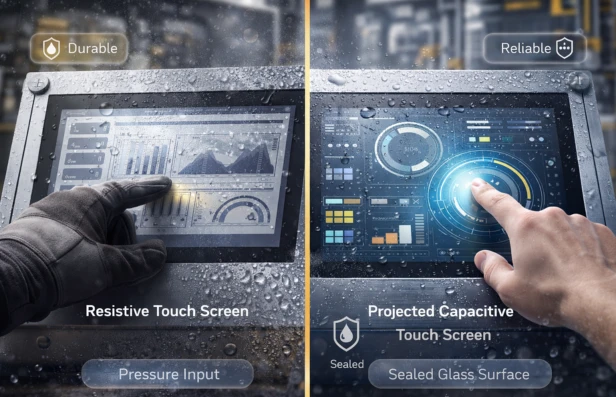
Touch screens are powerful, but they require careful design in high-risk environments.
The strongest designs include:
- Hardened cover lenses with anti-glare coatings
- Firmware tuned for gloves and moisture
- Confirmation gestures or two-step actions for critical commands
- Clear visual hierarchy for safety-critical controls
In many systems, touch screens are combined with physical controls so the most safety-critical actions still require a tactile, deliberate input.
Why Layout and Interaction Design Matter
Precision is not only in the hardware. It is in how the controls are arranged.
- Critical inputs should be physically distinguishable
- Emergency controls should be impossible to miss or confuse
- Frequently used controls should be in the most ergonomic positions
- Visual and tactile cues should reinforce each other
A precision input device with a poor layout is still a poor input system.
Environmental Stress and Long-Term Reliability
In high-risk environments, controls must survive more than wear.
They must handle:
- Cleaning, sterilization, and disinfectant exposure
- Temperature swings and humidity
- Vibration, shock, and mechanical stress
- UV light and aggressive chemicals
Designs that meet performance specs in a lab and fail under real environmental stress are not actually precision devices. They are prototypes that escaped into the field.
Where Manufacturing Precision Becomes Critical
Precision input devices are not just a design challenge. They are a manufacturing one.
They depend on:
- Tight tolerances on domes, contacts, and embossing
- Consistent material lots and adhesives
- Stable print, lamination, and assembly processes
- Validation against real-world cycles, not just initial samples
Organizations working in printed electronics, membrane switches, graphic overlays, force sensing resistors, and touch screens, such as Butler Technologies, Inc., focus on bringing these design and manufacturing decisions together so the input device behaves the same way in the field as it did in design review.
The Real Role of Precision Input in Safety
Precision input devices do not eliminate human error. They make the right action easier and the wrong action harder.
- They reduce uncertainty in the moment that matters
- They reinforce muscle memory and ergonomic flow
- They maintain consistency over thousands of cycles
- They protect operators from interface failures that become safety failures
In high risk environments, the input device is not just how the operator talks to the system. It is the last line of defense between intent and outcome.
FAQs
What are precision input devices?
They are engineered controls designed to deliver accurate, repeatable, and reliable input across demanding environments, including medical, aerospace, defense, and industrial settings.
Why is tactile feedback important in high risk environments?
It allows operators to confirm input by feel, supports operation without visual focus, and reduces uncertainty under stress.
How do force sensing resistors improve precision?
They allow controls to detect varying pressure, supporting more nuanced inputs and enabling safer, more ergonomic control in space constrained interfaces.
Can touch screens be used in safety critical applications?
Yes, when paired with hardened cover lenses, tuned firmware, careful UI design, and often combined with physical controls for the most critical actions.
What makes a control device safe in a high risk environment?
A combination of accurate input, predictable feedback, resistance to environmental stress, ergonomic layout, and consistent long term manufacturing quality.




















Sign in to leave a comment.