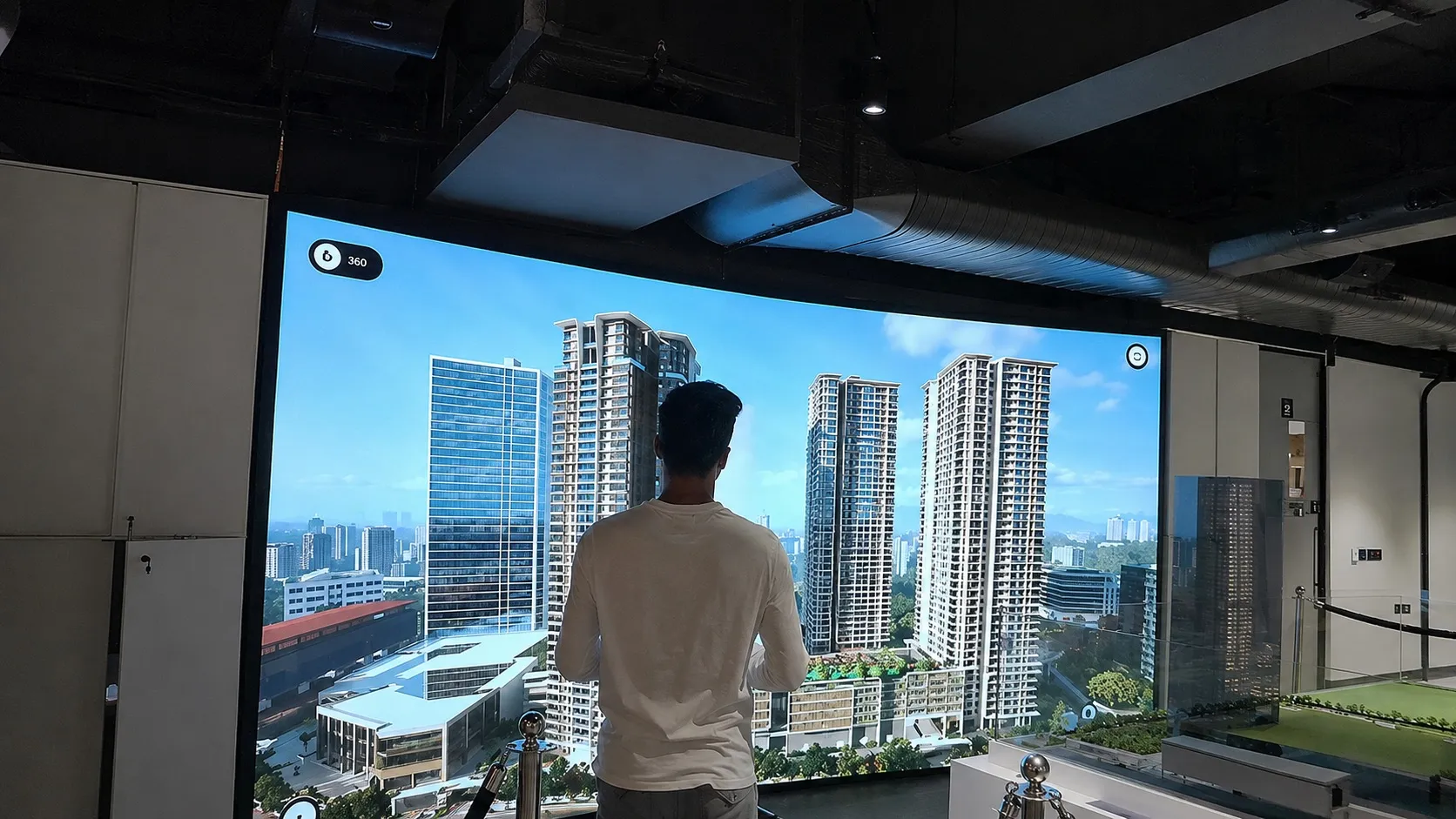

Ask any real estate sales director what they'd change about their marketing budget, and printing costs come up more often than you'd expect. Glossy brochures, laminated floor plans, foam-board renders for the sales office wall — all of it gets reprinted the moment a price changes or a phase launches. Proptech software for builders exists precisely because this cycle was never sustainable, and buyers stopped being impressed by it years ago.
The uncomfortable truth is that a static render, however beautifully done, is still just a picture. And pictures leave a lot to a buyer's imagination — exactly where they shouldn't have to fill in the gaps.
The Hidden Cost of Staying Static
Brochures and printed renders feel safe because they're familiar. But they carry real costs that rarely show up on a single line item:
- Every price revision, layout tweak, or new phase means another print run
- A static render can't answer "what does this look like from my actual balcony" — buyers have to trust the artist's chosen angle
- Sales teams end up repeating the same verbal caveats — "this is indicative," "actual view may vary" — which quietly erodes buyer trust
- Printed material can't be updated in real time when a unit sells out or a configuration changes
None of this is dramatic on its own. But added together, it's a sales process still running on 20th-century tools in a market where buyers expect digital-first everything else in their lives.
Adani Realty's Codename LIT: A Project Too Ambitious for Paper
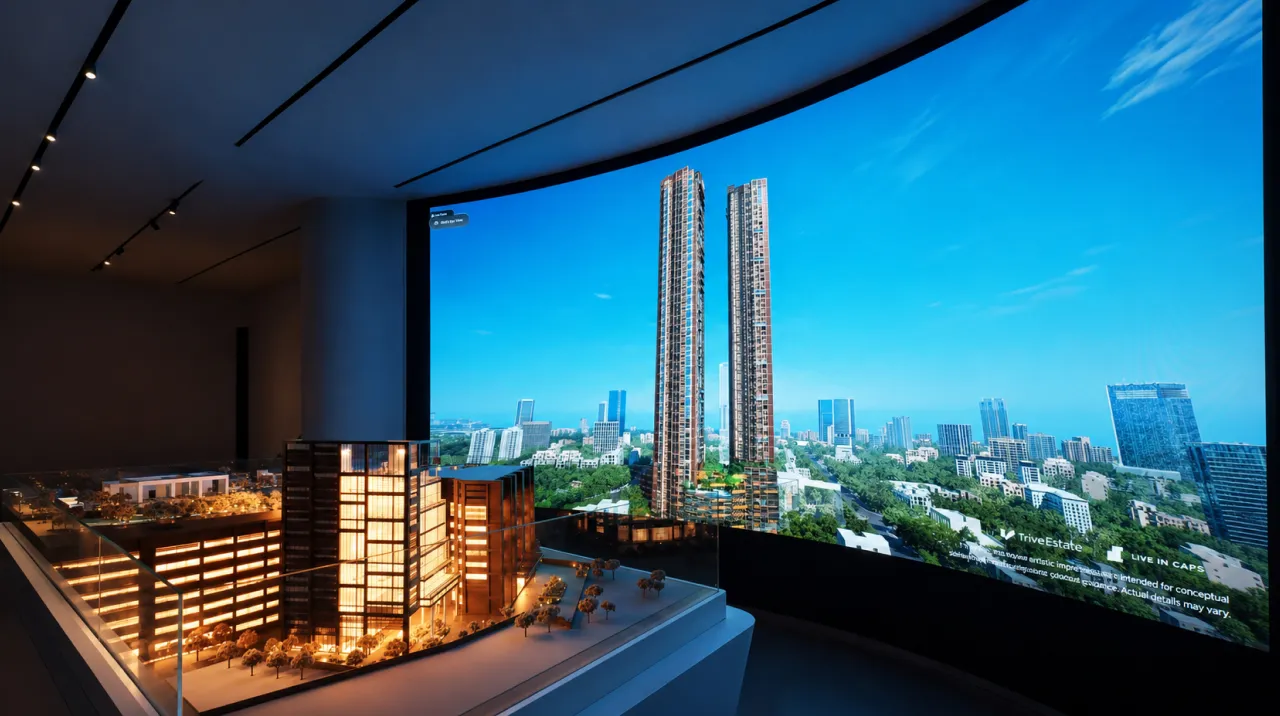
Adani Realty's Codename LIT in Thane, spread across roughly 17–18 acres at Teen Hath Naka with multiple high-rise towers, 2 to 4 BHK configurations, and over 44,000 sq. ft. of recreational facilities, is not a project you can fairly represent with a folded brochure. Scale like this needs a format that can actually hold it.
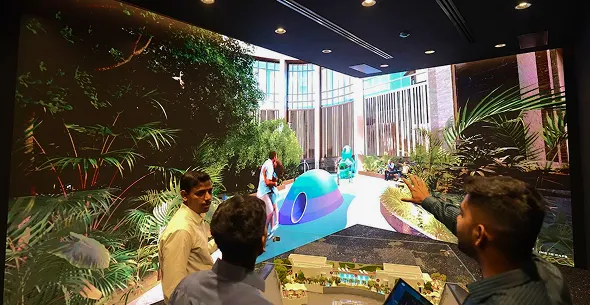
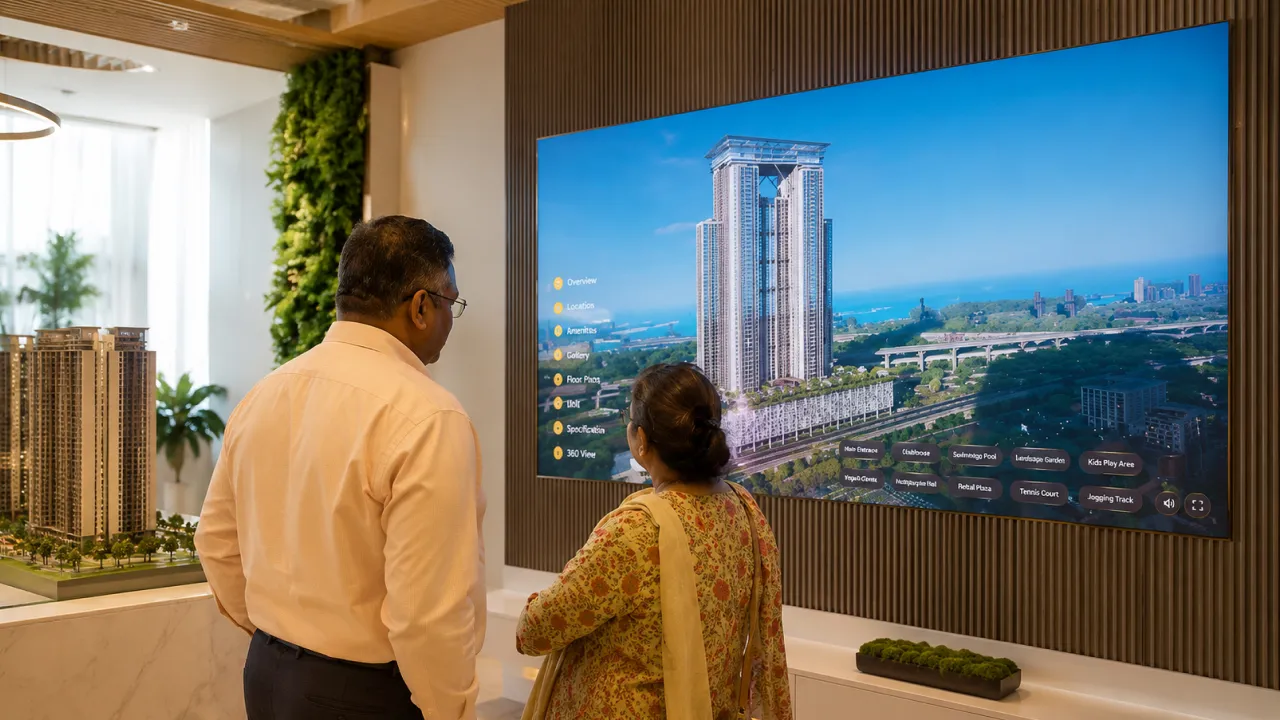
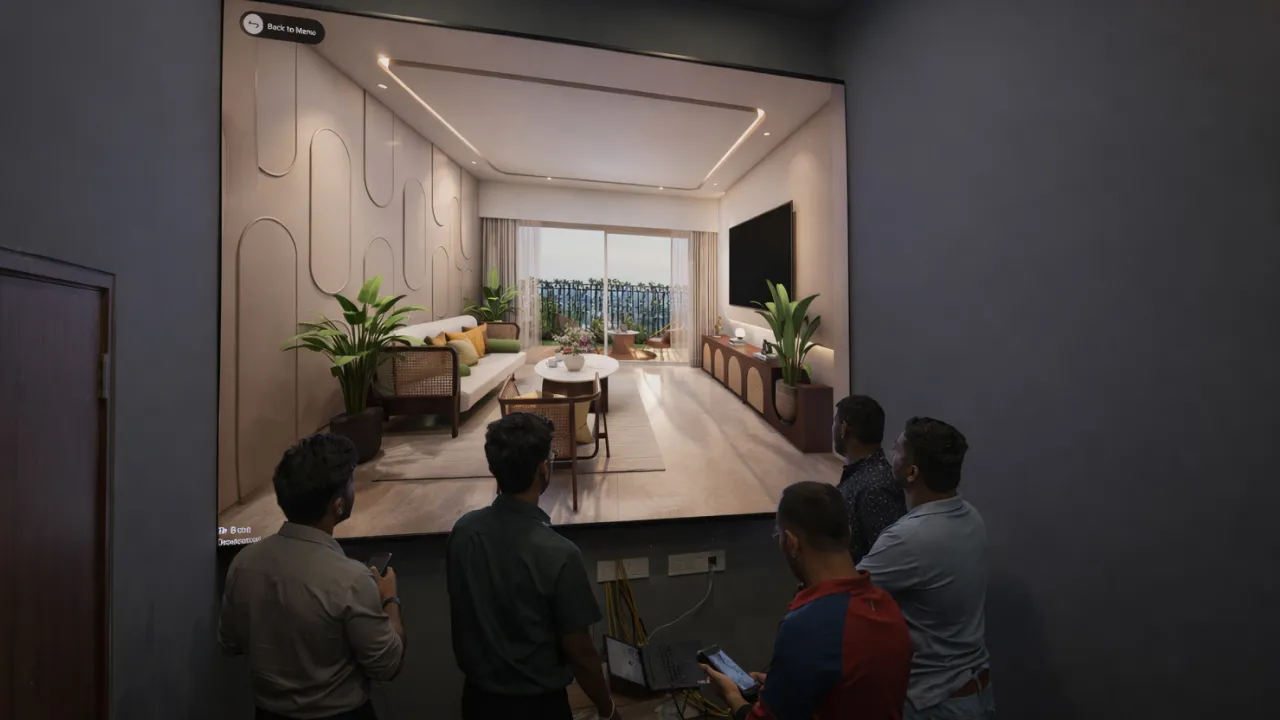
V-Estate's work with Adani Realty on Codename LIT replaced static collateral with a digital, interactive presentation layer — one that can be updated instantly as configurations, availability, or pricing shift, without a single reprint. Buyers explore towers, amenities, and layouts through a format built to keep pace with a project this size, rather than flattening it into a handful of static images.
It's the same shift V-Estate outlines in its broader look at archviz and how it helps real estate sell faster — moving presentation from something printed once and reused for months, to something that's always current and always interactive.
What You Gain When You Retire the Brochure
- Real-time accuracy. Update a floor plan or price point once, centrally, and every sales touchpoint reflects it instantly
- Deeper buyer trust. Interactive tools let buyers verify details themselves instead of taking a salesperson's word for it
- Lower long-term cost. No reprints, no wasted stock when a phase sells out, no outdated brochures circulating months after a price change
- Stronger brand positioning. A digital-first presentation quietly signals that your organisation operates at a more sophisticated level than competitors still handing out laminated sheets
For large-scale developments especially, this isn't a marginal upgrade. It's the difference between a presentation that keeps up with your project and one that's perpetually a few weeks behind it.
Retire the Renders. Build Something Buyers Can Actually Explore
If your sales collateral is still measured in reams of paper, it's worth asking what you're really protecting by keeping it that way. V-Estate's proptech platform gives developers a living, always-current alternative — 3D walkthroughs and digital twins that replace the brochure entirely, not just supplement it.
Tired of reprinting every time something changes? Get in touch with V-Estate and build a presentation system that updates as fast as your project does.






















Sign in to leave a comment.