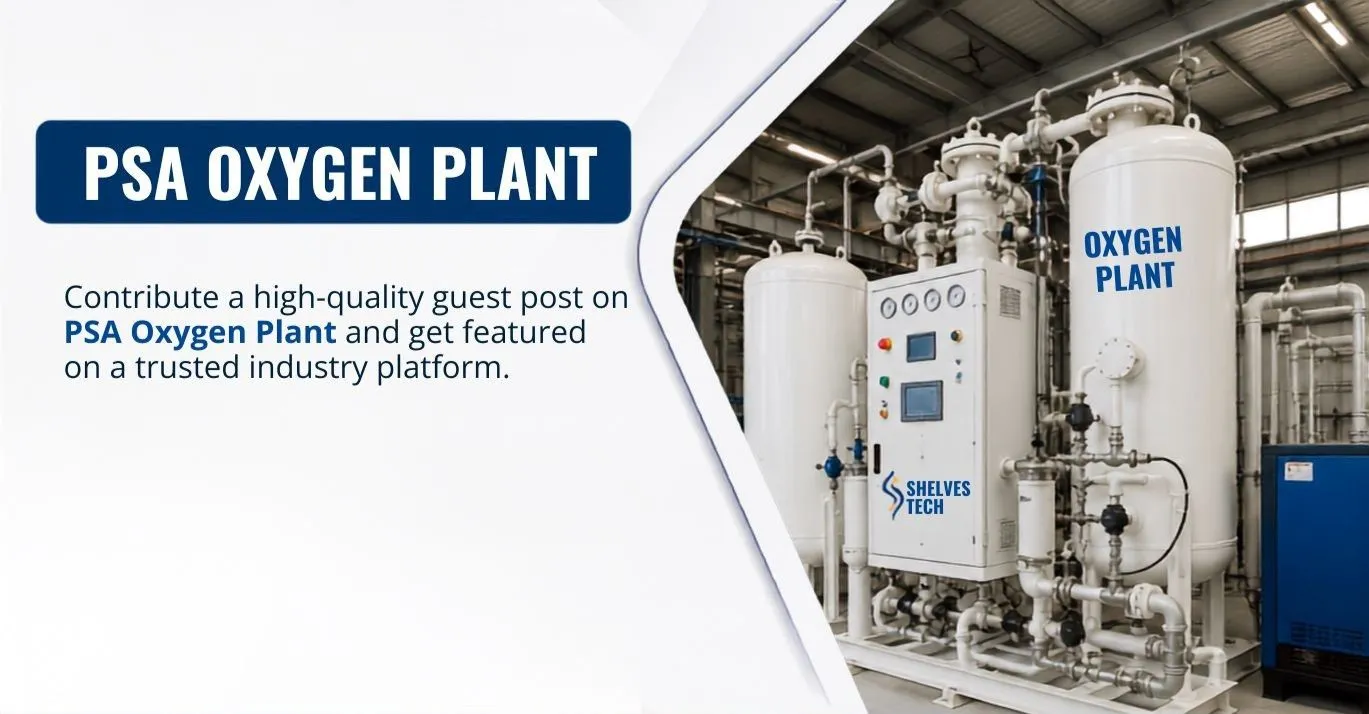

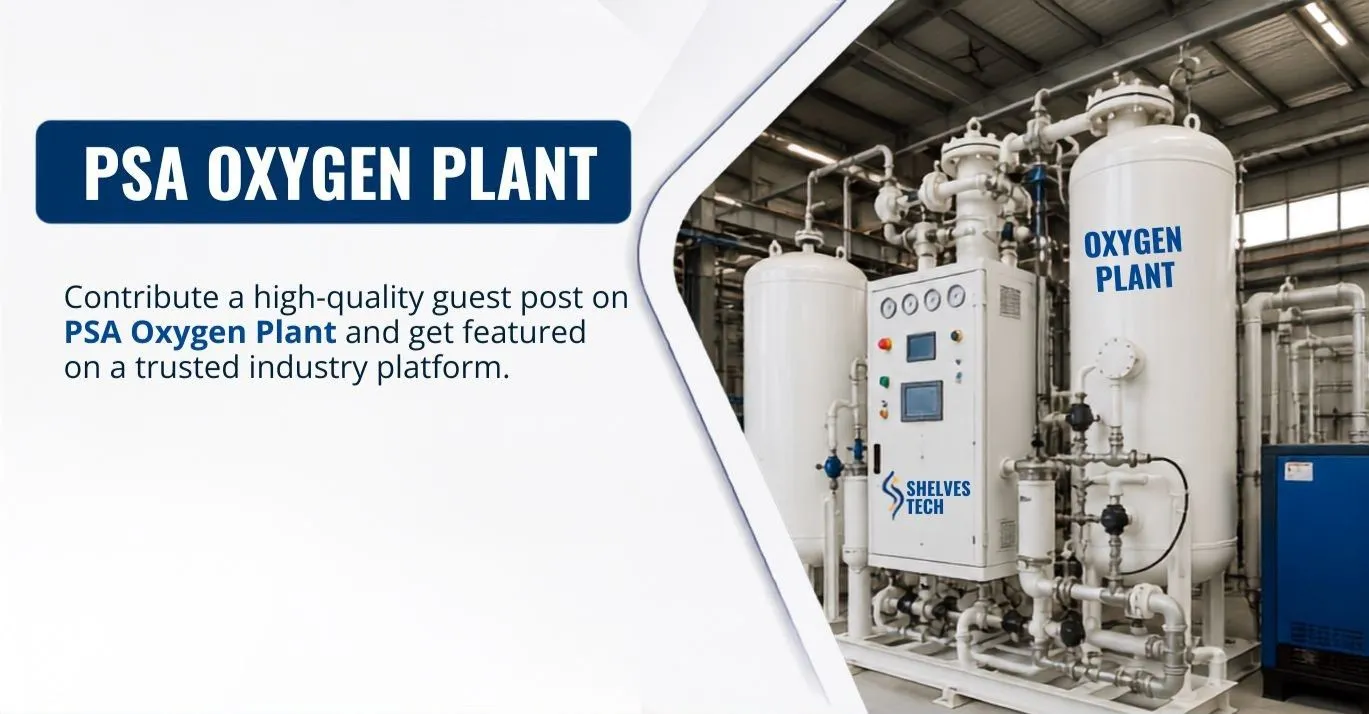
A hospital in a Tier-2 town runs out of oxygen cylinders on a Friday evening. The closest refill depot is two hours away by road. This is precisely the reason why procurement teams all over India have begun to use a PSA Oxygen Gas Plant as infrastructure rather than an unnecessary luxury cylinder logistics lead you down the wrong path at the worst possible moment. An on-site plant does not.
Here's the blunt version: if your facility still depends entirely on delivered cylinders or liquid oxygen tankers, you're carrying a supply risk that has nothing to do with your medical staff and everything to do with traffic, fuel prices, and a vendor's delivery schedule. A PSA Oxygen Gas Plant removes that dependency by generating oxygen on-site, from the air already in the room.
What's Actually Inside a PSA Oxygen Gas Plant
Most brochures describe the PSA process in one line — "air goes in, oxygen comes out" — and skip the part that actually matters to a buyer: consistency under load.
The Core Components
- Air compressor — pressurizes ambient air before it enters the system
- Filtration train — strips moisture, oil, and dust before the air reaches the towers
- Twin zeolite adsorption towers — one tower adsorbs nitrogen while the other releases oxygen, and the two alternate continuously
- Oxygen storage and control panel — buffers output and monitors purity in real time
The Detail Most Buyers Skip
Purity isn‘t a figure it‘s a band, and that‘s the band that needs to go on your purchase order, not assumed. MSDE quality PSA systems usually provide oxygen at 93% +/-3% purity a level which is what hospitals actually require. For industrial use, purity may be directed up to 95%+ if required. When a quote doesn‘t specify the purity band and the tolerance a mistake or an omission? that‘s what you‘ll be arguing about after installation, not before.
The Objective: 5 Questions to Ask Before You Sign Anything
Every supplier will tell you they're reliable. Here's what to actually check.
- Is the purity guarantee written with a tolerance band, not a vague claim? A bad answer sounds like "our oxygen is very pure." A supplier who won't put a number and a tolerance on paper hasn't tested their own output enough to commit to one.
- Does the plant come with ISO-certified manufacturing documentation? A bad answer is "we can get that for you later." Certification exists before delivery, not after a hospital's biomedical audit forces the issue.
- What's the actual maintenance schedule, not the marketing version? A bad answer is "very low maintenance." Every PSA system needs filter changes and analyzer checks on a fixed calendar — a supplier who can't name the interval hasn't run one long-term.
- Who handles installation, and is it the manufacturer or a subcontractor? A bad answer dodges the question entirely. Direct manufacturer installation means one point of accountability if something doesn't work on day one.
- What happens when a part fails — is there a defined AMC, or a "we'll figure it out" policy? A supplier who says they'll handle issues case by case doesn't have a policy. That's a negotiation you'll lose after the warranty period ends and the plant is already piped into your ICU.
Benefits That Actually Protect Your Budget and Your Patients
- No dependency on delivery schedules. Oxygen is generated on-site, so a delayed cylinder truck stops being a hospital emergency.
- Lower cost-per-litre over time. Once installed, a PSA plant produces oxygen from ambient air — no repeat purchase cost per cylinder refill.
- Modular capacity. Systems scale from a single ward to full pipeline supply covering ICUs, operating theatres, and emergency wards.
- Reduced storage risk. Fewer cylinders on-site means less handling risk and less space given over to storage.
- Built-in purity monitoring. Automated alarms flag purity deviation before it becomes a clinical problem, not after.
- Predictable maintenance costs. A fixed AMC replaces the unpredictable expense of emergency cylinder procurement during shortages.
Availability Across India — and Why Location Is a Supply Chain Decision
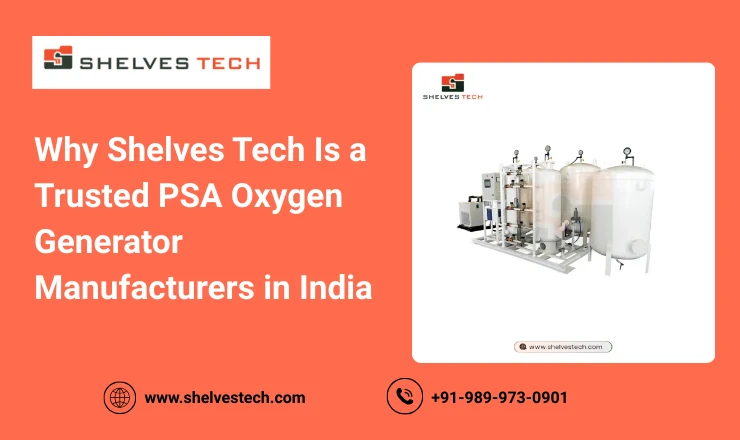
A plant manufactured and supported out of Delhi isn't just a head-office detail — it affects how fast a technician reaches your facility when something needs attention. Shelves Tech is based in Delhi and services hospitals, government health departments, and industrial buyers across India, with completed projects supporting healthcare infrastructure for the Government of Nagaland and the Government of Mizoram. That's not incidental — it means the manufacturing and after-sales support sit close enough to the buyer that a service call doesn't turn into a multi-day wait.
The same manufacturing base has supported installations beyond India, including projects tied to healthcare infrastructure in Myanmar, Kenya, and the Democratic Republic of Congo. For a procurement officer, that history matters less as a marketing point and more as evidence that the plant has already been tested outside a single climate and a single power grid.
About Us
We've been building PSA Oxygen Gas Plants since 2013, and one thing we learned early is that a plant that looks fine on a spec sheet can still fail a hospital if nobody accounts for local voltage fluctuation. We design our control systems with that in mind, because we've seen what happens when a system built for stable grid power gets installed somewhere it isn't. Our director, Mukesh Panchal, has spent over 20 years across manufacturing and healthcare equipment ventures before this one, and that background shows up in how we quote projects — we'd rather lose an order than promise a purity band we can't hold. We manufacture directly, we hold ISO-certified processes, and we handle installation and AMC ourselves instead of routing it through a third party.
Get a Quote From Shelves Tech
Send us your facility's daily oxygen requirement in litres per minute, your intended purity specification, and your installation timeline. We respond to serious inquiries within 24 hours, and our minimum order quantity on standard PSA units is one plant. Reach Shelves Tech directly — we quote based on your actual load, not a generic package.
Conclusion
A PSA Oxygen Gas Plant isn't a backup system anymore — for most hospitals, it's the primary one, with cylinders as the backup. The buyers who get this right are the ones who ask about purity tolerance, maintenance intervals, and installation ownership before signing, not after. As oxygen demand keeps climbing across India's healthcare network, the facilities that invested early in on-site generation will be the ones that aren't scrambling the next time supply gets tight.
FAQs
What is a PSA Oxygen Gas Plant used for?
It generates medical or industrial-grade oxygen on-site by separating oxygen from compressed air using zeolite adsorption, instead of relying on delivered cylinders or liquid oxygen tankers.
How long does installation take?
It depends on plant capacity and site readiness — a single-ward unit can be operational faster than a full pipeline system covering ICUs and operating theatres. We'll give you a firm timeline once we see your site layout, not before.
What purity level can I expect from a medical PSA system?
Standard medical-grade output is 93% ±3%, which meets hospital requirements for patient care. If your application needs a tighter band, that has to be specified at the quotation stage.
Do PSA Oxygen Gas Plant Manufacturers in India offer AMC support?
Reputable ones do, and you should ask for the AMC terms in writing before purchase. We'll be honest — a plant without an AMC in place is a plant you'll eventually be servicing on your own dime and your own schedule.
How does an on-site plant compare to cylinder delivery on cost?
Upfront cost is higher than a cylinder order, but cost-per-litre drops over the plant's operating life since there's no repeat delivery charge. The payback period varies by facility size and usage.

























Sign in to leave a comment.