
What We Now Know About Trauma That Changes Everything
For a long time, trauma treatment was built around a single idea: talk about it enough, and it will lose its grip. That idea was not entirely wrong, but it was incomplete in ways that left a lot of people feeling like they were failing at recovery.
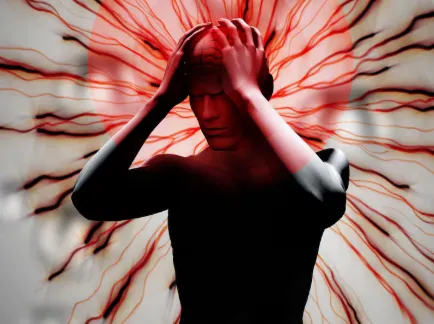
What research over the past two decades has made increasingly clear is that trauma is not stored the way ordinary memories are. It does not sit in a file in the mind waiting to be reviewed and reinterpreted. It lives in the body, in the nervous system, in reflexes and physical responses that can activate years after the original experience. Talking about trauma can help, but it often cannot reach the parts of the system where trauma actually lives.
PTSD treatment in 2026 looks substantially different from what it looked like even ten years ago. The shift is toward approaches that address the whole system, not just cognition and narrative.
The Nervous System Is the Starting Point
Post-traumatic stress disorder is, at its core, a dysregulation of the nervous system. Something happened that overwhelmed the body's capacity to process it in the moment. The survival response, fight, flight, or freeze, did exactly what it was supposed to do. The problem is that the system can get stuck in that state long after the danger has passed.
This is why PTSD symptoms often feel so disconnected from conscious thought. The hypervigilance, the startle response, the difficulty sleeping, the emotional numbing, these are not personality traits or choices. They are a nervous system that learned to stay on alert and has not yet received a clear enough signal that it is safe to come down.
Modern trauma treatment starts by helping people understand this before doing anything else. That knowledge alone can reduce shame significantly.
Approaches That Go Beyond Talk
EMDR
Eye Movement Desensitization and Reprocessing has been one of the most researched Trauma and the Nervous System treatments of the past thirty years. It uses bilateral stimulation, typically guided eye movements, while a person holds a traumatic memory in mind. The mechanism is not fully understood, but the clinical evidence for its effectiveness is strong. It allows the brain to reprocess stored trauma material in a way that reduces its emotional charge without requiring extensive verbal narration.
Somatic Therapy
Somatic approaches work directly with the body. The premise is that trauma is held in physical patterns, tension, posture, breath, and movement, and that releasing it requires working at the physical level as well as the cognitive one. Therapists trained in somatic methods help clients track body sensations, notice physical responses in real time, and gradually shift the patterns that have become associated with threat.
Internal Family Systems
Internal Family Systems, or IFS, is a model that understands the mind as made up of different parts, some of which carry the weight of traumatic experiences and some of which have developed protective roles to keep those experiences from overwhelming the system. IFS work involves building a relationship with those protective parts, developing trust, and gradually accessing the parts that hold the original pain. It is slow, deliberate work, but for people with layered or early-onset trauma, it often reaches places that other approaches cannot.
Trauma-Informed CBT
Cognitive Behavioral Therapy, when applied with a strong trauma lens, goes beyond disputing thoughts. Trauma-informed CBT includes psychoeducation about the nervous system, gradual exposure work, and a careful attention to the pace at which a client can process difficult material without becoming overwhelmed. This approach is particularly useful for people who have enough emotional grounding to begin working with the narrative of what happened.
Why Pace Matters More Than Most People Expect
One of the most common mistakes in trauma recovery, both by clients and sometimes by clinicians, is pushing through material too fast. There is a window of tolerance, a zone where a person is activated enough to do real work without being so overwhelmed that the system shuts down or floods.
Staying inside that window is the job of skilled trauma therapy. Going too slowly is not usually the risk. Going too fast is.
What Live Life Now! Brings to Trauma Recovery
At Live Life Now!, trauma work is approached with a strong grounding in what actually helps people recover, not just cope. The practice draws on evidence-based methods and integrates them with practical skills so that clients have real tools to use between sessions, not just during them.
This matters because trauma recovery is not something that happens only in a therapy room. It happens in the moments between sessions, in the choices a person makes about their body, their relationships, and their day. Building skills that support the nervous system in those moments is part of what makes treatment effective over time.
Progress Looks Different Than People Expect
Recovery from PTSD is not linear, and it does not look like forgetting what happened. What changes is the relationship to the memory and to the body's response to reminders of it. Triggers still exist for most people in recovery. What changes is how much power they have, how long they last, and how quickly a person can return to a sense of groundedness afterward.
That is real recovery. It is available in 2026 with approaches that were not widely accessible even a decade ago.















Sign in to leave a comment.