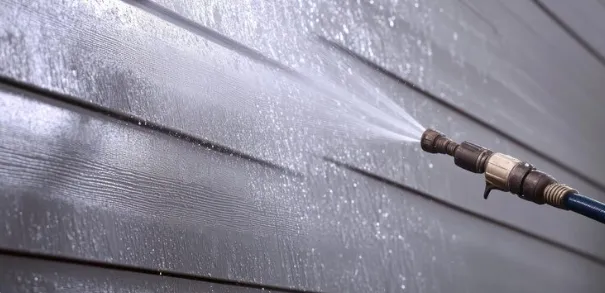

At some point, most homeowners stand in front of a worn-out deck or a stained driveway and ask themselves if it's time to replace it. The surface looks bad. It's been that way for a while. And the assumption is that if something looks that rough, it's probably past the point where cleaning can do anything about it.
That assumption is wrong more often than people realize, and the gap between what power washing costs and what deck or driveway replacement costs is significant enough that it's worth running through before making any decisions.
The Case for Cleaning Before Replacing
What "Worn Out" Actually Looks Like
There's a difference between a surface that looks worn and a surface that's structurally compromised. Concrete that's dark, stained, and coated in biological growth can look like it's falling apart when it's actually structurally sound underneath. Wood decking that's gray, dirty, and soft-looking in spots may have years of life left if the deterioration is surface-level.
Power washing vs replacement comes down to one primary question: is the problem in the material or on top of it? A professional cleaning answers that question, and in many cases the answer is that the problem is on top of it.
Concrete that looks nearly black from organic growth and oil staining can come back looking close to original after a high-pressure wash. Wood that's gray from oxidation and surface grime can look completely different after a soft wash and reveal if the boards underneath are still solid or if there's actual rot to deal with.
The Cost Comparison
Deck replacement costs vary depending on size, material, and labor, but for an average residential deck, full replacement runs into thousands of dollars. Concrete driveway replacement is similar, often in the range of several thousand dollars depending on the size and the complexity of the job.
Professional power washing for either surface costs a fraction of that. For most residential properties, exterior cleaning of a deck or driveway falls in a range that makes the comparison straightforward. If cleaning extends the life of the surface by even two or three years, the math heavily favors cleaning.
Companies like Jacobson's Power Washing in the Richmond area see this situation regularly. Homeowners come in expecting to hear that their deck or driveway needs to go, and after a cleaning, the surface reveals itself to be in far better condition than the buildup suggested.
When Cleaning Genuinely Extends the Lifespan
Decks
Wood decking deteriorates through two main mechanisms: UV degradation and moisture-related damage. The gray color that develops on unfinished decks is largely from oxidation and surface weathering, not structural rot. The organic growth that builds up on deck surfaces, moss, algae, mildew, holds moisture against the wood and accelerates the second mechanism.
Removing that organic growth with a proper soft wash stops the moisture retention problem. Once the surface is clean and dried, the wood can be assessed for actual rot, and if the boards are solid, sealing or staining the surface protects it going forward.
A deck that looked like it needed replacing often needs cleaning, spot repair on a few boards, and a protective coat. That sequence costs a fraction of full replacement and can add years to the deck's useful life.
Driveways
Concrete is one of the more forgiving surfaces to maintain because its structural integrity is largely independent of its surface appearance. A concrete driveway that's stained, dirty, and coated in algae is still structurally a concrete driveway. The cleaning removes what's on top of the material, not what's in it.
The cases where driveway replacement makes sense are when there's significant cracking, heaving from tree roots or freeze-thaw cycles, or crumbling along edges from physical damage. Surface staining and biological growth are not structural problems, and treating them as such leads to unnecessary replacement costs.
Oil stains that have bonded to concrete over many years may not come fully clean, but they can be reduced significantly. Biological growth, rust, and general grime are more responsive to high-pressure washing and in most cases come off substantially in a single session.
When Replacement Is Actually Necessary
Cleaning is not a substitute for replacement when the structural integrity of the material is compromised. Wood boards that are soft when you press on them, that flex noticeably underfoot, or that show obvious rot at the grain level are boards that need to come out regardless of how clean the surface looks.
Concrete that has large cracks running through it, sections that have heaved or settled significantly, or edges that are crumbling from physical deterioration is concrete that cleaning won't fix. These are structural issues, and no amount of pressure washing addresses what's happening in the material itself.
The value of cleaning in these situations is still diagnostic. A professional wash on a surface you're evaluating for replacement reveals the actual condition of the material underneath the buildup. Sometimes that information confirms replacement is necessary. Sometimes it shows that the material is in much better shape than it appeared.
Making the Call
The practical approach before committing to any replacement project is to get the surface professionally cleaned and then assess what you're looking at. In many cases, the decision becomes much clearer once the organic growth, staining, and surface buildup have been removed.
Power washing vs replacement stops being a question once you can see the actual condition of the material. And more often than not, what was assumed to be a replacement job turns out to be a cleaning job with some targeted repairs. That's a different budget conversation entirely.
































Sign in to leave a comment.