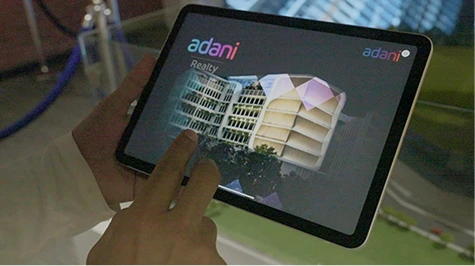

The typical real estate buying journey looks something like this: initial interest leads to a site visit, which leads to confusion because the project isn't finished. The buyer returns for a second visit to confirm what they thought they saw. A third visit happens because they want to bring family. A fourth because they realized they forgot to check something important. By the fifth visit, both the buyer and the sales team are exhausted, and what should have been a straightforward decision has become a grinding process.
This isn't unique to any particular developer or market. It's systemic to how real estate sales have worked. When the only way to truly experience a property is to visit the physical site, and that site is under construction or incomplete, everything slows down.
Property digital twin technology addresses this not as a luxury feature but as a practical solution to a real operational problem.
The Economics of Site Visit Complexity
Let's think about the actual cost structure of traditional real estate sales:
A single site visit isn't free. The sales team loses time from other activities. If site access is limited by construction schedules, visitors must fit into narrow windows. A buyer who lives far away invests significant time and money traveling. If they bring family members, that multiplies the time investment. Add weather considerations, scheduling coordination, and the reality that empty construction sites are difficult to navigate safely, and site visits become surprisingly costly experiences.
From a developer perspective, each site visit requires staff deployment and facility management. Scale this across multiple property visits per interested buyer, and the operational cost climbs. Some of that cost is inevitable. Some of it is the consequence of buyers needing multiple visits because a single visit doesn't provide sufficient understanding.
Digital twin for real estate fundamentally changes this equation because it allows a buyer to achieve substantial understanding without each understanding-seeking visit requiring physical presence.
What Changed at Urban Woods and Matunga
When Rustomjee implemented immersive experiences at Urban Woods and Matunga, something measurable shifted in their sales dynamics.
A buyer could now explore the apartment thoroughly at home. They could move through spaces at their own pace, understand the layout, visualize living there, and arrive at the physical site with clarity rather than confusion. The physical visit still happened, but its purpose changed. It wasn't "let me figure out what this is"—it was "let me confirm what I've understood and experience the finishes in person."
This reduced repeat visits dramatically. When a buyer has already thoroughly explored the property digitally, the questions that previously required second, third, and fourth site visits were already answered. The unnecessary trips disappeared.
The impact was predictable but significant: faster sales cycles, reduced operational burden, and higher conversion because buyers were making decisions from actual understanding rather than incomplete information.
The Operational Transformation
Here's what specifically changed in the sales process when developers implemented property digital twin technology:
Reduced repeat visit burden. Instead of a typical buyer making 3-4 site visits before deciding, the number dropped substantially. Why? Because confusion—which drives repeat visits—was eliminated. A buyer who's already virtually inhabited the space, who understands dimensions and flow, doesn't need to return to confirm basic spatial questions.
Improved scheduling flexibility. Physical site visits no longer need to happen at specific times during construction windows. A buyer can explore the property digitally whenever suits their schedule, then schedule a physical visit once they're ready. This works better for busy professionals and international buyers who can't visit repeatedly.
Higher quality in-person experience. Because the buyer has already understood the basic property, the physical visit focuses on what you actually need to physically experience—materials, finishes, neighborhood feel, spatial confirmation. The visit becomes higher-value rather than repetitive confirmation.
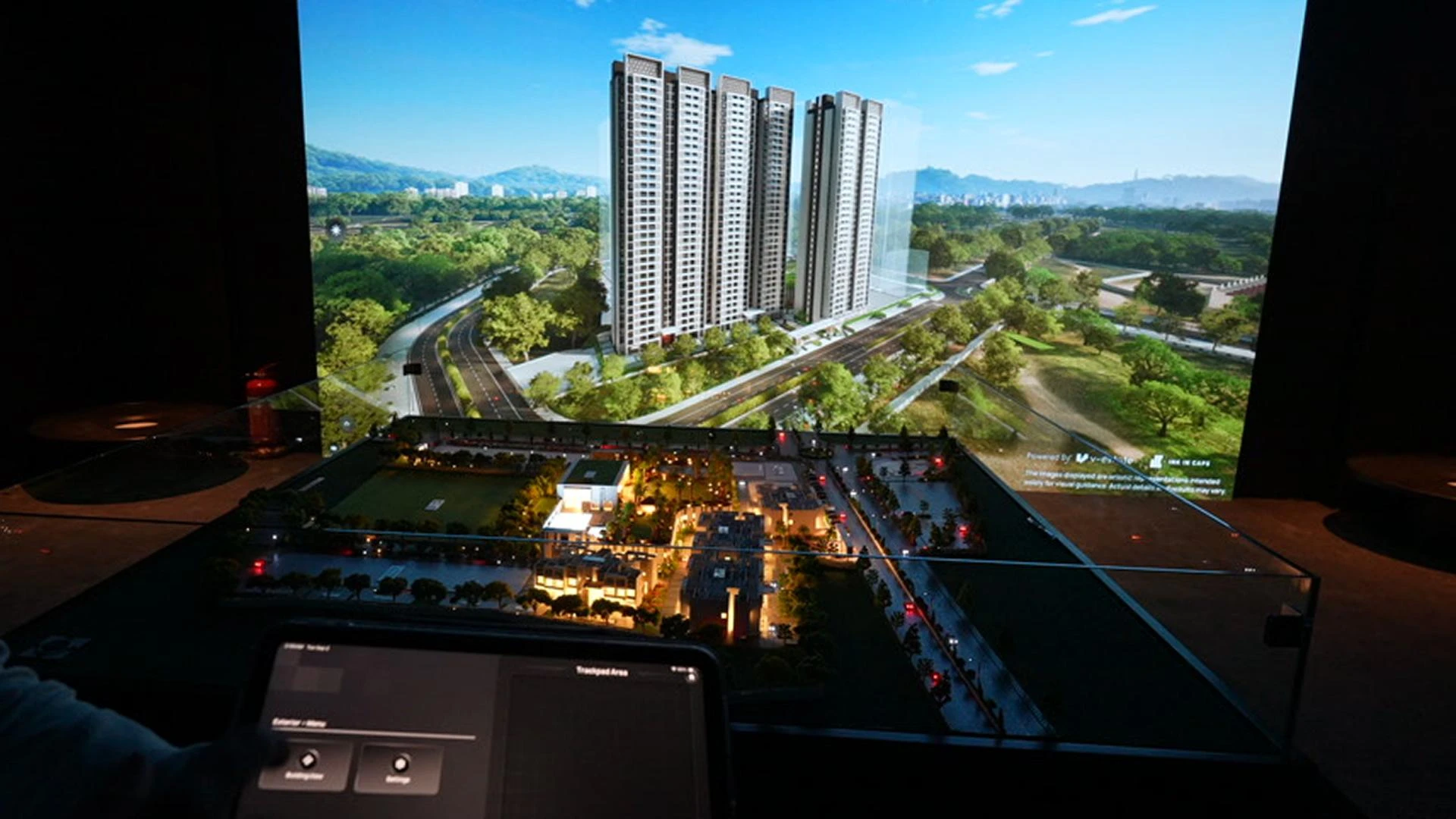
Faster decision-making. Projects like Verdant Vista and Adani Realty documented measurably shorter decision timelines when buyers had comprehensive digital twin understanding. The sales cycle compressed because the information asymmetry that traditionally causes hesitation was eliminated.
What Runwal Raaya and Others Demonstrated
When implementing real estate digital twin experiences, developers discovered specific operational benefits:
The sales team could focus on higher-level conversations. Instead of answering "how big is the bedroom?" for the tenth time that week, professionals could discuss investment potential, customization options, and lifestyle fit. This qualitatively improved sales interactions.
Common area understanding reduced on-site confusion. Projects like Runwal Raaya integrated community amenities, shared spaces, and neighborhood context into the digital experience. When buyers already understood how the apartment connected to common areas, their on-site visit was more purposeful.
Family decision-making accelerated. A typical high-value property purchase involves multiple family members, and coordinating multiple site visits is complex. When the property could be explored digitally, family discussions happened more naturally. Everyone could explore independently, then discuss, then one site visit confirmed decisions rather than five visits producing information.
The Specific Efficiencies
Digital twin technology for real estate produces concrete operational improvements:
Reduced site visit scheduling complexity. Construction site access is logistically challenging. Coordinating visits across multiple potential buyers within construction windows creates scheduling friction. With digital exploration enabling initial understanding, the pressure on physical site visit scheduling decreases significantly.
Lower operational costs per sale. Every site visit requires staff deployment, facility preparation, and safety management. Reducing the average number of site visits per buyer directly reduces operational cost per sale. Some developers saw per-sale operational costs decrease 30-40% as repeat visit frequency dropped.
Improved lead-to-sale conversion. This is subtle but important: when buyers can thoroughly explore a property without barriers to understanding, conversion rates improve. It's not that the product is better; it's that confusion—a major barrier to purchase—has been removed.
Extended geographic reach with existing resources. A buyer in another city can explore the property thoroughly without requiring multiple visits. This expands the addressable buyer market without scaling the sales team proportionally.
The Timeline Advantage
Consider the practical timeline difference:
Traditional model: Initial site visit (buyer confused due to construction/incompleteness) → Second visit to confirm layout → Third visit to evaluate finishes → Fourth visit to bring family → Finally ready to discuss terms. Timeline: 4-8 weeks typically.
With digital twin: Buyer explores property thoroughly at home → Shares with family digitally → One or two physical visits to confirm and experience finishes → Ready to discuss terms. Timeline: 1-2 weeks typically.
This isn't because buyers are rushed. It's because understanding happens more efficiently. Projects like Matunga Experience Centre documented this timeline compression directly.
Beyond the Transaction
Interestingly, the operational improvements extend beyond the immediate sale.
When buyers have thoroughly explored a property before purchase, their post-completion satisfaction increases. They move in having already "lived" there mentally. They're less likely to regret the purchase or experience buyer's remorse. This improves word-of-mouth marketing and referral generation.
The sales team, freed from repetitive site visit management, can focus on relationship building and post-purchase engagement. This matters for future projects and community building.
The Practical Implementation
The transition from traditional to property digital twin-enhanced sales doesn't require abandoning existing processes. Most successful implementations, like Urban Woods and Verdant Vista, use a hybrid approach:
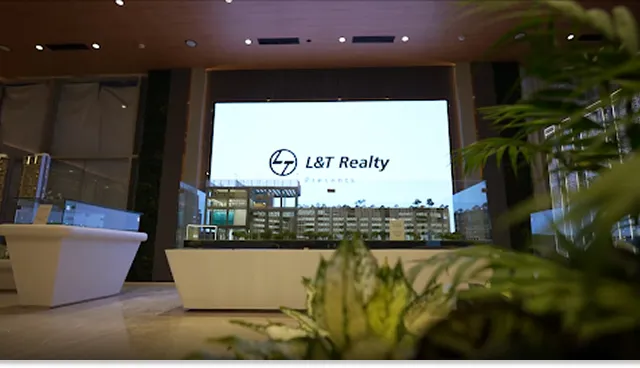
Physical experience centers remain, but serve a different purpose—showcasing finishes, enabling material touch, and building emotional connection rather than providing basic spatial understanding.
Digital experiences handle spatial understanding, neighborhood context, and accessible exploration across geographies and schedules.
Sales conversations happen at higher sophistication levels because basic information asymmetry has been resolved.
The Real Efficiency Story
When developers talk about implementing property digital twin technology, the conversation often centers on marketing innovation or buyer experience. But the operational reality is straightforward: this technology solves a practical problem that's plagued real estate sales for years.
Buyers needed to make multiple site visits because single visits didn't provide sufficient understanding. That drove operational complexity, extended timelines, and increased costs. When spatial understanding can happen efficiently without repeated physical visits, the entire system becomes more efficient.
It's not revolutionary. It's practical problem-solving applied to a process that was more complex than it needed to be.
Your sales team knows the frustration of managing endless site visits and extended sales cycles. The solution isn't working harder it's enabling smarter buyer understanding. Explore how immersive property experiences are helping developers accelerate sales timelines, reduce operational burden, and close more deals with confident, informed buyers.
























Sign in to leave a comment.