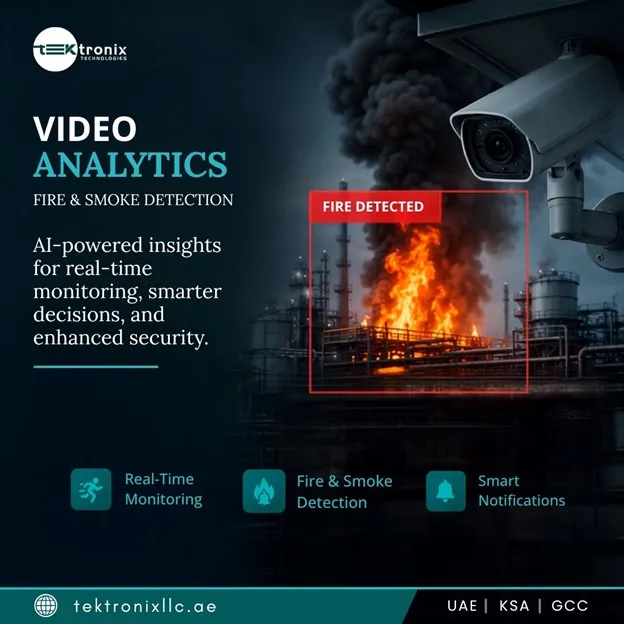

Fire and smoke in a hospital represent a categorically different emergency from the same event in a commercial office or industrial facility — patients on ventilators cannot self-evacuate, ICU and HDU clinical teams cannot abandon patients at the first sign of an alarm, and the dense network of oxygen pipelines, anaesthetic gases, and flammable clinical materials present in operating theatres and pharmacy storage areas creates fire propagation risks that demand the earliest possible detection followed by the most precisely co-ordinated response. Intelligent Video Analytics technology has fundamentally changed what early detection means in this context — moving the trigger point for fire and smoke response from the moment a traditional heat or ionisation sensor reaches its threshold to the moment an AI model observes the first visual signature of combustion developing, often minutes before any particle or temperature sensor would register anything at all.
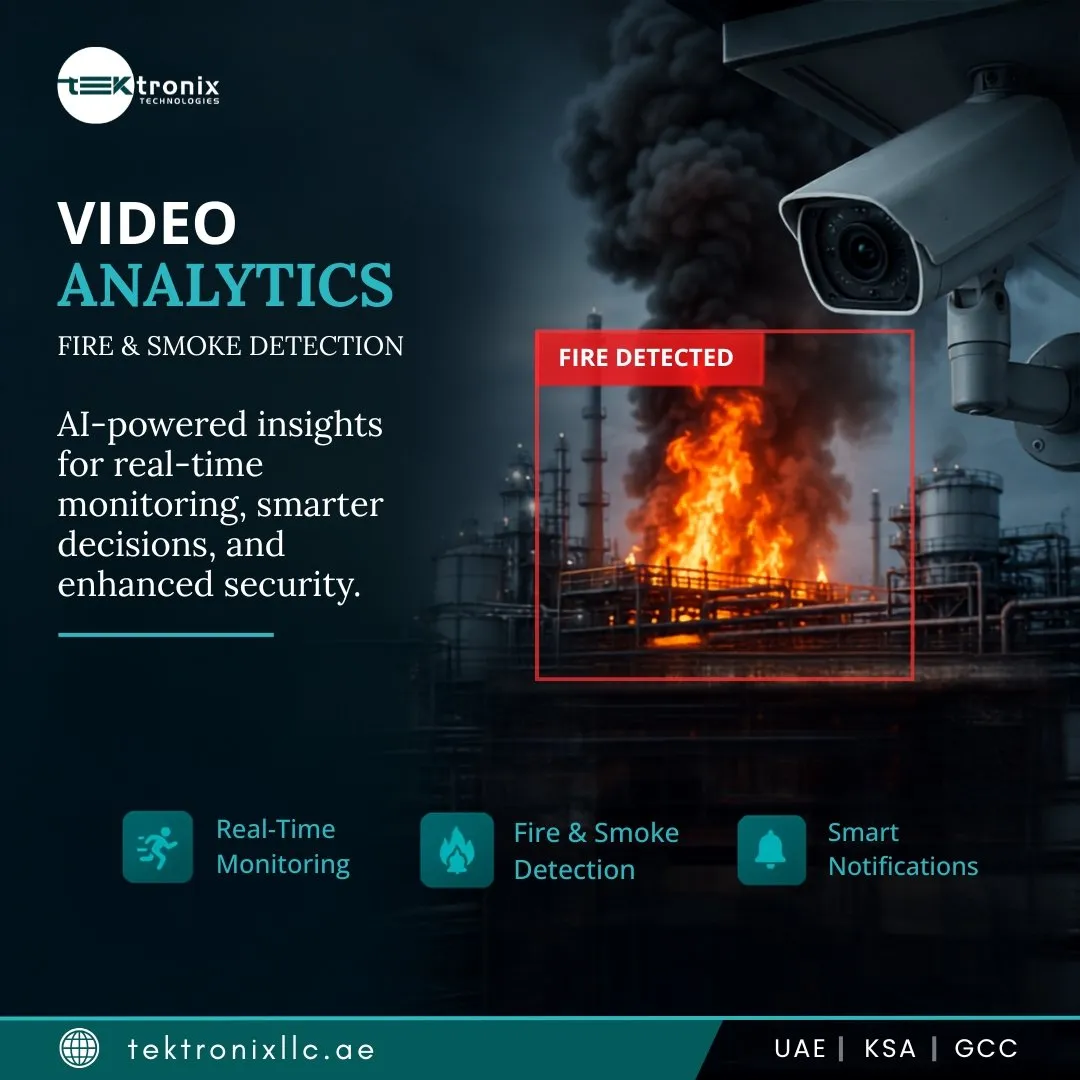
Tektronix LLC brings this next-generation detection capability to UAE hospitals through deep integration expertise and a regional deployment track record across Dubai's and Abu Dhabi's most demanding healthcare environments. Explore our video analytics solutions for UAE hospitals and healthcare facilities and discover how AI-driven fire and smoke detection protects every patient, every ward, and every critical clinical zone in your facility.
Why Traditional Fire Detection Falls Short in UAE Hospital Environments
UAE hospital fire safety standards — governed by Dubai Civil Defence (DCD) for Dubai facilities and Abu Dhabi Civil Defence Authority (ADCDA) for Abu Dhabi — mandate fire detection, alarm, and suppression systems across every licensed healthcare facility as a baseline building code requirement. The UAE Fire and Life Safety Code of Practice (DCD Technical Guideline TG-002) specifies detection, notification, and suppression standards that every new hospital must satisfy before licensing and every existing facility must maintain to retain its operating licence. These standards are comprehensive and non-negotiable — but they were written for conventional point-detection technology: ionisation detectors, photoelectric smoke detectors, heat sensors, and linear beam detectors that respond to the physical arrival of combustion products at the sensor element itself.
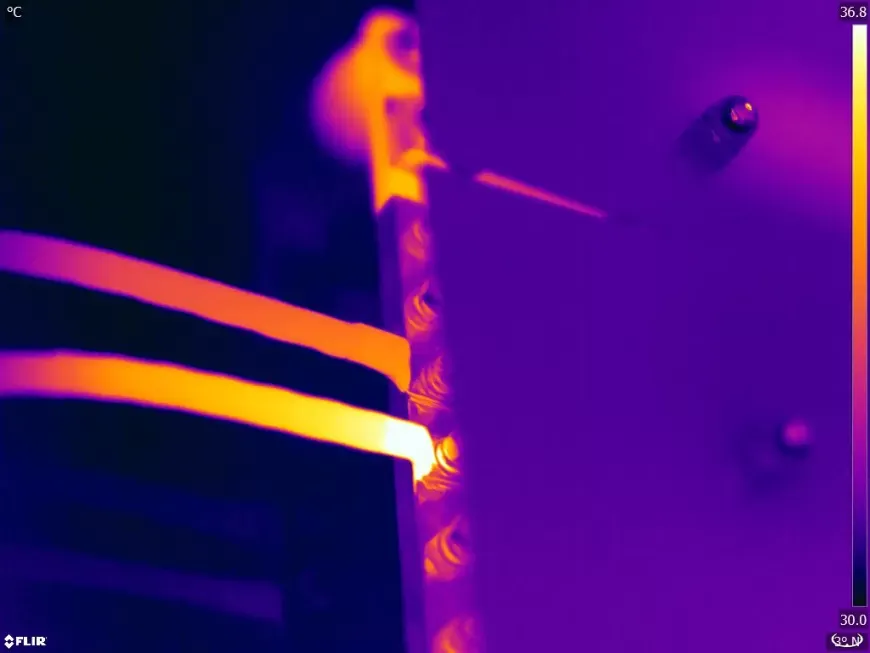
The fundamental limitation of point detection in a hospital setting is the delay between ignition and alarm. A photoelectric smoke detector mounted on a ceiling in a hospital corridor detects smoke when smoke particles reach it — by which time the fire source may already be producing combustion gases and radiant heat that are affecting the clinical environment below. In a general office this delay is inconvenient. In a hospital bay containing non-ambulatory patients on oxygen therapy, or in an operating theatre where the surgeon cannot pause mid-procedure at the first whiff of smoke, that delay is potentially catastrophic. AI-powered video fire and smoke detection identifies the visual signatures of incipient combustion — the earliest wisps of smoke, the first glow of a developing flame, the thermal radiation plume visible to infrared cameras before any particle concentration is detectable — and initiates the response chain at that earlier moment, providing the additional minutes that make the difference between a controlled clinical evacuation and an uncontrolled emergency.
How AI-Powered Video Analytics Detects Fire and Smoke in Hospital Environments
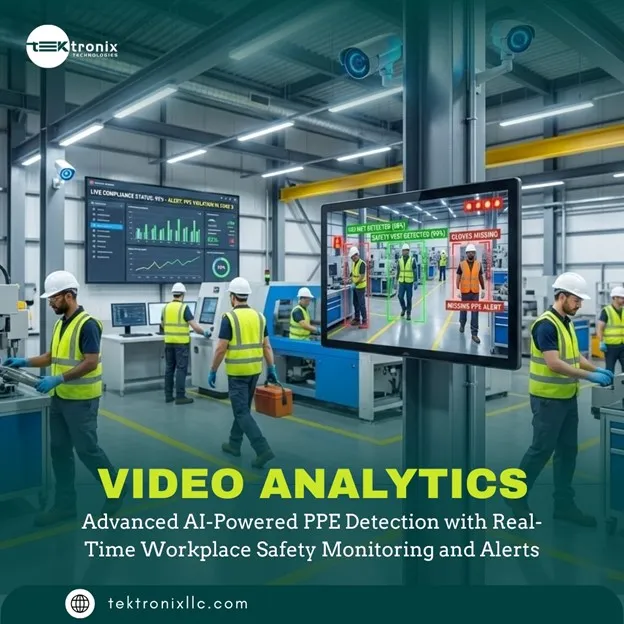
Tektronix LLC's AI-Powered Video Analytics platform continuously processes every monitored camera feed using deep learning models trained specifically on fire and smoke visual signatures across the full range of healthcare facility environments — hospital corridors, clinical ward bays, pharmacy storage areas, operating theatre suites, central sterile services departments, kitchen and catering areas, plant rooms, and electrical infrastructure rooms. The AI models distinguish between genuine fire and smoke signatures and the visual phenomena that generate false alarms in hospital environments: steam from autoclaves and sterilisation equipment, vapour from clinical humidifiers, dust disturbed during maintenance works, condensation from air conditioning diffusers near cameras, and the visual noise generated by high-traffic corridor environments where people, equipment, and trolleys create constant movement.
This contextual intelligence is what makes AI video detection fundamentally different from motion-triggered video analytics or simple pixel-change detection, which treat any visual change as a potential alarm and generate the alert volumes that cause security and facilities teams to develop the alert fatigue that defeats the purpose of an automated detection system. The deep learning models analyse flame flicker characteristics, smoke plume behaviour, temporal spread patterns, and colour spectrum signatures that distinguish genuine combustion events from environmental false triggers with documented accuracy that Tektronix LLC's hospital deployments consistently demonstrate across Dubai and Abu Dhabi's diverse healthcare facility environments.
Core Platform Capabilities for Hospital Fire Safety
Video Analytics Software: Processing Every Camera Feed Simultaneously
Tektronix LLC's Video Analytics Software processes every connected camera feed in real time — simultaneously, continuously, and without the attention degradation that affects human monitoring of multi-screen surveillance systems after sustained periods of vigilance. For a large UAE hospital with several hundred cameras covering wards, corridors, plant rooms, car parks, and specialist clinical departments, the software maintains full analytical attention on every feed around the clock, applying fire and smoke detection models alongside the facility's other video analytics applications — intruder detection, access control verification, equipment movement monitoring, and patient safety analytics — from a single unified platform. The software's processing architecture is optimised for hospital network infrastructure, using edge-processing capability where available to reduce bandwidth requirements and ensure that detection latency remains below the five-second threshold required for the earliest possible alarm initiation.
Real-Time Hazard Detection: Visual Fire Signatures Before Sensors Respond
The operational core of Tektronix LLC's hospital fire detection deployment is Real-Time Hazard Detection, which identifies the visual precursors of a developing fire event at the earliest frame-level signature — a characteristic flicker in an electrical switchboard cabinet, the first wisps of smoke rising from a smouldering cable tray in a plant room, or an incipient flame at a stored material pile in a waste management area — and raises an alert simultaneously to the hospital security operations centre, the facilities management duty officer, and the Dubai Civil Defence-connected fire alarm panel within the detection confirmation window. The detection system does not wait for a defined smoke concentration or a threshold temperature rise; it acts on visual evidence of developing combustion that exists before any conventional sensor would be triggered, providing the additional early response window that hospital evacuation complexity demands.
Automated Emergency Response: Co-ordinated Action Without Human Relay
Early detection is only operationally valuable if it initiates an early response — and Tektronix LLC's Automated Emergency Response integration ensures that a confirmed fire or smoke detection event triggers a co-ordinated facility response without requiring a human relay between the detection moment and the first physical response actions. Integration with the hospital's fire alarm panel initiates audible and visual alarm notification across the affected zone and adjacent zones simultaneously. Integration with the building management system (BMS) triggers smoke damper closure in the HVAC system serving the affected area, protecting unaffected clinical zones from smoke ingress through ventilation ductwork. Door access control integration releases magnetic hold-open devices on fire doors, compartmentalising the affected corridor zone. Nurse call system integration alerts ward nursing stations to the detection event location, enabling clinical teams to initiate patient protection protocols before the general evacuation alarm sounds. Every response action is logged with a timestamp, creating the incident response audit trail that Dubai Civil Defence Authority post-incident investigation and Joint Commission International (JCI) accreditation review processes require.
Reduced False Alarms: The Operational Difference That Protects Patients
False fire alarms in hospitals are not a minor inconvenience — they are a clinical safety risk. Every evacuated patient on supplementary oxygen, IV therapy, post-operative monitoring, or mechanical ventilation faces procedure interruption, stress-related vital sign deterioration, and the physical risk of emergency movement that elective transfer would never involve. For this reason, Reduced False Alarms is not a secondary benefit of AI video fire detection but a primary clinical safety outcome that makes the difference between a detection system that hospital clinicians accept as an operational partner and one they resent as a source of disruptive false evacuations. Tektronix LLC's AI fire and smoke detection platform achieves false alarm rates significantly lower than conventional point detection in hospital environments by applying contextual intelligence — understanding that steam from a ward kitchen humidifier is not smoke, that the flash from a clinical photography light bank is not flame, and that dust rising from a floor-polishing machine is not a combustion signature — rather than responding to any visual change that meets a basic threshold parameter.
Integration Across the UAE Hospital Safety Ecosystem
Tektronix LLC's fire and smoke video detection capability integrates natively with the complete range of safety and security systems deployed across UAE hospital facilities. Fire alarm panel integration connects directly with Notifier, Hochiki, and Siemens Cerberus fire alarm control panels — the brands most widely deployed across DHA-licensed Dubai hospitals and ADCDA-approved Abu Dhabi healthcare facilities — ensuring that a video analytics detection event generates the same panel-level response as a conventional detector activation, triggering zone-specific alarm sequences, fire door releases, and DCD notification protocols without requiring any additional software layer between the detection system and the physical response infrastructure.
CCTV integration with Milestone XProtect and Genetec Security Center provides simultaneous live camera display of the detected event location on the security operations console at the moment of alarm, giving the duty security officer visual confirmation of the detection within seconds rather than requiring them to navigate to the relevant camera in an archive system. For UAE hospitals pursuing or maintaining JCI accreditation, the platform's incident logging module records every detection event, response action, and resolution outcome in a structured, exportable format that JCI surveyors review as evidence of active fire safety governance during accreditation survey visits. Tektronix LLC's UAE-based technical support team provides ongoing system performance review, model calibration updates, and false alarm analysis to continuously improve detection accuracy across the facility's specific camera and environmental conditions throughout the operational life of the deployment.
Video Analytics UAE: Compliance-Ready Fire Detection for the Emirates' Healthcare Standards
Deploying AI video fire and smoke detection as part of a UAE hospital's fire safety infrastructure requires a platform and implementation methodology aligned with the Emirates' specific regulatory framework. Tektronix LLC's Video Analytics UAE deployment methodology ensures that every hospital fire detection installation satisfies Dubai Civil Defence Technical Guideline TG-002 supplementary detection requirements, Abu Dhabi Civil Defence Authority fire safety standards for healthcare facilities, the DHA and DoH Abu Dhabi healthcare facility licensing frameworks, and the JCI patient safety and facility management standards applicable to UAE hospitals seeking or maintaining international accreditation. System commissioning documentation, detection performance certification, and integration verification records are produced in the formats required for DCD and ADCDA facility inspection submissions, ensuring that Tektronix LLC's video analytics fire detection deployment is a compliance asset rather than a compliance question mark for UAE hospital operators.
Tektronix LLC's UAE hospital video analytics fire detection deployment team manages every phase of the engagement — from initial camera coverage audit and detection zone mapping through AI model calibration for the facility's specific environment, fire panel and BMS integration engineering, commissioning testing against DCD performance acceptance criteria, clinical staff awareness training, and post-commissioning performance monitoring — with formal project delivery timelines aligned to the hospital's operational scheduling requirements and any ongoing accreditation programme milestones.
Video Analytics Dubai: Protecting the City's Premier Healthcare Facilities
Dubai's healthcare landscape — one of the GCC's most diverse and internationally referenced — encompasses Hamdan Medical Corporation's flagship hospitals, the Mediclinic network spanning Dubai and the Northern Emirates, Aster Hospitals' multiple Dubai facilities, King's College Hospital Dubai's tertiary care campus, the American Hospital Dubai's long-established clinical campus, and a wave of premium private hospital developments across Business Bay, Dubai Healthcare City, and the Jumeirah Medical District. Video Analytics Dubai fire and smoke detection deployments across this landscape must accommodate the full range of architectural configurations — from modern purpose-built hospital towers with structured cable infrastructure to established hospital buildings where legacy fire detection systems require integration rather than replacement. Tektronix LLC's Dubai-based engineering team has the DCD relationship, product certification documentation, and fire panel integration expertise to deploy video analytics fire detection within Dubai's existing regulatory approval framework, providing the DCD-accepted supplementary detection layer that hospital safety directors are seeking as an additional line of protection without requiring re-submission of the facility's entire fire safety system approval.
Conclusion
UAE hospitals cannot afford to rely solely on conventional fire detection technology when the patients in their care cannot self-evacuate and when every additional minute of early warning represents a measurable reduction in clinical risk. Tektronix LLC's AI-driven Video Analytics platform addresses that gap definitively — delivering visual fire and smoke detection that responds to incipient combustion signatures before any particle or heat sensor would register a threshold crossing. The platform's continuously processing AI-Powered Video Analytics engine and intelligent Video Analytics Software give hospital security operations teams the earliest possible visual confirmation of a developing fire event, while proven Video Analytics Solutions architecture ensures every detection trigger flows through a fully co-ordinated Automated Emergency Response sequence without human relay delay. The result is Real-Time Hazard Detection that initiates the clinical protection response minutes earlier than conventional systems, and Reduced False Alarms that spare patients from the clinical disruption and safety risk of unnecessary evacuation events. For UAE-wide hospital safety programmes, Tektronix LLC's Video Analytics UAE expertise covers every emirate, with specialist Video Analytics Dubai deployment capability serving the city's most demanding healthcare environments. Contact Tektronix LLC today to bring the UAE's most clinically appropriate fire detection technology to your hospital.
Frequently Asked Questions
FAQ 1: How does Video Analytics detect fire and smoke earlier than conventional detectors in UAE hospitals?
Tektronix LLC's Video Analytics fire detection identifies the visual signatures of developing combustion — flame flicker, smoke plume formation, and infrared thermal radiation — at the earliest frame-level appearance that is often minutes before any particle concentration or temperature rise reaches the threshold of a conventional ionisation, photoelectric, or heat detector. In a hospital environment where patient evacuation complexity means every additional minute of warning is clinically significant, this earlier detection window provides the additional response time that structured clinical evacuation protocols require. The AI models are trained to recognise genuine fire and smoke signatures specifically in healthcare facility visual environments, distinguishing them from the steam, vapour, and dust phenomena that trigger false alarms from conventional detectors in hospital settings.
FAQ 2: How does AI-Powered Video Analytics reduce false fire alarms in UAE hospital environments?
Tektronix LLC's AI-Powered Video Analytics platform applies contextual deep learning models that distinguish genuine fire and smoke visual signatures from the environmental phenomena that trigger false alarms in hospitals: steam from autoclaves and clinical humidifiers, condensation from HVAC diffusers, dust from maintenance activities, and vapour from sterilisation equipment. Unlike conventional detectors that respond to any particle concentration or temperature rise reaching a threshold regardless of cause, the AI engine analyses the specific spatial spread, temporal behaviour, and spectral characteristics that distinguish combustion events from benign environmental sources — significantly reducing the false alarm rate that forces unnecessary clinical evacuations and erodes staff confidence in the detection system.
FAQ 3: How does Video Analytics Software integrate with existing UAE hospital fire alarm panels?
Tektronix LLC's Video Analytics Software integrates directly with Notifier, Hochiki, and Siemens Cerberus fire alarm control panels — the systems most widely deployed in DHA-licensed Dubai and ADCDA-approved Abu Dhabi hospitals — ensuring that a video analytics detection confirmation generates the same panel-level response as a conventional detector activation. This integration means that the hospital's existing zone-level alarm sequences, DCD notification protocols, and fire suppression system activations are all triggered through the established fire alarm system infrastructure rather than through a parallel software layer, simplifying regulatory compliance documentation and maintaining the single-point control architecture that Dubai Civil Defence inspection criteria require for hospital fire safety system approval.
FAQ 4: What does Automated Emergency Response include in a UAE hospital fire detection deployment?
Tektronix LLC's Automated Emergency Response integration for UAE hospitals includes simultaneous fire alarm panel activation for zone-level alarm notification, BMS integration for automatic smoke damper closure in HVAC systems serving the detected zone, access control integration for magnetic hold-open door release enabling fire compartmentalisation, nurse call system notification alerting clinical ward stations to the detected event location, and CCTV platform integration displaying the detected camera feed on the security operations console at the moment of alarm. Every triggered action is timestamped and logged in the incident record, providing the complete response audit trail that Dubai Civil Defence post-incident investigation and JCI accreditation review processes require as evidence of co-ordinated, documented emergency response.
FAQ 5: How does Reduced False Alarms capability specifically protect patients in UAE hospital clinical environments?
In a UAE hospital, a false fire alarm that triggers a ward evacuation requires nursing teams to disconnect non-ambulatory patients from monitoring equipment, interrupt IV therapy, stop oxygen administration, and manage the physical transfer of post-surgical and critically ill patients — a process that creates genuine clinical risk of vital sign instability, procedure interruption, and physical injury during emergency movement. Tektronix LLC's Reduced False Alarms capability directly reduces the frequency of these unnecessary clinical disruptions by applying AI contextual intelligence rather than simple threshold response, delivering a false alarm rate that hospital clinical directors and accreditation bodies including JCI accept as evidence of a clinically appropriate fire safety system rather than a source of patient safety risk that requires mitigation through secondary alarm verification protocols.
For more information contact us on:
Tektronix Technology Systems Dubai-Head Office
+971 50 814 4086
























Sign in to leave a comment.