

Cross-border investing has always been complex. Different regulations, currency risks, settlement delays, and lack of transparency have historically slowed international capital movement. In 2026, this landscape is changing at a pace never seen before. Real world assets such as real estate, commodities, private equity, and infrastructure are increasingly being tokenized, allowing investors to participate in global markets with fewer barriers and greater confidence.
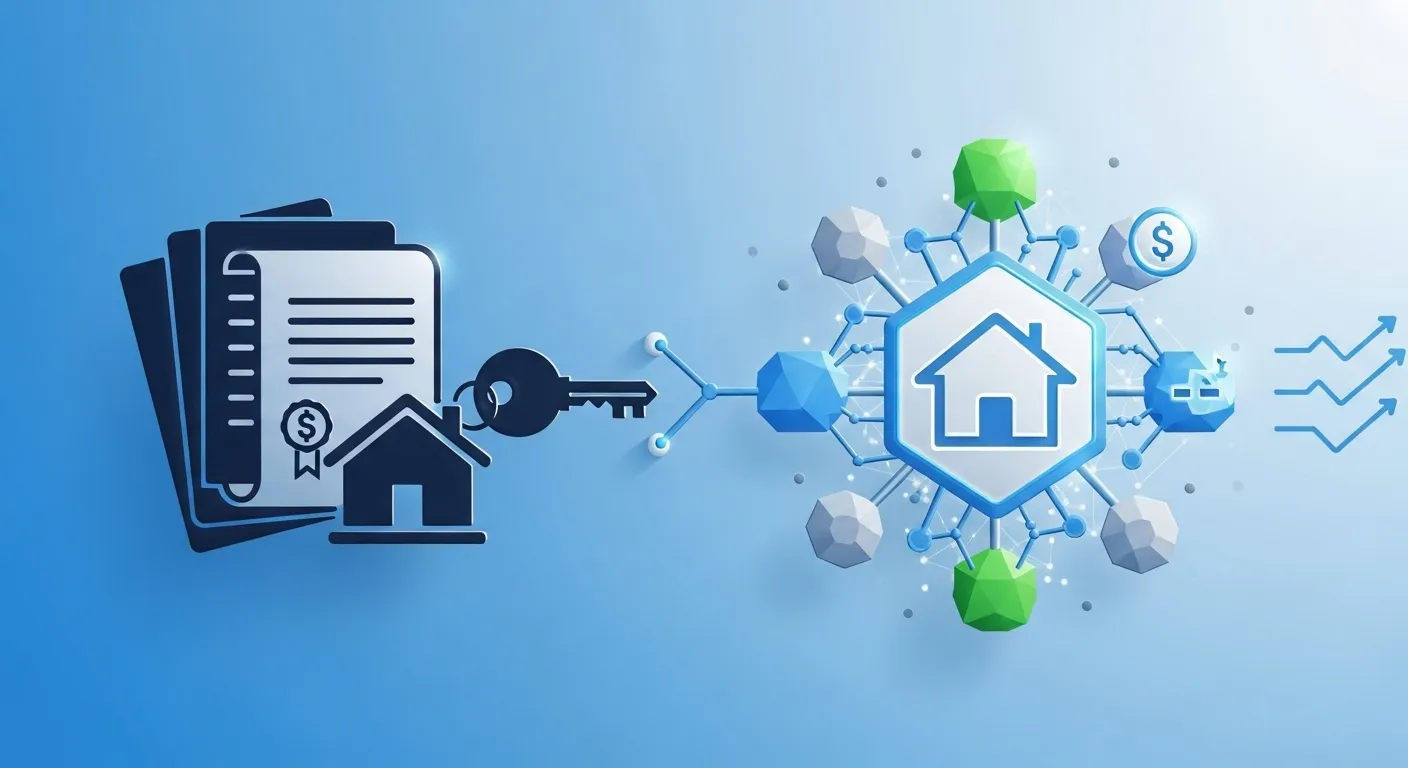
Real World Asset Tokenization is no longer viewed as a niche blockchain experiment. It has become a strategic infrastructure layer for global finance. As institutions and governments mature their digital asset frameworks, tokenized assets are emerging as a practical solution to unlock liquidity, enhance compliance, and enable seamless cross-border participation.
This article explores the most important real world asset tokenization trends shaping cross-border investments in 2026 and why enterprises, investors, and financial institutions are rapidly aligning with this transformation.
The Rise of Borderless Asset Ownership
One of the most powerful impacts of tokenization is the concept of borderless ownership. Traditionally, investing in foreign assets required local intermediaries, physical documentation, and extended settlement timelines. Tokenization replaces these inefficiencies with digital tokens that represent ownership rights on a distributed ledger.
Through advanced rwa tokenization platform development, assets can be fractionalized and made accessible to global investors regardless of location. This enables participation in international assets that were previously limited to local or institutional players.
Key outcomes driving adoption include:
- Reduced dependency on cross-border custodians
- Faster ownership transfer with near real-time settlement
- Increased transparency through immutable transaction records
- Simplified compliance through programmable asset rules
These benefits are reshaping how capital flows across regions, particularly between emerging markets and established financial hubs.
Regulatory Alignment as a Growth Catalyst
In earlier years, regulation was often seen as the primary barrier to tokenization. In 2026, it has become one of its strongest enablers. Jurisdictions across Asia, Europe, and the Middle East are introducing structured digital asset frameworks that recognize tokenized real world assets as legally enforceable financial instruments.
This regulatory clarity has empowered every major RWA Tokenization Company to design platforms that embed compliance directly into asset lifecycles. Know Your Customer rules, investor accreditation, transfer restrictions, and tax reporting are now automated at the protocol level.
As a result, cross-border investments benefit from:
- Harmonized compliance across jurisdictions
- Lower legal friction for multinational investors
- Reduced risk of regulatory arbitrage
- Increased institutional confidence
Real World Asset Tokenization Services are increasingly tailored to meet region-specific requirements while maintaining global interoperability.
Tokenized Real Assets as a Hedge Against Currency Volatility
Currency fluctuation has always been a major concern in cross-border investments. Tokenization introduces new ways to mitigate this risk. Many tokenized assets are now denominated in stable digital representations or multi-currency settlement frameworks.
By leveraging Real World Asset Tokenization Offerings, investors can gain exposure to assets without being directly exposed to unstable local currencies. This has become especially attractive for investments in emerging economies where asset value growth outpaces currency stability.
In 2026, this trend is driving increased foreign participation in:
- Infrastructure projects in developing regions
- Commercial real estate in high-growth urban markets
- Agricultural and commodity-backed assets
- Renewable energy projects with long-term yield potential
Tokenization allows these assets to be structured in ways that protect investor value while supporting local economic development.
Institutional Adoption Moves Tokenization Into the Mainstream
Another defining trend shaping cross-border investments is the accelerated adoption of tokenized assets by institutional investors. Pension funds, asset managers, and private equity firms are no longer experimenting. They are actively deploying capital through tokenized structures.
This shift has been fueled by enterprise-grade platforms developed by specialized rwa tokenization platform development company teams that focus on security, scalability, and integration with legacy financial systems.
Institutions are adopting tokenization because it enables:
- Efficient portfolio diversification across geographies
- Improved liquidity for traditionally illiquid assets
- Automated dividend and yield distribution
- Transparent asset performance tracking
As institutional demand grows, tokenized assets are becoming standardized, which further strengthens cross-border market participation.
Fractionalization Expands Global Investor Access
Fractional ownership has become one of the most transformative aspects of tokenization. In 2026, high-value assets are increasingly divided into smaller token units, allowing investors from different countries to participate with lower capital requirements.
This is particularly impactful in cross-border contexts, where access to premium global assets was historically limited to ultra-high-net-worth individuals.
Benefits of fractionalized tokenized assets include:
- Lower entry barriers for international investors
- Increased asset liquidity through secondary trading
- Broader investor participation across regions
- More efficient capital allocation
Real world asset tokenization platform development has matured to support high-volume micro-ownership without compromising governance or compliance.
Smart Contracts Redefine Trust in Global Transactions
Trust has always been a challenge in cross-border investing. Differences in legal systems, enforcement mechanisms, and intermediaries created uncertainty. In 2026, smart contracts are redefining how trust is established.
Modern RWA token development integrates programmable logic that automatically executes contractual obligations. Revenue sharing, ownership transfers, and compliance checks are enforced by code rather than manual intervention.
This automation reduces:
- Counterparty risk
- Settlement disputes
- Administrative overhead
- Operational delays
For global investors, this creates a more predictable and transparent investment environment, making international asset exposure far more attractive.
Liquidity Transformation Through Tokenized Secondary Markets
Liquidity has traditionally been a major limitation in cross-border real asset investments. Tokenization changes this by enabling compliant secondary markets where asset tokens can be traded globally.
In 2026, Real World Asset Tokenization Services increasingly include built-in liquidity mechanisms such as regulated digital exchanges and private trading networks.
Liquidity improvements include:
- Faster exit opportunities for international investors
- Continuous price discovery across regions
- Reduced dependence on local buyers
- Enhanced asset valuation transparency
These secondary markets are a key reason why institutional and retail investors alike are increasing cross-border exposure through tokenized assets.
Interoperability Between Global Financial Systems
Interoperability has emerged as a critical trend shaping cross-border investments. Tokenized assets are now being designed to move seamlessly across different blockchain networks and financial infrastructures.
A Real world asset tokenization platform company in 2026 must support integration with custodial banks, payment systems, compliance providers, and regional trading venues.
This interoperability enables:
- Seamless cross-border settlement
- Integration with traditional financial reporting systems
- Cross-chain asset mobility
- Unified investor dashboards across jurisdictions
As interoperability improves, tokenized assets become a truly global financial instrument rather than region-specific products.
Risk Management and Transparency as Competitive Advantages
In cross-border investing, visibility and risk control are essential. Tokenization offers unprecedented transparency through immutable records and real-time asset monitoring.
Investors working with a professional RWA tokenization development company gain access to platforms that provide continuous insight into asset performance, ownership history, and compliance status.
Risk management benefits include:
- Real-time auditing capabilities
- Reduced fraud and asset misrepresentation
- Clear provenance tracking
- Automated compliance alerts
This transparency is becoming a deciding factor for investors choosing tokenized structures over traditional cross-border investment vehicles.
Emerging Markets as the Biggest Beneficiaries
One of the most significant trends in 2026 is the role of tokenization in unlocking capital for emerging markets. Many regions rich in real assets have historically struggled to attract foreign investment due to structural inefficiencies.
Through rwa tokenization platform development, these markets can now present assets in standardized, compliant, and globally accessible formats.
This enables:
- Foreign participation in local infrastructure projects
- Global funding for small and medium enterprises
- Access to international capital markets without heavy intermediaries
- Economic growth through inclusive investment models
Tokenization is not just reshaping investment mechanics. It is redefining economic opportunity at a global scale.
The Strategic Role of Specialized Tokenization Providers
As the ecosystem matures, the role of specialized providers becomes more critical. A trusted RWA Tokenization Company does more than issue tokens. It designs the legal, technical, and operational framework that supports long-term cross-border success.
Leading providers offer end-to-end Real World Asset Tokenization Services including asset structuring, compliance integration, investor onboarding, and lifecycle management.
Enterprises increasingly seek partners with deep expertise in:
- Cross-border regulatory frameworks
- Secure smart contract architecture
- Scalable platform infrastructure
- Institutional-grade governance models
This professionalization is accelerating mainstream adoption.
Conclusion: Tokenization as the Backbone of Global Investment in 2026
By 2026, real world asset tokenization is no longer a forward-looking concept. It is the backbone of modern cross-border investing. The convergence of regulatory clarity, institutional adoption, smart contract automation, and platform maturity has created an environment where global capital can move more freely and securely than ever before.
Real World Asset Tokenization Offerings are enabling investors to diversify internationally with reduced friction, enhanced transparency, and improved liquidity. For asset owners, tokenization unlocks new pools of global capital while maintaining control and compliance.
As financial markets continue to globalize, tokenized real world assets will define the next generation of cross-border investment strategies. Those who align early with this transformation will be best positioned to lead in the new era of global finance.

































Sign in to leave a comment.