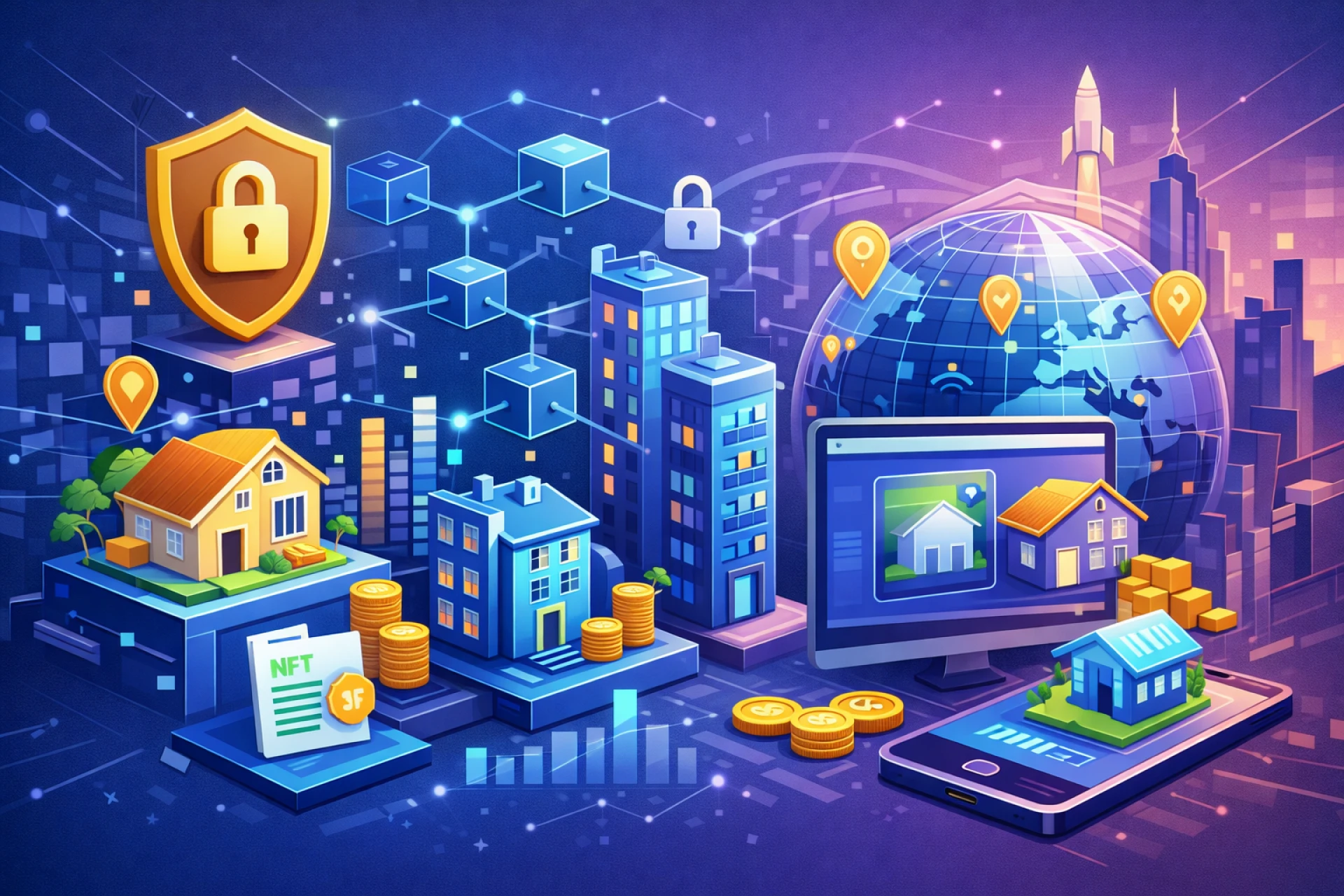

In 2026, the real estate industry is undergoing one of the most significant transformations in its history. Property ownership, once tightly bound by geography, paperwork, and local regulations, is now becoming borderless, programmable, and accessible at a global scale. At the center of this shift is real estate tokenization development, a technology-driven approach that converts physical property assets into digital tokens on blockchain networks. This evolution is not just modernizing transactions but fundamentally redefining how real estate is owned, traded, and financed across borders.
Traditional real estate markets have long suffered from inefficiencies such as high entry costs, limited liquidity, lengthy settlement cycles, and restricted access for international investors. Real Estate Tokenization is solving these problems by introducing fractional ownership, transparent transaction records, and seamless global participation. As regulatory clarity improves and institutional adoption accelerates, tokenized property markets are emerging as a powerful alternative to conventional real estate systems.
This blog explores how Real Estate Tokenization Platform Development is enabling borderless property markets in 2026, the technologies driving this transformation, the role of specialized service providers, and the practical methods businesses are using to build scalable tokenization ecosystems.
Understanding Real Estate Tokenization in a Borderless Context
Real Estate Tokenization refers to the process of representing ownership or economic rights of a physical property as digital tokens on a blockchain. Each token corresponds to a defined share of the asset, allowing investors to buy, sell, or transfer ownership without the traditional friction of property transactions.
In a borderless market, these tokens can be accessed by investors across different countries, jurisdictions, and currencies. Blockchain infrastructure removes the need for multiple intermediaries, while smart contracts automate compliance, revenue distribution, and ownership transfers. This creates a unified digital layer where real estate assets are no longer constrained by national boundaries.
In 2026, Real Estate Tokenization Platform Development has matured to support multi-jurisdiction compliance, localized investor onboarding, and global settlement mechanisms. This has turned tokenized property into a globally tradable asset class rather than a region-specific investment.
Why Borderless Property Markets Are Gaining Momentum in 2026
The rise of borderless property markets is not accidental. It is the result of converging economic, technological, and regulatory forces that are reshaping how capital flows into real estate.
Global investors are seeking diversification beyond domestic markets, especially in regions with high growth potential or stable rental yields. At the same time, property developers and asset owners are looking for new funding models that reduce dependency on traditional banks and private equity firms.
Real Estate Tokenization Services bridge this gap by connecting global capital with local assets. Tokenization enables developers to raise funds from a worldwide investor base while offering investors exposure to properties they would otherwise never access. In 2026, this model is proving especially powerful in emerging markets, commercial real estate, hospitality assets, and mixed-use developments.
The Role of Real Estate Tokenization Platform Development
A borderless property market cannot exist without robust digital infrastructure. This is where Real Estate Tokenization Platform Development plays a critical role. These platforms act as the foundation for issuing, managing, and trading tokenized real estate assets.
Modern platforms support end-to-end workflows, including asset onboarding, legal structuring, token issuance, investor verification, transaction execution, and post-investment management. They are designed to handle large volumes of users while maintaining compliance with regional regulations.
In 2026, a mature Real Estate Tokenization Platform is not just a technical solution but a complete ecosystem that integrates blockchain networks, payment systems, identity verification tools, and asset management modules. This holistic approach enables seamless cross-border participation without compromising security or regulatory alignment.
How Tokenization Unlocks Global Liquidity
Liquidity has always been one of the biggest challenges in real estate. Selling a property can take months, and partial exits are often impossible. Tokenization changes this dynamic by enabling fractional ownership and secondary market trading.
Through Real Estate Tokenization Development Services, properties are divided into digital units that can be traded independently. Investors can enter and exit positions more easily, creating a continuous flow of capital rather than locked-in investments.
This liquidity is especially important in a borderless context. International investors can allocate capital dynamically across regions, adjusting portfolios based on market conditions without the logistical burden of traditional property transactions. In 2026, this flexibility is making real estate a more attractive asset class for global investors who value speed and adaptability.
Fractional Ownership and Inclusive Global Investment
One of the most powerful outcomes of Real Estate Tokenization is the democratization of property investment. Fractional ownership allows investors to participate with significantly lower capital requirements, opening the market to a broader audience.
In borderless markets, this inclusivity is amplified. Investors from different economic backgrounds and regions can pool resources into high-value properties located anywhere in the world. This global participation is fueling demand for tokenized assets and driving innovation in Real Estate Tokenization Services.
By lowering barriers to entry, tokenization is transforming real estate from an elite investment category into a globally accessible financial instrument. This shift is reshaping investor behavior and expanding the reach of property markets beyond traditional financial hubs.
Regulatory Evolution Supporting Cross-Border Tokenization
Regulatory clarity is a key enabler of borderless property markets. In 2026, many jurisdictions have established frameworks that recognize tokenized assets and define compliance requirements for digital securities.
A professional Real Estate Tokenization company works closely with legal experts to ensure that tokenized offerings align with local and international regulations. This includes investor accreditation rules, anti-money laundering standards, and reporting obligations.
Modern Real Estate Tokenization Platform Development incorporates regulatory logic directly into smart contracts. This ensures that only eligible investors can participate, transactions are recorded transparently, and compliance is enforced automatically. As a result, cross-border investments become safer and more scalable.
The Technology Stack Behind Borderless Real Estate Markets
The success of borderless property markets depends on a sophisticated technology stack that integrates multiple components seamlessly. At the core is blockchain infrastructure, which provides transparency, immutability, and decentralized record keeping.
Smart contracts automate ownership transfers, revenue distribution, and governance rules. Identity verification systems ensure compliance with global standards, while digital wallets enable secure storage and transfer of tokens.
A Real Estate Tokenization Development company typically builds platforms that support interoperability across blockchains and payment systems. This flexibility allows investors to participate using different currencies and digital assets, further reducing friction in cross-border transactions.
Methods Used to Build Borderless Tokenization Platforms
Developing a scalable tokenization platform requires a structured approach that balances innovation with compliance. Below are key methods used by leading Real Estate Tokenization Platform Development teams in 2026.
Asset Structuring and Legal Mapping
Before tokenization begins, properties are structured into legally compliant entities. Ownership rights, revenue flows, and investor protections are clearly defined. This legal mapping ensures that digital tokens accurately represent real-world assets.
Smart Contract Engineering
Custom smart contracts are developed to encode ownership rules, transfer conditions, and profit distribution mechanisms. These contracts are audited to ensure security and reliability across jurisdictions.
Global Investor Onboarding
Platforms integrate identity verification and compliance checks tailored to different regions. This allows investors from multiple countries to participate while meeting regulatory requirements.
Multi-Currency Payment Integration
To support borderless markets, platforms enable transactions in various fiat and digital currencies. This flexibility reduces conversion costs and improves accessibility for international investors.
Secondary Market Enablement
Liquidity is enhanced by building mechanisms for peer-to-peer trading or regulated marketplaces. This allows token holders to exit or rebalance portfolios efficiently.
The Role of Real Estate Tokenization Companies in 2026
A specialized Real Estate Tokenization company acts as a strategic partner for developers, asset owners, and financial institutions. These companies bring together expertise in blockchain development, real estate finance, and regulatory compliance.
In 2026, successful tokenization providers offer end-to-end Real Estate Tokenization Development Services, from initial consulting to platform deployment and ongoing maintenance. Their role is not limited to technology but extends to ecosystem design, investor experience optimization, and market scalability.
By working with an experienced Real Estate Tokenization Development company, businesses can accelerate time to market and reduce the risks associated with cross-border operations.
Real Estate Tokenization Services for Developers and Investors
For property developers, Real Estate Tokenization Services offer an alternative funding model that reduces reliance on traditional lenders. Tokenized offerings enable faster capital formation and broader investor outreach.
For investors, these services provide access to diversified portfolios, transparent performance data, and automated income distribution. In a borderless market, this combination of benefits is driving strong adoption among retail and institutional participants alike.
The alignment of interests between developers and investors is one of the reasons tokenized real estate ecosystems are scaling rapidly in 2026.
Institutional Adoption and Market Maturity
Institutional players are increasingly entering the tokenized real estate space, attracted by improved transparency, efficiency, and risk management. Pension funds, asset managers, and family offices are exploring tokenized assets as part of diversified investment strategies.
This institutional involvement is raising standards across the industry. Real Estate Tokenization Platform Development now emphasizes enterprise-grade security, governance frameworks, and reporting tools. As a result, borderless property markets are becoming more stable and credible.
Challenges Still Shaping the Landscape
Despite rapid progress, challenges remain. Regulatory differences across countries, investor education gaps, and technical interoperability issues continue to shape the evolution of tokenized real estate.
However, these challenges are driving innovation rather than slowing adoption. Real Estate Tokenization Development Services are increasingly focused on modular platforms that can adapt to regional requirements while maintaining a unified global experience.
In 2026, the industry is moving from experimentation to optimization, refining models that work at scale.
The Future of Borderless Property Markets
Looking ahead, real estate tokenization is expected to integrate more deeply with decentralized finance ecosystems, digital identity frameworks, and global payment networks. This convergence will further reduce friction and expand participation.
As platforms mature, Real Estate Tokenization Platform Development will focus on user experience, data analytics, and interoperability. These advancements will make borderless property markets more intuitive and accessible to a wider audience.
The vision is clear: a global real estate marketplace where assets can be discovered, invested in, and traded as easily as digital securities.
Conclusion: 2026 as the Turning Point for Global Real Estate
In 2026, real estate tokenization development is no longer a niche innovation but a foundational force powering borderless property markets. By combining blockchain technology, regulatory alignment, and innovative platform design, the industry is unlocking global liquidity and redefining property ownership.
Through advanced Real Estate Tokenization Platform Development, specialized Real Estate Tokenization companies, and comprehensive Real Estate Tokenization Services, real estate is becoming more inclusive, efficient, and globally connected.
As adoption accelerates, borderless property markets will continue to reshape how capital flows, how assets are managed, and how investors engage with real estate worldwide. The transformation underway is not just technological but structural, signaling a new era for the global property ecosystem.


























Sign in to leave a comment.