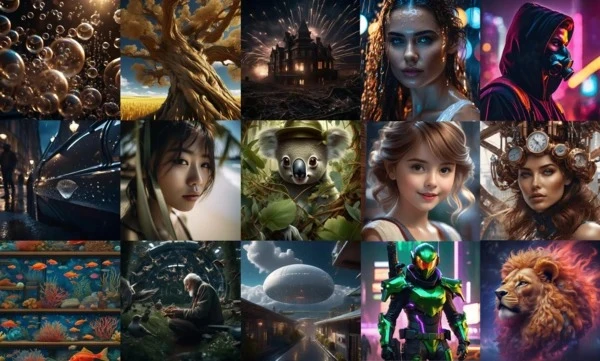

In the fast-paced world of advertising, where visuals and timing are everything, creativity often meets the constraint of resources and time. Whether you’re pitching to a new client, building storyboards, or testing different demographic responses, having the ability to instantly generate high-quality visuals can be a game-changer. This is where Magic Hour's AI Face Generator steps in as a powerful creative ally.
This free, web-based tool empowers advertising professionals to generate realistic human faces in seconds—without requiring any sign-up or technical expertise. From crafting campaign personas to rapidly iterating ideas, it opens the door for endless visual experimentation. But what does this mean in practice for advertising agencies?
Let’s explore some real-world uses of AI face generators in advertising agencies, with a closer look at how Magic Hour’s solution brings efficiency, innovation, and adaptability into the creative process.
Crafting Visual Concepts for Campaign Pitches
At the core of every advertising campaign is a visual idea—an image, a person, a mood that captures the heart of the message. Traditionally, this phase would involve searching through stock photo libraries, organizing expensive photoshoots, or hiring illustrators to mock up faces. All of these methods come with costs, time constraints, and often compromise the uniqueness of the visuals.
With Magic Hour’s AI face generator, creatives can type in a few descriptive words—say, “mid-30s woman with a confident look, short curly hair, natural light”—and receive two instantly-generated images that align with their vision. This rapid prototyping capability allows agencies to present a range of visual directions during campaign pitches, offering clients a more dynamic and tailored experience from the outset.
Since the generated faces are unique and not pulled from stock, pitches instantly feel fresher and more aligned to the brand’s personality. Moreover, agencies are no longer limited by budget or existing assets when building out initial creative concepts.
Storyboarding Personas and Target Markets
Understanding and connecting with a brand’s target audience is essential to campaign success. This often requires building out detailed personas—hypothetical customers that represent specific demographics, lifestyles, and preferences. In traditional workflows, persona creation might include sourcing generic images or even leaving visuals out entirely due to constraints.
With a tool like Magic Hour’s AI face generator, those days are over. Advertising professionals can now visually build out entire persona boards with precision and nuance. Need a face for a 55-year-old urban male with a relaxed demeanor and a slight beard? Simply describe the persona and generate a realistic face that brings the demographic to life.
Storyboarding these personas alongside campaign narratives makes internal communication smoother and more effective. Teams can visualize their audience while brainstorming copy, placements, and creative assets. More importantly, stakeholders and clients can better grasp the emotional connection the campaign intends to evoke.
Magic Hour as a Rapid Ideation Tool
In a creative agency, ideation rarely follows a straight path. Ideas evolve rapidly, and the need to test new angles, visuals, and messaging in real-time is crucial. Magic Hour’s AI face generator provides a fluid creative sandbox where art directors, designers, and strategists can explore visual ideas without constraints.
Since the platform does not require sign-up, teams can dive right in. During creative sprints or brainstorming sessions, users can instantly produce diverse faces that help trigger new concepts or angles. Want to see how a campaign idea might look with a different gender, age group, or ethnicity? You can generate several variations in minutes.
Another unique aspect of Magic Hour’s platform is its ability to transform these faces into motion using their image-to-video and animation features. This extends the ideation process beyond static visuals, helping teams prototype animated ads, video storyboards, or even motion graphic previews.
By using the AI face generator in this way, agencies can iterate faster, refine more boldly, and arrive at polished creative ideas sooner—all while staying in complete control of the visual style and tone.
Using AI Faces for Market Testing Visuals
A key part of any advertising campaign is testing. Before a campaign launches, it’s common practice to test different ad versions across focus groups or A/B platforms to gather insights into what visuals resonate most with a target audience. In these early stages, however, using actual photos can be expensive or logistically challenging—especially when dealing with concepts still in development.
Magic Hour’s AI face generator solves this by allowing marketers to create diverse and tailored visuals that look authentic but are entirely synthetic. These faces can be used in mock ads, landing pages, social posts, or concept boards during market testing phases. Because the generated images are royalty-free and cleared for both commercial and personal use, there are no legal hurdles to consider.
More importantly, using AI-generated faces enables unbiased, privacy-respecting market research. Since the images aren’t of real people, there are no ethical concerns related to using someone’s likeness for testing purposes. The insights gathered from these tests can then inform the final asset creation, leading to more accurate targeting and higher conversion potential.
Conclusion
The creative needs of advertising agencies are evolving rapidly—and so are the tools designed to support them. In this dynamic environment, solutions like Magic Hour’s AI face generator are proving to be more than just novel—they’re becoming essential.
From developing pitch visuals and creating detailed personas to enhancing ideation and powering market research, AI-generated faces are offering real, tangible value to creative teams. They lower production barriers, accelerate workflows, and unleash a new level of flexibility in how agencies approach storytelling.
Best of all, with Magic Hour’s commitment to a seamless, free-to-use experience, agencies can incorporate these powerful tools into their processes without overhauling their systems or budgets.






















Sign in to leave a comment.