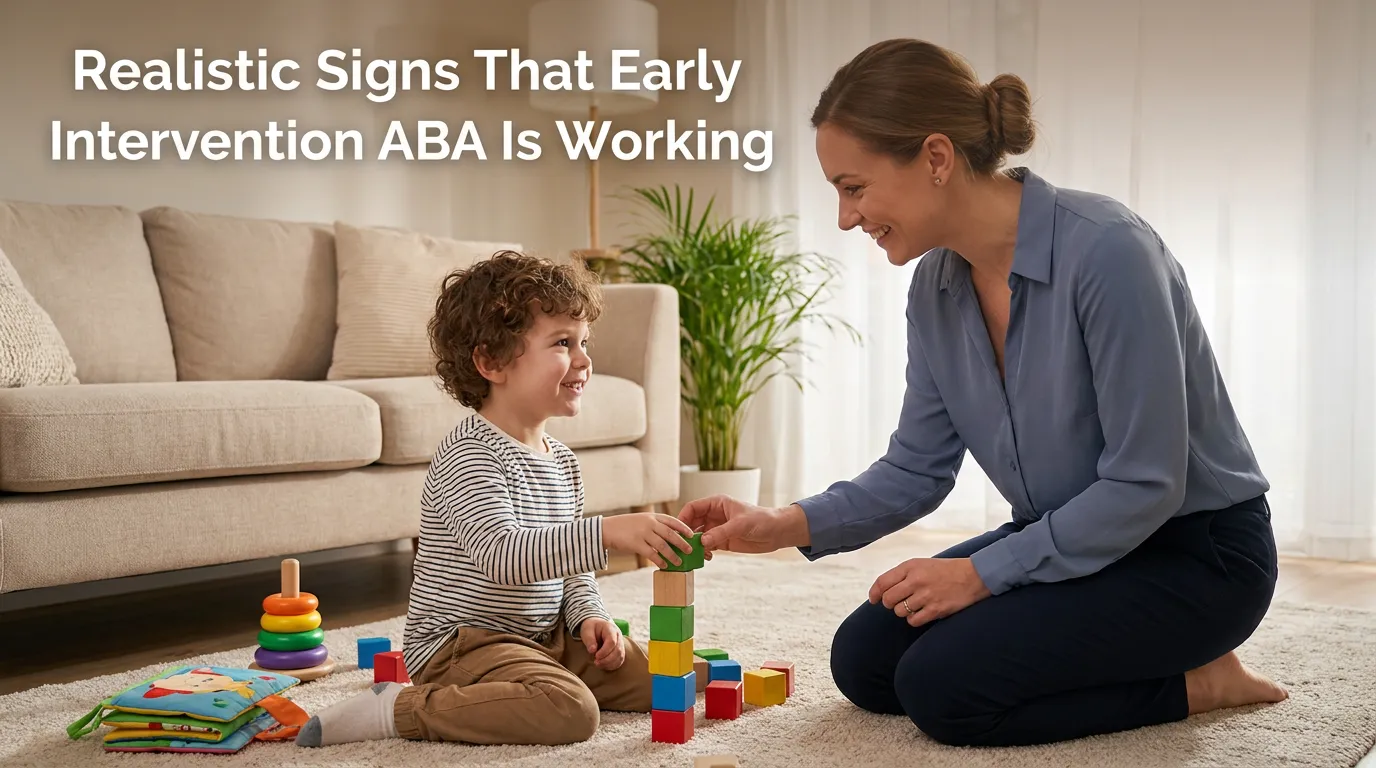

Parents who start their child in early intervention ABA often spend the first few months watching intently, hoping for signs that the investment of time and energy is paying off. The challenge is that progress in early intervention does not always look the way parents expect. Big visible leaps are real but rare — most meaningful progress happens in smaller increments that are easy to miss if you are not sure what to look for.
The First Signs Are Often Relational, Not Skill-Based
Early in a successful ABA program, the first thing many parents notice is not a new skill — it is a change in how their child relates to the therapist. A child who was initially distressed or avoidant begins to show interest in the behavior technician. They might look toward the door when the therapist is expected, bring them a toy, or tolerate proximity more easily. This shift signals that the therapist has identified effective reinforcers and built enough rapport for learning to happen efficiently.
Parents sometimes overlook this sign because it does not feel like therapy progress. But from a behavior analytic perspective, the relationship between the child and the therapist is the medium through which everything else flows. When that relationship is working, session efficiency improves rapidly.
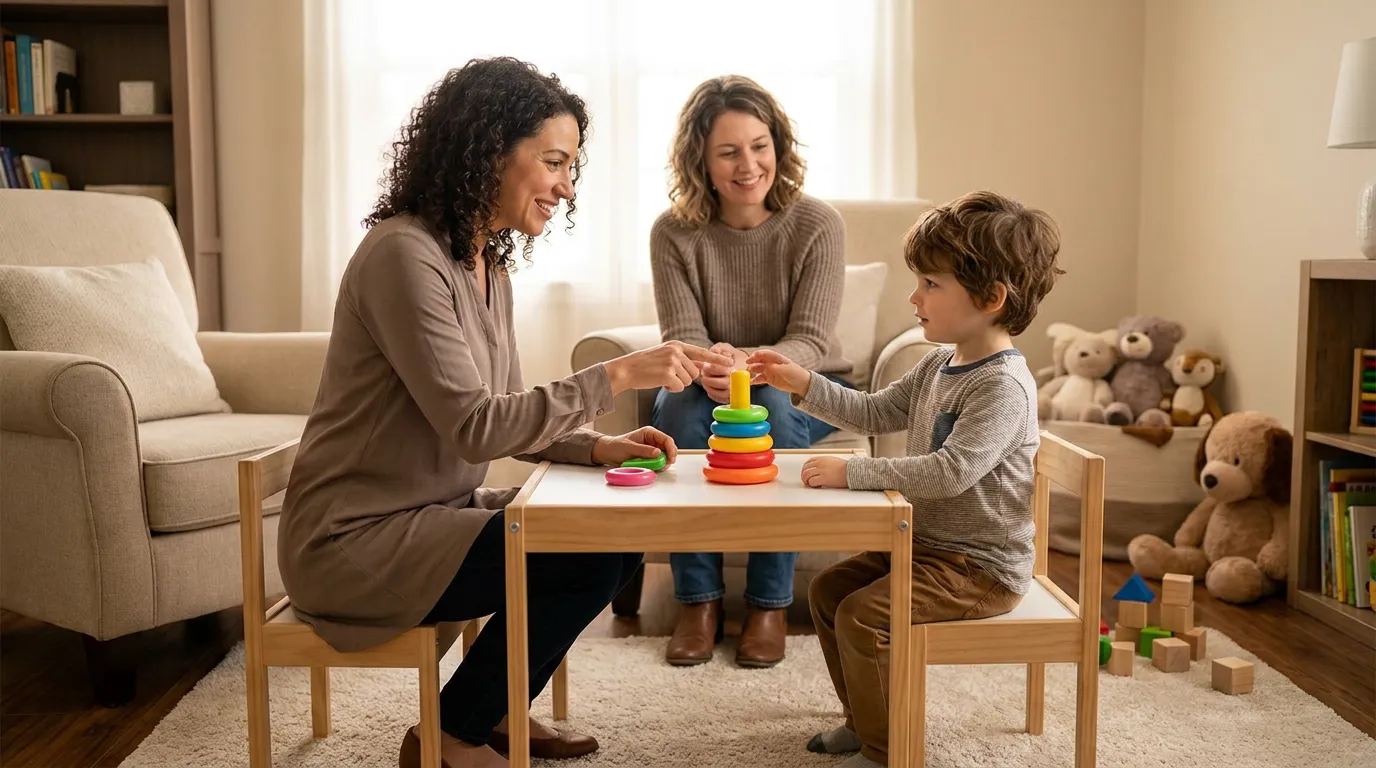
Families who have chosen early intervention aba therapy can ask their clinical team specifically what relationship indicators they are tracking during the initial months, which gives parents a more precise lens for their own observations at home.
Skill Generalization Is the Real Measure
The next sign that ABA is working is generalization — the child using skills learned in therapy in settings outside of therapy. A child who learned to imitate actions during sessions might start imitating a sibling at dinner. A child who practiced requesting preferred items might begin using that same strategy with a grandparent. A child who worked on tolerating waiting in a structured session might manage the grocery store checkout line with less distress.
Generalization is the measure that matters most, because skills that only work inside the therapy room are not yet functional. Early generalization — even in small ways — signals that learning is genuinely taking root. When parents notice these moments, reporting them to the clinical team provides valuable data. Therapists can then deliberately program for broader generalization across more settings and people.
It is worth noting that generalization does not always happen smoothly. A child might demonstrate a skill confidently at home and then appear to forget it at preschool. This is normal and expected — it is part of why good ABA programs build generalization programming intentionally rather than assuming it will happen automatically.
Progress That Does Not Look Like Progress
Some of the most important early gains in ABA are reductions rather than additions. A child who used to become completely dysregulated during transitions and now only briefly protests before moving on has made real progress, even though there is no new skill to point to. A child whose self-injurious behavior has decreased in frequency or intensity has made real progress. These reductions are harder to celebrate than a new word or a new skill, but they matter enormously.
Progress in ABA is often gradual enough that it is clearest when you compare where your child is today to where they were six months ago rather than comparing today's session to last week's. Most parents, looking back over a year in a well-run program, can identify multiple areas that have genuinely shifted — even when progress felt imperceptible week by week.


























Sign in to leave a comment.