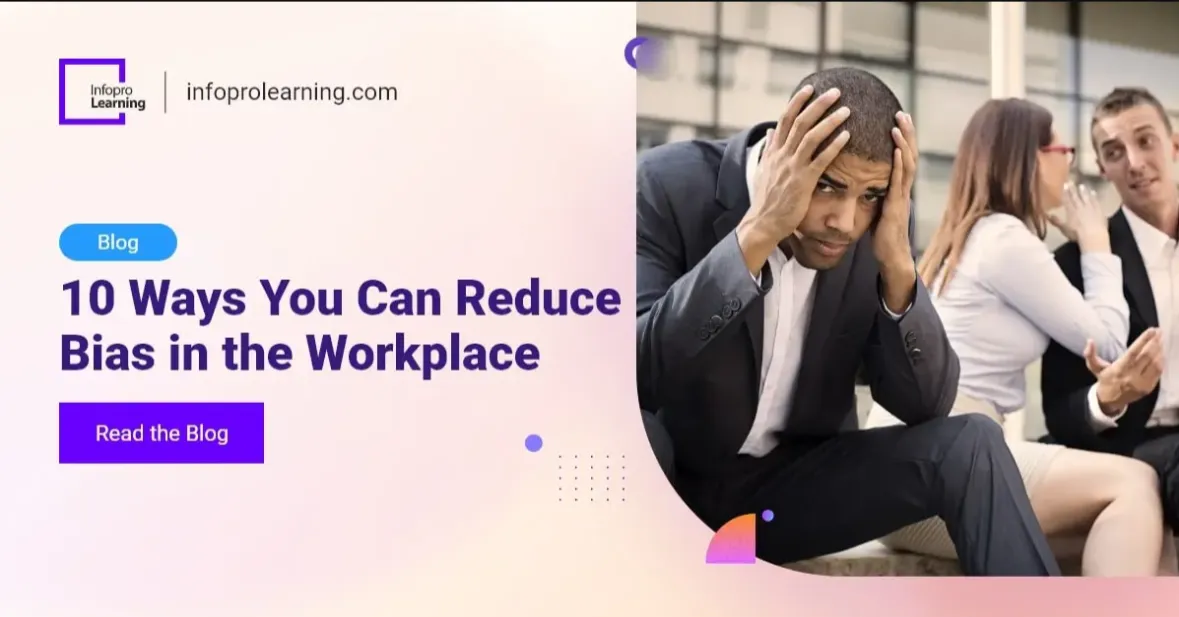

Organisations in today's complex and interconnected business environment are realizing the necessity to address bias at all layers of their decision-making processes.
Whether bias is deliberate or not, it can have a significant impact on various aspects of the work environment, for example hiring, promotions, evaluations of performance, and the dynamics of teams. Dealing with bias has become, therefore, not only a moral issue but a business imperative.
The Importance of Reducing Bias
The initiatives aimed at reducing bias have a direct effect on the performance, creativity, and satisfaction of employees in organizations.
A report by McKinsey reveals that companies with a diverse workforce have 36% higher chances of financially outperforming their competitors. This is a strong indication that minimizing bias can lead to gains in financial performance.
Workplace bias may result in:
- Diversity taking a back seat in the hiring process and among top leadership
- Employees feeling less motivated and experiencing lower morale
- Decisions being made on a narrow set of viewpoints thereby leading to errors
- More employees leaving the organization
Devoting efforts toward reducing bias will enable organizations to have a more inclusive and efficient workforce.
Different Types of Bias
Identifying the types of bias helps in addressing them effectively:
- Unconscious bias: The brain makes automatic judgments without the person being aware of it, usually based on common stereotypes.
- Affinity bias: This is a tendency to like people who are similar to us in some way.
- Confirmation bias: The tendency to look for and believe in information that confirms your preconceptions already.
- Gender and cultural bias: Discrimination against people based on the identity.
The next step after is to tackle the problem after identifying that biases exist.
Ways to o Reduce Bias in Companies
1. Structured Hiring Process
Having standardized interview questions and a clear rubric for evaluating candidates can be effective in reducing bias during recruitment. Also, removing names and other personal information from resumes during initial screening can level the playing field.
2. Conduct Bias Awareness Programs
Thought-provoking sessions making employees aware of their biases have the potential to greatly change behavior regarding inclusion. Besides, an organization may be employing a good number of unconscious or unintentional behaviors that they are not aware of.
3. Make Use of Data and Analytics
Analytical approach with data support highlights recruitment, promotion and evaluation areas where unconscious bias exists or excludes certain groups and suggests corrective actions.
4. Building Diverse Teams
Every member of a heterogeneous team brings his/her point of view to the fore. Encouraging such teams is a natural remedy for the ill effects of bias in decision-making.
5. Facilitate Inclusive Leadership
Since leaders largely influence the cultural milieu of an organization, inclusive leadership traits guarantee that even the quietest voices are heard and appreciated.
Business Advantages
Companies that are working consciously to iron out biases can expect the following benefits, among others:
- Increased creativity: Different viewpoints make it possible to uncover a greater number of novel ideas
- Enhanced decision-making: Less bias means more objective and rational decisions
- Raised employee satisfaction: Inclusive settings are great motivators
- Employer branding the second strongest after product branding: Ability to tap into the top talent pools of diverse backgrounds
The comprehensive study by Deloitte echoes the fact that organizations that prioritize inclusivity are twice as likely to either meet or exceed their financial goals.
Drawbacks of Eliminating Bias
Despite its importance, efforts to reduce bias can be met with challenges such as:
- Resistance to change within the organization
- Lack of awareness or understanding of bias
- Inconsistent implementation of policies
Possibilities of Technology in Dismantling Bias
Technology is becoming an essential tool in helping organizations tackle bias. AI-driven recruitment systems, for instance, can standardize candidate evaluation and largely remove human bias - although they still need thorough monitoring to ensure that they don’t perpetuate existing biases.
Educational tech platforms and training modules can also be used to provide targeted content to raise awareness and foster inclusive practices.
Best, Sustainable Practices for Make a Real Difference
Moreover, to truly change the face of bias, what organizations need to do is:
- Make inclusion one of the company culture and values
- Periodically audit and refresh policies and procedures
- Measure and report progress using key performance indicators
- Create a culture of open communication and feedback
- Spend on continual training and development
Only through consistent efforts and holding each other accountable will we see real change.
Final thoughts
Being able to dismantle bias is a skill that is very much needed nowadays especially considering the business world that is so highly competitive and at the same time diverse. It is an indispensable part of building organizational culture that is both inclusive and innovative, and where people perform at their highest level. Meeting regulations is just a stepping stone; one of the driving forces behind business growth is reducing bias.
With structured processes, data usage, and leadership development centered around inclusion, companies will be on their way to successfully diminishing bias and unleashing their human capital’s full capacity.




























Sign in to leave a comment.