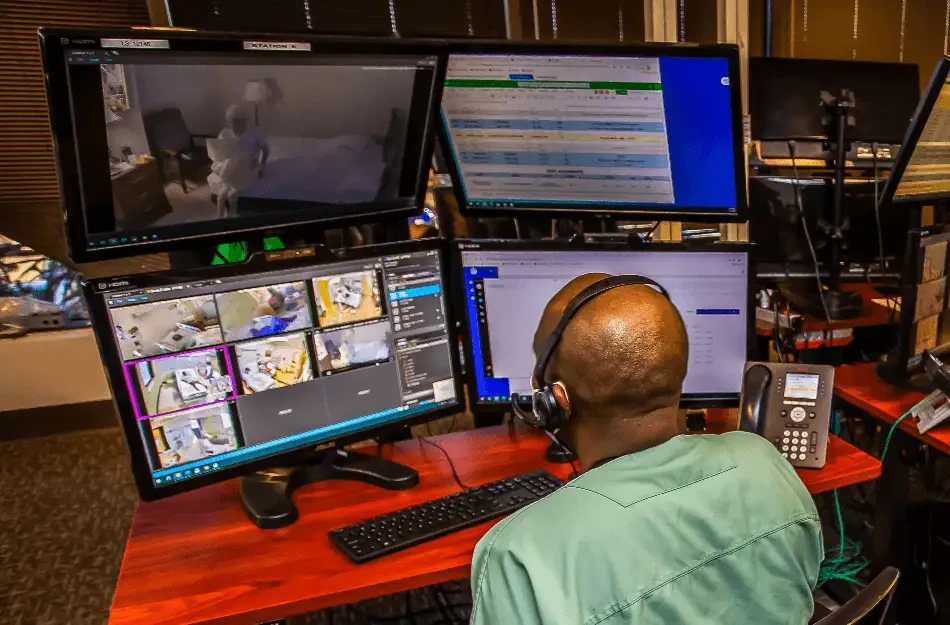

By 2025, the U.S. is expected to experience a shortage of 446,300 home health aides; 95,000 nursing assistants; 98,700 medical and lab technologists and technicians; and 29,400 nurse practitioners. It’s stats like these that propel the VirtuAlly mission.
Every day, our people work hard to infuse both next-gen technology and compassion into the world of remote patient care. Now, we’re leading the way in telehealth by human-centered remote care without compromise.
We’re not a new company or one so big that we don’t know each other’s names. Mostly we’re known by word-of-mouth popularity throughout our region. So, to help others find us online and learn why our clients count on us to keep patients safe and costs down, we decided to publish a list of frequently asked questions. We also want to offer you resources and help you consider options that improve patient safety and care.
Read on. And if you have other questions, please give us a shout!
What is remote patient monitoring (RPM)?
Remote patient monitoring is software, services, and devices that physicians and health care providers use to manage various acute and chronic health conditions.
For example, a patient may wear a wireless device, typically in their home, that communicates electronically to their care team whether their blood pressure has increased. Once the patient’s information is collected and analyzed, their medical care provider may alter a prescription or adjust the patient’s treatment plan.
As the healthcare industry continues to navigate through exceptional challenges and never-before-seen pressures, we’re grateful for the opportunity to influence positive change and render top-quality service to patients and caregivers where and when they need it most.
For patients, this means increasing safety by reducing incidents of falls, self-harm, and suicide attempts within standard and specialized care facilities across the country.
For caregivers, it’s providing a peace of mind from a second set of trained eyes and ears plus integrated electronic medical record-keeping, so you maintain focus on what matters most: caring for patients.























Sign in to leave a comment.