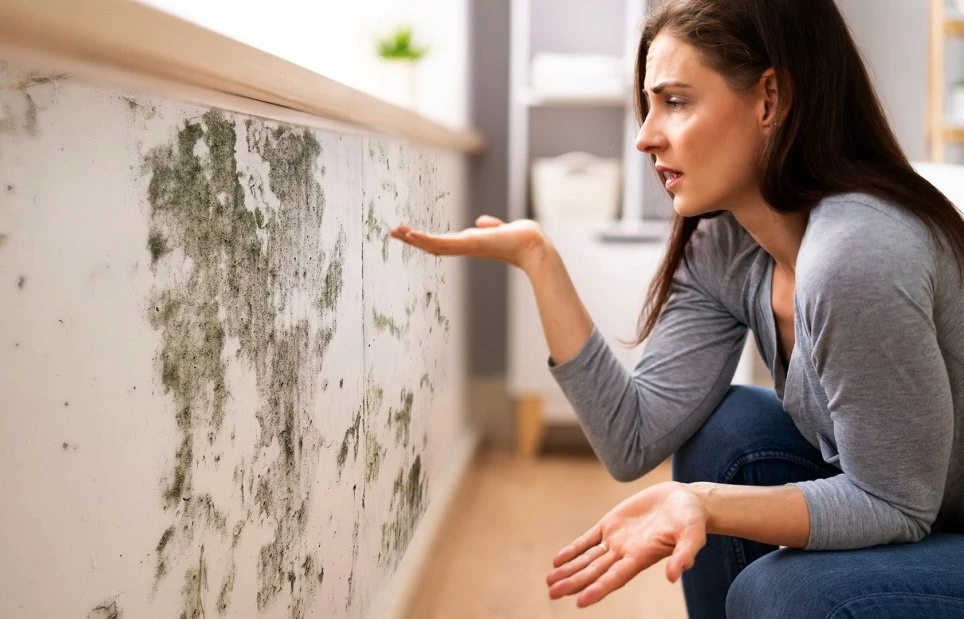

Black spots are the dominance of a single-celled, ancient fungus that has managed to overextend its boundaries. Although everyone knows about successful attempts to "tame" mold to produce medicines and delicious cheeses. The vast majority of its species that we encounter in everyday life can undermine health. We tell you how to remove mold from walls using simple and affordable methods.
Why does mold and fungus appear on walls?
The fungus is annoying and dangerous. The occupation of walls with a nasty coating forces you to do everything possible to remove mold from wallpaper, tiles or concrete as soon as possible. How and for what reasons did it settle there? One of the forms of existence of mold and some other single-celled life forms is spores. In this "canned" state, they migrate with air currents until they find conditions conducive to the active phase of life and reproduction.
And the main factor that contributes to the abundant growth of unicellular fungi is high humidity, heat and lack of fresh air. Ideal conditions for active growth of mold are formed when the humidity in the room is more than sixty percent. The main set of factors that provoke the growth of mold on the walls looks like this:
How to remove mold from walls using folk remedies?
Removing the blackness that has covered the walls is difficult, but that doesn't mean it's impossible. Even if you wash it off, the island of mold appears again and again, growing, absorbing even more area. How to remove mold from walls? There are many simple and affordable ways worth trying.
How to remove mold from walls with vinegar
Pour the vinegar solution into a spray bottle and apply it to the surfaces with mold. After an hour, you can wipe the surfaces with a damp cloth or sponge.
In order to destroy the mycelium, you will have to repeat the procedure several more times, with an interval of 7-10 days. With good ventilation, the characteristic smell evaporates quickly.
Ethyl alcohol or ammonia
A 10% aqueous solution of ammonia can be purchased at any pharmacy. It is suitable for removing mold in the bathroom, kitchen, and for treating ceramic tiles, glass, or plastic. The pharmacy solution is diluted in equal proportions with water and applied to the areas where mold has appeared. After a few hours, the treated surfaces are wiped with a wet cloth and allowed to dry. The residue can be wiped off with a solution of ethyl alcohol.
Soda
There are different ways to remove fungus and mold with baking soda. It is easier to prepare a soda solution. A tablespoon per half a liter of warm water is enough.
The solution is sprayed onto the surface or applied with a household sponge. This is also the fastest option, as it does not require rinsing. Another option for the cleaning composition includes the following components:
- baking soda - 60 g (three tablespoons);
- washing powder - 1.5 tablespoons;
- water - 200 ml.
This product is applied with a sponge, then wiped with a damp and dry cloth.
Hydrogen peroxide
A 3% hydrogen peroxide solution will help remove mold if it has appeared recently, the area it has taken over is small, and the mycelium has not had time to penetrate the thickness of the material.
This product can be safely applied to wallpaper, furniture, in the bathroom and kitchen. The special advantages are versatility and safety for apartment residents, including indoor plants and pets.
Borax
To obtain a solution of optimal concentration, add a glass of borax to 4 liters of water and stir thoroughly. To combat mold, we recommend:
- Clean the surface mechanically - you can use a vacuum cleaner equipped with a HEPA filter that removes microparticles.
- Apply the solution and scrub the affected areas with a stiff brush.
- Wipe with a dry, clean cloth.
Iodine solution
Iodine solution is known for its moderate effectiveness in combating fungus, and its use is more of a preventive measure than a real way to deal with the problem.
Opened bottles of iodine solution are placed in a damp room to protect walls from mold. Active evaporation of iodine occurs, which leads to suppression of the vital activity of the fungus.
Chlorine bleach
" Bleaching ", due to its antiseptic effect, is one of the most popular ways to combat mold. To treat a surface area, one part bleach is mixed with ten parts water. Only surfaces that are resistant to moisture and discoloration can be treated with this solution. It is important to remember that working with a chlorine bleach solution requires a respirator and protective gloves.
How to remove mold from walls: special tools
There is another, simpler and more familiar way to help fight fungus. We are talking about household chemicals , including universal cleaning products, including for cleaning the bathroom and kitchen . Among them are Sano Anti-Mold Agent , San Clean for removing mold without chlorine , and others.
A line of effective household chemicals will help you get rid of mold and all kinds of dirt in a short time. Thanks to their antibacterial effect, the use of such products will ensure safe disinfection and prevent the spread of pathogenic microflora.
How to get rid of mold on brick, concrete, and drywall walls
Certain finishing materials require special care and protection against mold. Here are some of the most common options.
Paint
If the fungus has settled on a painted wall, it is necessary to inspect the affected area. Places where cracks or a swollen coating layer are visible are cleaned with a spatula before plastering to remove the spores and mycelium present there. Before repainting, a primer containing an antiseptic is applied.
Wallpaper
For minor fungal and mold infestations, you can use vinegar, baking soda, peroxide, or ammonia. However, this option is more often used as a temporary measure. Ideally, such wallpaper should be replaced after applying a primer with an antiseptic.
Drywall
Methods for cleaning drywall from mold stains are determined by the presence or absence of a layer of paint that is resistant to moisture. If the stains are noticed on a painted surface, they can be removed with the help of universal detergents. Removing fungal infection from unpainted drywall is a more difficult task. If the mold has penetrated deeply, it is advisable to mark the damaged area.
Concrete
Mold fungi can even settle on concrete, especially if it is not treated with a fungicidal composition. Cleaning of the concrete surface is carried out using a stiff brush, which is used to clean the abundantly moistened wall. After the destruction of visible traces of the fungus, a borax solution is applied.
Brick
A brick wall can be cleaned with a mixture of vinegar and glycerin, mixed 1:1. Clean with a wire brush mounted on a drill. Repeat the procedure if necessary.
Tile
It is not difficult to wash the tiles, the biggest problem in this case is the seams between the tiles. To remove the fungus, use baking soda and vinegar. In the most neglected cases, remove all the grout and treat with an antiseptic.
How to prevent mold from appearing on walls?
Mold and fungus appear in damp, poorly ventilated rooms, so you need to constantly monitor the humidity in your home and take preventive measures.
- Ventilate the rooms. That is why the kitchen, bathroom, and basement should be equipped with high-quality ventilation. You should constantly turn on exhaust fans or open windows when you are cooking, showering, or doing laundry to release steam. Even better, install a ventilation system throughout the house. After all, dehumidifiers and air conditioners effectively absorb moisture from the air, which is important in the off-season.
- Place furniture away from walls for easy air circulation. Heat your house regularly in cold weather to prevent condensation from forming on windows and walls. This is especially true in the bathroom, where mold is most likely to appear. Always keep the door open.
- Thoroughly insulate the walls, floor, and especially the roof, where a lot of heat can be lost, with sealant. And constantly check pipes, plumbing, and windows for leaks.
- Clean your house regularly to get rid of things that can cause mold. If possible, avoid drying clothes indoors, as this significantly increases humidity. Minimize the number of houseplants that need to be sprayed frequently.
Only good air circulation prevents the appearance of dampness and mustiness in the premises. Although there are still factors that can provoke the appearance of fungus. They are difficult to correct, but you should not despair. Regular use of special detergents will help eliminate the problem. Before removing mold at home, do not forget about personal protective equipment.

























Sign in to leave a comment.