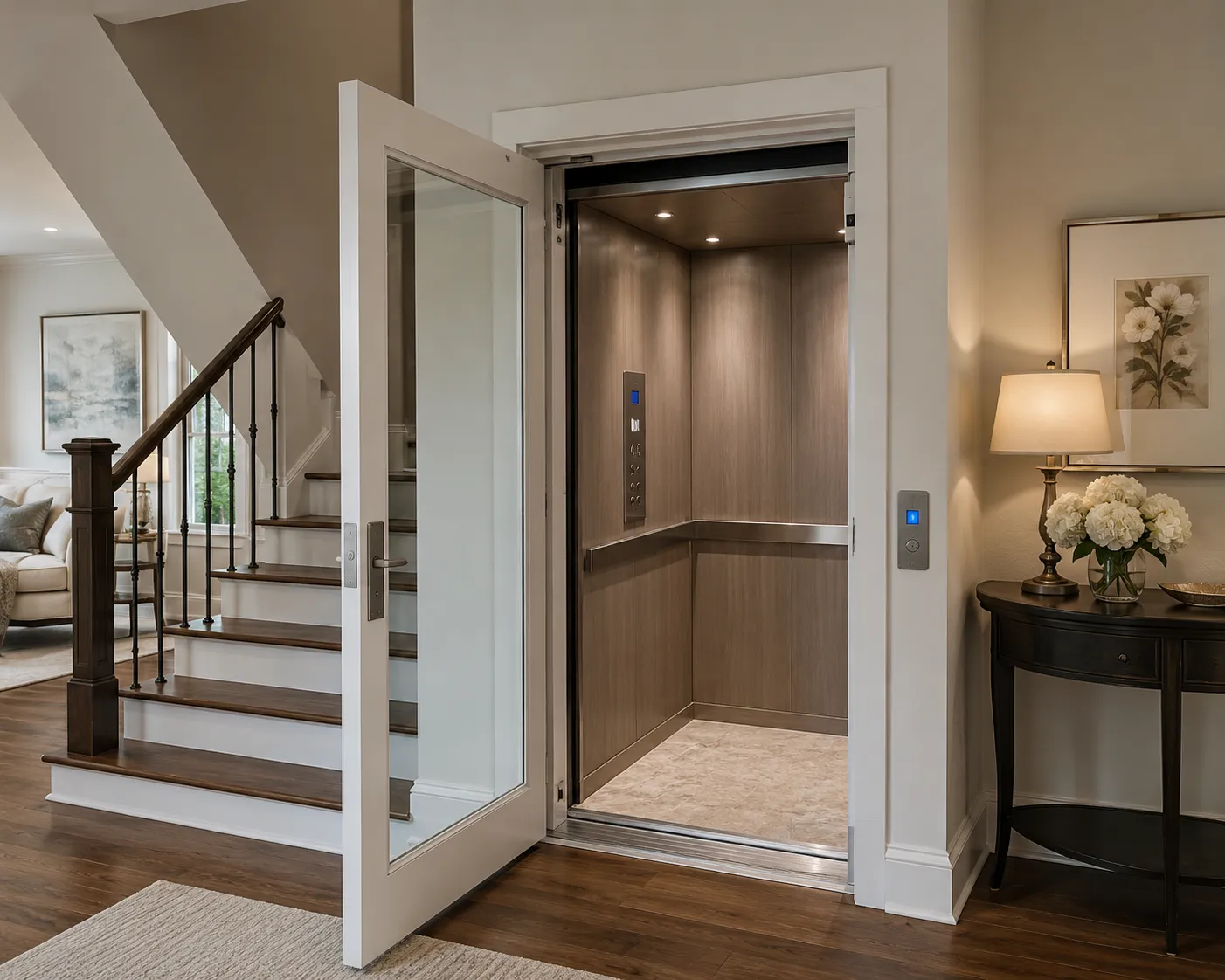

Modern homes are increasingly being designed around comfort, accessibility, and long-term convenience. As independent houses, villas, duplexes, and multi-storey residences become more common, residential elevators are emerging as a practical solution for moving between floors safely and comfortably.
Once considered a luxury feature, home elevators are now being considered by families with elderly parents, children, people with mobility challenges, and homeowners looking to make their properties more future-ready.
What Is a Residential Elevator?
A residential elevator, also called a home lift or home elevator, is an elevator specifically designed for private residences. Compared with conventional commercial elevators, residential systems can be designed around the available space, number of floors, usage requirements, and architectural style of a home.
Depending on the design, a residential elevator can be installed in a newly constructed house or incorporated into an existing property as a retrofit.
Why Are Residential Elevators Becoming Popular?
1. Improved Accessibility
Stairs can become difficult for elderly family members or people with mobility limitations. A residential elevator provides convenient floor-to-floor access and can help homeowners maintain independence as their needs change.
2. Everyday Convenience
Carrying groceries, luggage, furniture, laundry, or other household items between floors is considerably easier when an elevator is available.
3. Future-Proofing Your Home
A home that works well today may not meet your family's needs ten or twenty years from now. Installing an elevator can make a multi-storey property more adaptable to changing mobility requirements.
4. Better Use of Multi-Storey Homes
For villas, duplexes, and independent houses with multiple floors, an elevator can make the entire property easier to use rather than leaving upper floors inconveniently accessible.
5. Architectural Appeal
Modern residential elevators can be integrated into the home's interior design. Glass cabins, contemporary finishes, lighting, and customised doors can make the elevator a functional architectural feature rather than simply a utility.
Types of Residential Elevators
Homeowners can choose from several elevator technologies, depending on the building structure and available space.
Traction elevators use an electric motor and pulley system and can provide smooth, efficient operation.
Hydraulic elevators use hydraulic power to move the elevator and may be suitable for certain residential applications.
Vacuum or pneumatic elevators use air pressure and can be attractive for homes where conventional shaft construction is difficult.
The right technology depends on factors such as the number of floors, available space, structural conditions, expected usage, power requirements, and local regulations.
What Should You Consider Before Installing a Home Elevator?
Available Space
Start by assessing where the elevator can be positioned. Consider the cabin dimensions, shaft or enclosure requirements, landing areas, doors, and any structural modifications.
For a new home, elevator planning should ideally happen during the architectural design stage. Retrofitting an elevator into an existing house requires a detailed site assessment.
Number of Floors
Tell your elevator provider exactly how many floors the lift will serve. Travel height and the number of stops can influence the appropriate technology and design.
Load Capacity
Choose a capacity based on the people and objects that will regularly use the elevator. Avoid selecting a model based solely on its lowest purchase price.
Safety Features
Safety should be one of the most important factors when comparing residential elevators. Depending on the applicable standard and system, homeowners should ask about features such as door interlocks, overspeed protection, emergency communication, automatic rescue systems, overload protection, and emergency lighting.
In India, homeowners should also verify the applicable current standards and state-level requirements before installation. IS 17900 became the mandatory safety reference for new lift installations from December 22, 2025, while building codes and licensing requirements can also apply.
Power Backup
Power interruptions are an important consideration for Indian homes. Ask whether the proposed elevator includes an appropriate emergency or automatic rescue system and what backup-power arrangement is required.
Maintenance
An elevator is a long-term mechanical and electrical system, so installation is only the beginning. Regular professional inspection and maintenance help identify component wear and keep the system operating reliably.
Residential Elevator vs. Commercial Elevator
Residential elevators are designed around the requirements of private homes rather than high-traffic commercial buildings.
| Feature | Residential Elevator | Commercial Elevator |
|---|---|---|
| Typical application | Villas, duplexes, houses | Offices, malls, hotels |
| Usage | Moderate | High |
| Design focus | Comfort and home integration | High traffic and durability |
| Space planning | Often compact/customised | Larger infrastructure |
| Aesthetics | Highly customisable | Usually standardised |
| Installation | Can be planned for new or existing homes | Usually integrated into building design |
The appropriate elevator should always be selected according to the building, intended usage, applicable standards, and professional engineering assessment.
Can You Install an Elevator in an Existing Home?
Yes, in many cases a residential elevator can be retrofitted into an existing property. However, the feasibility depends on the building's structure, available floor area, access between floors, electrical requirements, and local building regulations.
A professional site survey should be completed before making a purchase decision. Retrofitting during an early renovation stage can also make structural work easier to coordinate.
How Much Does a Residential Elevator Cost?
There is no single price for a home elevator. The total investment depends on factors such as:
- Elevator technology
- Number of floors and stops
- Cabin size
- Load capacity
- Shaft or enclosure requirements
- Civil and structural work
- Interior finishes
- Electrical and backup-power requirements
- Installation
- Maintenance and service coverage
Rather than comparing quotations only on the headline price, homeowners should compare the complete scope of supply, safety specifications, installation work, warranty, maintenance, and after-sales support.
How to Choose the Right Residential Elevator
Before selecting a supplier, ask these questions:
- What elevator technology is recommended for my home, and why?
- What structural and space requirements are involved?
- Which safety standards does the elevator comply with?
- What emergency systems are included?
- What power-backup arrangement is required?
- What approvals or licences are applicable in my state?
- What does the warranty cover?
- What maintenance package is available?
- Are replacement parts and service technicians readily available?
- What is the complete installed cost?
Getting clear answers to these questions can help homeowners avoid unexpected costs and unsuitable equipment.
Final Thoughts
A residential elevator is more than a luxury addition. For a multi-storey home, it can improve accessibility, convenience, independence, and long-term usability.
The best elevator is not necessarily the most expensive or the one with the most features. It is the system that fits your home, meets the applicable safety requirements, suits your family's needs, and can be reliably maintained for years to come.
If you are planning a new house or considering an elevator for an existing property, start with a professional site assessment and compare solutions based on safety, engineering, service support, and total ownership cost—not just the initial quotation.
























Sign in to leave a comment.