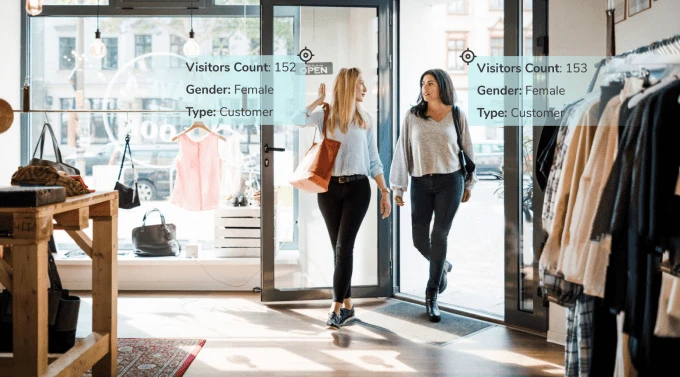

The retail industry is increasingly leveraging advanced technologies to understand and optimize customer behavior and shopping patterns. Among these technologies, footfall counters play a pivotal role. Footfall counters are systems used to measure the number of people entering and exiting a store. These counters provide valuable data that helps retailers enhance customer experiences, streamline operations, and boost sales.
Types of Footfall Counters
Infrared Sensors:
Functionality: These sensors emit an infrared beam across the entrance of a store. When the beam is broken, it counts as an entry or exit.Advantages: They are cost-effective and easy to install.Limitations: They may not differentiate between multiple people entering at the same time or account for people lingering at the entrance.Thermal Sensors:
Functionality: Thermal sensors detect the heat signature of people entering and exiting the store.Advantages: They are effective in all lighting conditions and can count multiple individuals accurately.Limitations: They can be more expensive than infrared sensors.Video Analytics:
Functionality: These systems use cameras combined with software to analyze video footage and count footfall.Advantages: They offer high accuracy and can provide additional data such as demographic information and customer movements within the store.Limitations: They require significant investment in both hardware and software, along with ongoing maintenance.Wi-Fi and Bluetooth Tracking:
Functionality: These systems detect signals from smartphones and other devices to count footfall and track movement.Advantages: They provide detailed insights into customer behavior, including time spent in different areas of the store.Limitations: They depend on customers having their devices turned on and Wi-Fi or Bluetooth enabled, raising privacy concerns.Benefits of Footfall Counters in Retail
Customer Behavior Analysis:
Footfall counters provide data on the number of customers entering and exiting the store, which helps in understanding peak shopping times and customer flow.Advanced systems, enhanced with footfall counting software, can analyze in-store movements, showing popular areas and products, which helps in optimizing store layout and product placement.Sales and Conversion Rates:
By comparing footfall data with sales data, retailers can calculate conversion rates, helping to understand how many visitors actually make a purchase.This information is crucial for evaluating the effectiveness of marketing campaigns and in-store promotions.Staff Optimization:
Footfall data helps in optimizing staff schedules by aligning staffing levels with customer traffic. This ensures that there are enough staff members during peak times and reduces labor costs during quieter periods.Improved staff allocation enhances customer service, reducing wait times and increasing overall customer satisfaction.Inventory Management:
Understanding customer patterns helps in forecasting demand more accurately, leading to better inventory management.Retailers can ensure that popular items are well-stocked during peak times, reducing the risk of stockouts and lost sales.Store Performance Comparison:
Retail chains can use footfall data to compare the performance of different stores.This comparison helps identify underperforming stores and allows for targeted strategies to improve their performance, such as localized marketing or changes in store layout.Enhanced Customer Experience:
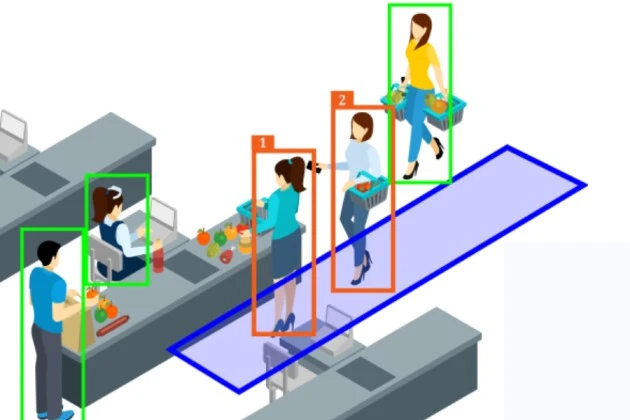
By analyzing footfall data, retailers can identify bottlenecks and areas of congestion within the store, leading to improvements in store layout and customer flow.Enhanced layout and reduced congestion lead to a more pleasant shopping experience, encouraging customers to spend more time and potentially increasing sales.Integration with Other Technologies
Point of Sale (POS) Systems:
Integrating footfall counters with POS systems provides a holistic view of customer behavior, from entry to purchase.This integration helps in understanding the complete customer journey, enabling more effective marketing and sales strategies.Customer Relationship Management (CRM) Systems:
Footfall data can be integrated with CRM systems to enrich customer profiles with in-store behavior.This enriched data helps in personalizing marketing efforts and improving customer engagement.Artificial Intelligence (AI) and Machine Learning:
AI and machine learning can analyze footfall data to predict customer behavior and trends.Predictive analytics help in making informed decisions regarding inventory, staffing, and marketing.Internet of Things (IoT):
IoT devices, such as smart shelves and beacons, can be integrated with footfall counters to provide real-time data on customer interactions with products.This integration offers deeper insights into customer preferences and behavior, enabling more effective merchandising strategies.Challenges and Considerations
Privacy Concerns:
Technologies like video analytics and Wi-Fi tracking can raise privacy concerns among customers.Retailers must ensure compliance with data protection regulations and communicate clearly with customers about data collection practices.Data Accuracy:
The accuracy of footfall counters can vary based on the technology used and the store environment.Regular calibration and maintenance of the systems are essential to ensure accurate data.Integration and Compatibility:
Integrating footfall data with other systems can be complex and require significant investment.Retailers need to choose compatible technologies and ensure seamless integration to maximize the benefits.Cost:
Advanced footfall counting systems can be expensive to install and maintain.Retailers must weigh the costs against the potential benefits and ROI to determine the feasibility of implementation.Future Trends
Advanced Analytics and AI:
The future of footfall counters lies in advanced analytics and AI, which can provide deeper insights and predictive capabilities.Retailers will increasingly rely on these technologies to anticipate customer needs and optimize operations.Omni-Channel Integration:
As retail becomes more omni-channel, integrating footfall data with online behavior will provide a complete view of customer interactions.This integration will enable more cohesive and personalized customer experiences across all channels.Enhanced Customer Engagement:
Footfall counters will evolve to not just count but also engage customers through personalized offers and interactions based on real-time data.Technologies like augmented reality (AR) and virtual reality (VR) could be integrated to create immersive in-store experiences.Conclusion
During the 21st century, the retail scenario has become increasingly relevant. Therefore it is important to embrace innovative solutions such as door counters, retail footfall tracking software, and others that benefit a clear understanding of customer behavior and preferences. Modern technologies deliver data-driven insights that lay the foundation for a seamless shopping experience.
Retail footfall counting systems offer relevant retail solutions analyzing customer pathways. Retailers can ensure visibility and accessibility potentially enhancing the sales conversions. Implementing retail footfall counters enables retail stores to enhance their shopping experience and enter the transforming era of retail solutions. Looking for a footfall-counting solution? Nextbrain is an excellent footfall tracking software that assists retail stores and businesses to ensure sustained growth and success. Get started with our system to acquire actionable insights relating to footfall data.























Sign in to leave a comment.