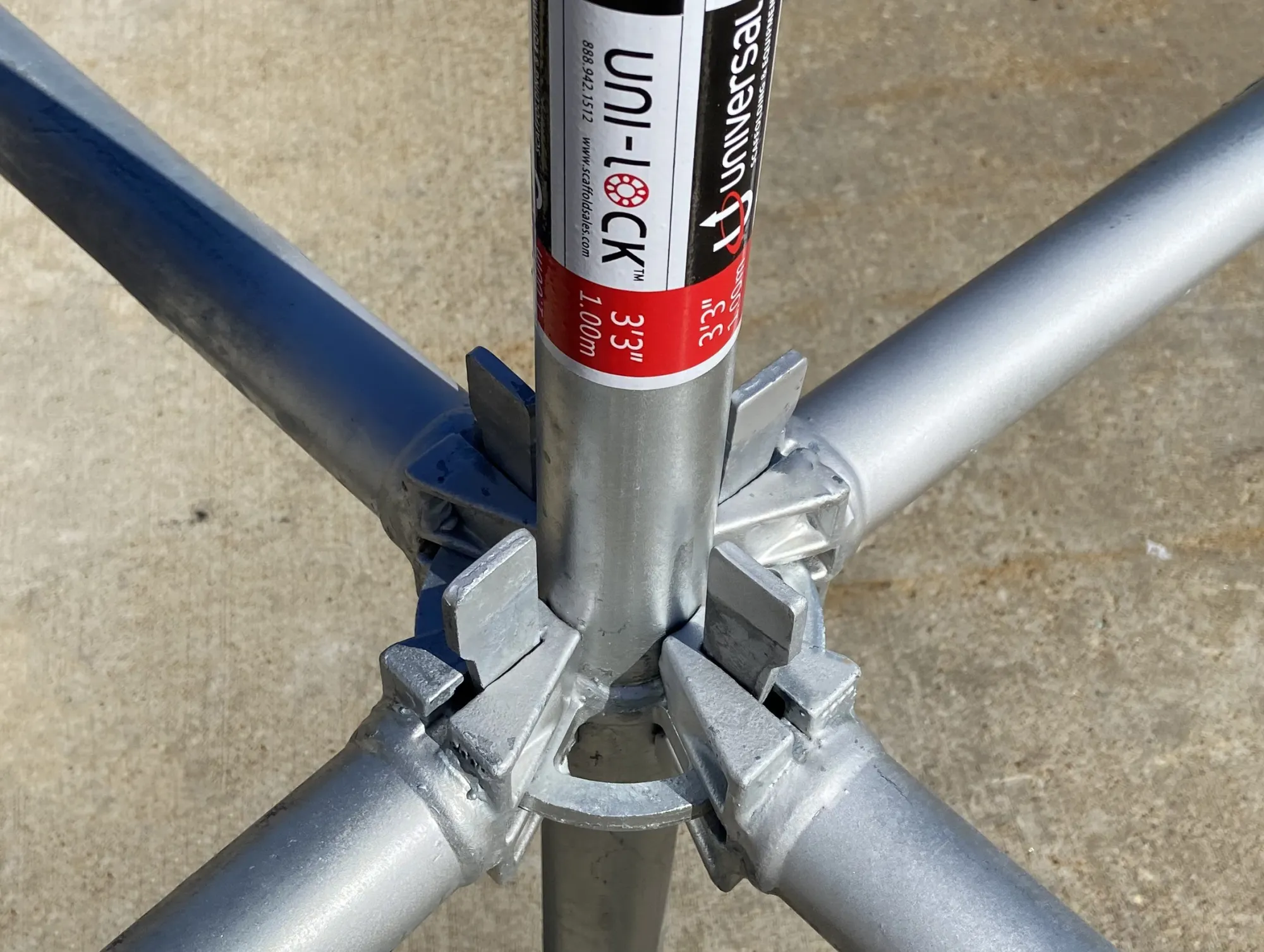

Choosing the right scaffolding system can make a significant difference in how efficiently a construction project is organized. Contractors need a system that provides stable working platforms, adapts to different structures, and can be assembled and dismantled efficiently. Ringlock scaffolding is a modular steel system designed around these requirements.
Also written as ring lock or ring-lock scaffolding, this system uses rosette connections on vertical standards to connect horizontal ledgers and diagonal braces. Its modular design allows contractors to create configurations for building construction, industrial maintenance, infrastructure work, and other applications.
What Is Ringlock Scaffolding?
Ringlock scaffolding is a modular scaffolding system made from standardized steel components. Its defining feature is the circular rosette attached to the vertical standards at regular intervals.
Horizontal ledgers and diagonal braces have connection heads that fit into the rosette. A wedge then locks the connection into place, creating a rigid structural connection without relying on numerous separate couplers.
The rosette provides multiple connection points, allowing components to be arranged in different directions. This makes the system useful when scaffolding needs to follow irregular building shapes or accommodate different working configurations.
How Does Ringlock Scaffolding Work?
The system is assembled by connecting vertical standards, horizontal ledgers, and diagonal braces through the rosette nodes.
A typical setup involves:
- Positioning base plates or adjustable base jacks on a suitable foundation.
- Installing the vertical standards.
- Connecting horizontal ledgers at the required working levels.
- Adding diagonal braces to provide structural stability.
- Installing platforms, guardrails, toe boards, and access components.
- Checking alignment, connections, bracing, and overall stability before use.
The wedge connection is one of the system's most recognizable features. Main components can be connected using a straightforward locking process, reducing the need for numerous loose bolts and couplers.
However, assembly should always follow the manufacturer's instructions, project engineering requirements, and applicable safety regulations. Scaffolding should be erected and inspected by appropriately trained and competent personnel.
Main Ringlock Scaffolding Components
Understanding the individual components helps contractors select the correct equipment for a project.
Vertical Standards
Standards are the primary vertical members of the scaffold. Rosettes are welded to them at predetermined intervals, creating connection points for other components.
Horizontal Ledgers
Ledgers connect the vertical standards horizontally. They help establish the scaffold's bays and provide support for working platforms and other components.
Diagonal Braces
Diagonal braces contribute to the rigidity and stability of the scaffold. They connect standards diagonally and help control movement within the structure.
Base Jacks and Base Plates
Base components transfer scaffold loads toward the supporting surface. Adjustable base jacks can also help compensate for variations in ground level.
Platforms and Planks
Platforms create the working surface for personnel and materials. Depending on the system, contractors may use steel planks, decks, or other compatible platform components.
Guardrails and Toe Boards
Guardrails provide edge protection around working platforms, while toe boards help prevent tools and materials from falling from platform edges.
These components work together as one modular system, so compatibility and correct installation are essential.
Benefits of Ringlock Scaffolding
One reason modular systems are widely used is their ability to combine standardized components with flexible configurations.
Key advantages include:
- Modular construction: Standard components can be combined for different scaffold layouts.
- Multi-directional connections: Rosette nodes allow connections in multiple directions.
- Efficient assembly: Wedge-based connections can simplify the installation process.
- Structural rigidity: Properly installed braces and locked connections create a stable framework.
- Reusable components: Many components can be reused across different projects and configurations.
- Adaptability: The system can be configured for façades, stair towers, industrial work, shoring, and other applications.
The exact performance of a scaffold depends on its configuration, components, loading, foundation, bracing, and installation. Therefore, contractors should not assume that every ringlock setup has the same load capacity.
Where Is Ringlock Scaffolding Used?
Ringlock systems can be adapted to a wide range of construction and maintenance environments.
Common applications include:
Building Construction
Contractors can use modular scaffolding for façade work, masonry, painting, installation, repairs, and general access around buildings.
Industrial Maintenance
The system can provide temporary working platforms around industrial facilities where workers need access to elevated equipment and structures.
Bridges and Infrastructure
Its modular design makes ringlock useful for infrastructure projects where scaffold configurations may need to accommodate unusual dimensions or structural features.
Stair Towers and Access Systems
Compatible components can be configured into stair towers and access structures, helping workers move between different working levels.
Shoring Applications
Ringlock components can also be used in certain shoring and temporary-support configurations when designed and installed for the specific application.
Ringlock Scaffolding vs Traditional Tube and Coupler
Traditional tube-and-coupler scaffolding uses individual tubes connected with separate fittings. This approach can provide considerable flexibility, but every connection generally requires the correct fitting and installation process.
Ringlock scaffolding takes a more standardized approach. The rosette connection points are incorporated into the standards, while ledgers and braces use compatible wedge heads.
This can simplify repetitive assembly and make it easier to create standardized scaffold bays. On projects involving complex shapes, the multiple connection directions can also provide useful flexibility.
The best choice depends on the project's geometry, required working platforms, available components, engineering requirements, labor, and applicable regulations.
What to Check Before Buying Ringlock Scaffolding
Whether buying new or used equipment, contractors should evaluate more than the quantity of components.
Consider the following:
- Component compatibility: Make sure standards, ledgers, braces, platforms, and accessories are designed to work together.
- Component condition: Inspect used steel members for bends, cracks, excessive corrosion, damaged welds, or other defects.
- Required dimensions: Determine the bay lengths, lift heights, platform widths, and overall configuration required.
- Accessories: Check whether base jacks, guardrails, toe boards, stairs, and other necessary parts are included.
- Documentation: Review manufacturer information, load tables, inspection requirements, and applicable certifications.
- Project requirements: Confirm that the selected system is appropriate for the intended application.
Working with an established scaffolding supplier such as scaffoldsales can also help contractors identify the components required for their specific project.
Safety and Maintenance Considerations
Even a well-designed modular scaffold requires proper installation and regular inspection. The supporting ground should be suitable for the intended loads, and the completed scaffold should be checked for alignment, bracing, connections, access, platforms, and edge protection.
Components should also be kept clean and stored correctly after dismantling. Damaged or questionable parts should be removed from service until they have been properly assessed.
Regular inspections are particularly important after events that could affect scaffold stability, such as significant weather or changes to the structure.
Final Thoughts
Ringlock scaffolding provides a flexible modular approach to temporary access and support requirements. Its rosette-and-wedge connection system allows standards, ledgers, braces, platforms, and accessories to be assembled into configurations suitable for many construction and maintenance applications.
Before purchasing or using a system, consider the project's dimensions, loading requirements, components, foundation conditions, inspection procedures, and applicable safety standards. Selecting compatible equipment and following the correct engineering and installation requirements can help create a reliable working environment throughout the project.




















Sign in to leave a comment.