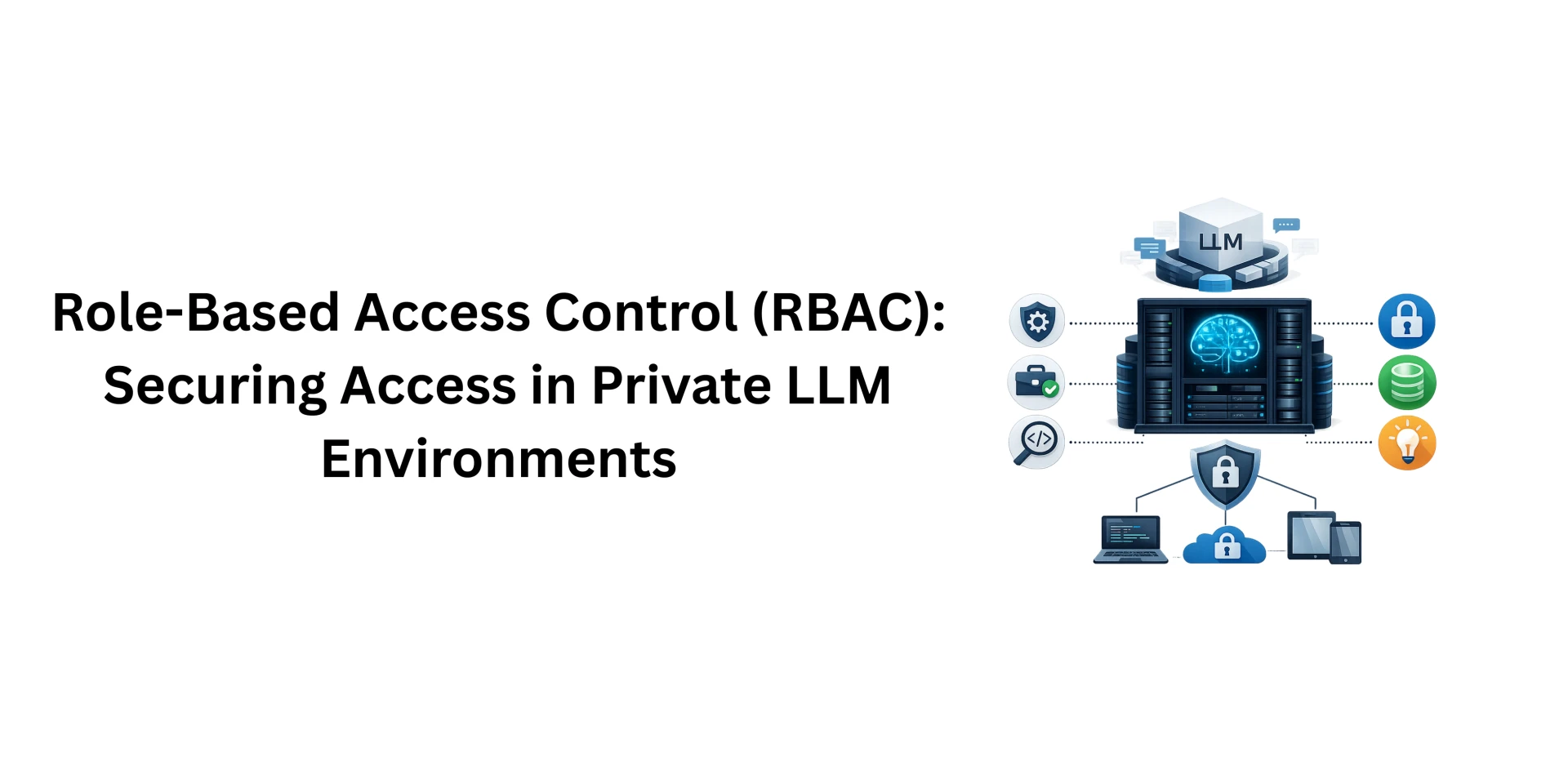

Security rapidly becomes a board-level discussion as businesses use large language models to power automation, analytics, and customer experiences. Although network security and encryption are important, too many people having too much access is a more straightforward cause of many breaches.
Role-based access control, or RBAC, is essential in this situation. Structured permissions are not just useful, but crucial for private AI installations. Organisations can improve private LLM security and lower the chance of misuse, data disclosure, or compliance violations by putting RBAC into place inside controlled settings.
This strategy guarantees that innovation doesn't surpass governance, which is important for CEOs and other corporate executives.
What Is RBAC in Private LLM Environments?
A security framework called Role-Based Access Control (RBAC) bases system permissions on a user's job function as opposed to specific requests. Organisations define roles like administrator, developer, analyst, or watcher rather than manually assigning access.
Only the access required to carry out particular tasks is granted to each position.
In a private LLM environment, this means:
- Only authorized teams can upload training data
- Sensitive prompts remain restricted
- Model configurations are protected
- Administrative actions are limited
This structured approach directly supports stronger private LLM security while simplifying oversight.
Why Unrestricted Access Creates Risk
Without clear boundaries, LLM systems can become vulnerable. When multiple departments interact with AI tools, excessive permissions often lead to accidental data leaks or unauthorized changes.
Common risks include:
- Exposure of confidential documents
- Unauthorized model modifications
- Compliance violations
- Difficulty tracing accountability
Even a minor error might have serious legal or financial repercussions for sectors that are subject to regulations. By upholding the least privilege principle, which states that users should only access what they absolutely need, RBAC reduces these dangers.
Important RBAC Regulations That Boost Private LLM Security
Clearly Defined Duties and Positions
Determine who communicates with the LLM and what steps they need to take first. Overlapping rights are avoided by keeping roles like administrators, data scientists, and end users distinct.
Granular Permissions
Limit access to specific datasets, APIs, or features. Fine-grained controls prevent broad exposure and reduce attack surfaces.
Identity Integration
Connect RBAC with enterprise identity systems like SSO or multi-factor authentication. This ensures consistent authentication and simplifies user management.
Constant Record-Keeping and Evaluations
To make sure access is still suitable, periodically check permissions and keep an eye on activity logs. As duties change over time, permissions should also alter to reflect those changes.
When combined, these procedures provide a strong basis for trustworthy private LLM security.
Business Benefits Beyond Security
RBAC enhances operations in addition to protecting systems. Teams become more accountable and less confused when access structures are clear. Compliance checks are made simpler, audits are made easier, and onboarding is sped up.
This translates into fewer surprises and increased confidence in AI investments for leadership. Controlling access makes it safer and more predictable to scale AI across departments.
Conclusion
Businesses have more control over their data in private AI environments, but this control is contingent on strict access control. RBAC offers a workable, tested method of system security that doesn't impede innovation.
Organisations may enhance private LLM security, safeguard confidential data, and guarantee AI stays both potent and accountable by incorporating role-based policies into routine business activities.
Smart access control is not just best practice, but also essential in today's business environment.



















Sign in to leave a comment.