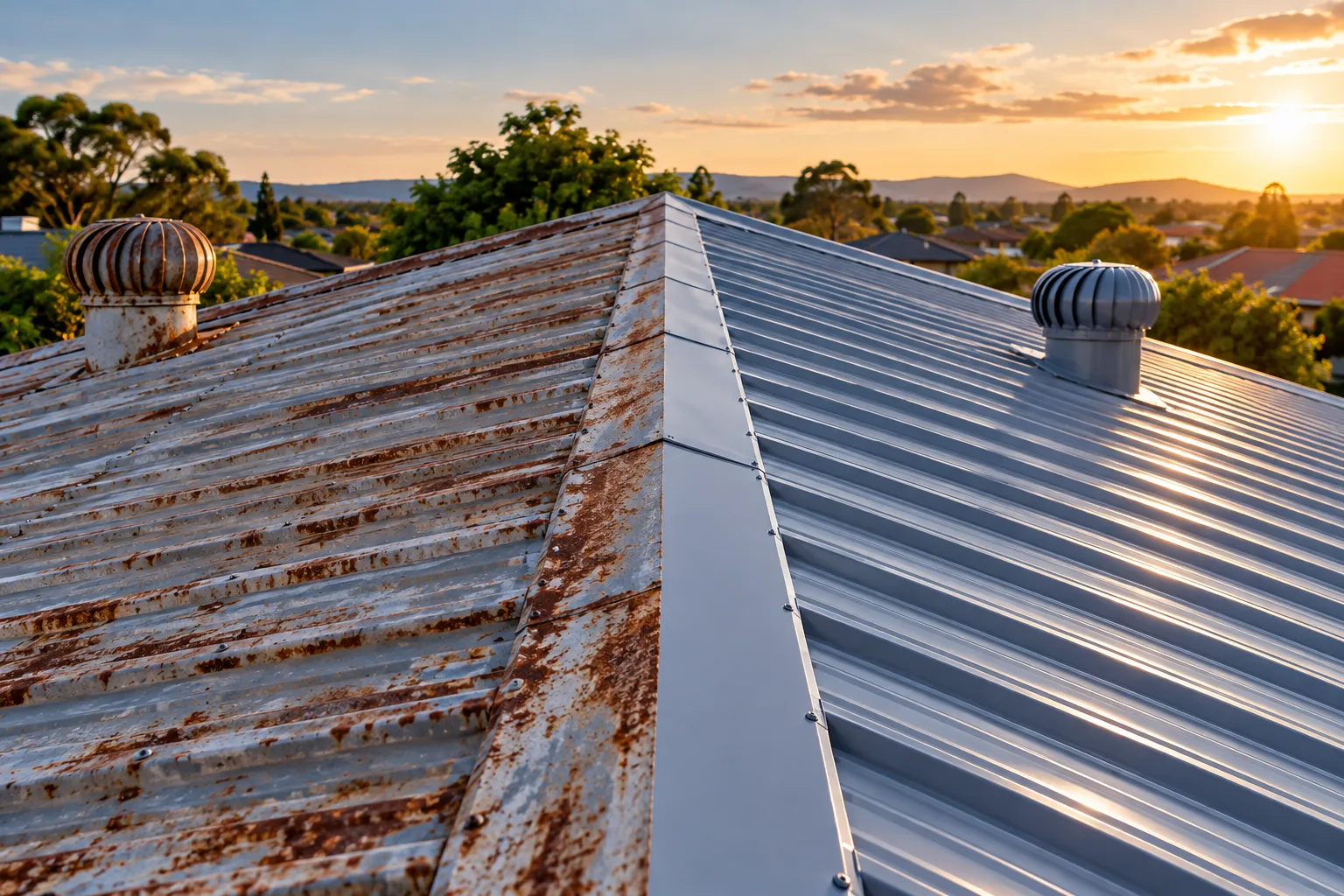

A metal roof can look tired long before it reaches the end of its useful life. Faded colour, surface rust, peeling paint and ageing fasteners can make homeowners wonder whether they need a completely new roof or whether the existing sheets can still be repaired and protected. For Melbourne homes, changing weather can expose small roofing problems quickly. In many cases, roof restoration can extend the service life of a sound metal roof without the cost and disruption of replacing the entire system.
However, coating an ageing roof is not always the right answer. A coating cannot repair severely corroded sheets, major leaks or serious structural damage. Likewise, replacing a roof that still has plenty of usable life can mean spending considerably more than necessary. The right choice depends on the actual condition of the metal sheets, fixings, flashings, gutters and other parts of the roof.
So, how do you know which option makes sense? Start with the condition of the existing roof rather than its appearance alone. A faded surface may only need preparation and recoating, while widespread corrosion may point towards replacement. Understanding the differences can help Melbourne homeowners make a more practical decision.
1. Start by Checking the Condition of Your Metal Roof
The condition of the metal sheets should be the first thing you consider. Surface fading, minor oxidation and worn paint do not automatically mean the roof has reached the end of its life. If the sheets remain structurally sound and do not have widespread corrosion, a professional can often clean, prepare and recoat the surface. In this situation, roof restoration can be a sensible way to improve protection without removing the existing roof.
Look closely at areas around screws, overlaps, valleys, flashings and penetrations. These points can develop problems before the main roof sheets show obvious deterioration. Loose fasteners may allow water to enter, while failed seals around penetrations can create small leaks. Rust around fixings also deserves attention because corrosion can spread if you leave it untreated.
A professional inspection should go beyond simply looking at the roof from ground level. A roofing contractor can assess the condition of the sheets, check for corrosion and inspect the roof drainage system. They can also identify whether previous repairs or coatings have failed. That information gives you a much clearer basis for deciding whether to repair and coat the roof or start planning for a new metal roof.
2. When a Roof Coating Makes Sense
A roof coating works best when the existing metal roof still has good structural strength. The coating itself does not make a badly damaged roof sound again. Instead, it adds a protective layer over a properly prepared surface. This can help improve the roof's appearance while providing additional protection against weather exposure.
Preparation plays a major role in the result. A contractor may need to remove dirt, surface contamination, loose coating and areas of corrosion before applying a new roofing product. Any damaged fasteners, joints or flashing details should also receive attention before coating begins. Painting over rust or loose material without proper preparation can lead to premature failure.
The type of coating matters too. Metal roofing products need to suit the existing roof material and the conditions the roof faces. A professional should consider the roof's current coating, exposure to sunlight, moisture levels and general condition before recommending a product. Good preparation and the correct coating system can make a significant difference to how long the finished surface performs.
3. Signs That Replacement May Be the Better Choice
Some metal roofs have simply gone too far for a coating to provide a dependable solution. Widespread corrosion, severely rusted sheets, repeated leaks and extensive deterioration can all indicate that the existing roof needs more than surface treatment. In these circumstances, roof restoration may not address the underlying problems because the metal itself has already lost too much strength.
Pay attention to areas where rust has created holes or significantly thinned the sheet. A small rust spot may be manageable, but extensive corrosion across several sections presents a different problem. You should also consider repeated leaks. If contractors have repaired the same areas several times and water continues to enter the building, replacing the affected roof sections or the entire roof may make more sense.
Age also matters, but it should not be the only deciding factor. An older metal roof in good condition may still perform well after suitable maintenance, while a younger roof exposed to harsh conditions can develop serious corrosion. The decision should therefore come from an inspection of the actual roof rather than an arbitrary age limit.
4. Consider the Cost of Each Option
Cost naturally plays a major role in the decision. Coating an existing metal roof will generally involve less material removal and less labour than completely replacing the roof. However, the final price depends on the roof's size, access, condition, preparation requirements and the amount of repair work needed beforehand.
Replacement usually involves removing the existing sheets and installing new roofing materials. The project may also involve replacing deteriorated insulation, flashings, screws or other components. Because of this, a replacement quote can look significantly higher at first. However, it may provide better long-term value when the existing roof requires extensive repairs before it can be coated.
Rather than choosing the cheapest quote, compare what each contractor includes. Ask whether preparation, rust treatment, repairs, fastener replacement and clean-up form part of the price. Also check whether the quote covers only the visible roof surface or includes associated components that may affect its performance. A detailed quote makes it easier to compare the two options fairly.
5. Think About Rust Before Choosing a Coating
Rust is one of the biggest concerns with older metal roofs. Small areas of surface oxidation can often receive appropriate treatment, but deeper corrosion requires closer attention. If rust has weakened the metal, applying a new coating over the area will not restore the lost material.
Rust often develops around fasteners, overlaps and damaged sections of the existing finish. Moisture can remain trapped around these areas, particularly when dirt or debris builds up. Once corrosion begins, it can gradually spread underneath the surrounding coating. That is why proper preparation matters so much before any new protective layer goes onto the roof.
A roofing professional can determine whether the corrosion is superficial or has affected the underlying metal. Small damaged areas may need cleaning and treatment, while heavily affected sheets may need replacement. Dealing with rust properly before coating helps prevent the new finish from failing prematurely and reduces the chance of recurring problems.
6. Check the Roof's Flashings, Screws and Seals
Metal roof sheets are only one part of the system. Flashings around chimneys, skylights, vents and wall junctions help direct water away from vulnerable areas. If these details have deteriorated, a new coating alone will not solve the problem.
Fasteners deserve attention as well. Older screws can lose their protective coating or develop corrosion around the fixing point. Loose screws may allow water to enter beneath the sheets, while worn washers can reduce the effectiveness of the seal. Replacing damaged fasteners during roof work can prevent small problems from turning into leaks.
The same applies to roof penetrations and joins. Sealants can deteriorate after years of exposure to sunlight and changing temperatures. Before choosing a coating or replacement, ask the contractor to inspect these areas carefully. A good roofing job should address the points where water is most likely to enter rather than focusing only on the broad sheet surface.
7. Melbourne Weather Should Influence Your Decision
Melbourne roofs deal with changing weather throughout the year. Strong sunlight, heavy rain, wind and temperature changes can all affect metal roofing materials and protective coatings. A roof that already has weak areas may deteriorate faster when these conditions continue without maintenance.
Heavy rain can also reveal drainage problems. Gutters and downpipes need to move water away from the roof efficiently. If they remain blocked or damaged, water can back up against the roof edge and increase the risk of leaks and corrosion. Any assessment should therefore include the roof drainage system rather than treating the roof as an isolated component.
Timing can matter too. If you notice rust, leaks or coating failure, dealing with the issue before the next period of severe weather can prevent further deterioration. Regular inspections are particularly useful for older metal roofs because they allow small defects to be addressed before they become expensive repairs.
8. Consider the Long-Term Condition of the Roof
A coating can improve the condition and appearance of a suitable metal roof, but it should form part of a broader maintenance plan. Keep an eye on rust, fasteners, flashings and drainage after the work is completed. Regular checks can help identify problems before they spread.
Replacement may offer a stronger long-term option when the existing sheets have extensive deterioration. New metal roofing can provide a fresh protective surface and reduce the need to deal with ageing sheets. However, the installation still needs to address drainage, flashing details and fixing points properly. A new roof will not perform well if those details receive little attention.
Think about the next several years rather than only the immediate project cost. If your existing roof remains structurally sound, a coating and targeted repairs may give you the result you need. If the roof has widespread corrosion and recurring faults, investing in roof restoration may not make financial sense if the underlying metal cannot provide reliable service.
Make the Choice Based on the Roof, Not Just Its Appearance
A faded metal roof does not automatically need replacement. Likewise, a fresh-looking roof is not necessarily free from problems. The real answer comes from checking the condition of the sheets, fasteners, flashings, seals and drainage system. Once you understand what is actually happening, the choice becomes much easier.
If the metal remains strong but the surface has deteriorated, cleaning, repairs and a suitable coating may provide a practical solution. If corrosion has spread deeply, leaks continue to return or the sheets have become structurally weak, replacement deserves serious consideration. Getting an independent assessment can prevent you from spending money on a treatment that will not address the underlying issue.
For Melbourne homeowners, the best approach is to have the entire roof assessed before making a decision. A professional can explain what needs attention now and what can reasonably wait. If the existing metal roof still has good structural condition, roof restoration can be a practical alternative to complete replacement. If the damage has progressed too far, replacing the affected roofing may provide the more dependable result.

















Sign in to leave a comment.