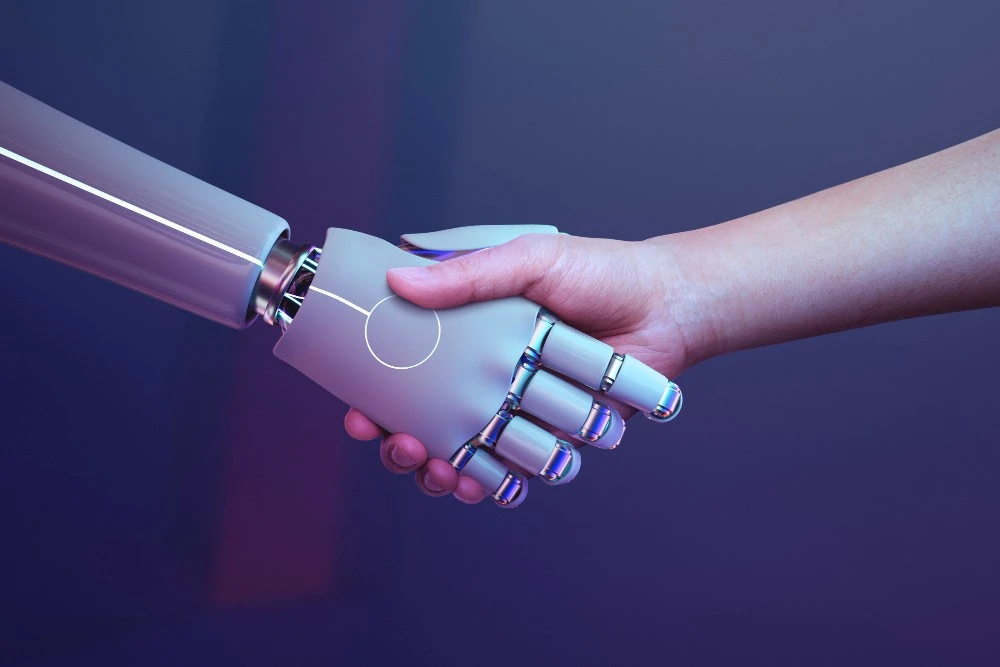

Intelligent automation has brought a complete shift in the business world and this shift is helping businesses in improving efficiency, increasing productivity. This is changing the way businesses operate. In this respect, the movement of Robotic Process Automation (RPA) to AI agents is seen as a major evolution. Evidently, RPA is best in automating repetitive tasks and in streamlining processes, thus leaving less room for human inaccuracies. But going forward, small and large businesses are looking for better adaptability and are sharpening their decision-making, and that is where AI agents have cropped up as a strategic and futuristic step.
The next generation systems have the capacity to study data, make predictions based upon its learnings, and can interact with users. No wonder that more sophisticated solutions with automation are underway. This transition promises to redefine operational capabilities and drive innovation across industries.
The Evolution from RPA to AI Agents:
As explained above, RPA has become enormously instrumental in automating such tasks which have set rules and have mundane tasks in everyday operations. Hereon, businesses can optimistically look at AI agents in introducing advancer functionalities, for example in case of machine learning and language processing. You may enjoy this benefit by extending AI and Automation Training to your personnel at a dedicated institute like Kaushal Vikash.
With focussed training, your trained professionals can simplify even the most complicated decision-making processes. Today when AI technology is maturing day by day, businesses are enjoying better client/customer interaction, and steadfast and optimum operations, together with strategic insights around their business. In other words, they now have not only the automated functionality but also better intelligence and smarter adaptability.
RPA: A Foundation for Automation:
Whenever you need a modern automation strategy, you think of Robotic Process Automation or RPA. This has become an important foundation in the contemporary business world. Employees are no longer required to carry out mundane tasks as those repetitive activities have been automated with RPA. Companies can look forwards fast and better ROI, once RPA tools are in place. However, there is the inability to learn and adapt with RPA, and this lack can be patched up with Intelligent Automation.
AI Agents: The Next Frontier:
Traditional RPA limitations have been surpassed with the extensive far-reaching capabilities of the agents of AI. These capabilities make it easy to activate cognitive functions, and that is different from RPA, as these agents are extra smart to learn from interactions and decipher outcomes. They can also adapt to the information, and take informed and smart decisions. As a result of this adaptability, they easily handle complicated or uneasy tasks, involve creatively in conversations and share personal experiences.
With agility and responsiveness soon becoming a priority for businesses, aligning operations with the help of AI and Automation Training has become prerequisite for them.
Benefits of Integrating AI Agents with RPA:
You have noteworthy advantages and optimistic results assured by integrating AI agents with Robotic Process Automation (RPA). It is like bringing two technologies together and drawing their combined strength to achieve higher accuracy and efficiency in the workflow. On one hand, you can let the automation of repetitive tasks be taken care through RPA and on the other, use the AI agents for more complex activities like analysing the unstructured data, having in-depth studies and making intelligent strategic decisions with Intelligent Automation.
The synergy thus produced with this integration again leaves negligible scope for human error, and at the same time, promotes quicker processing and better scalability. Furthermore, you can leverage AI agents to constantly evolve in their outcomes by continuous data monitoring, and thus, optimize RPA systems. As that is taken care, your business can focus more on strategic initiatives because those mundane tasks have been already automated.
The Hybrid Approach: RPA and AI Working Together:
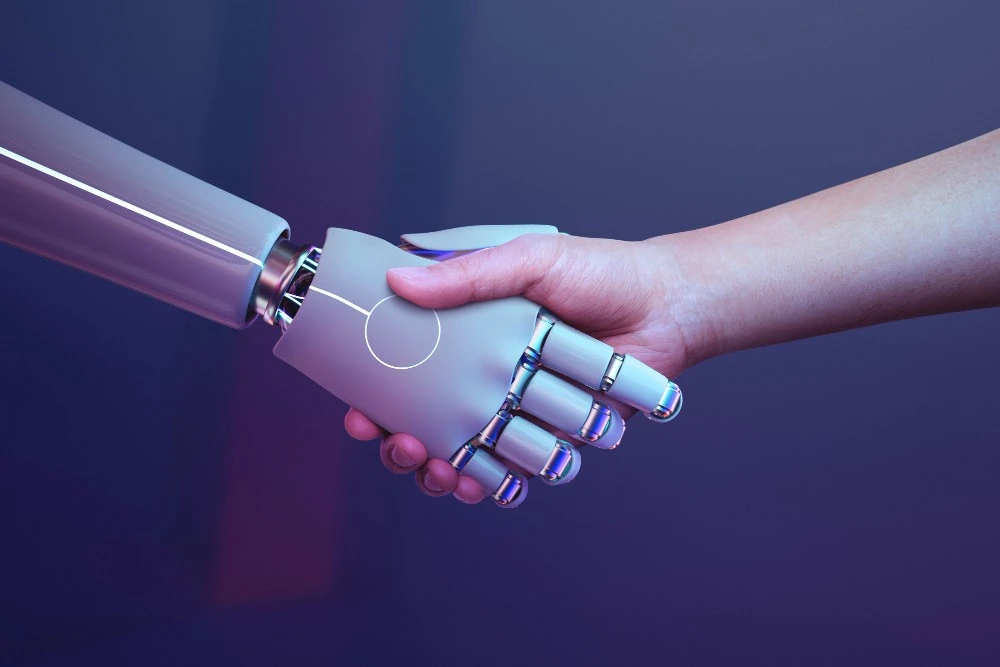
You set up a hybrid approach when RPA with AI work together as this combination creates a strong technological framework for your business. This hybrid approach is synonymous to blending two sophisticated powers – one of RPA and the other of AI. It is pertinent to mention here that AI and Automation Training is highly desirable if you want to draw complete outcomes of the hybrid approach. This high level training can be obtained at India’s most reliable institute which is Kaushal Vikash.
You are bound to reap all the specific benefits of RPA and smart automation as discussed above. RPA takes care of the rule-based mundane tasks which do not need much of human intervention and AI takes care of complex and strategic affairs of decision making, and this collaboration improves operational efficiency.
For example, if your business has a lot of data input every day, and you have the hybrid approach involving RPA and AI together, the data entry gets done by RPA while the complex task of interpreting customer enquiries gets taken care by AI. This way, your human resources are set free from everyday routine tasks and can be given more strategic roles. Aside, you save huge costs and ensure better customer experience with intelligent automation.
Getting Started with AI Agents:
As a first step to get started, all that is required is to assess your particular automation needs. Then, identify those routine tasks which you want to automate and integrate with the current systems. While doing so, you should also initiate employee training so that they get familiar with the AI technology alternates and contribute in the seamless integration aimed at.
It is pretty foreseeable that the next generation businesses will have to make sure they integrate AI agents with RPA. Their objective should be to leverage the combined strength of both RPA and AI, if they want to boost productivity, streamline their operations and add smart decision-making abilities in their business. Most businesses have realized this, not just as a present business requirement but also as a step towards future. No matter how small or large your business is; you have all the good reasons to ride the ladder of intelligent automation as a smart move and look forward to an optimistic future.
























Sign in to leave a comment.