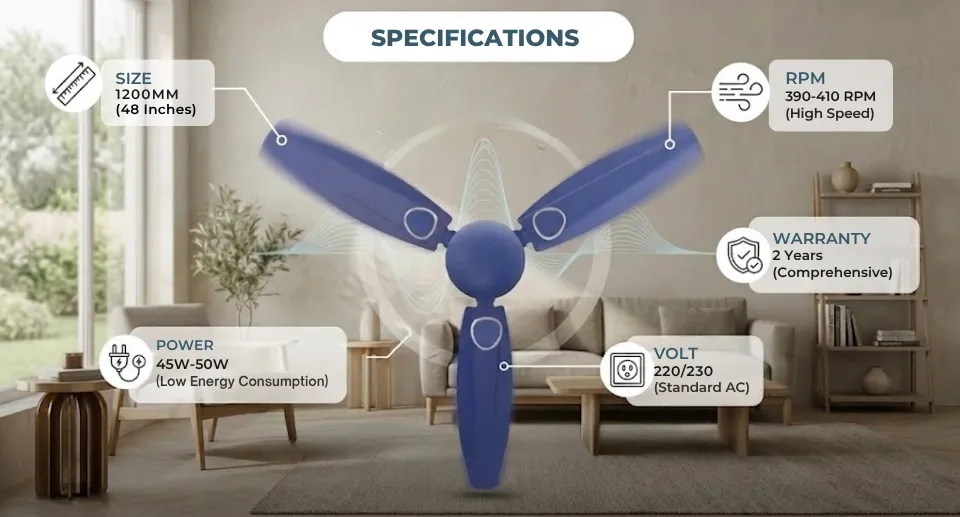

Ceiling fans are one of the most commonly used appliances in homes, offices, and commercial spaces. While people often consider design, size, and price when buying a fan, one of the most important technical factors is RPM. Understanding the rpm of ceiling fan helps you choose the right model for better airflow, comfort, and energy efficiency.
This detailed guide explains everything about ceiling fan RPM, including its meaning, importance, ideal ranges, and how it impacts performance.
What Is RPM in a Ceiling Fan?
RPM stands for Revolutions Per Minute, which refers to how many times the fan blades rotate in one minute.
For example:
- A fan with 300 RPM rotates 300 times in a minute
- A fan with 400 RPM spins faster and generally provides stronger airflow
RPM is essentially the speed of the fan, and it directly affects how much air the fan circulates in a room.
Why RPM Matters in Ceiling Fans
RPM plays a crucial role in determining how effective a ceiling fan is in cooling a space.
1. Airflow Generation
Higher RPM means the blades rotate faster, pushing more air downward. This increases air circulation and creates a cooling effect.
2. Comfort Level
A fan with optimal RPM improves comfort by enhancing the wind-chill effect, making you feel cooler without lowering the room temperature.
3. Ventilation
In spaces like kitchens or crowded rooms, higher RPM helps remove heat, humidity, and odors more efficiently.
4. Energy Usage
While higher RPM can mean more power consumption, modern fans are designed to deliver high speed with low energy usage.
Typical RPM Range of Ceiling Fans
Ceiling fan RPM varies depending on the type, size, and purpose of the fan.
1. Standard Ceiling Fans
- RPM Range: 250–350
- Suitable for bedrooms and living rooms
- Balanced airflow and energy efficiency
2. High-Speed Ceiling Fans
- RPM Range: 350–450+
- Ideal for hot climates
- Provides strong airflow for quick cooling
3. Decorative Ceiling Fans
- RPM Range: 200–300
- Focus on aesthetics
- Best for air-conditioned spaces
4. Industrial Ceiling Fans
- RPM Range: 300–500+
- Used in large commercial or industrial areas
- Designed for maximum airflow
RPM vs Airflow (CFM): What’s the Difference?
Many people assume that RPM alone determines a fan’s performance, but airflow is equally important.
- RPM: Speed of blade rotation
- CFM (Cubic Feet per Minute): Volume of air moved
A fan with high RPM but poor blade design may deliver less airflow than a fan with moderate RPM and efficient blades.
👉 The best fans offer a balance of RPM and high CFM.
Factors That Affect Ceiling Fan RPM
Several factors influence how fast a ceiling fan can rotate:
1. Motor Type
- AC Motors: Common but may have moderate RPM
- BLDC Motors: Energy-efficient, quieter, and maintain higher RPM
2. Blade Size
Larger blades cover more area but may rotate at lower RPM. Smaller blades can spin faster but move less air per rotation.
3. Blade Pitch (Angle)
A steeper blade angle moves more air but may reduce RPM due to increased resistance.
4. Voltage Supply
Low or fluctuating voltage can reduce RPM, affecting fan performance.
5. Build Quality
High-quality materials and engineering ensure smooth rotation and consistent RPM.
Ideal RPM for Different Room Sizes
Choosing the correct RPM depends on the size and usage of the room.
Small Rooms (Up to 75 sq. ft.)
- Ideal RPM: 250–300
- Provides sufficient airflow without excessive speed
Medium Rooms (75–150 sq. ft.)
- Ideal RPM: 300–350
- Balanced performance and comfort
Large Rooms (150–300 sq. ft.)
- Ideal RPM: 350–400
- Ensures proper air circulation
Large Halls or Commercial Spaces
- Ideal RPM: 400+
- May require multiple fans for uniform airflow
High RPM vs Low RPM Ceiling Fans
High RPM Fans
Advantages:
- Strong airflow
- Better cooling in hot conditions
- Ideal for large or poorly ventilated spaces
Disadvantages:
- May consume more power (in older models)
- Can produce noise if poorly designed
Low RPM Fans
Advantages:
- Quiet operation
- Energy-efficient
- Suitable for air-conditioned rooms
Disadvantages:
- Limited airflow
- Less effective in high temperatures
Energy Efficiency and RPM
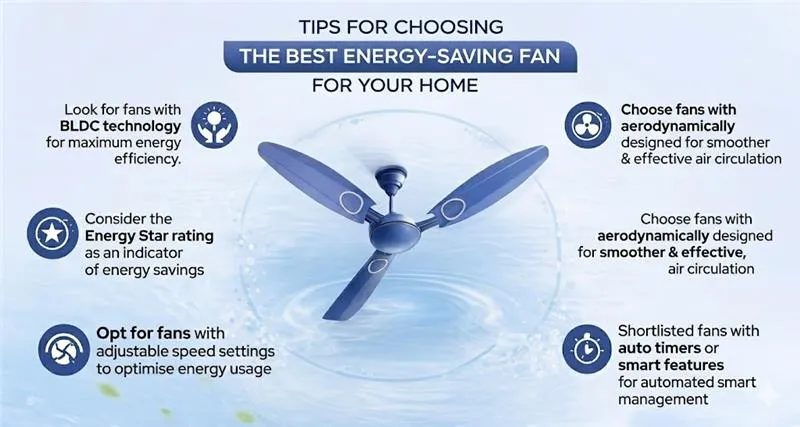
Modern ceiling fans are designed to deliver high RPM while minimizing power consumption.
1. BLDC Technology
Fans with BLDC motors:
- Use up to 50–65% less electricity
- Maintain consistent RPM even with voltage fluctuations
- Operate quietly
2. Star Ratings
Energy-efficient fans come with ratings that indicate lower power usage with good performance.
Common Issues Affecting RPM
Sometimes fans do not operate at their optimal speed due to various issues:
1. Dust Accumulation
Dust on blades increases resistance and reduces RPM.
2. Faulty Capacitor
A damaged capacitor can significantly lower fan speed.
3. Worn-Out Motor
Old motors may not achieve the required RPM.
4. Voltage Fluctuations
Low voltage results in slower rotation and poor airflow.
How to Maintain Optimal RPM
Maintaining your ceiling fan properly ensures consistent performance.
1. Regular Cleaning
Clean the blades to reduce resistance and improve airflow.
2. Check Electrical Components
Inspect capacitors and wiring for faults.
3. Ensure Proper Installation
A well-installed fan runs smoothly and maintains stable RPM.
4. Use Voltage Stabilizers
Helps maintain consistent speed in areas with unstable power supply.
Ceiling Fan RPM and Noise
Higher RPM can sometimes lead to increased noise, but modern fans are designed to minimize this issue.
Tips to Reduce Noise:
- Choose high-quality fans
- Ensure proper installation
- Avoid loose components
- Clean regularly
Well-designed fans can operate quietly even at high RPM.
How to Choose the Right Ceiling Fan Based on RPM
When buying a ceiling fan, consider the following:
1. Climate Conditions
- Hot regions: Choose high RPM fans
- Moderate climates: Standard RPM is sufficient
2. Room Type
- Bedrooms: Moderate RPM with low noise
- Living rooms: Balanced RPM and airflow
- Kitchens: Higher RPM for ventilation
3. Energy Efficiency
Look for fans that offer high RPM with low wattage.
4. Brand Reliability
Trusted brands ensure consistent RPM and durability.
Future Trends in Ceiling Fan RPM Technology
The ceiling fan industry is evolving rapidly with a focus on performance and efficiency.
1. Smart Ceiling Fans
These allow users to control RPM through mobile apps or voice assistants.
2. Automatic Speed Adjustment
Fans can adjust RPM based on room temperature and occupancy.
3. Advanced Blade Design
Improved aerodynamics help deliver better airflow at lower energy consumption.
4. Eco-Friendly Motors
Modern motors aim to maximize RPM while reducing environmental impact.
Conclusion
RPM is a key factor that determines the performance and efficiency of a ceiling fan. It directly influences airflow, comfort, and overall cooling effectiveness. While higher RPM generally provides better airflow, it is important to consider other factors such as blade design, motor type, and room size.
The ideal ceiling fan is one that balances RPM, airflow, and energy efficiency. By understanding how RPM works and what to look for, you can choose the perfect fan for your needs.
Whether you are upgrading your home or selecting a fan for a new space, paying attention to RPM ensures better comfort, improved air circulation, and long-term value.




























Sign in to leave a comment.