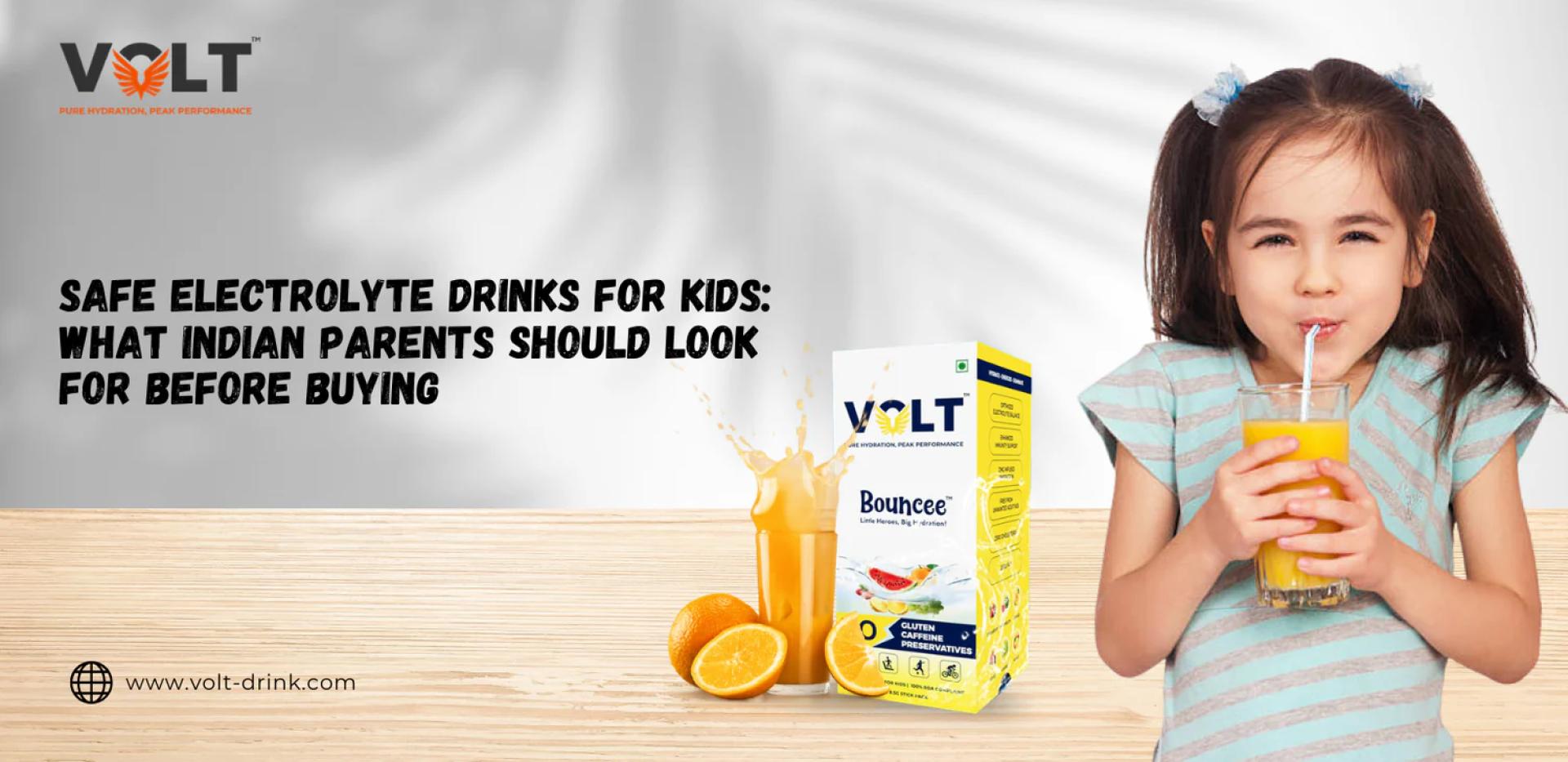

When your child comes home tired after playing cricket in the sun or feels weak during a fever, your first thought is simple: “How do I help my child feel better quickly?”
Most Indian parents reach for water, coconut water, nimbu pani or sometimes a ready‑made drink from the store. Today, the market is full of colourful bottles claiming to be the best drink for dehydration or the best drink to stay hydrated for kids. The problem? Not all of these drinks are really safe or suitable for children.
This guide will help you understand what makes a safe electrolyte drink for kids, which ingredients to check, what to avoid, and how to choose the right option—like Volt Bouncee—for your child’s daily life.
Why Hydration Is So Important for Kids in India
India’s climate plays a huge role in dehydration. In cities like Ahmedabad, Mumbai, Chennai or Delhi, temperatures can easily cross 40°C in summer. Children lose fluids quickly because they:
- Sweat more while playing outdoors
- Forget to drink enough water during the day
- Are active in sports, tuitions and school activities
- Lose fluids faster during fever, vomiting or diarrhoea
When the body loses water, it also loses important minerals called electrolytes. These electrolytes help:
- Maintain energy and stamina
- Support muscle and nerve function
- Prevent cramps
- Keep the brain alert and focused
- Balance fluids inside and outside cells
Plain water is essential but it only replaces fluids, not minerals. That’s where a child‑friendly electrolyte drink can help.
What Are Electrolytes?
Electrolytes are minerals in the body that carry tiny electrical signals and keep many processes running smoothly. For kids, the most important ones are:
- Sodium – Helps maintain fluid balance and blood pressure
- Potassium – Supports muscles and heart function
- Magnesium – Helps prevent cramps and fatigue
- Calcium – Supports bones and nerves
During heavy sweating or illness, these minerals are lost. Water alone cannot replace them. In such cases, a safe electrolyte drink for kids becomes useful to restore balance.
Are Electrolyte Drinks Safe for Kids?
Many parents ask: Are electrolyte drinks safe for kids?
The honest answer is: Yes—if you choose the right type.
Not every drink that looks sporty or energetic is healthy for children. Some products contain:
- Very high sugar
- Artificial colours and flavours
- Caffeine (in energy drinks)
- Unnecessary stimulants
These are not suitable for children and may do more harm than good.
A safer kids’ electrolyte drink should be:
- Low in sugar or with controlled sugar
- Completely caffeine‑free
- Free from harsh stimulants
- Made with balanced electrolytes appropriate for kids
Brands like Volt Drinks focus on clean, child‑friendly formulations that support hydration without unnecessary sugar overload.
Sports Drinks vs Energy Drinks for Children
Parents often confuse sports drinks with energy drinks, but the difference is very important.
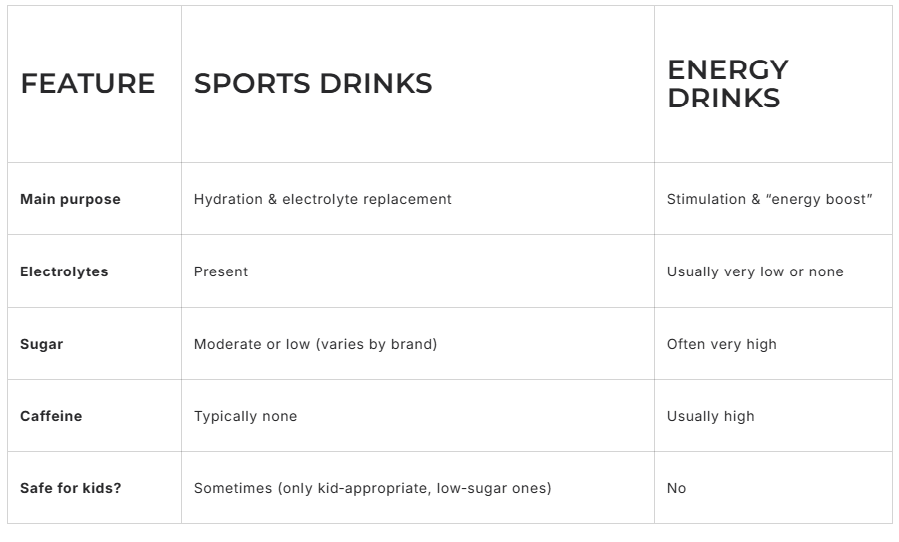
Sports drinks are meant to replace fluids and electrolytes lost in sweat. Energy drinks are designed for adults and contain caffeine and stimulants, which are unsafe for children.
Why Sugar Content Matters So Much
Many children’s drinks in India—even those marketed as “health” or “sports” drinks—are loaded with sugar. While a small amount of glucose can help during illness, excess sugar may lead to:
- Unwanted weight gain
- Tooth decay
- Sudden blood sugar spikes and crashes
- Hyperactivity or irritability
That’s why more parents are looking for:
- Electrolyte drinks with low or controlled sugar
- Electrolyte drinks without sugar for regular use
- Electrolyte powder sugar‑free options for overweight or less‑active kids
The benefits of zero‑ or low‑sugar electrolyte drinks include:
- No unnecessary calories
- Better for daily or frequent use
- Safer for kids who are already overweight
- Lower risk of dental problems
- No sudden “sugar high and crash” effect
For daily support, a controlled‑sugar or sugar‑free formula is often the smarter choice.
When Do Kids Really Need Electrolyte Drinks?
Not every situation needs an electrolyte drink. For a healthy child sitting at home or attending school indoors, plain water is still the best drink to stay hydrated.
Electrolyte drinks are more useful in situations like:
- Fever – Body temperature rises and fluids are lost faster.
- Vomiting or diarrhoea – Electrolytes are lost rapidly; a doctor may recommend ORS or an electrolyte solution.
- Intense sports or outdoor play – Football, cricket, running, swimming or long practice sessions under the sun.
- Extreme heat exposure – Summer vacations, travel, picnics or outdoor tournaments.
In these cases, a safe kids’ electrolyte drink can help restore fluids and minerals faster than water alone.
How Often Can Kids Drink Electrolytes?
Two very common questions are:
- How often can kids drink electrolytes?
- How many electrolyte drinks per day are safe?
Simple guidelines for healthy children:
- Normal days / light activity: Water is enough. No need for electrolyte drinks.
- Mild dehydration or sports: 1 serving after intense activity is usually enough.
- During illness: Follow your paediatrician’s advice and recommended dosage.
Even the best electrolyte drink for children should not completely replace water. Think of it as supportive—used when needed, not all the time.
What Parents Should Check Before Buying Kids’ Drinks
Before putting any drink into your child’s routine, turn the pack and read the label. Look for these key points:
1. Ingredient List
Prefer drinks that include:
- Sodium
- Potassium
- Magnesium
- Child‑friendly vitamins
- Natural or nature‑identical flavours
Avoid or minimise:
- Caffeine and stimulants
- High fructose corn syrup
- Very long lists of artificial colours and flavours
2. Sugar Content
Look at the “Total Sugar” or “Added Sugar” line.
Choose:
- Low sugar per serving
- Sugar‑free or controlled‑glucose options for regular use
Avoid:
- Drinks with 20–30 g sugar per serving
- Beverages that taste extremely syrupy or overly sweet
3. Artificial Colours and Flavours
Very bright neon colours often mean heavy artificial colouring. Prefer softer, natural‑looking shades and clean‑label brands that keep colours and flavours in check.
4. Age Suitability
Some sports drinks are made for adults or professional athletes. Always check if the product is specifically suitable for children or has kid‑friendly dosing instructions.
5. Brand Transparency
A responsible brand clearly mentions:
- Full nutrition facts
- Ingredient list
- How and when to use
- Any age‑related or medical precautions
Transparency helps you trust what you are giving to your child.
How Volt Bouncee Fits into “Safe for Kids”
Volt Bouncee is Volt’s kids‑focused electrolyte hydration drink mix, designed for children in the 5–12 age group. Each 5.6 g serving (one stick) provides approximately:
- Around 20 kcal
- Sodium: ~240 mg
- Potassium: ~200 mg
- Chloride: ~280 mg
- About 6 g total sugars (from cane sugar) with controlled sweetness
- Vitamin C and B‑vitamins (B1, B2, B3, B5, B12.) close to kids’ RDA ranges
- Added zinc to support normal immunity
In simple terms, Bouncee aims to:
- Replace electrolytes lost in sweat or mild illness
- Provide gentle energy without very high sugar
- Stay completely caffeine‑free and free from harsh stimulants
Parents should still follow the usage instructions on pack and avoid over‑use, but the formulation is built keeping children’s needs and safety in mind.
Electrolyte Powder Sugar‑Free: When It’s Useful
Powder‑based electrolyte drinks—especially sugar‑free versions—are becoming popular because they are:
- Easy to carry in school bags or sports kits
- Convenient while travelling
- Long‑lasting on the shelf
- Customisable (you can mix in more or less water)
A sugar‑free electrolyte powder works well for:
- Kids who are already getting a lot of sugar from other foods
- Overweight or sedentary children who still need electrolytes sometimes
- Older kids involved in frequent sports training, where repeated sugary drinks aren’t ideal
Volt Drinks offers powder‑based hydration options that focus on electrolytes and vitamins, not sugar.
Best Drink to Stay Hydrated Daily
For everyday hydration, the answer is simple:
- Water should be your child’s main drink, all through the day.
Electrolyte drinks are add‑ons. Use them when:
- There is heavy sweating
- There is clear fluid loss (illness, extreme heat)
- Quick recovery from sports is needed
If your child spends most of the day indoors, plays lightly and eats normally, plain water (plus regular healthy meals) is usually enough.
Common Myths About Electrolyte Drinks
Myth 1: All sports drinks are healthy.
Not true. Many have sugar levels similar to soft drinks. Always read the label.
Myth 2: Kids need electrolyte drinks every day.
No. Healthy children can depend on water for daily hydration. Electrolytes are for special situations.
Myth 3: Energy drinks improve school or sports performance.
Energy drinks contain caffeine and are not safe for kids. They should be avoided completely.
Myth 4: More electrolytes always mean better health.
Too much of anything can disturb the body’s balance. The goal is right balance, not maximum dose.
Signs of Dehydration in Kids
Watch out for these warning signs of possible dehydration:
- Dry lips or mouth
- Reduced urination
- Dark yellow urine
- Tiredness or low energy
- Headache
- Irritability or dizziness
In such cases, encourage sips of water immediately. If symptoms are stronger—especially with vomiting, diarrhoea or high fever—speak to a doctor. They may advise ORS or a child‑safe electrolyte drink.
Why Choosing the Right Brand Matters
Children’s bodies are more sensitive than adults’. A drink that isn’t designed for kids can:
- Push sugar intake too high
- Upset the stomach
- Affect sleep or behaviour (if it contains caffeine)
Choosing a trusted brand like Volt Drinks means choosing:
- Balanced electrolytes in each serving
- Controlled sugar levels
- Caffeine‑free, kid‑friendly formulations
- Clear instructions and transparent labelling
That combination helps parents support hydration without compromising on safety.
Comparing Options: What Makes a Drink Truly Safe?
When comparing labels, ask yourself these questions:
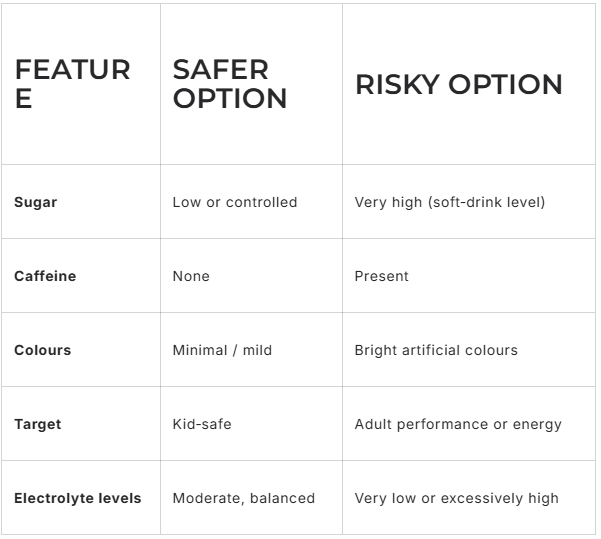
Many popular sports drinks contain 20–30 g sugar per serving. A kids‑focused electrolyte drink like Volt Bouncee aims to keep sugar controlled while still supporting hydration.
Practical Tips for Indian Parents
To keep things simple, follow these steps:
- Encourage your child to drink water regularly during the day.
- Give extra water breaks during outdoor play and sports.
- Use electrolyte drinks when there is heavy sweating, heat or doctor‑advised recovery.
- Avoid energy drinks completely for children.
- Always read labels—check sugar, caffeine, colours and electrolyte levels.
- Prefer low‑ or zero‑sugar options and brands that clearly mention kids’ suitability.
Final Thoughts: Making Smart Hydration Choices
As a parent, your goal is clear: keep your child healthy, active and happy. Electrolyte drinks can be very helpful, but only when chosen and used wisely. Focus on:
- Clean ingredients
- Low or controlled sugar
- No caffeine
- Balanced minerals
- Transparent labelling and clear usage guidance
Volt Bouncee and other Volt hydration products are designed keeping these principles in mind, offering smarter hydration support for growing children.
Remember:
- Water is essential every day.
- Electrolytes are supportive when needed.
- Sugar overload is unnecessary.
Once you know what to look for on the label, choosing the best electrolyte drink for children becomes simple and stress‑free.
FAQs: Safe Electrolyte Drinks for Kids in India
1. Are electrolyte drinks safe for kids?
Electrolyte drinks are generally safe for kids when they are low in sugar, completely caffeine‑free, and made with balanced minerals suitable for children. Always read the label and follow the recommended serving.
2. How often can kids drink electrolytes?
Healthy children usually need electrolyte drinks only during heavy sweating, hot weather, or illness. For most kids, 1 serving after intense sports or as advised by a paediatrician is enough—water should remain the main daily drink.
3. What is the best drink for dehydration in children?
During dehydration, a balanced electrolyte solution with controlled sugar and clear dosing instructions works best. In cases of fever, vomiting or diarrhoea, parents should follow their doctor’s advice and may be asked to give ORS or a kid‑friendly electrolyte drink.
4. What should parents check before buying kids’ electrolyte drinks?
Check sugar levels, caffeine (should be zero), presence of artificial colours/flavours, and the amounts of sodium, potassium and other minerals. Also see if the product clearly mentions suitability for children and recommended serving size.
5. What is the difference between sports drinks and energy drinks for kids?
Sports drinks are designed to replace fluids and electrolytes lost in sweat and may sometimes be suitable for kids in moderation. Energy drinks contain caffeine and stimulants and are not safe for children.
6. Can kids drink electrolyte powder sugar‑free every day?
Sugar‑free electrolyte powder can be useful for overweight kids or frequent sports, but it still should not replace plain water. Use it when there is extra fluid loss or heavy activity, not as a constant all‑day drink, unless a doctor suggests otherwise.
Know More:https://www.volt-drink.com/blogs/news/safe-electrolyte-drinks-for-kids-india































Sign in to leave a comment.