
Most real estate presentations end the same way: the buyer nods, says "let me think about it," and leaves. Not because the project failed to impress — but because a presentation, by itself, rarely closes anything. It informs. It doesn't convert.
Sales ready properties software is built to close that specific gap — turning a presentation from something a buyer passively watches into something they actively experience, question, and ultimately decide on inside the room. When a buyer can see and interrogate the details themselves, "let me think about it" starts turning into "let's talk numbers."
That shift — from passive pitch to active decision — is the whole point.
The Problem: Presentations Inform, They Don't Convert
Traditional sales presentations, even well-produced ones, run into a structural limitation: they're one-directional.
- A slide deck or video shows the developer's chosen angle, not the buyer's specific question.
- Buyers nod along without fully absorbing construction quality, material choices, or engineering details that actually justify a premium price.
- There's no mechanism for a buyer to challenge or verify what they're being told — everything rests on the sales team's word.
- Pricing conversations begin before real conviction has been built, which almost always ends in hesitation.
The result: strong projects lose sales not because buyers don't like them, but because the presentation never earned enough trust to move past "interested" into "committed."
How Interactive Presentation Technology Builds Real Conviction
The shift from presentation to decision happens when a buyer is given the tools to verify claims themselves, rather than simply hearing them:
- Interactive construction storytelling — showing waterproofing systems, structural reinforcement, or elevator engineering as visible, explorable detail rather than a bullet point in a brochure.
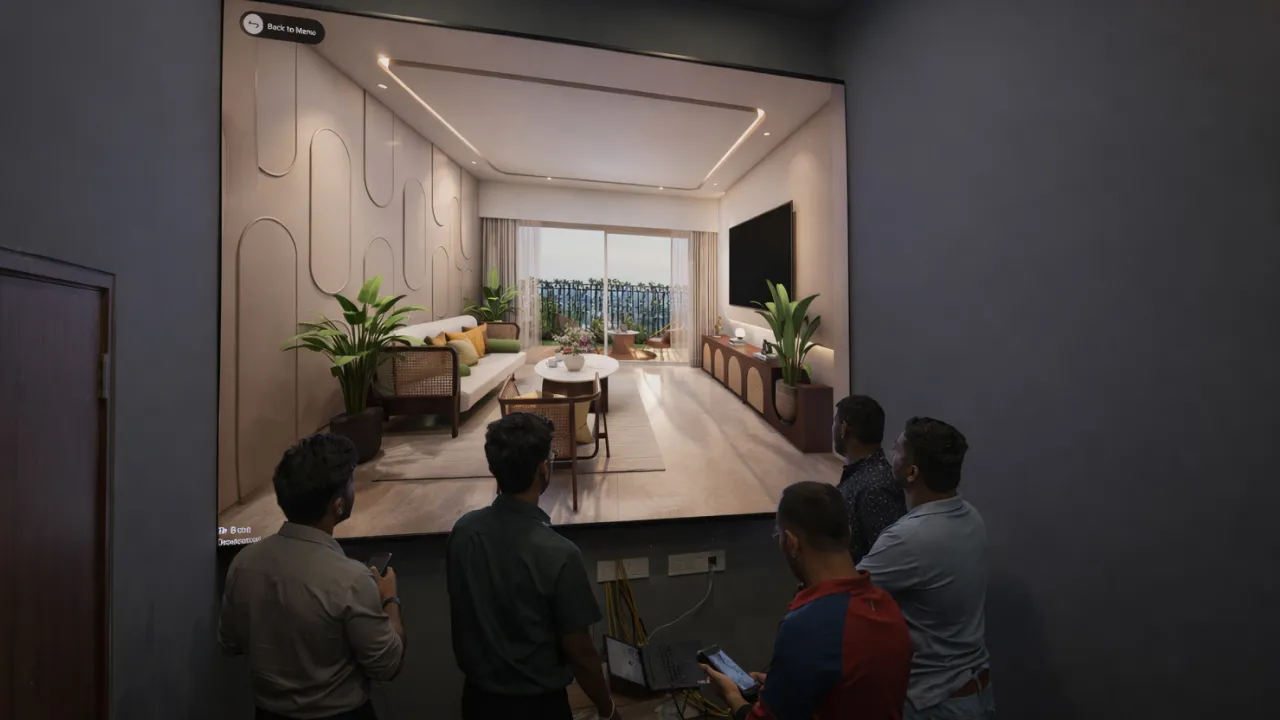
- Touch-driven exploration — buyers physically engage with a wall or screen, triggering the specific information they're curious about, at their own pace.
- Guided but self-directed navigation — the sales executive frames the journey, but the buyer controls what they look at closely.
- A structured spatial flow — presentations are designed as a physical journey through a space, not a seated slideshow, which keeps attention and builds momentum toward a decision.
This is what separates informing a buyer from actually convincing them.
The Development and Deployment Process
Building a presentation environment like this typically follows a clear sequence:
- Story mapping — identifying which product truths (construction quality, design philosophy, engineering systems) genuinely need to be proven, not just stated.
- Spatial design — laying out a physical journey through the sales gallery that moves buyers logically from one proof point to the next.
- Interactive build — converting each proof point into kinetic, touch-responsive, or motion-triggered visual storytelling.
- Installation and calibration — fitting the technology to the physical gallery space, whether that's a curved wall, a touchscreen panel, or a combination of both.
- Sales training — equipping the team to guide, not narrate — letting the interaction do the convincing while they read buyer cues and respond in real time.
Which Projects Benefit Most From This Approach
This category of interactive sales and design center software earns its investment fastest where the sale depends on proving quality, not just showing it:
- Ultra-luxury developments, where buyers expect — and can afford to demand — proof of engineering and material quality.
- Projects entering a competitive micro-market, where differentiation has to be demonstrated, not claimed.
- Brands introducing experiential technology for the first time, using it as a statement of confidence in their own build quality.
- Developments where construction quality is genuinely a differentiator and deserves more than a line item in a brochure.
The Buyer Journey: From Curiosity to Conviction
A well-designed interactive presentation typically guides a buyer through a deliberate arc:
- Arrival and orientation — the buyer enters a space designed to hold attention, not just display information.
- Guided discovery — moving through a structured sequence of zones, each answering a specific category of question (design, engineering, lifestyle).
- Hands-on verification — the buyer triggers details themselves, building a sense of ownership over what they've learned.
- Emotional and rational alignment — by the end of the journey, both the emotional appeal (design, lifestyle) and the rational proof (engineering, quality) have been addressed.
- The pricing conversation, on solid ground — because conviction was built first, price discussions land differently.
What Changes for the Sales Team
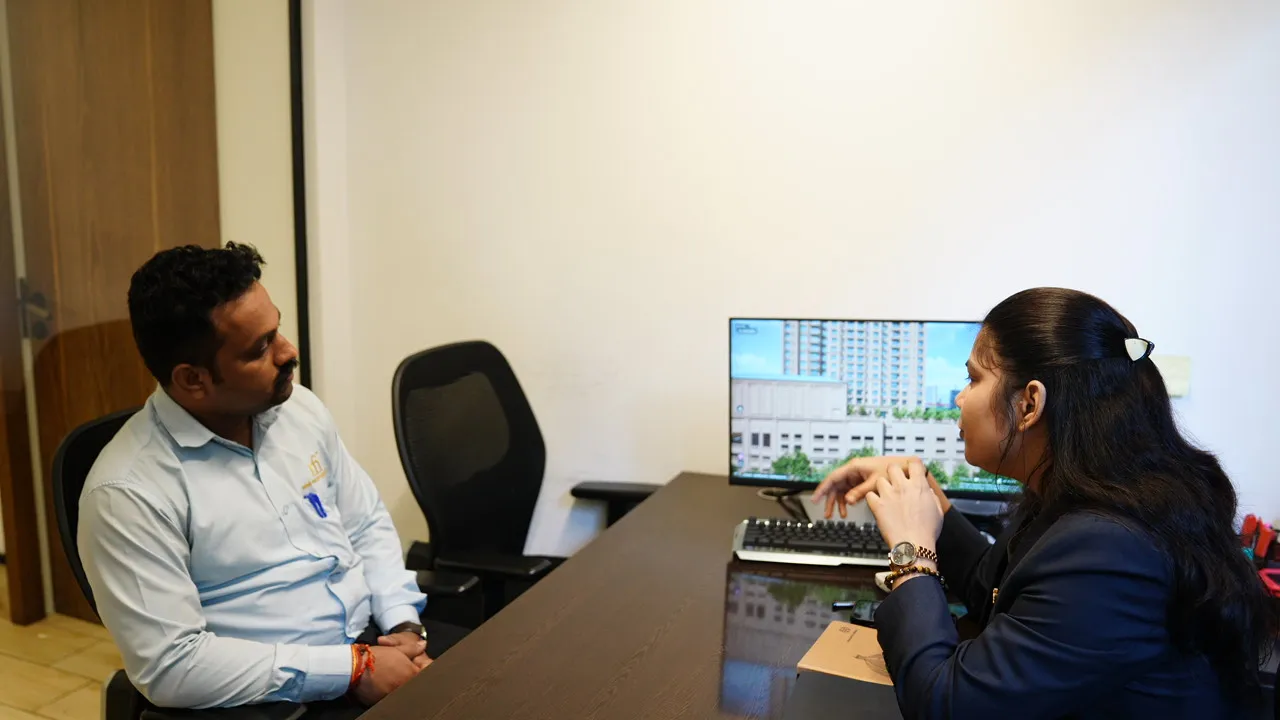
Sales executives shift from presenters to guides. Instead of carrying the entire burden of persuasion through talking, they walk buyers through an experience that does much of the convincing on its own — freeing them to focus on reading the buyer's reactions and addressing specific hesitations as they surface.
A Real Example: Godrej Trilogy, Worli
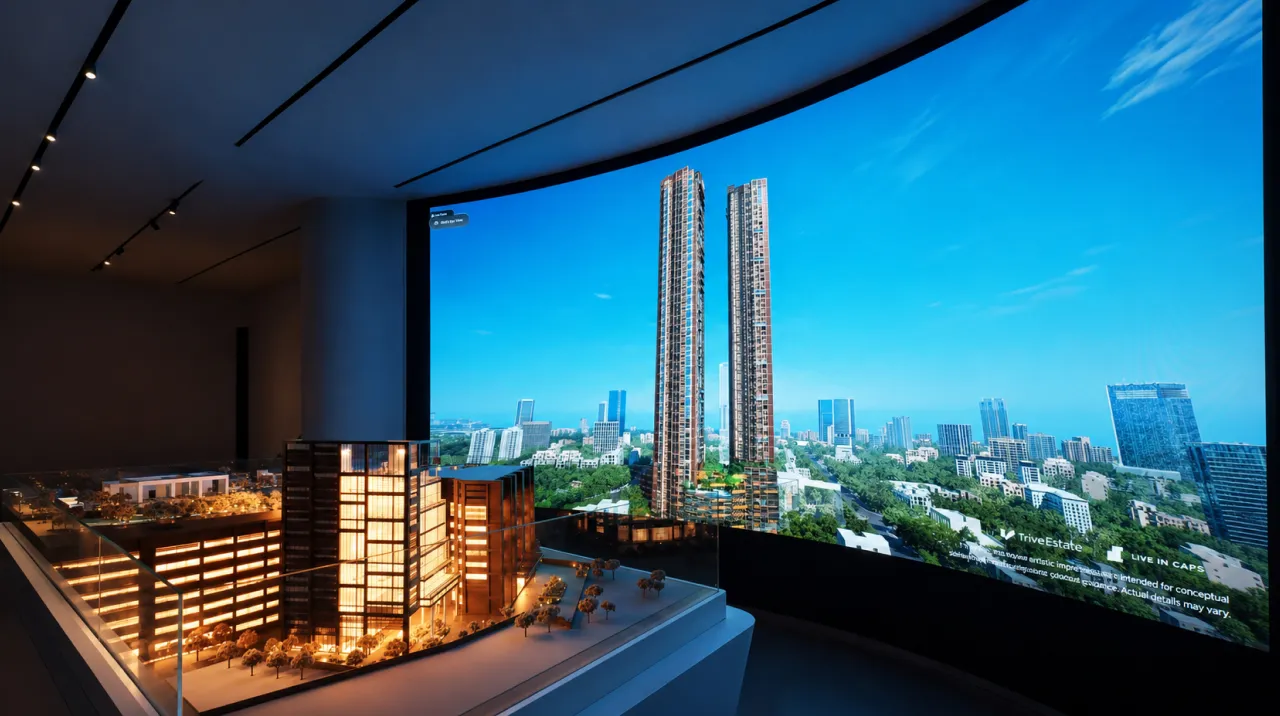
Godrej Trilogy is an ultra-luxury seafront development in Worli, Mumbai — the kind of project where buyers are comparing several similarly priced South Mumbai addresses in a single weekend. For this launch, Godrej Properties chose to introduce experiential sales technology for the first time, not for novelty, but to clearly demonstrate what actually sets a Godrej home apart from the competition.
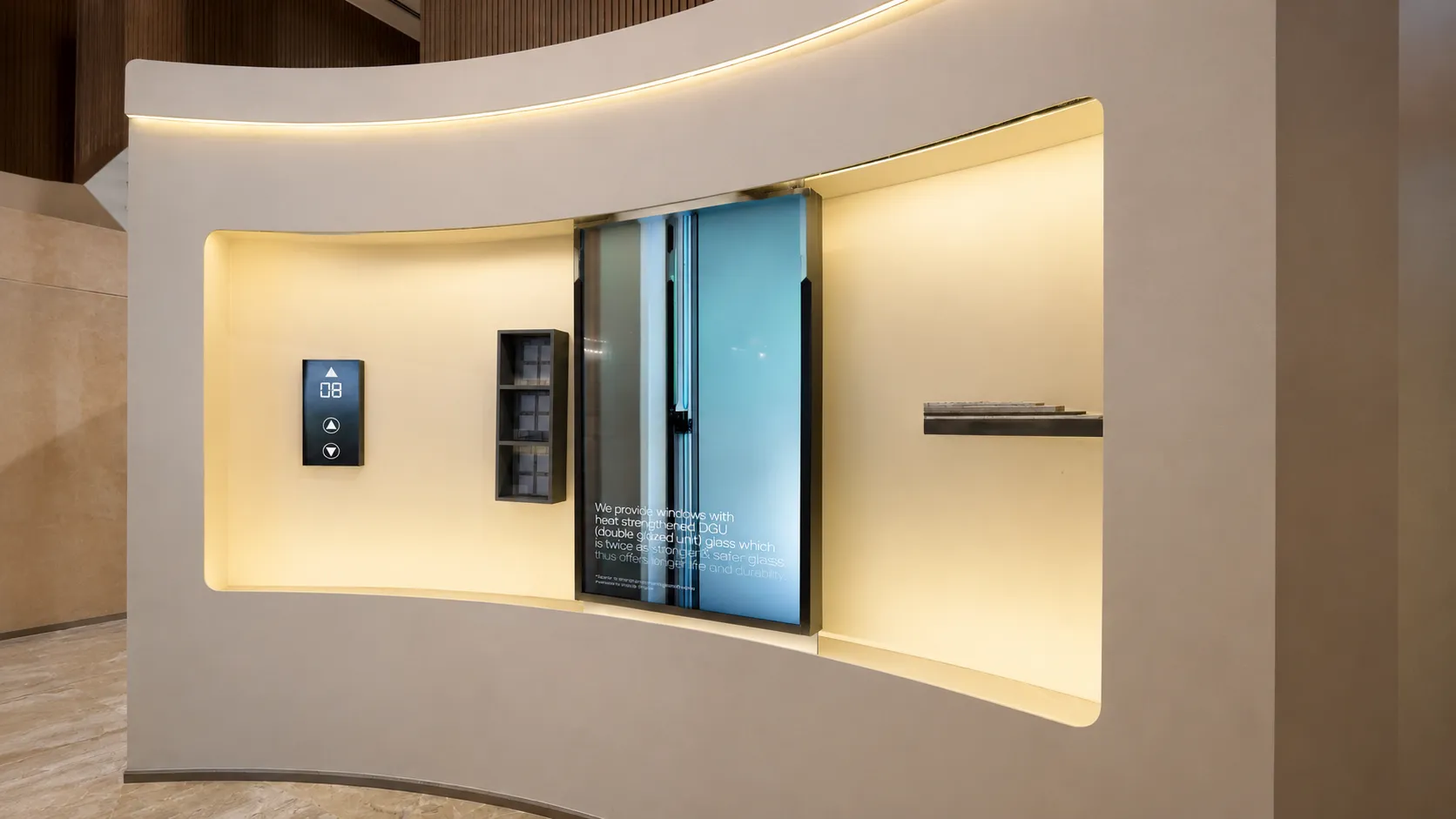
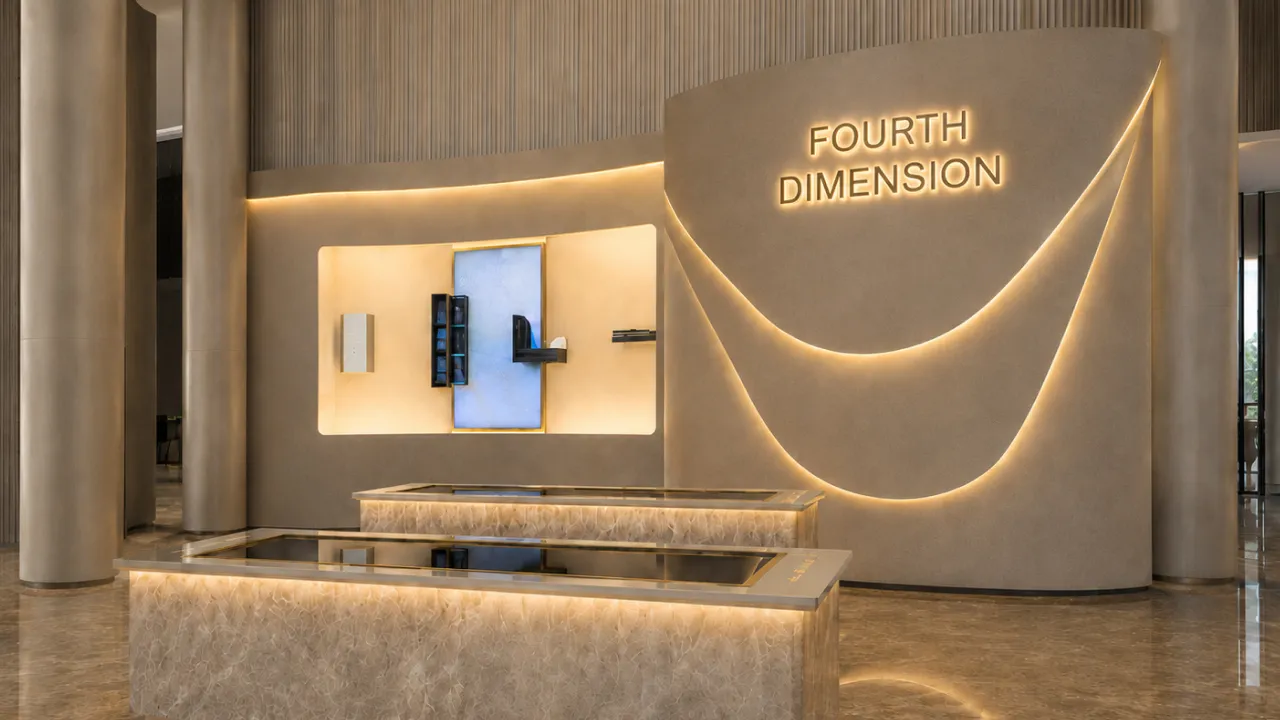
The result was the Fourth Dimension Experience Centre, an S-shaped spatial journey connecting two distinct interactive installations in one continuous flow:
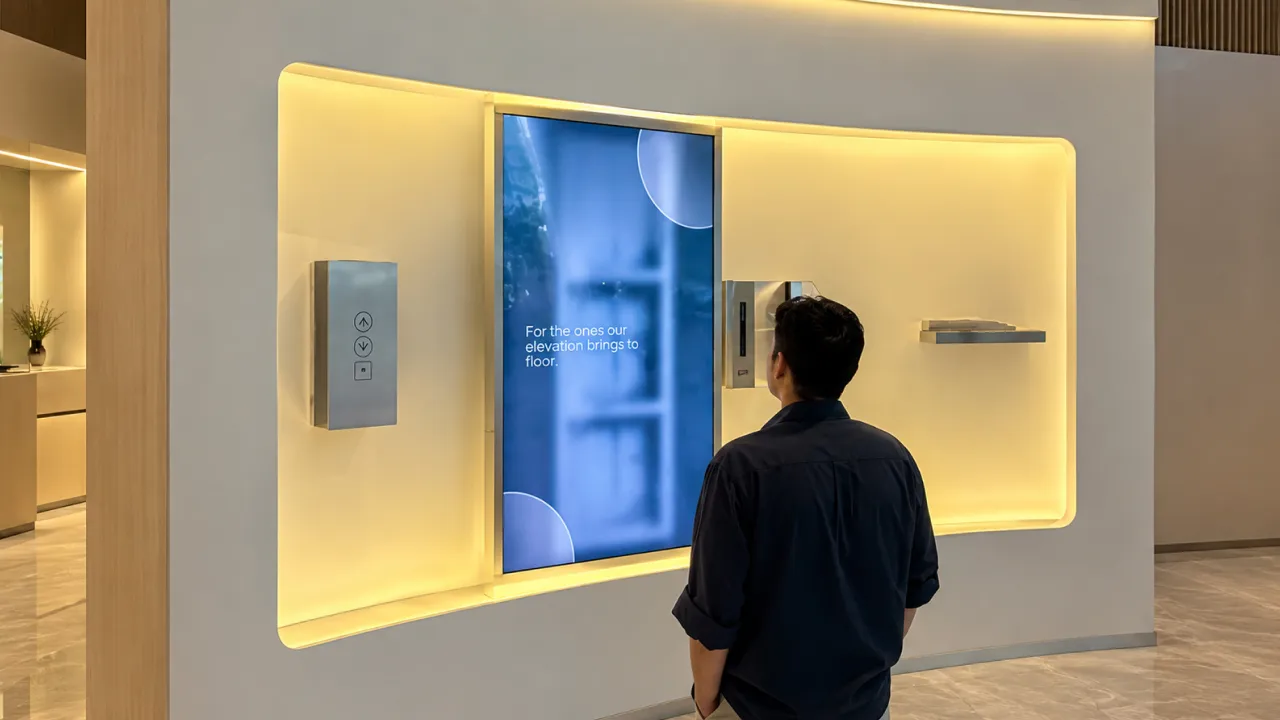
- A 10-feet-high curved rotoscopic wall, using motion-triggered kinetic animation to translate normally invisible construction features into visible, tangible buyer proof — including dual-layer waterproofing with reinforced RCC seepage-prevention design and high-speed elevator systems engineered for optimal wait times in a high-rise luxury tower.
- An interactive touchscreen wall, letting buyers explore construction quality, materials, and engineering systems at their own pace and depth.
As Kaushal Dhoker, Senior Manager – Brand Marketing at Godrej Properties, described it, the cinematic, anamorphic storytelling quality of the experience helped their teams communicate lifestyle value far more effectively on-site.
Together, these installations transformed product assurance from a sales-led monologue into a guided, immersive interaction — letting buyers see, understand, and genuinely question the value behind a Godrej home, rather than simply being told about it.
The Technology Stack Behind It
- Curved rotoscopic display technology, purpose-built for large-format kinetic storytelling on a 10-feet-high wall.
- Motion-triggered animation systems, translating structural engineering detail into visible, sequential visual proof.
- Touch-responsive interactive panels, giving buyers direct control over which construction details they explore.
- An S-shaped spatial layout, designed specifically to connect two different storytelling zones into a single, uninterrupted buyer journey.
Verified Results
The shift from passive presentation to interactive proof produced outcomes that matter well beyond the launch weekend:
- Product assurance moved from something buyers were told to something buyers experienced and understood directly.
- The brand differentiated itself clearly in a highly competitive luxury micro-market, where every project claims quality but few prove it visually.
- Sales conversations shifted measurably toward construction and engineering confidence, strengthening the ground pricing discussions were built on.
- The experience positioned the brand as a category leader willing to invest in proof, not just polish.
Limitations and Planning Considerations
Interactive presentation technology delivers real conviction, but it works best with a few things planned for in advance:
- It requires a genuine story to tell. This approach works because Godrej had real engineering differentiators worth proving — it isn't a substitute for actual build quality.
- Spatial design needs real planning. An S-shaped journey or curved installation depends on gallery layout and footfall patterns, which should be mapped early, not retrofitted.
- It's a considered capital investment. Custom kinetic installations cost more and take longer to build than a standard digital twin walkthrough, and the budget should reflect that from the start.
- The sales team's role changes. Executives need training to guide an interactive journey rather than deliver a script — skipping that step undercuts the investment.
FAQs
Is this different from a digital twin walkthrough? Yes — a digital twin focuses on exploring the built environment itself, while interactive presentation technology like this focuses on proving specific product claims, such as construction quality or engineering systems.
Does this only work for ultra-luxury projects? It's most valuable where buyers are actively comparing competing projects and need a reason to believe in quality claims — which applies well beyond ultra-luxury, though the investment is often justified fastest there.
How long does an installation like the Fourth Dimension Experience Centre take to build? Custom kinetic installations require more design and build time than a standard walkthrough, so timelines should be planned alongside the broader launch schedule, not squeezed into the final weeks before it.
Can this be combined with a digital twin walkthrough in the same gallery? Yes — many experience centres combine both, using a digital twin for spatial exploration and an interactive presentation zone for product-quality storytelling, connected as a single buyer journey.
Turn Your Next Presentation Into a Decision
If your project's quality is real but your presentation isn't proving it, the gap is costing you conversions — quietly, every single week.
V-Estate designs interactive sales and design center software that turns construction quality, engineering depth, and design philosophy into experiences buyers can see and trust for themselves. Explore V-Estate's interactive sales tools or book a demo to see how a guided, interactive presentation could work for your next launch.























Sign in to leave a comment.