

Have you ever started a construction or development project only to realize halfway through that the ground levels weren’t what you expected? I’ve seen site managers scratching their heads over unexpected slopes, drainage issues, and uneven surfaces that delayed the entire schedule. That’s when I learned firsthand how crucial a topographic survey really is. Without a proper terrain model or precise elevation data, every stage of design, excavation, and planning becomes a guessing game that costs both time and money.
The first time I received a detailed topographic survey report for one of my projects, the difference was night and day. Suddenly, the unknowns vanished. The report provided accurate ground contours, feature positions, and height variations that helped our engineers design foundations and drainage systems with total confidence. It wasn’t just a technical document, it was the foundation that kept our timeline on track and expenses predictable.
Why do so many projects face unexpected site issues?
Many developers, architects, and contractors underestimate the complexity of what lies beneath and around a proposed site. Ground elevations, soil behavior, and even nearby infrastructure can drastically affect construction feasibility. I’ve seen projects delayed for months due to inaccurate base plans or missing data points that could have been identified at the start with proper surveying.
What makes matters worse is that design assumptions often depend on outdated maps or visual inspections that miss subtle but important details. When your excavators uncover a difference of even 20 centimeters in ground height, it can mean truckloads of extra fill material, revised drainage paths, or structural redesigns. Each change brings cost overruns, more consultants, and more stress.
How does accurate terrain mapping solve these issues?
A modern terrain mapping process gives you a true representation of the land surface. By combining GPS data, drone photogrammetry, and total station measurements, a surveyor captures both horizontal and vertical information that forms a digital terrain model (DTM) or digital elevation model (DEM). This data is the baseline used by engineers, architects, and environmental consultants to plan efficiently.
With modern technology like LiDAR scanning and georeferenced imagery, the process captures millions of data points across the site. These points are then converted into 3D surface models that reveal even small depressions or elevation changes invisible to the naked eye.
This level of precision allows:
- Designers to calculate accurate cut and fill volumes.
- Engineers to plan drainage and grading with confidence.
- Project managers to minimize the risk of rework due to elevation errors.
When I started using these detailed reports, I noticed fewer change orders and smoother collaboration between teams because everyone referred to the same verified data source.
What key elements does a topographic report include?
A complete terrain survey doesn’t just show elevations. It captures a wide range of physical and man-made features that define the project environment. These elements include both natural and constructed features, along with essential reference points.
Here’s a simplified table that shows common data categories included in a standard report:
Data Category
Description
Typical Use in Planning
Contours & Spot Levels
Elevation points and contour lines showing surface shape
Foundation design, grading, drainage
Boundaries & Features
Fences, walls, trees, poles, curbs
Site layout and environmental assessment
Utilities
Underground and overhead lines, drainage pipes, manholes
Coordination with civil and electrical design
Water Bodies
Streams, ponds, flood channels
Flood risk analysis and site drainage
Access Routes
Roads, footpaths, driveways
Transportation and logistics planning
Control Points
Fixed GPS or total station benchmarks
Georeferencing for future surveys
Every one of these data layers feeds directly into the design and construction workflows. Engineers use contour lines for slope analysis, while architects rely on boundary data to optimize site coverage. Civil teams integrate utility information to prevent conflicts during excavation.
Why is accuracy so important for cost control?
From my own experience, small measurement errors can snowball into expensive corrections later. For instance, an incorrect elevation reading in one corner of the site can affect drainage gradients across an entire estate. You might not notice it until heavy rainfall causes flooding, requiring expensive re-grading and reinstallation of drainage systems.
Precise survey control ensures that design drawings align perfectly with reality. When combined with GNSS positioning and total station triangulation, the positional accuracy often reaches within 10 millimeters, enough precision to eliminate guesswork during foundation setting-out.
This accuracy directly impacts:
- Material usage: Correct ground models reduce excess soil movement and wastage.
- Construction speed: Less time spent correcting site discrepancies.
- Budget stability: Lower risk of rework and unexpected engineering variations.
One housing development I worked on saved nearly 8% of its total groundwork cost simply because the contractor relied on an accurate terrain report from the start.
How can early surveying prevent project delays?
One of the biggest time-savers in construction is early data acquisition. Conducting a survey before finalizing your design plans ensures that your architects and engineers are working with the correct terrain information. This means fewer revisions later.
For example, in civil engineering projects like road expansions or industrial park layouts, early survey data helps define realistic gradients and earthwork volumes before tendering even begins. When contractors receive clear data upfront, their pricing becomes more accurate, leading to fewer disputes down the line.
If you’ve ever had to pause construction because of a discovered slope issue or drainage conflict, you’ll understand the frustration it causes. A few days invested in a proper terrain report early on can save months of rework later.
What technologies make modern terrain reports faster and better?
Surveying has evolved drastically in recent years. Where once surveyors relied solely on theodolites and manual leveling, today we have aerial drones, satellite-based correction systems, and 3D modeling software.
Some of the commonly used technologies include:
- LiDAR (Light Detection and Ranging): Captures terrain using laser pulses to create dense point clouds for accurate contour models.
- UAV (Unmanned Aerial Vehicle) Mapping: Drone-based photogrammetry that quickly covers large areas with centimeter-level precision.
- GNSS (Global Navigation Satellite System): Provides precise coordinates for control points across the site.
- Total Station Equipment: Measures distances and angles for local detail mapping.
By integrating these tools, surveyors can deliver comprehensive results within days rather than weeks, reducing waiting time and allowing faster project starts.
How does detailed elevation data help in design decisions?
When architects and civil engineers plan, they rely heavily on elevation contours, cross-sections, and surface gradients. These determine how structures interact with the natural ground. Accurate elevation data enables decisions like:
- Adjusting building placement to minimize excavation.
- Aligning roads for optimal gradient.
- Designing drainage systems that follow natural flow directions.
In one of my projects, we used contour maps to position a stormwater retention basin at the lowest point of the site. This not only reduced the need for pumps but also saved around £30,000 in construction costs.
How do survey reports contribute to environmental compliance?
Environmental and flood risk assessments depend heavily on accurate terrain data. With rising regulatory standards, local authorities often require digital ground models as part of planning submissions. The survey data helps analyze:
- Floodplain boundaries and runoff potential.
- Tree preservation and vegetation mapping.
- Slope stability for cut and fill balance.
Environmental consultants integrate this data into GIS systems to simulate rainfall and runoff behavior. This ensures your development not only meets safety regulations but also avoids costly drainage failures.
Can terrain reports reduce design conflicts between teams?
Absolutely. I’ve noticed that when every discipline works from the same verified survey base, coordination issues drop significantly. Civil engineers, architects, and utility planners all refer to one unified terrain model. This consistency eliminates duplicated measurements or contradictory assumptions.
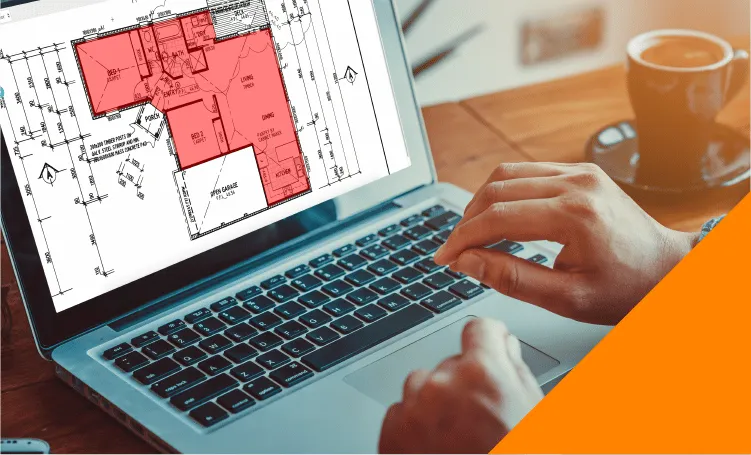
Many modern projects use Building Information Modeling (BIM) software, where terrain data acts as the base layer. When survey data is imported into BIM, design elements like roads, utilities, and structures align perfectly with real ground coordinates. This integration saves countless hours during coordination meetings.
When should you update or repeat a site survey?
Terrain conditions can change over time due to erosion, grading, or nearby construction. That’s why it’s important to update your base survey whenever there’s a significant site alteration. For long-term projects, I recommend periodic verification, especially before setting out major structures or utilities.
Survey control points established during the initial study make these updates much easier. They allow quick re-measurement using GPS or total station equipment to track any changes in elevation or boundary alignment.
What are common mistakes to avoid when ordering a survey?
Over the years, I’ve seen clients make similar errors that affect the quality or usefulness of their reports. Here are a few to watch out for:
- Ordering a general boundary survey instead of a detailed topographic mapping service.
- Failing to brief the surveyor on specific design needs (e.g., drainage layout or structural depth).
- Skipping control point establishment for future reference.
- Accepting data in incompatible file formats for design software.
A good practice is to discuss deliverable formats beforehand, whether you need CAD files, GIS layers, or PDF plans, so integration into design workflows is seamless.
How much can accurate data actually save?
A precise survey might seem like an extra cost upfront, but it’s actually one of the most cost-effective investments you can make. According to a report by the Institution of Civil Engineers, early site data acquisition can reduce project variation orders by up to 60%. That’s a direct reflection of how valuable proper terrain information is.
I personally worked on a commercial site where the contractor initially skipped the detailed ground mapping to “save time.” A few months later, they faced subsurface drainage alignment errors that cost over £120,000 to correct. Compare that to the few thousand pounds a proper survey would have cost initially.
Why do engineers trust high-resolution contour data?
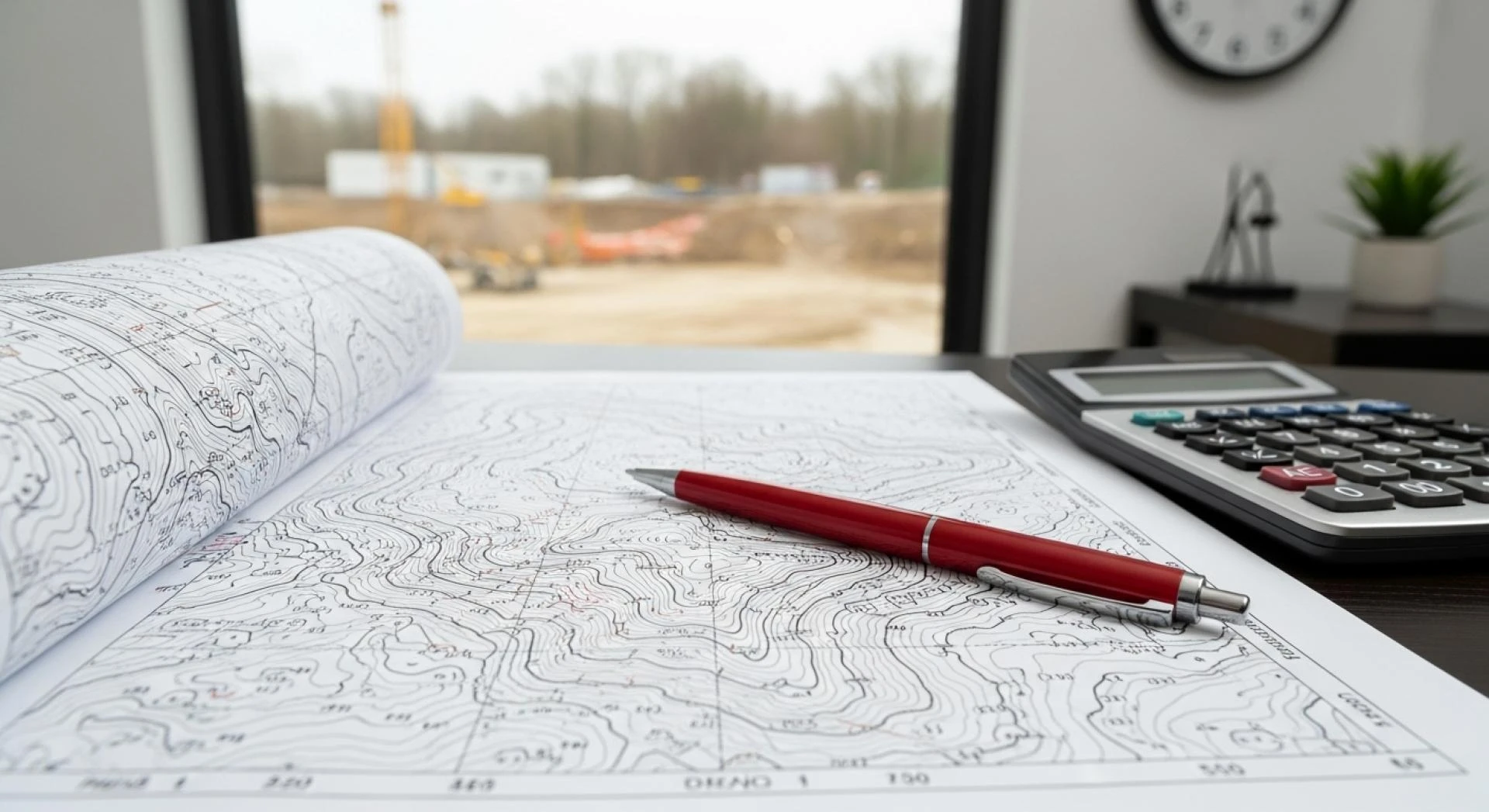
Contour intervals, typically shown at 0.25m, 0.5m, or 1m spacing, reveal slopes and elevation transitions critical for grading and foundation design. Engineers use these contours to plan:
- Retaining wall positions.
- Earthwork balance.
- Drainage gradients.
The tighter the contour interval, the higher the level of detail. When combined with surface modeling software, contour data helps simulate rainfall flow, cut and fill balance, and surface runoff, all essential to avoid unexpected drainage problems later.
How do terrain models integrate with GIS and BIM systems?
Modern design workflows depend on digital integration. Survey data captured in coordinate-based systems like OSGB36 or WGS84 seamlessly integrates into Geographic Information Systems (GIS). This allows planners to overlay zoning boundaries, flood data, and infrastructure maps onto one unified dataset.
Similarly, importing surface models into BIM software allows design teams to visualize real-world site conditions in 3D. This fusion of data shortens design cycles and reduces misunderstandings between consultants.
What happens if data accuracy is ignored?
Ignoring precise measurements can have compounding effects across all stages. Foundations may require rework, underground utilities could clash, and drainage systems may fail. In one industrial park I observed, a misaligned datum level caused a 40-meter storm drain to be reinstalled at a cost exceeding £200,000.
These are avoidable mistakes. The truth is, good site information isn’t a luxury, it’s an insurance policy for your schedule and budget.
How can small developers benefit just as much?
Even for smaller housing or commercial plots, accurate terrain data ensures that your contractor’s quotes are based on reality. It also prevents disputes about excavation quantities or slope stability during construction. Many local councils also now request digital survey submissions with planning applications, so it saves future compliance headaches.
I’ve seen independent builders use simple drone surveys combined with GPS control points to produce affordable yet detailed base maps, cutting their preliminary planning time by weeks.
What does a good survey report look like?
When reviewing a report, look for:
- Clear contour intervals and coordinate grids.
- Inclusion of benchmarks and reference points.
- Utility mapping and boundary delineation.
- A scale-appropriate drawing layout.
- Metadata showing accuracy standards and instrument types.
A professional surveyor will include a methodology section that outlines the type of equipment used (such as Leica Total Station, Trimble GNSS, or DJI Phantom RTK drone). This transparency proves the quality of the data you’re relying on.
Conclusion
Every successful project I’ve managed had one thing in common, solid ground information from the start. A reliable topographic survey report is far more than just a set of lines on paper. It’s a financial safeguard, a planning tool, and a coordination framework that helps everyone from designers to contractors make smarter decisions.
By investing in accurate terrain mapping, you save yourself from uncertainty, reduce unnecessary rework, and maintain tighter control over both time and budget. In a world where construction margins are shrinking and project schedules are tighter than ever, precision is no longer optional, it’s the most practical form of peace of mind.




























Sign in to leave a comment.