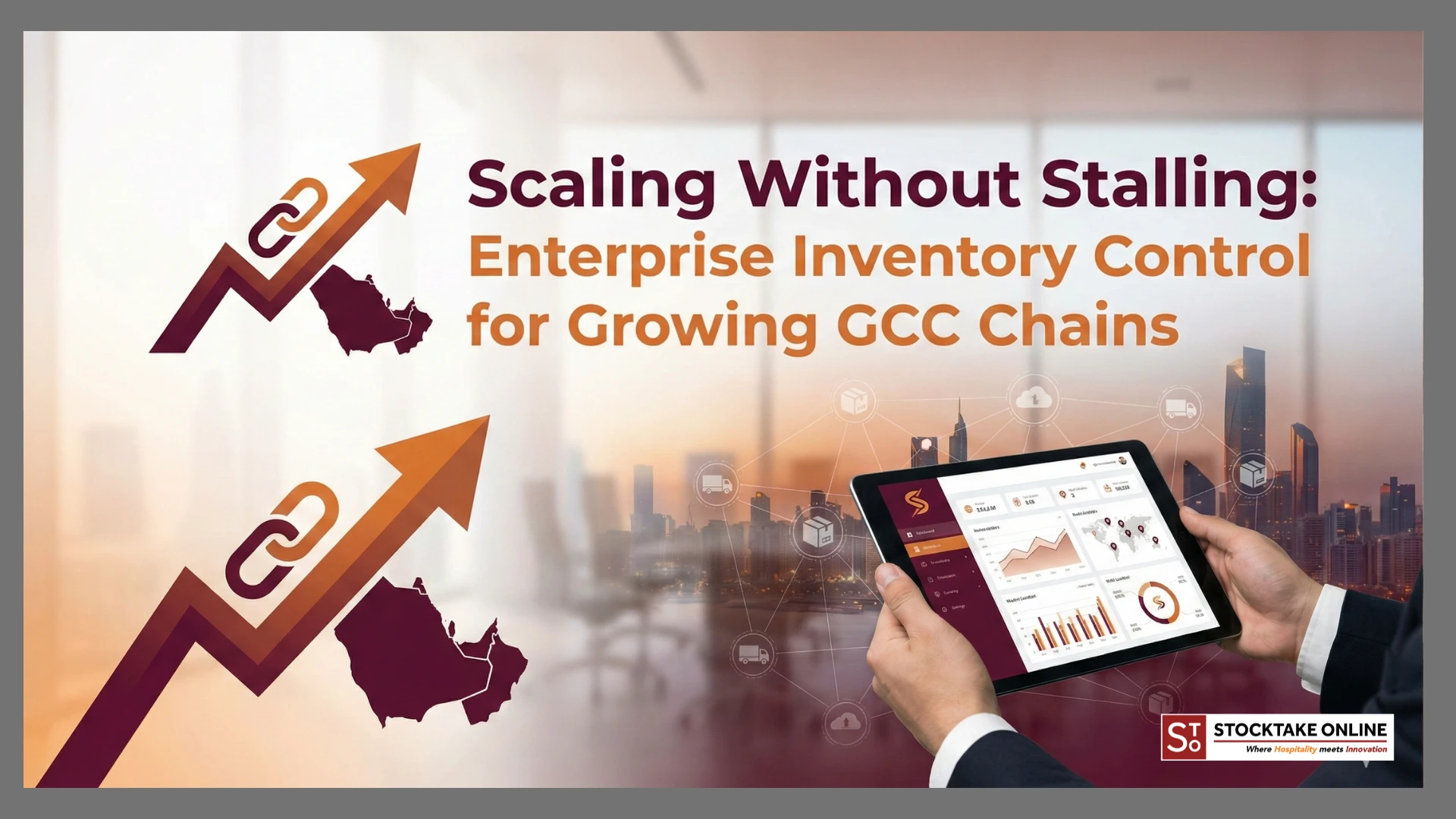

The hospitality landscape in the Gulf Cooperation Council (GCC) is currently characterised by a velocity of expansion rarely seen in mature Western markets. From the rapid transformation of Riyadh’s dining scene under Vision 2030 to the relentless innovation of Dubai’s cloud kitchen sector, new concepts are moving from blueprint to launch in months rather than years.
Successful franchises are scaling from single-country operations to pan-regional presence in single investment cycles. However, behind the press announcements and ribbon cuttings, a silent operational crisis often unfolds. As the physical footprint grows, margins frequently tighten disproportionately. Variance in stock levels becomes difficult to track, and procurement costs begin to drift.
For many growing groups, the bottleneck is not capital, demand, or concept quality. The limiting factor is an inventory control infrastructure that has failed to pace the business’s physical expansion. While revenue growth captures the headlines, it is comprehensive inventory management that secures the bottom line.
The Complexity of Rapid Expansion
In the early stages of operation—one kitchen, a unified supplier list, and a small management team—inventory decisions remain within manageable limits. Judgment calls are made in person, oversight is direct, and the Head Chef likely knows the price of every SKU by heart.
However, when a group scales to five, ten, or twenty locations across the UAE, KSA, or the wider region, operational cracks inevitably appear. Without robust systems, each site begins to operate as a silo. The following issues typically emerge:
- Price Discrepancies: Locations negotiate prices independently, leading to cost discrepancies for identical ingredients.
- Ad-Hoc Purchasing: Local teams bypass central agreements to buy from local supermarkets or non-preferred vendors, destroying bulk purchasing power.
- Transfer Blind Spots: Stock transfers between central production units (CPUs) and satellite kitchens go unrecorded, leaving finance teams with data that does not reconcile.
These issues are amplified by the unique pressures of the GCC market. High competition, fluctuating tourism cycles, and the complexity of multi-brand cloud kitchens increase the operational velocity. When inventory management relies on manual controls, spreadsheets, or legacy POS add-ons, speed becomes the enemy of standardisation. It is not a failure of personnel, but a failure of system architecture designed for single-site operations rather than enterprise scale.
Why Legacy Tools and Spreadsheets Collapse
The traditional response to these growing pains is often to increase administrative pressure: more manual checks, more approvals, and more Excel sheets. Unfortunately, in a high-volume environment, manual interventions create friction and delays, which in turn generate data blind spots.
Spreadsheets are static; hospitality is dynamic. By the time a consolidated Excel report reaches the Operations Director, the data is historic. If a specific protein cost spikes in Jeddah but remains stable in Dammam, a manual system may not flag this variance until the end-of-month P&L review. By then, weeks of margin opportunity have been lost.
Furthermore, legacy systems often lack the specific inventory features required for complex multi-site logic. They struggle to handle recipe nesting (using a sub-recipe as an ingredient in a main dish) or complex unit conversions (buying in kilograms, prepping in litres, serving in grams). This inability to map the physical reality of the kitchen to the digital record creates a "theoretical usage" gap that finance teams cannot close.
The Four Pillars of Enterprise Control
The evolution from small business to enterprise requires a fundamental shift in how inventory is managed. It moves beyond simple stock counting to a holistic view of the "Item Master"—a centralised truth for recipes, ingredients, and costs. To achieve control at scale, operators must focus on four strategic pillars.
1. Centralised Procurement and Vendor Management
In a multi-site operation, purchasing power is the primary lever for cost control. However, this leverage only exists if the head office can enforce compliance. Enterprise systems allow for a "locked basket" approach.
Headquarters negotiates the price and terms for core items (e.g., proteins, dairy, dry goods) and pushes these approved lists to local sites. Local chefs can place orders, but only from the approved vendors and at the approved prices. This prevents "maverick spend" and ensures that the volume discounts negotiated at the group level are actually realised.
2. The Single Source of Truth: Recipe Management
Consistency is the currency of a franchise. A burger in Abu Dhabi must taste—and cost—the same as one in Doha. This requires digitised recipe management.
By building recipes into a central database, operators can see the theoretical cost of every dish in real-time. If a supplier increases the price of butter, the system automatically recalculates the margin for every dish containing butter across the entire menu. This allows for dynamic menu engineering, ensuring that pricing strategies are based on current costs, not last year’s estimates.
3. Operational Integration (POS and Accounting)
Inventory does not exist in a vacuum. To get an accurate theoretical Cost of Goods Sold (COGS), your inventory system must talk to your Point of Sale (POS).
When a dish is sold on the POS, the inventory system should automatically deplete the relevant ingredients from stock. This "perpetual inventory" approach allows for daily variance reports. If the system says you should have used 10kg of steak, but a stock count reveals you used 12kg, you have an immediate operational red flag (waste, theft, or over-portioning).
Furthermore, integration with accounting software streamlines the "Procure-to-Pay" cycle. Invoices can be matched against delivery notes digitally, reducing the workload for the finance team. This level of connectivity is achieved through seamless partner integrations, which link the BOH (Back of House) ecosystem into a cohesive unit.
4. Waste Intelligence
In high-growth environments, waste is often dismissed as the "cost of doing business." In reality, it is the easiest place to recover margin. However, you cannot manage what you do not measure.
Enterprise systems replace the "general waste" bin with categorised tracking: spoilage, prep waste, burnt food, and customer returns. By analysing this data, multi-site managers can identify trends. Is one specific location consistently wasting produce? Is a specific dish being returned frequently across all sites? This data turns waste reduction from a vague goal into an actionable KPI.
Centralisation Without Rigidity
One of the biggest anxieties operators have about implementing enterprise systems is the fear of bureaucracy—that "corporate" tools will slow down agile kitchen teams or take away local flexibility.
In actual practice, the results run contrary to that fear. Enterprise inventory solutions do not take away autonomy; they remove administrative burden.
By standardising the "heavy lifting" (pricing, allergen data, nutritional info, supplier terms) at the head office, local managers are freed from data entry and price negotiation. They can focus on what matters: food quality, service speed, and managing their teams. The system provides the guardrails, but the local team drives the car.
The Role of Professional Audits and Setup
Implementing an enterprise-grade system is not merely a software installation; it is a change management project. The data integrity of the system is only as good as the initial setup.
Many large groups falter because they attempt to upload messy data—duplicate ingredients, incorrect unit conversions, or outdated recipes. This is where value-added inventory services become critical. Engaging professional auditors or setup specialists ensures that the "Item Master" is clean from day one. It also ensures that staff are trained not just on which buttons to press, but why the data matters. In the diverse labour market of the GCC, clear, standardised training is the bedrock of compliance.
The Financial Impact of Maturity
For hospitality brands expanding across the region, the definition of success is shifting. It is no longer measured solely by the number of new openings, but by the ability to maintain operational clarity as complexity increases.
The financial impact of this maturity is tangible. Moving from a manual/hybrid environment to a fully integrated inventory platform typically yields a 2–5% reduction in COGS. For a multi-site group generating millions in revenue, this percentage represents a massive injection of net profit—often enough to fund the opening of the next location.
Cost variance should narrow, not widen, as a group scales. Emergency purchasing should decrease as forecasting improves. Ultimately, the brands that dominate the next phase of GCC hospitality will be those that treat inventory management not as a back-office chore, but as a primary pillar of their enterprise strategy.
If your group is facing the friction of growth, it may be time to evaluate whether your current infrastructure is an engine for expansion or an anchor holding you back.
Strategic Next Step: Are you ready to centralise your operations and secure your margins? Contact Stocktake Online today for a consultation on structuring your inventory for enterprise-scale growth.




























Sign in to leave a comment.