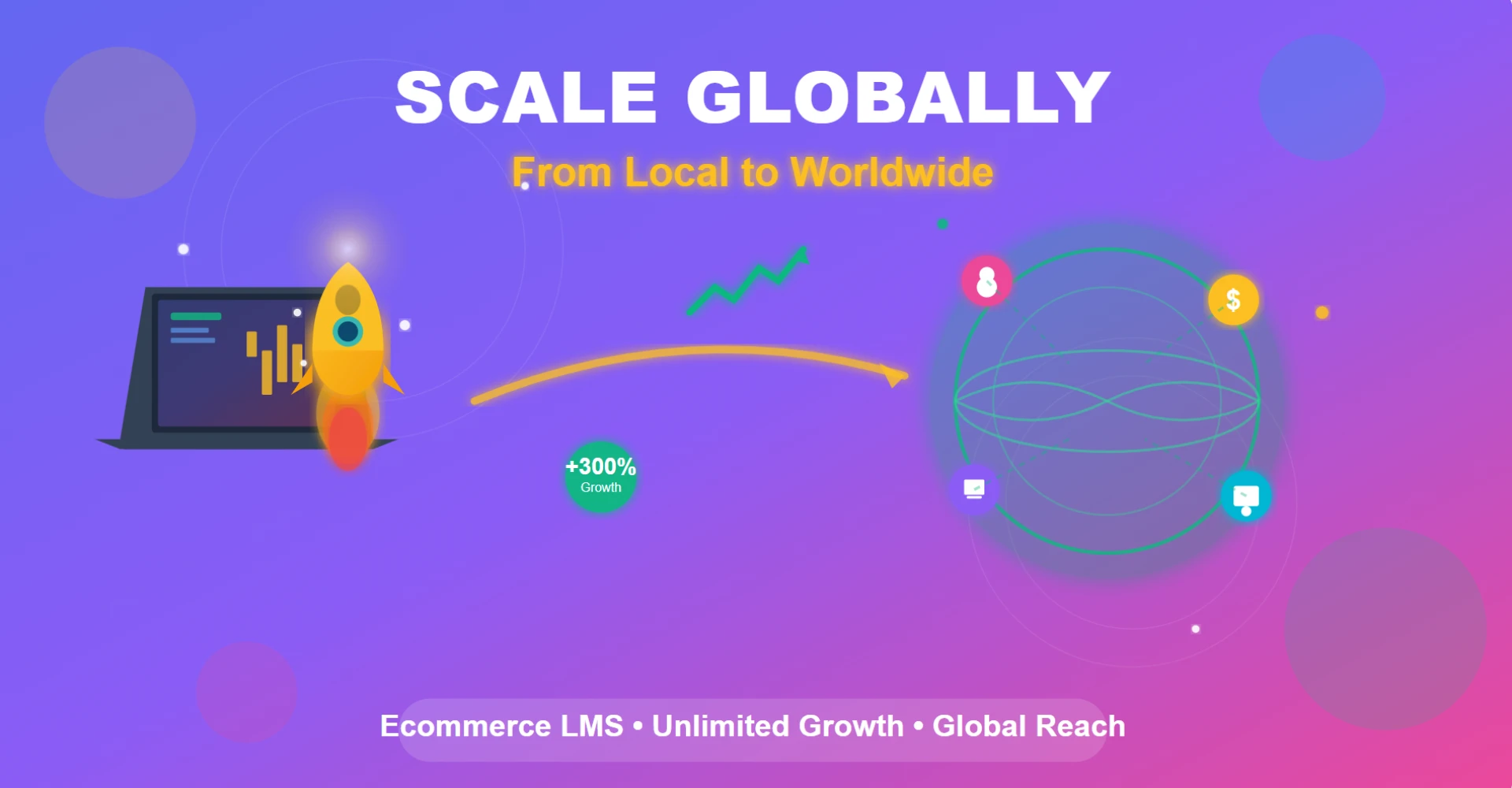
Scale your institute globally with an e-commerce LMS for training business. Learn proven strategies to attract students, sell courses, and grow faster.
Introduction: Why Local Training Institutes Must Think Global Now
Running a small training institute today is very different from even five years ago. Learners no longer look for courses only within their city; they search online, compare options globally, and expect seamless digital experiences. According to Statista, the global eLearning market is projected to surpass $460 billion by 2026, driven largely by online professional training and skill-based education.
For institute owners, this shift creates both pressure and opportunity. Scaling no longer means opening new physical centres; it means adopting the right digital infrastructure. An e-commerce LMS for training business allows even a small academy to sell courses online, manage learners, and reach international audiences without massive overhead.
This guide explores how local training providers can scale sustainably, attract more learners, and build a global presence using practical, real-world strategies.
Why Scaling Is Hard for Small Training Institutes
Many training institutes want to grow but hit the same roadblocks.
Common Challenges That Limit Growth
- Dependence on manual processes for enrolments and payments
- Limited reach beyond local referrals
- Difficulty managing online and offline learners together
- Poor visibility on search engines
- No system to sell courses internationally
Without the right tools, growth often leads to chaos instead of scale.
The Role of an E-commerce LMS in Global Expansion
An e-commerce LMS does more than host videos; it becomes the backbone of your training business.
What Makes an E-commerce LMS Different?
Unlike basic learning platforms, an e-commerce LMS for training business allows you to:
- Sell courses directly from your website
- Accept global payments and multiple currencies
- Automate enrolments, certificates, and learner communication
- Bundle courses, offer discounts, and run promotions
This shift transforms your institute from a local classroom into a scalable digital product.
Moving from Local Batches to Online Revenue Streams
Digitize What Already Works
Start by converting your most popular offline courses into structured online programs. You don’t need perfection; clarity and consistency matter more.
Pro tip: Record live sessions first, then refine content based on learner feedback.
Offer Flexible Learning Formats
Global learners prefer choice:
- Self-paced courses for working professionals
- Instructor-led programs for certification-focused students
- Hybrid models combining live sessions and recorded content
This flexibility helps you grow a training business online without diluting quality.
Marketing for Training Providers in a Global Market
Scaling is impossible without visibility.
Build Trust Before Selling
International learners won’t know your brand. You must earn credibility through:
- Trainer profiles with real experience
- Student testimonials and outcomes
- Clear course descriptions and learning objectives
Smart Digital Channels That Actually Work
Effective marketing for training providers focuses on:
- Search traffic from high-intent learners
- LinkedIn and YouTube for professional audiences
- Email nurturing for long-term conversions
Instead of chasing every platform, double down on what aligns with your audience.
SEO for Online Training Courses: Your Long-Term Growth Engine
SEO isn’t optional; it’s how global learners discover you.
What Learners Search For
Most people don’t search for institute names. They search for problems:
- “Best project management course online.”
- “Data analytics certification for beginners”
Optimizing for these searches helps you attract students to training academy pages organically.
Practical SEO Actions
- Create dedicated landing pages for each course
- Use real learner questions as subheadings
- Publish helpful blogs linked to your courses
Scaling Operations Without Scaling Complexity
Automate the Admin Work
An e-commerce LMS reduces operational load by automating:
- Course access and renewals
- Certificates and assessments
- Learner progress tracking
This frees you to focus on content quality and growth instead of manual coordination.
Centralize Data for Better Decisions
With one system, you can track:
- Which courses convert best
- Drop-off points in learning journeys
- Revenue by region or channel
These insights guide smarter expansion decisions.
Building a Global Brand, Not Just Selling Courses
Localization Matters
Global doesn’t mean generic. Small changes make a big difference:
- Region-specific pricing
- Time-zone-friendly live sessions
- Local case studies, when possible
Community Drives Retention
Scaling isn’t just about acquisition. Discussion forums, live Q&As, and alumni groups help retain learners and increase lifetime value.
Internal and External Learning Resources
To explore related strategies, you may find these helpful:
World Economic Forum reports on upskilling trends highlight why online training demand continues to grow: https://www.weforum.org
These resources reinforce why scalable digital training models are becoming essential.
Conclusion: Scale Smart, Not Fast
Scaling your small training institute doesn’t require massive funding or global offices. It requires the right foundation. By combining strong content, focused marketing, and an e-commerce LMS for training businesses, you can reach learners worldwide while maintaining quality and control.
The institutes that succeed globally are not the biggest; they’re the most adaptable.
If you’re ready to move beyond local limitations and build a future-ready training business, now is the time to explore scalable learning platforms and growth strategies that work long-term.
Take the next step: evaluate your current setup, identify gaps, and start building a system designed for global growth, not local survival.




























Sign in to leave a comment.