

Here's the number most homeowners get wrong: the EPA recommends inspecting a septic system every one to three years and pumping it every three to five years, but that range hides a lot of variation depending on your household. If you've been going by a rough guess instead of an actual answer, it's time to talk to a real professional septic pumping in Lexington so you know exactly where your system stands.
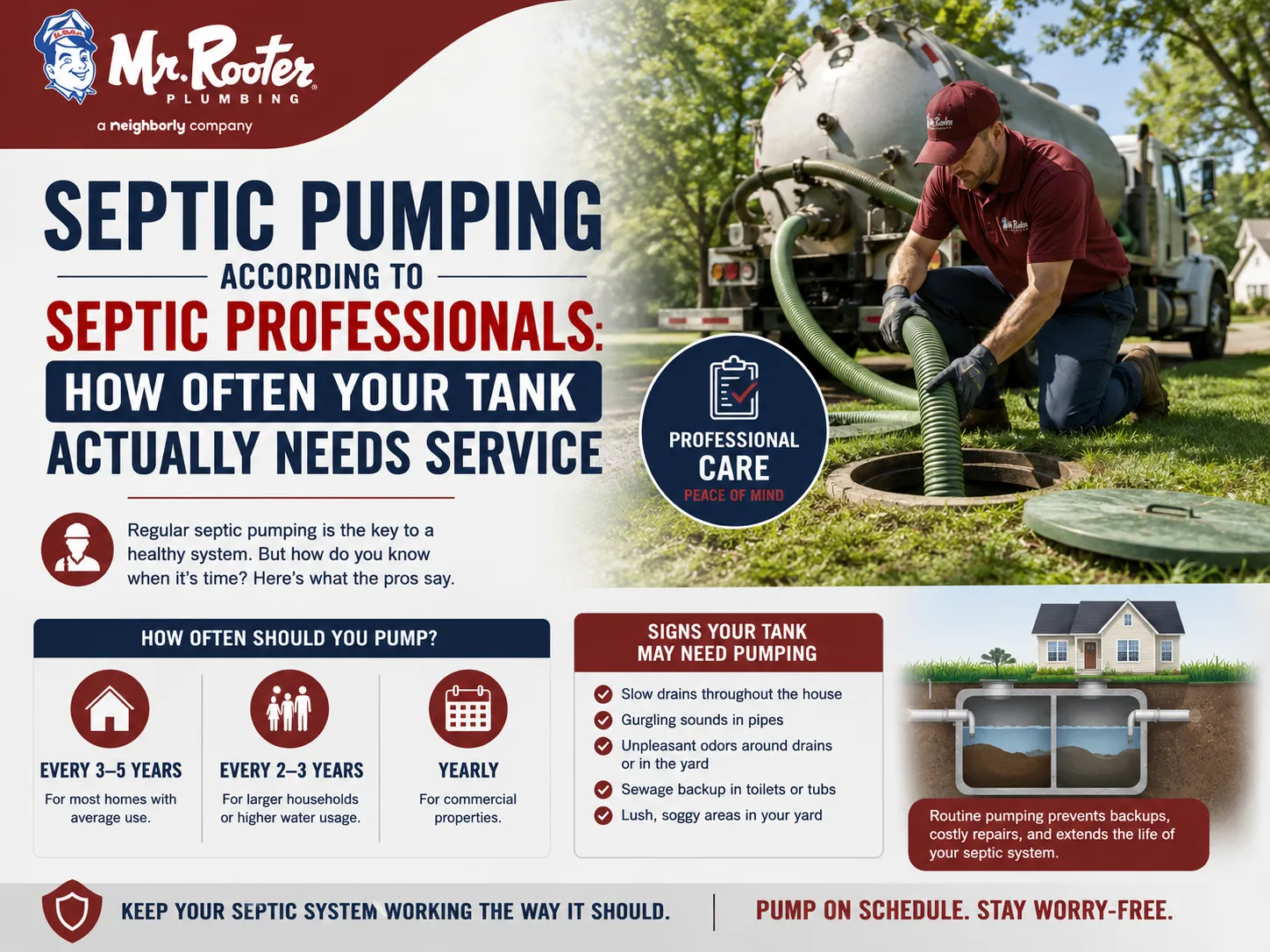
How Often Does a Septic Tank Actually Need Pumping?
The honest answer is: it depends, but there's a real formula behind it. The EPA's baseline recommendation is every three to five years for an average household, but tank size, number of people in the home, and water usage habits all shift that number significantly in either direction. A retired couple with a large tank might stretch to seven or eight years, while a big family with a small tank could need service every two years.
Why "Every Few Years" Isn't a Good Enough Answer
Most homeowners have heard the general "three to five years" guideline, but very few know where their specific household actually falls within that range. That gap between vague advice and an actual answer is exactly why so many septic systems either get pumped too late, risking a backup, or too early, wasting money on service that wasn't needed yet.
Show You Understand: What Homeowners Usually Struggle With
If any of this sounds familiar, you're definitely not alone:
- Not knowing when the tank was last pumped, especially in a home you didn't build
- Guessing at a schedule instead of knowing your household's actual numbers
- Assuming a home sale means the tank was serviced beforehand
- Waiting for a visible problem before scheduling anything
- Confusion over whether a garbage disposal changes the timeline
None of these are unusual. Septic maintenance is one of those things most people only think about once something already feels off.
How Septic Blue of Columbia Figures Out Your Actual Schedule
This is where a real inspection replaces guesswork. Septic Blue of Columbia measures the sludge and scum layers directly during an inspection, rather than relying on a generic timeline. When the sludge layer reaches within 12 inches of the outlet baffle, or the scum layer extends to within six inches, that's the physical signal the tank needs pumping, regardless of what the calendar says.
What Actually Determines Your Pumping Schedule?
How Does Household Size Affect the Timeline?
More people means more showers, more flushes, more laundry, and ultimately more solid waste entering the tank. A family of four with a standard 1,000-gallon tank typically needs pumping roughly every two and a half to three years, while a household of one or two with the same size tank can often go five years or longer between services.
Does Tank Size Really Make That Big of a Difference?
Yes, significantly. A larger tank simply holds more before solids reach a level that requires pumping. A 1,500-gallon tank serving two people, for example, can sometimes stretch to eight or nine years between pump-outs, while a smaller 750-gallon tank serving a large family might need attention every year or two.
Does a Garbage Disposal Change Things?
It does, and more than most people expect. According to EPA data, a garbage disposal can increase the solids entering a septic system by up to 50%, since ground food waste doesn't break down the way human waste does. If you have a disposal and use it regularly, it's smart to subtract roughly a third off whatever pumping interval you'd otherwise expect.
How Do You Know When a Tank Needs Pumping Right Now?
Think of a septic tank like a coffee filter that's been used one too many times. It still technically works for a while, but eventually there's so much buildup that things start backing up instead of flowing through. Slow drains, gurgling sounds, sewage odors near the tank or drain field, and standing water over the drain field are all signs the tank has reached that point already.
What If I Just Bought a Home With a Septic System?
Don't assume the previous owner had it pumped before closing, since some sellers do and many don't. Start by checking for paperwork, but if the county or seller has nothing useful, a technician can open the tank and estimate the last service date based on the actual sludge and scum depths.
What Usually Works
Scheduling an inspection based on actual sludge and scum measurements, rather than a generic calendar reminder, consistently gives the most accurate picture of when a tank truly needs pumping. Keeping simple records of past pumping dates also helps a technician spot patterns and set a more precise schedule going forward.
What Often Fails
Assuming every household fits the same "three to five year" timeline almost always leads to either an unexpected backup or paying for service earlier than necessary. Skipping inspections because "nothing seems wrong yet" is another common mistake, since sludge and scum buildup happens gradually and isn't something you can judge from the surface.
A Simple Way to Think About It
Picture your septic tank like a gas tank in a car. Some drivers go through a tank of gas in three days; others make it last two weeks. The size of the tank and how much you use it both matter, and there's no single "correct" number of days between fill-ups that applies to every driver, or every septic system.
A Lexington Homeowner's Overdue Tank
A homeowner in Lexington had been going by a rough "every five years" guess since they didn't know when the tank was last pumped by the previous owner. During an inspection, a technician found the sludge layer had already reached within a few inches of the outlet baffle, well past the safe range. Because it was caught during a routine check rather than after a backup, the fix was a straightforward pumping instead of a much messier emergency.
Key Takeaways
- The EPA recommends inspecting septic systems every one to three years and pumping every three to five years, but the exact number depends on your household
- Household size and water usage are the biggest factors in determining your actual schedule
- A garbage disposal can increase solids by up to 50%, shortening the time between pumpings
- Sludge and scum measurements, not a generic calendar, are the most accurate way to know when it's time
- Buying a home with a septic system means starting your own inspection schedule, not assuming the previous owner's timeline applies
- Waiting for visible signs like backups or odors usually means the tank is already overdue
Conclusion
Every three to five years is a helpful starting point, but it's not the same as actually knowing where your septic system stands. Household size, tank capacity, and habits like using a garbage disposal all shift that number in real, measurable ways. If you're not sure where your system falls, scheduling septic pumping in Lexington with someone who actually measures your tank instead of guessing is the smartest next step. Septic Blue of Columbia has helped Lexington homeowners move from vague guesswork to a real, personalized pumping schedule based on what their system actually needs.
FAQs
How do I know when my septic tank actually needs pumping? A technician measures the sludge and scum layers directly. Once sludge reaches within about 12 inches of the outlet baffle, or scum reaches within six inches, it's time.
Does household size really change how often I need to pump? Yes, more people in the home means more wastewater and solids, which fills the tank faster than a smaller household would.
Should I have my tank inspected if I just bought the home? Yes, don't assume the previous owner had it pumped before the sale. An early inspection tells you exactly where things stand.
Does a garbage disposal really affect my pumping schedule that much? Yes, it can increase solids entering the tank by up to 50%, which often means pumping roughly a third more often than you would without one.
What happens if I wait too long between pumpings? Overdue tanks risk backups, drain field damage, and sewage surfacing in the yard, all of which cost significantly more to fix than routine pumping would have.





























Sign in to leave a comment.