
Walk down any old high street and you’ll see them: faded hand-painted signs on brick walls, pub facades gilded in gold, or shop windows carefully lettered with a steady hand. These signs feel alive. They tell stories not only about the businesses they represent but also about the craft of the people who made them.
But here’s the tricky part: when you start researching this craft, you’ll see two terms used interchangeably, signwriting and signpainting. Are they the same thing? Or do they mean different skills?
Let’s break it down.
What is Signwriting?
At its core, signwriting is the act of designing and inscribing letters for functional purposes. Traditionally, this term was more common in the UK and Commonwealth countries. Signwriters were responsible for producing everything from shopfronts to road signs to commercial branding long before vinyl cutters and digital printers arrived.
A signwriter’s skill wasn’t just in putting paint on a board; it was in understanding layout, proportion, and lettering styles. They needed to balance legibility with aesthetics so that anyone could quickly read the sign from a distance.
Historically, tools included flat brushes, mahl sticks, pencils, compasses, and sometimes gilding tools. The focus was practical, but beauty was always part of the result.
What is Signpainting?
Signpainting, on the other hand, is more closely tied to the American tradition of the craft. In simple terms, it’s the manual art of painting letters and images onto a surface by hand.
Signpainters emphasize brush technique, paint handling, and stylistic flourishes that make a sign feel vibrant. It’s more tactile than the term “signwriting” suggests; signpainting is about the physical act of moving paint across a surface with precision and rhythm.
In fact, many signpainters describe it like a dance: the brush must glide, twist, and press in just the right way to bring letterforms to life.
The Key Differences Between Signwriting and Signpainting
So, are they really different? Yes and no.
- Terminology: In the UK and Commonwealth, “signwriting” was the standard term. In the US, “signpainting” became more common.
- Focus: Signwriting often implies more emphasis on design and layout, while signpainting emphasizes execution with paint and brush.
- Overlap: In reality, most professionals have always done both. They designed and painted their signs, regardless of what they called themselves.
Think of it like this: “signwriting” is the blueprint, “signpainting” is the brushwork. But in practice, they blend seamlessly.
Why the Confusion?
Part of the confusion comes from how trades evolved. Apprenticeships, guilds, and local traditions gave rise to different terminology. Popular culture (films like Sign Painters in the US) also reinforced “painting” as the dominant word.
In everyday use today, most people use both terms interchangeably. What matters more is the craft itself.
The Revival of Traditional Sign Arts
By the 1980s and 1990s, the rise of vinyl plotters and digital printing nearly wiped out hand-painted signs. They were cheaper, faster, and didn’t require years of training.
But something interesting happened. People missed the soul of painted signs. A vinyl banner looks temporary, but a hand-painted fascia feels timeless. Businesses looking for authenticity and character began turning back to traditional signpainters.
Today, there’s a vibrant revival of the craft worldwide, with younger generations picking up brushes again, not just for nostalgia, but for the unique value these signs add to spaces.
Tools of the Trade
If you’re new to this world, the toolkit might surprise you. Some essentials include:
- Brushes: Specialized signwriting brushes, often with long bristles for smooth strokes.
- Paints: Oil-based enamels and specialty paints for durability.
- Mahl Stick: A steadying tool for keeping lines crisp.
- Palettes & Boards: For mixing and practicing.
- Care: Proper cleaning and conditioning of brushes is as important as the painting itself.
Learning Signwriting and Signpainting Today
Traditionally, you’d apprentice with a master, sweeping the floor before earning the chance to pick up a brush. Books and one-day workshops can give you a taste, but they rarely provide the structure you need to progress.
That’s where modern online training has transformed access. With video lessons, feedback loops, and guided projects, anyone worldwide can now learn at their own pace.
The Signpainters Academy
Founded by Paul Myerscough, The Signpainters Academy is one of the most comprehensive online platforms for learning this craft. With over 30 years of professional experience, Paul has condensed decades of trial, error, and mastery into courses that fast-track students from complete beginner to confident signpainter.
Courses include:
- Beginners Bootcamp — perfect for those starting fresh.
- The Full Course — a 12-month structured program covering everything from brush skills to advanced techniques.
- The 26 Letters — a detailed series focused on lettering styles, shading, and special techniques.
The Learning Process
The Academy emphasizes real-world learning:
- Brush Skills: Drills to build muscle memory.
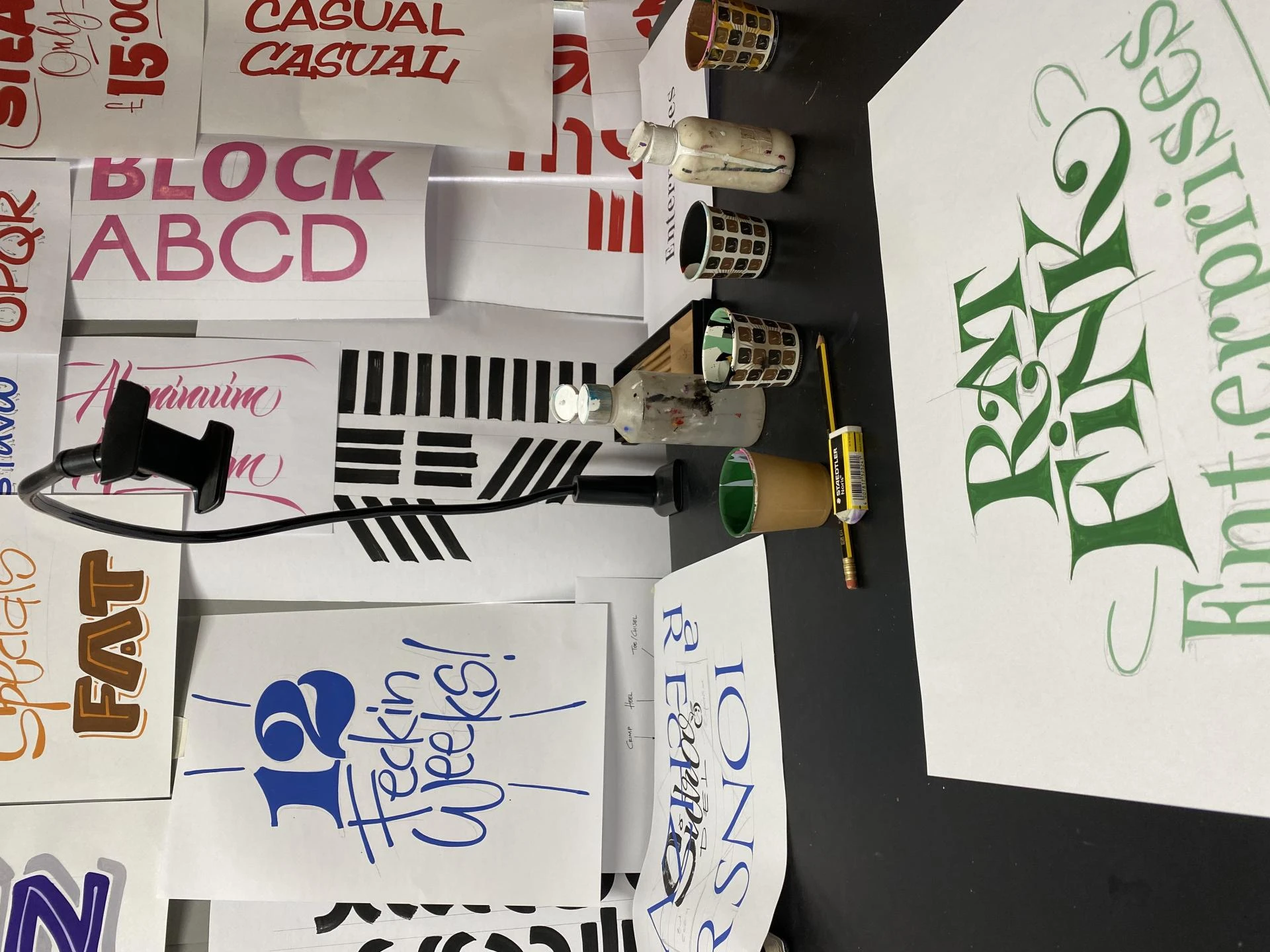
- Lettering Styles: Casual, block, script, and Roman as the foundation.
- Projects: Practical exercises that double as portfolio pieces.
- Portfolio Building: Essential for attracting future clients.
- Flexible Learning: Real-time videos available anytime, anywhere.
Unlike heavily edited tutorials, Paul’s demonstrations include mistakes and how to fix them,so students learn real problem-solving.
Practical Applications in Today’s World
Mastering this craft isn’t just a hobby. Opportunities include:
- Shopfront signs that stand out on busy streets.
- Decorative wall lettering and murals.
- Festival, event, and theatre signage.
- Personal commissions like house or cottage names.
In an era of mass production, these hand-painted works stand out for their individuality.
Benefits of Mastering the Craft
Why put in the time to learn?
- Creative Outlet: A deeply satisfying art form.
- Professional Opportunities: Students from the Academy have launched businesses.
- Cultural Value: Preserves a centuries-old tradition.
- Flexibility: Work locally, remotely, or while traveling.
Student Stories
The proof is in the students’ journeys:
- Robert (USA): Turned vacation rentals into a steady stream of sign commissions after joining the course.
- Jason (Ireland): Found his brush control transformed, with confidence soaring thanks to guided drills.
- Jules (UK): Already experienced, but discovered fresh focus and improved technique through structured practice.
These aren’t just testimonials, they’re examples of how learning signpainting changes both skill and mindset.
Workshops vs Online Learning
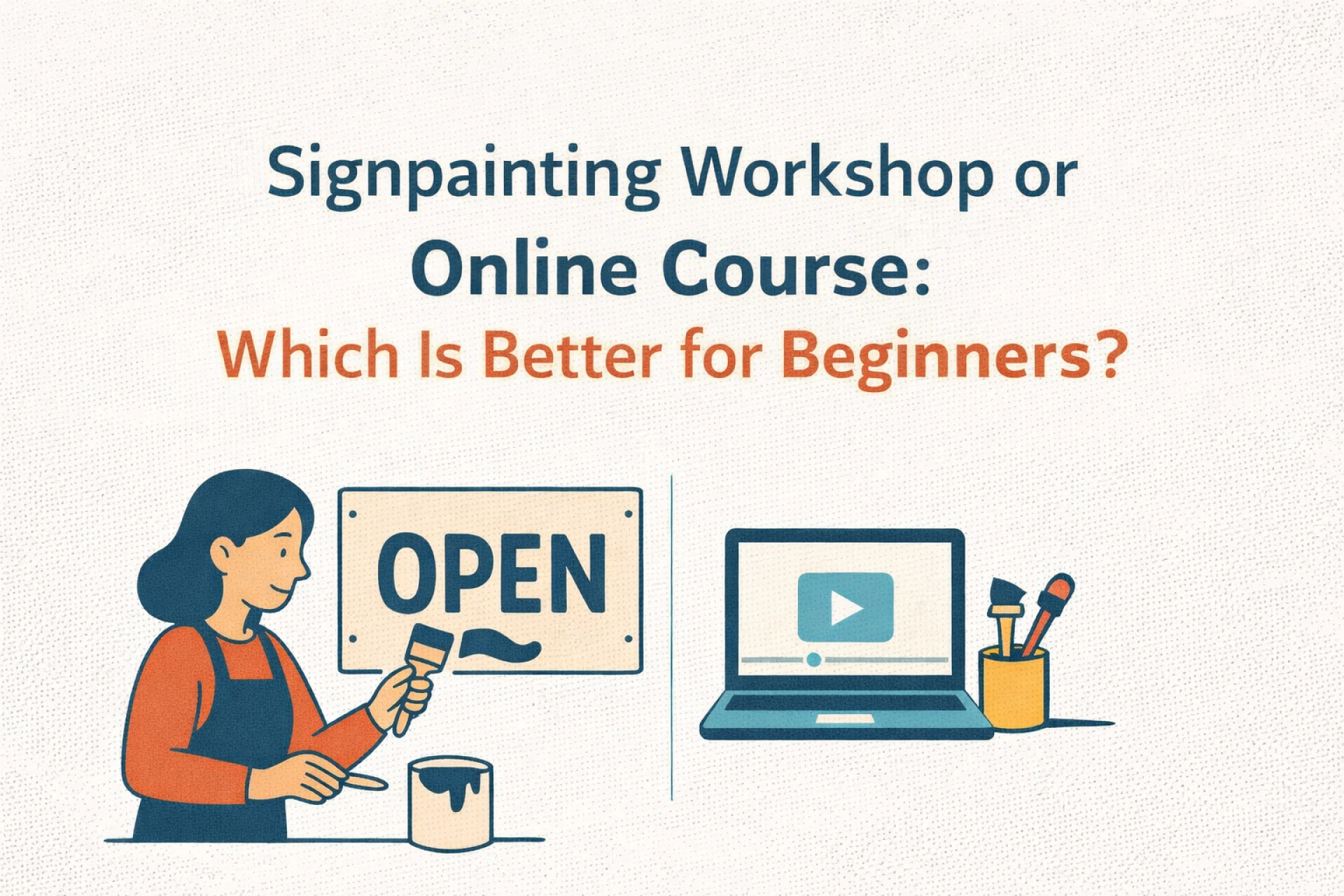
Signwriting workshops are fantastic for immersive experiences, but they’re short-lived. Online training offers flexibility, repeatable lessons, and structured growth. The sweet spot? Combining both, online for consistency, workshops for community and hands-on intensity.
Why Choose The Signpainters Academy
- Global Reach: Students in the UK, USA, Canada, Europe, and Australia.
- Proven Expertise: Over 30 years of professional signpainting.
- Community: Peer-to-peer platforms for feedback and support.
- Bonuses: Discounts on supplies, optional workshops, and direct mentoring.
It’s the closest thing to a traditional apprenticeship, without needing to relocate or give up your current job.
Conclusion
So, signwriting or signpainting? In truth, they’re two sides of the same brush. One emphasizes design, the other execution, but together they form a craft that continues to thrive in our digital world.
If you’ve ever felt drawn to the beauty of letters, now is the time to pick up a brush. Whether you’re starting from scratch or refining old skills, The Signpainters Academy offers a path that’s flexible, practical, and deeply rewarding.
Hand-painted signs remind us that skill, patience, and tradition still have a place in modern life. Why not be part of keeping it alive?
























Sign in to leave a comment.