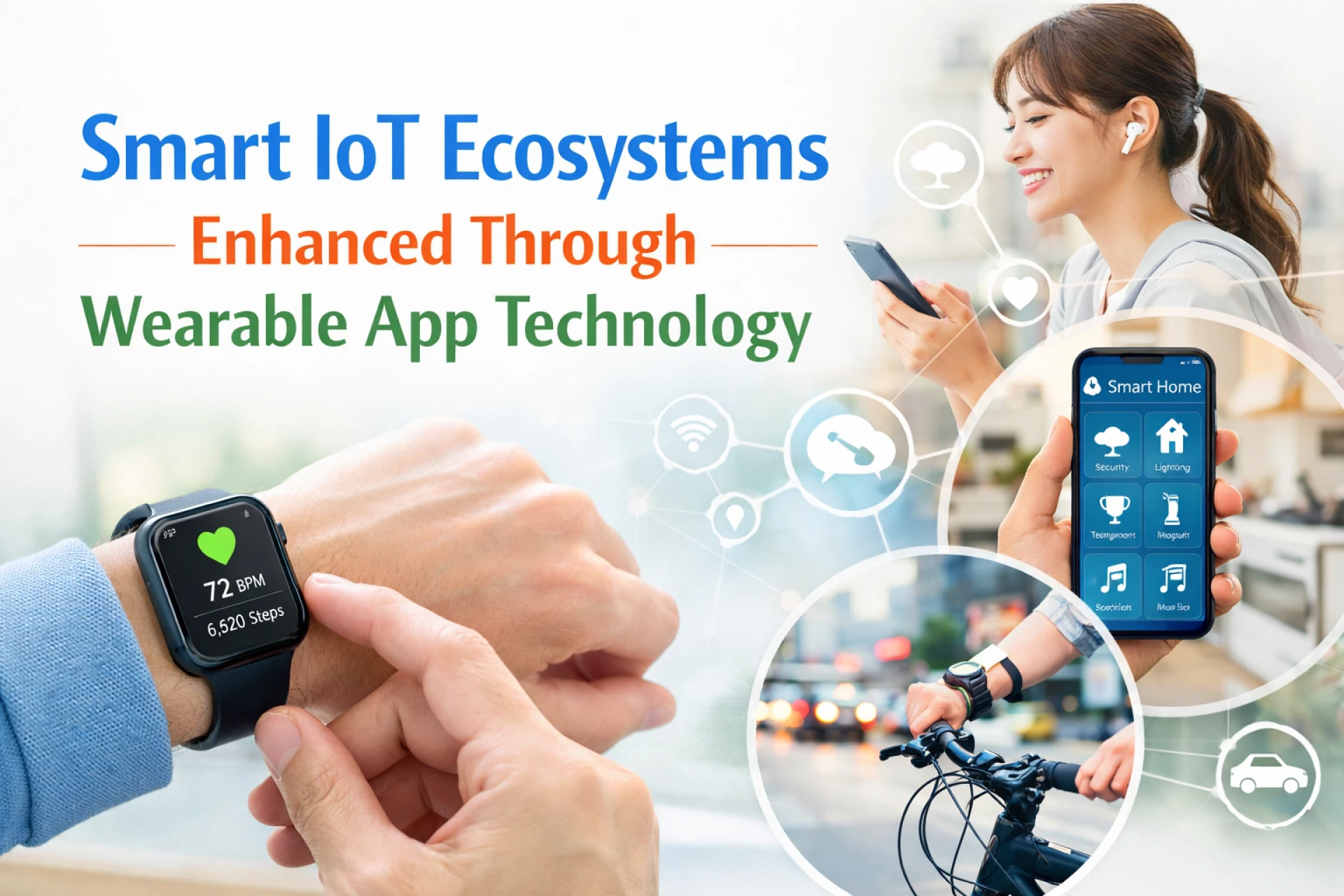

The Internet of Things has matured from isolated connected devices into fully synchronized digital ecosystems. From healthcare and manufacturing to retail and logistics, organizations are building smart environments where devices exchange data in real time. Within these ecosystems, wearable technology has evolved into a strategic layer that connects human interaction with machine intelligence.
A reliable wearable app development service plays a critical role in enabling this integration. Wearables are no longer limited to fitness tracking. They now serve as operational dashboards, health monitors, communication tools and industrial assistants, bridging users directly with IoT infrastructures.
The Role of Wearables in IoT-Driven Environments
IoT ecosystems rely on three pillars: connected devices, intelligent processing and user interfaces. Wearables strengthen the third pillar by delivering actionable insights directly to users through smartwatches, fitness bands, AR glasses and specialized industrial wearables.
In enterprise contexts, wearable applications can:
- Collect biometric or environmental data in real time
- Trigger alerts based on sensor thresholds
- Provide remote access to dashboards and reports
- Enable contactless authentication and workforce tracking
When these functions are developed through professional wearable app solutions, the result is a seamless connection between cloud systems, IoT sensors and end users.
Why Businesses Are Prioritizing Wearable Integration
Connected ecosystems demand speed, precision and mobility. Wearables introduce mobility without compromising connectivity. Field workers, healthcare professionals, warehouse operators and executives benefit from instant notifications and contextual insights delivered directly to their devices.
A specialized wearable app development service ensures compatibility across IoT platforms, APIs and enterprise systems. This includes integration with cloud analytics engines, edge computing frameworks and data visualization tools.
Smart IoT ecosystems benefit from wearable integration in several measurable ways:
- Faster decision-making through real-time data delivery
- Reduced dependency on desktop dashboards
- Improved workforce safety with automated alerts
- Higher user engagement through personalized interfaces
Organizations that adopt a wearable OS app architecture tailored to IoT systems can achieve a more synchronized operational flow. Whether deployed on watchOS, Wear OS or proprietary platforms, the application layer must align with broader infrastructure goals.
Industry Applications of Smart Wearable Ecosystems
Wearable technology adapts to industry-specific challenges, offering custom functionalities aligned with operational demands.
Healthcare and Remote Monitoring
Wearable medical devices collect patient vitals and transmit data to IoT-enabled hospital systems. These systems analyze patterns and notify clinicians instantly. Advanced wearable healthcare apps can support:
- Remote patient monitoring
- Medication reminders
- Real-time emergency alerts
- Secure medical record access
Such integration enhances patient outcomes while reducing hospital readmissions.
Manufacturing and Industrial Operations
In manufacturing plants, smart wearables improve worker efficiency and safety. Integrated with IoT sensors and predictive maintenance systems, wearables notify workers about machinery anomalies or hazardous conditions.
Industrial wearable app development focuses on:
- Hands-free navigation and instructions
- Real-time performance tracking
- Voice-enabled communication
- Environmental risk alerts
These solutions reduce downtime and optimize production cycles.
Retail and Logistics
Retail staff equipped with smart wearables can manage inventory, process payments and track shipments without relying on fixed terminals. IoT-based logistics systems use wearable devices for route optimization and delivery confirmations.
Custom wearable app engineering in logistics ensures:
- Barcode scanning integration
- GPS synchronization
- Fleet tracking connectivity
- Instant order updates
Key Components of a Scalable Wearable App Strategy
Developing wearables for IoT ecosystems requires a multi-layered strategy. Businesses must consider hardware compatibility, data security, performance optimization and scalability.
Cross-Platform Compatibility
Wearable devices operate on diverse operating systems. A wearable app development service must ensure applications function seamlessly across platforms while maintaining a consistent user experience. Whether targeting consumer smartwatches or industrial-grade devices, cross-platform architecture reduces fragmentation.
Data Security and Compliance
IoT ecosystems handle sensitive operational and personal data. Wearable applications must integrate encryption protocols, secure authentication and compliance measures aligned with industry standards. Secure APIs and encrypted cloud storage protect real-time data transmission.
Edge and Cloud Synchronization
Modern wearable apps often rely on edge computing for faster processing. Critical alerts are processed locally, while aggregated data is transmitted to cloud servers for long-term analytics. Efficient synchronization ensures minimal latency and optimized battery consumption.
Understanding Wearable App Development Cost Factors
Cost considerations influence technology adoption decisions. The wearable app development cost varies depending on:
- Platform selection and device compatibility
- Complexity of IoT integration
- Security and compliance requirements
- UI/UX customization
- Real-time analytics features
Enterprises seeking scalable wearable ecosystems often prioritize long-term value over initial investment. Strategic development reduces maintenance expenses and improves system longevity.
Custom vs. Pre-Built Solutions
Businesses entering the wearable ecosystem market may evaluate ready-made solutions such as white-label apps for sale. While pre-built frameworks reduce launch time, they may limit customization and advanced IoT integration.
Custom wearable application development provides:
- Tailored feature sets aligned with enterprise workflows
- Full ownership of intellectual property
- Flexible scalability as IoT infrastructure evolves
- Enhanced branding opportunities
The decision depends on organizational objectives, budget and long-term digital strategy.
Designing User-Centric Wearable Interfaces
Wearables have limited screen space, requiring a simplified and intuitive design. Effective wearable apps prioritize:
- Minimalist interface layouts
- Gesture and voice control support
- Quick-access dashboards
- Energy-efficient coding
Human-centered design improves adoption rates and operational efficiency. An experienced wearable app development service focuses on usability testing and real-world deployment scenarios.
Integration with AI and Predictive Analytics
IoT ecosystems generate massive volumes of data. When wearable apps connect with AI-powered analytics engines, they deliver predictive insights directly to users. Instead of reactive notifications, businesses gain proactive alerts and performance forecasts.
Predictive maintenance alerts, health anomaly detection and automated workflow suggestions enhance productivity and risk management.
Challenges in Wearable IoT Deployment
Despite significant advantages, wearable IoT integration presents challenges:
- Battery life limitations
- Device fragmentation
- Data synchronization complexities
- Regulatory compliance in sensitive industries
A strategic development approach mitigates these risks through performance optimization and modular architecture.
Future Outlook of Wearable-Driven IoT Ecosystems
The evolution of smart ecosystems indicates deeper convergence between wearables, AI and 5G connectivity. Faster networks enable instant synchronization across global infrastructures. Wearable applications will increasingly support augmented reality interfaces, biometric authentication and contextual automation.
Enterprises adopting wearable integration today position themselves for long-term operational resilience. A comprehensive wearable app development service ensures that businesses remain adaptable as technology advances.
Conclusion
Smart IoT ecosystems rely on more than connected devices; they require meaningful interaction layers. Wearable technology provides that interface by delivering real-time intelligence directly to users. From healthcare monitoring to industrial automation, wearable integration enhances safety, efficiency and decision-making accuracy.
Organizations planning to strengthen their IoT strategies benefit from investing in scalable wearable solutions. With proper architecture, secure integrations and thoughtful design, wearable applications become central to modern digital ecosystems.
FAQs
What industries benefit most from wearable IoT integration?
Healthcare, manufacturing, logistics, retail and field services gain significant advantages due to real-time monitoring and mobility features.
How long does wearable application development take?
Timelines vary based on complexity, integration requirements and platform compatibility. Enterprise-grade solutions typically require structured planning and testing phases.
Is custom wearable development better than pre-built solutions?
Custom development offers flexibility and deeper IoT integration, while pre-built frameworks may reduce initial costs but limit scalability.
How secure are wearable IoT applications?
Security depends on encryption standards, authentication protocols and compliance practices implemented during development. A professional approach ensures enterprise-grade protection.
Can wearable apps integrate with existing IoT infrastructure?
Yes, properly engineered wearable applications can connect with cloud platforms, APIs and analytics systems already in place within IoT ecosystems.
























Sign in to leave a comment.